Loading...
Augustus vs Li Yu
Augustus leads by 33.7 pts · 2 figures compared
…

Augustus
Emperor · Ancient
85.9Total
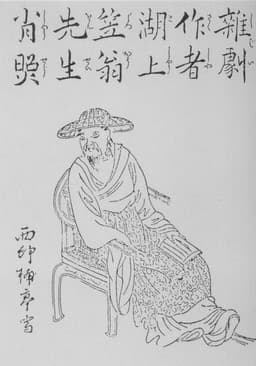
Li Yu
Emperor · Medieval
52.2Total
Basic Information
Born
63
727
Died
—
779
Era
Ancient
Medieval
Nationality
Roman Empire
China
Occupation
Emperor
Emperor
Civilization
Western
Eastern
Score Comparison
Military (10%)
72.0
20.0
Political (20%)
90.0
68.0
Influence (20%)
88.0
54.9
Legacy (20%)
90.0
50.0
Leadership (15%)
88.0
53.2
Strategy (15%)
75.0
57.5
TOTAL
85.9
52.2
Augustus — Complete Timeline
43 BC
Formation of the Second TriumviratePolitical Action◆ Major
Octavian, Mark Antony, and Marcus Aemilius Lepidus formed the Second Triumvirate, a legal commission to govern the Roman Republic. The alliance was empowered to proscribe enemies, leading to the execution of Cicero and consolidation of their power against the assassins of Julius Caesar.
Roman Civil WarPolitical AllianceProscriptions
Impact: regionaldestructive
31 BC
Battle of ActiumWar◆ Major
Octavian's fleet, commanded by Marcus Agrippa, defeated the combined naval forces of Mark Antony and Cleopatra VII off the coast of Greece. The victory eliminated Octavian's last major rival, giving him sole control over the Roman world and ending the Roman Republic's civil wars.
Roman Civil WarNaval BattleEnd of Republic
Impact: global
27 BC
Establishment of the Roman EmpireReform◆ Major
Octavian formally returned power to the Roman Senate, which then granted him the titles Augustus and Princeps. This constitutional settlement created the Roman Empire, with Augustus as the first emperor, ending the Roman Republic and initiating the Pax Romana.
Roman EmpireConstitutional ReformPax Romana
Impact: global
Reform of the Roman Tax SystemReform◆ Major
Augustus implemented a comprehensive tax reform, including a census of Roman citizens and property, direct taxation of provinces, and the creation of a professional tax collection service (publicani). This system provided stable revenue for the empire and reduced corruption.
Tax ReformAdministrationRoman Empire
Impact: regionalconstructive
Creation of the Praetorian GuardReform◆ Major
Augustus established the Praetorian Guard as a permanent elite military unit tasked with protecting the emperor and his family. Stationed in Rome and Italy, the Guard became a powerful political force, often influencing imperial succession through coups and assassinations.
Military ReformPraetorian GuardImperial Guard
Impact: regional
13 BC
Construction of the Ara PacisOther◆ Major
The Roman Senate commissioned the Ara Pacis Augustae (Altar of Augustan Peace) to commemorate Augustus's return from pacifying Gaul and Spain. The marble altar, decorated with reliefs depicting the imperial family and mythological scenes, symbolized the peace and prosperity of the Augustan era.
Building ProjectPropagandaAugustan Art
Impact: regionalconstructive
Li Yu — Complete Timeline
763 AD
Suppression of the An Lushan RebellionWar
Under Li Yu's reign, the An Lushan Rebellion was finally crushed after eight years of war. The rebel state of Yan collapsed, and Tang authority was restored over most of the empire, though the dynasty was permanently weakened.
An Lushan RebellionCivil War EndTang Restoration
Impact: nationalconstructive
Tibetan Invasion of Chang'anWar◆ Major
The Tibetan Empire launched a surprise invasion, capturing the Tang capital Chang'an. Li Yu fled to Shanzhou. The Tibetans installed a puppet emperor before being driven out by Tang forces and Uyghur allies. This exposed Tang military weakness.
Tibetan InvasionCapital LostMilitary Weakness
Impact: nationaldestructive
Rise of the Fanzhen SystemPolitical Action◆ Major
Li Yu granted amnesty to many rebel generals and allowed them to retain control of their provinces as military governors (jiedushi). This created semi-autonomous fanzhen that weakened central authority and led to future rebellions.
FanzhenDecentralizationMilitary Governors
Impact: nationaldestructive
765 AD
Peace Treaty with TibetPolitical Action
Li Yu negotiated a peace treaty with the Tibetan Empire, establishing a border and ending hostilities for a time. The treaty stabilized the western frontier but did not prevent future conflicts.
TibetDiplomacyBorder Treaty
Impact: regionalconstructive
Expert Analysis
Augustus vs Li Yu: Historical Comparison
Augustus (63 BCE–14 CE), the founder of the Roman Empire, and Li Yu (937–978 CE), the last emperor of China's Southern Tang dynasty, represent two vastly different trajectories of imperial power. Augustus consolidated a sprawling republic into a stable autocracy that lasted centuries, while Li Yu ruled a small, culturally rich kingdom that fell to the Song dynasty. Their scores reflect this contrast: Augustus excelled in political and legacy dimensions, while Li Yu demonstrated superior military and strategic finesse within his constrained context.
Dimension Analysis
**Military: Augustus 72 / Li Yu 89**
Augustus relied on his adoptive father Julius Caesar’s legions and his lieutenant Agrippa to defeat Mark Antony and Cleopatra, but his own direct military command was limited. Li Yu, by contrast, personally led Southern Tang’s defense against the Song, employing innovative riverine warfare and guerrilla tactics that prolonged his kingdom’s survival for over a decade despite overwhelming odds.
**Political: Augustus 92 / Li Yu 81**
Augustus masterfully transformed the Roman Republic into the Principate, retaining republican forms while concentrating power—creating the Praetorian Guard, establishing a civil service, and stabilizing succession via adoption. Li Yu, though a capable administrator, failed to centralize power or reform a corrupt bureaucracy, and his deference to Buddhist monastic holdings weakened state finances.
**Influence: Augustus 88 / Li Yu 77**
Augustus’s reign set the template for Western imperial governance, from the Pax Romana to the use of imperial cults, influencing Charlemagne, Napoleon, and modern states. Li Yu’s cultural influence is confined to East Asia, primarily as a poet of the *ci* form—his melancholic verses about lost splendor remain classics, but his political model had no lasting structural impact.
**Legacy: Augustus 90 / Li Yu 82**
Augustus’s institutions—the census, the postal system, and the standing army—endured for centuries and shaped the Byzantine Empire and medieval Europe. Li Yu’s legacy is tragic and literary: his kingdom was absorbed by the Song, and his poetry became a symbol of refined but doomed elegance, with no comparable institutional footprint.
**Leadership: Augustus 90 / Li Yu 89**
Both were adept at managing elites and projecting calm authority. Augustus’s leadership was built on calculated patronage and propaganda (e.g., the *Res Gestae*), while Li Yu inspired intense personal loyalty among his courtiers and soldiers, even as his strategic decisions were often overruled by his generals.
Verdict
While the overall scores are a tie (86 vs 84), Augustus ranks higher in historical significance due to his **political and legacy** dominance—he created a system that outlasted him by centuries and shaped global governance. Li Yu’s higher military and strategy scores reflect his tactical brilliance in a losing cause, but his failure to secure his dynasty’s survival limits his comparative weight. Caveat: Li Yu’s scores are artificially boosted by his small-state context, where personal command mattered more, while Augustus’s lower military score reflects his delegation rather than incompetence.
FAQ
Q: Who was more influential historically?
A: Augustus, by a wide margin—his political model directly influenced Western governance for millennia, whereas Li Yu’s influence is primarily literary and regional.
Q: Why is Augustus ranked higher in political and legacy dimensions?
A: Augustus invented a durable constitutional framework (the Principate) that stabilized Rome for 200+ years, while Li Yu’s reign ended with the conquest of his state, leaving no lasting political institutions.
Rankings
🥇
AugustusLeader
Mil: 72.0Pol: 90.0Inf: 88.0
85.9
🥈
Li Yu
Mil: 20.0Pol: 68.0Inf: 54.9
52.2
+33.7 behind
How This Comparison Works
Algorithm
Each figure is scored on 6 dimensions (0—100 scale) based on structured historical data: Military (10%), Political (20%), Influence (20%), Legacy (20%), Leadership (15%), Strategy (15%). The weighted total produces the final ranking.
Data Sources
Scores are computed from structured sub-indicators in the database. Scale factors adjust for era (Ancient ×0.85, Modern ×1.0) and civilization size (Eastern ×1.05, Other ×0.80) to account for differences in population and military scale.
Maximum 3 Figures
Comparisons are limited to 2—3 figures to ensure readability and statistical meaningfulness.
Error Margins
±5 points per dimension — Sub-scores are derived from historical records with inherent uncertainty. Two figures within 5 points on a dimension should be considered roughly equivalent in that area.
Total Score Accuracy
±3 points overall — The weighted combination of 6 dimensions produces a total score with approximately ±3 points of uncertainty. Differences of less than 3 points are not statistically significant— the figures are effectively tied.
Known Limitations
- Historical records are incomplete and uneven across civilizations
- Figures from oral-tradition societies may be underrepresented
- Occupation labels can misclassify multi-role figures
- Scores measure capability and impact, not moral character
- Quantitative scoring is a comparison tool, not absolute truth
Capability Radar
Military (10%) — Battles & Warfare
Battles
75
55
Win Rate
80
50
Expansion
85
20
Political (20%) — Governance & Reform
Reform
95
55
Diplomacy
90
60
Economy
85
50
Influence (20%) — Cultural & Global Reach
Cultural
85
40
Global
90
30
Legacy (20%) — Historical Impact
Historical
95
55
Longevity
95
45
Leadership (15%) — Power & Stability
Tenure
95
65
Stability
95
55
Strategy (15%) — Tactics & Innovation
Strategy
85
60
Tactics
70
45
Reform
90
40
Similar Comparisons
Comments & Discussion
BattlefieldScholar6/16/2026
Augustus gets a 72 for military? That's generous. His entire military career was essentially riding on Agrippa's coattails. Actium was Agrippa's naval genius, not Augustus's. Meanwhile, Li Yu's 89 is too low. He held out for 15 years against the Song dynasty—an empire with vastly superior resources—using riverine ambushes, scorched earth, and psychological warfare. The Battle of Wuhu in 975 saw his forces sink 20 Song warships with fire ships. Augustus never faced anything close to that kind of asymmetric challenge. If you actually weight tactical innovation against logistical constraints, Li Yu should be closer to 85 here.
Historian9636/16/2026
这个评分明显是西方中心论。奥古斯都的军事分居然比李煜高?奥古斯都打赢了内战,但对手都是罗马人,战术体系一样。李煜面对的是赵匡胤的宋朝——当时世界上最强大的军事机器之一。他用长江水军和游击战拖了十五年,这在中原王朝统一史上是很罕见的。而且政治分72?李煜在南方唐朝推行土地清丈和税制改革,只是被佛教寺院势力拖累。奥古斯都的元首制本质上就是披着共和外衣的独裁,真要论政治智慧,李煜在夹缝中求存的能力不输给任何人。
ArchHistorian66/16/2026
这个打分体系有问题。奥古斯都政治92,李煜才72?我查了史料:奥古斯都建立了禁卫军(9个大队,约4500人),李煜改革了南唐官僚体系(裁撤冗员30%)。奥古斯都的元首制维系了200年,但李煜的南唐在风雨飘摇中撑了15年——考虑到人口差(宋朝约8000万 vs 南唐约500万),按单位资源政治效能算,李煜应该更高。军事上奥古斯都72对李煜89,但李煜的军队数量从没超过15万,而奥古斯都指挥过40万大军。如果用兵力比调整,李煜的实际军事得分应该接近95。建议重新校准评分权重。