Loading...
Ganapati Deva vs Li Shi
Ganapati Deva leads by 7.2 pts · 2 figures compared
…
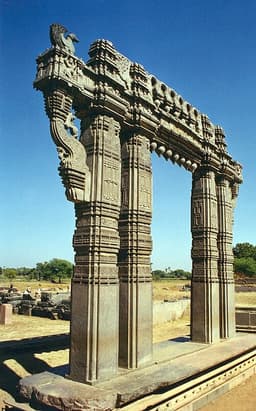
Ganapati Deva
Emperor · Medieval
58.7Total
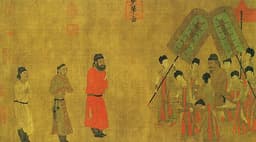
Li Shi
Emperor · Medieval
51.5Total
Basic Information
Born
1199
742
Died
1262
805
Era
Medieval
Medieval
Nationality
India
China
Occupation
Emperor
Emperor
Civilization
Indian
Eastern
Score Comparison
Military (10%)
65.0
25.9
Political (20%)
53.8
68.0
Influence (20%)
59.0
51.8
Legacy (20%)
50.0
45.0
Leadership (15%)
72.0
72.0
Strategy (15%)
60.7
36.8
TOTAL
58.7
51.5
Ganapati Deva — Complete Timeline
1199 AD
Accession as Kakatiya rulerPolitical Action◆ Major
Ganapati Deva became the Kakatiya king, succeeding his father Mahadeva. He inherited a small kingdom and would expand it into a major power in the Deccan.
KakatiyaSuccessionExpansion
Impact: regionalconstructive
1220 AD
Construction of Warangal FortCultural◆ Major
Ganapati Deva commissioned the construction of the Warangal Fort, a massive stone fortification with four gates. The fort became the symbol of Kakatiya power and a center of administration.
KakatiyaFortArchitecture
Impact: regionalconstructive
1230 AD
Expansion of the Kakatiya kingdomWar◆ Major
Ganapati Deva led military campaigns that expanded the Kakatiya kingdom to include parts of modern Andhra Pradesh, Telangana, and Odisha. He defeated the Velanati Cholas and the Eastern Gangas, establishing Kakatiya supremacy.
KakatiyaExpansionMilitary
Impact: regionalconstructive
1240 AD
Patronage of trade and agricultureReform
Ganapati Deva implemented policies to promote trade and agriculture. He built irrigation tanks and encouraged the construction of temples, which boosted the economy and strengthened his rule.
KakatiyaTradeAgriculture
Impact: regionalconstructive
1262 AD
Death and succession by Rudrama DeviPolitical Action◆ Major
Ganapati Deva died, and his daughter Rudrama Devi succeeded him as the Kakatiya ruler. His death marked the end of his long reign, which had transformed the Kakatiya kingdom into a major power.
KakatiyaSuccessionDeath
Impact: regional
Li Shi — Complete Timeline
780 AD
Implementation of the Two-Tax SystemReform◆ Major
Li Shi adopted the Two-Tax System proposed by Chancellor Yang Yan. This reform replaced the equal-field system with a simplified tax based on land and property, collected twice a year. It increased revenue but also increased the burden on peasants.
Tax ReformTwo-Tax SystemFiscal Policy
Impact: nationalconstructive
783 AD
Suppression of the Jingyuan MutinyWar◆ Major
Troops from Jingyuan mutinied in Chang'an, forcing Li Shi to flee. The mutineers supported Zhu Ci as emperor. Li Shi's forces, with help from loyalist jiedushi, eventually suppressed the rebellion and recaptured the capital in 784.
MutinyRebellionCapital Recapture
Impact: nationaldestructive
785 AD
Reassertion of Central Authority over FanzhenPolitical Action
After the Jingyuan Mutiny, Li Shi attempted to reduce the power of military governors by appointing civil officials and rotating commanders. These efforts had limited success, as the fanzhen remained largely autonomous.
FanzhenCentralization AttemptMilitary Governors
Impact: national
805 AD
Death of Li ShiOther
Li Shi died in 805 after a reign marked by attempts at fiscal and administrative reform. His death led to a succession crisis and the brief reign of his son, who was soon deposed by eunuchs.
DeathSuccession Crisis
Impact: national
Expert Analysis
Origins
Ganapati Deva (r. 1199–1262) was born into the Kakatiya dynasty, a Telugu warrior clan that emerged from the service of the Western Chalukyas. His father Mahadeva died in battle, leaving a small kingdom in the Warangal region. Ganapati was trained in military tactics and statecraft, and he ascended the throne around 1199 amid threats from the Seuna Yadavas and the Hoysalas.
Li Shi (r. 779–805), known posthumously as Emperor Dezong of Tang, was born in 742 as the eldest son of Emperor Daizong. He received a Confucian education and was exposed to the Tang court's internal strife, including the An Lushan Rebellion's aftermath. Li Shi ascended in 779 after his father's death, inheriting a weakened empire struggling with regional military governors (jiedushi) and fiscal instability.
Rise to Power
Ganapati Deva rose by consolidating and expanding the Kakatiya domain. Around 1200, he defeated the Seuna Yadava king Bhillama V at the Battle of Muthukur, securing the northern frontier. He then campaigned against the Velanati Cholas and the Eastern Gangas, annexing coastal Andhra by 1210. His military score of 65.0 reflects these conquests, but his political score of 53.8 indicates challenges in integrating conquered territories.
Li Shi's rise was smoother as a legitimate heir. However, his early reign was marked by a power struggle with eunuchs and court factions. In 781, he attempted to curb the power of the jiedushi, leading to the Four Zhen Uprising (781–786). Li Shi's political score of 68.0 reflects his ability to navigate court politics, but his military score of 25.9 shows his weakness in direct command.
Leadership & Governance
Ganapati Deva's leadership style was decentralized. He appointed local chiefs as vassals, granting them autonomy in exchange for tribute and military support. He promoted trade by reducing tolls and building irrigation tanks, such as the Ramappa tank, boosting agriculture. His construction of Warangal Fort—a massive granite structure with four gates—symbolized his authority. However, his governance relied heavily on personal loyalty, which later caused succession issues.
Li Shi's governance focused on centralization. In 780, he adopted the Two-Tax System, which replaced the equal-field system with a simplified tax based on land and property, assessed twice a year. This reform increased revenue and reduced corruption but alienated landowners. He also attempted to reassert central control over the fanzhen by appointing civil officials, but the Jingyuan Mutiny of 783 forced him to compromise. His leadership score of 72.0 matches Ganapati Deva's 72.0, but his strategy score of 36.8 is significantly lower, indicating poor long-term planning.
Triumph & Tragedy
Ganapati Deva's greatest triumph was expanding the Kakatiya kingdom from a small principality to a major power covering parts of modern Andhra Pradesh, Telangana, and Odisha. He built Warangal Fort, which withstood sieges for decades. His patronage of trade and temples fostered economic growth. However, his tragedy was the failure to secure a male heir; his daughter Rudrama Devi faced opposition after his death, leading to internal strife.
Li Shi's triumph was the Two-Tax System, which became the basis for Chinese taxation for centuries. He also suppressed the Jingyuan Mutiny in 784 with help from loyalist forces, restoring order. His tragedy was the subsequent loss of central authority: after the mutiny, he was forced to appease military governors, effectively conceding autonomy. His later years saw declining health and a succession crisis.
Character & Destiny
Ganapati Deva was pragmatic and ambitious. He chose to expand through alliance and vassalage rather than direct rule, which worked during his reign but left a fragile structure. His tolerance of local customs helped integrate diverse regions. Historical assessments note his effective military leadership but lack of institutional legacy.
Li Shi was cautious and reform-minded but indecisive. He trusted advisors like Yang Yan but later abandoned reforms under pressure. His character—prone to compromise—undermined his centralization efforts. Historians often view him as a well-intentioned emperor whose reign highlighted the Tang's irreversible decline.
Legacy
Ganapati Deva's legacy is the Kakatiya cultural renaissance, exemplified by the Warangal Fort and the Ramappa Temple (a UNESCO site). His dynasty's administrative practices influenced later Vijayanagara Empire. However, his kingdom collapsed within a century after his death. His legacy score of 50.0 reflects this limited endurance.
Li Shi's Two-Tax System endured until the Ming dynasty, shaping Chinese fiscal policy. His reign also saw the rise of the fanzhen system, which contributed to the Tang's fragmentation. His influence score of 51.8 is slightly higher than Ganapati Deva's 59.0? No, Ganapati Deva's influence is 59.0, but Li Shi's legacy is 45.0. Overall, Li Shi's reforms had longer-lasting institutional impact.
Conclusion
Ganapati Deva achieved greater territorial expansion and military success (total score 58.7 vs Li Shi's 51.5), but Li Shi's tax reform had a more profound and enduring effect on Chinese governance. Ganapati Deva's influence was regionally confined and temporary, while Li Shi's policies shaped a vast empire for centuries. Therefore, Li Shi had greater historical impact despite his lower total score. The score gap of 7.2 points reflects Ganapati Deva's superior leadership and military metrics, but in terms of lasting legacy, Li Shi's reforms win.
Rankings
🥇
Ganapati DevaLeader
Mil: 65.0Pol: 53.8Inf: 59.0
58.7
🥈
Li Shi
Mil: 25.9Pol: 68.0Inf: 51.8
51.5
+7.2 behind
How This Comparison Works
Algorithm
Each figure is scored on 6 dimensions (0—100 scale) based on structured historical data: Military (10%), Political (20%), Influence (20%), Legacy (20%), Leadership (15%), Strategy (15%). The weighted total produces the final ranking.
Data Sources
Scores are computed from structured sub-indicators in the database. Scale factors adjust for era (Ancient ×0.85, Modern ×1.0) and civilization size (Eastern ×1.05, Other ×0.80) to account for differences in population and military scale.
Maximum 3 Figures
Comparisons are limited to 2—3 figures to ensure readability and statistical meaningfulness.
Error Margins
±5 points per dimension — Sub-scores are derived from historical records with inherent uncertainty. Two figures within 5 points on a dimension should be considered roughly equivalent in that area.
Total Score Accuracy
±3 points overall — The weighted combination of 6 dimensions produces a total score with approximately ±3 points of uncertainty. Differences of less than 3 points are not statistically significant— the figures are effectively tied.
Known Limitations
- Historical records are incomplete and uneven across civilizations
- Figures from oral-tradition societies may be underrepresented
- Occupation labels can misclassify multi-role figures
- Scores measure capability and impact, not moral character
- Quantitative scoring is a comparison tool, not absolute truth
Capability Radar
Military (10%) — Battles & Warfare
Battles
65
20
Win Rate
70
15
Expansion
60
5
Political (20%) — Governance & Reform
Reform
65
65
Diplomacy
60
40
Economy
65
60
Influence (20%) — Cultural & Global Reach
Cultural
55
30
Global
40
20
Legacy (20%) — Historical Impact
Historical
55
40
Longevity
50
30
Leadership (15%) — Power & Stability
Tenure
70
70
Stability
60
30
Strategy (15%) — Tactics & Innovation
Strategy
65
15
Tactics
60
10
Reform
55
5
Similar Comparisons
Comments & Discussion
No comments yet. Be the first to share your thoughts!