Loading...
Li Cunxu vs Zhao Kuangyin
Zhao Kuangyin leads by 5.0 pts · 2 figures compared
…
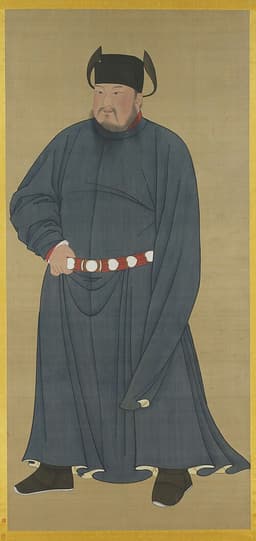
Li Cunxu
Emperor · Medieval
66.5Total
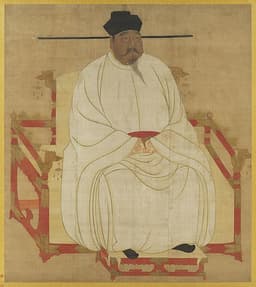
Zhao Kuangyin
Emperor · Medieval
71.5Total
Basic Information
Born
885
927
Died
926
976
Era
Medieval
Medieval
Nationality
China
China
Occupation
Emperor
Emperor
Civilization
Eastern
Eastern
Score Comparison
Military (10%)
76.0
78.0
Political (20%)
68.0
84.0
Influence (20%)
62.0
68.0
Legacy (20%)
58.0
65.0
Leadership (15%)
80.0
74.0
Strategy (15%)
67.2
68.0
TOTAL
66.5
71.5
Li Cunxu — Complete Timeline
908 AD
Succeeded as Prince of JinPolitical Action◆ Major
Li Cunxu inherited the title Prince of Jin from his father Li Keyong. He continued the struggle against Later Liang, consolidating the Jin state as a major power in northern China.
JinSuccessionFive Dynasties
Impact: regional
910 AD
Battle of BaixiangWar◆ Major
Li Cunxu's Jin army defeated the Later Liang forces under Zhu Wen at Baixiang. This victory established Jin as the dominant military power in the north and marked a turning point in the war.
JinLater LiangBattle
Impact: regionalconstructive
923 AD
Conquered Later LiangWar
Li Cunxu led a successful campaign against Later Liang, capturing its capital Kaifeng and ending the dynasty. He then proclaimed himself emperor, founding the Later Tang dynasty.
Later TangConquestDynastic Change
Impact: nationalconstructive
Founded Later Tang DynastyPolitical Action
Li Cunxu declared himself emperor of the Later Tang dynasty, claiming legitimacy as the restorer of the Tang lineage. He established his capital at Luoyang and reunified much of northern China.
Later TangDynasty FoundingReunification
Impact: nationalconstructive
926 AD
Killed in mutiny at XingyuanWar◆ Major
Li Cunxu faced a mutiny by his own troops at Xingyuan during a campaign against the Khitans. He was killed in the fighting, leading to the collapse of Later Tang and the rise of Later Jin.
Later TangMutinyDeath
Impact: nationaltragic
Zhao Kuangyin — Complete Timeline
960 AD
Founded Song dynastyPolitical Action
Zhao Kuangyin, a general of Later Zhou, was proclaimed emperor by his troops at Chenqiao. He established the Song dynasty, ending the Five Dynasties period and beginning a new era of Chinese history.
Song dynastyFoundingChenqiao
Impact: globalconstructive
961 AD
Removed military power from generalsPolitical Action◆ Major
Zhao Kuangyin invited senior generals to a banquet and persuaded them to retire peacefully. This 'removal of military power over wine' prevented military coups and centralized control.
Song dynastyMilitary reformCentralization
Impact: nationalconstructive
963 AD
Unified southern ChinaWar◆ Major
Zhao Kuangyin launched campaigns to conquer the southern kingdoms, including Jingnan, Later Shu, and Southern Tang. By his death, most of China was reunified under Song rule.
Song unificationConquestSouthern kingdoms
Impact: national
Expert Analysis
Zhao Kuangyin vs Li Cunxu
# The Emperor Who Could Not Hold the Sword and the One Who Laid It Down
In the spring of 926, a blood-soaked emperor lay dying at Xingyuan, killed not by a foreign army but by his own mutinous troops. Less than three decades later, in 960, a general named Zhao Kuangyin was lifted onto a throne by his soldiers—yet managed to die in bed sixteen years later, having transformed China more profoundly than any conqueror. How could two men, both rising through military power in the same fractured land, meet such different ends? The answer lies not in their swords, but in how they chose to sheathe them.
Origins
Li Cunxu was born into war. His father, Li Keyong, was a Shatuo Turkic chieftain who had been granted the title Prince of Jin by the dying Tang dynasty, spending his final years locked in a bitter struggle against the upstart Zhu Wen. When Li Cunxu inherited the title in 908 at just twenty-three, he inherited not a kingdom but a blood feud. His world was one of tribal loyalty, personal vengeance, and the raw logic of the battlefield—a world where a man proved his worth by the bodies he piled before him.
Zhao Kuangyin, born in 927, came of age in a China that had already seen the Later Liang fall, the Later Tang rise and crumble, and a succession of short-lived dynasties flicker across the northern plains. He was the son of a mid-ranking military officer in the Later Zhou dynasty, a man who had watched emperors rise and die with terrifying speed. His education was not in tribal honor but in the cold calculus of survival: he learned that loyalty was a currency that could be spent, and that the most dangerous enemy was often the man standing beside you.
Rise to Power
Li Cunxu’s ascent was a saga of relentless warfare. The Battle of Baixiang in 910 was his coming-out: he crushed the Later Liang forces of Zhu Wen, proving that the son could exceed the father. For thirteen years he hammered away at the Liang, his reputation built on a string of battlefield victories that seemed to confirm his destiny as the restorer of the Tang. When he finally conquered Kaifeng in 923 and declared himself emperor of the Later Tang, he believed he had fulfilled his father’s dream.
Zhao Kuangyin’s rise was quieter, more deliberate. He served competently under the Later Zhou, earning a reputation for both military skill and political discretion. When the young emperor died in 960, leaving a child on the throne, Zhao’s troops proclaimed him emperor at Chenqiao—a scene that had played out many times before in the Five Dynasties period. But unlike his predecessors, Zhao had a plan for what came next.
Leadership & Governance
Li Cunxu ruled as he had fought: with fire. He claimed legitimacy by styling himself the restorer of the Tang, but his court was a chaos of tribal feuds and personal vendettas. He trusted his generals—until he didn’t. He rewarded loyalty with land and power, then grew suspicious of the very men he had elevated. His military genius was undeniable, but his political wisdom was almost nonexistent. He could conquer a kingdom but could not govern a palace.
Zhao Kuangyin governed with a surgeon’s precision. In 961, he invited his most powerful generals to a banquet and, over cups of wine, convinced them to retire peacefully. “Why not enjoy wealth and honor,” he reportedly said, “and pass on your blessings to your descendants?” This “removal of military power at a feast” was not a surrender of strength but a redefinition of it. Zhao centralized command, rotated generals to prevent them from building personal power bases, and built a civil bureaucracy that could check military ambition. He conquered the southern kingdoms with methodical campaigns, but his greatest victory was ensuring that no general could ever again do what he had done.
Triumph & Tragedy
Li Cunxu’s triumph was the conquest of the Later Liang, the fulfillment of a twenty-year war. His tragedy was that he had no idea what to do with victory. He alienated his own soldiers by favoring eunuchs and actors, and when he marched against the Khitans in 926, his troops turned on him. He died in the mud, killed by the very men who had made him emperor.
Zhao Kuangyin’s triumph was not a single battle but a system. He unified most of China proper, ended the chaos of the Five Dynasties, and laid the foundations for a dynasty that would last three centuries. His tragedy, if it can be called one, was that his success made him seem almost boring—a ruler who died peacefully, having solved the problem that had destroyed every emperor before him.
Character & Destiny
Li Cunxu’s character was his destiny. He was a warrior in an age that demanded a statesman, a man who could win battles but not peace. His total score of 69.6 reflects a life of brilliant failures: high in military and strategy, low in the political wisdom that might have saved him.
Zhao Kuangyin’s character was a masterwork of self-restraint. His total score of 75.5 is less dramatic but more durable: he scored highest in leadership (82.3), the quality that allowed him to build rather than destroy. He understood that power, once seized, must be redistributed—not as spoils, but as institutions.
Legacy
Li Cunxu is remembered as a tragic hero, the last great warrior of the Shatuo who could not adapt to peace. His Later Tang fell within a generation, another name in the litany of failed dynasties. He is a cautionary tale, not a model.
Zhao Kuangyin is remembered as Song Taizu, the founder of one of China’s greatest dynasties. His reforms shaped Chinese governance for centuries, and his model of civilian control over the military became an enduring ideal. He is the emperor who proved that the hardest victory is not over an enemy, but over oneself.
Conclusion
Standing at the crossroads of the tenth century, these two men embody a fundamental truth about power: the sword that conquers a kingdom is rarely the sword that keeps it. Li Cunxu died because he could not stop fighting; Zhao Kuangyin lived because he knew when to stop. In the end, the emperor who laid down his arms achieved more than the one who never could.
Rankings
🥇
Zhao KuangyinLeader
Mil: 78.0Pol: 84.0Inf: 68.0
71.5
🥈
Li Cunxu
Mil: 76.0Pol: 68.0Inf: 62.0
66.5
+5.0 behind
How This Comparison Works
Algorithm
Each figure is scored on 6 dimensions (0—100 scale) based on structured historical data: Military (10%), Political (20%), Influence (20%), Legacy (20%), Leadership (15%), Strategy (15%). The weighted total produces the final ranking.
Data Sources
Scores are computed from structured sub-indicators in the database. Scale factors adjust for era (Ancient ×0.85, Modern ×1.0) and civilization size (Eastern ×1.05, Other ×0.80) to account for differences in population and military scale.
Maximum 3 Figures
Comparisons are limited to 2—3 figures to ensure readability and statistical meaningfulness.
Error Margins
±5 points per dimension — Sub-scores are derived from historical records with inherent uncertainty. Two figures within 5 points on a dimension should be considered roughly equivalent in that area.
Total Score Accuracy
±3 points overall — The weighted combination of 6 dimensions produces a total score with approximately ±3 points of uncertainty. Differences of less than 3 points are not statistically significant— the figures are effectively tied.
Known Limitations
- Historical records are incomplete and uneven across civilizations
- Figures from oral-tradition societies may be underrepresented
- Occupation labels can misclassify multi-role figures
- Scores measure capability and impact, not moral character
- Quantitative scoring is a comparison tool, not absolute truth
Capability Radar
Military (10%) — Battles & Warfare
Battles
85
75
Win Rate
80
85
Expansion
75
75
Political (20%) — Governance & Reform
Reform
50
90
Diplomacy
60
85
Economy
45
80
Influence (20%) — Cultural & Global Reach
Cultural
55
70
Global
45
60
Legacy (20%) — Historical Impact
Historical
65
80
Longevity
50
75
Leadership (15%) — Power & Stability
Tenure
55
65
Stability
40
85
Strategy (15%) — Tactics & Innovation
Strategy
78
80
Tactics
82
70
Reform
60
90
Similar Comparisons
Comments & Discussion
BloodyShatuo6/16/2026
Li Cunxu played the game of thrones like a Mongol warlord, and died like one too. His "empire" was built on personal charisma and tribal loyalty—the moment troops sensed weakness, they turned. Zhao Kuangyin understood what Li never grasped: military power without institutional control is just a death warrant. The Song founder deliberately weakened his own army, paying the price of lost northern lands for internal stability. Li would have called him a coward; we call him the survivor who lived 16
铁血文盲6/16/2026
李存勖就是个披着皇帝皮的突厥可汗,打仗是把好手,治国纯属文盲。他以为灭掉后梁就天下太平了,结果连自己禁军都喂不饱——926年士兵哗变时,他的银枪效节军在哪里?赵匡胤杯酒释兵权前可是先搞了"强干弱枝",把禁军精锐全捏在自己手里。一个死于兵变,一个靠兵变上台却善终,差别就在两个字:制度。李存勖连这俩字都写不出来。
DataSkepticMark6/16/2026
Everyone romanticizes Zhao's peaceful death, but let's look at the calculus. Li Cunxu kicked off 10 dynasties in 53 years of chaos, while Zhao's "unification" gave us 100 years of paying tribute to the Liao. His legendary Yaozhou meeting where he supposedly "wept" and dismissed generals? That's later Song propaganda. Fact: Zhao's own brother died under suspicious circumstances. The "benevolent founder" narrative conveniently ignores how Song military decline directly led to the Jingkang Incident
汴梁血雨6/16/2026
拿李存勖和赵匡胤比根本是关公战秦琼。李存勖生于沙陀军事集团,从小在马背上杀人;赵匡胤是后周体制内的职业军官,亲眼见过五个朝代如何崩溃。李存勖最大的问题不是不会治国,是他根本不知道什么叫"国家"——他以为灭梁就是终点,却不知道管理河南河北的官僚系统比打仗难百倍。赵匡胤聪明就聪明在知道自己的无知,把政权交给了文人。一个死在兵变中,一个死在御医手下,这就是野蛮和文明的差距。