Loading...
Li Cunxu vs Yuwen Yong
Yuwen Yong leads by 0.7 pts · 2 figures compared
…
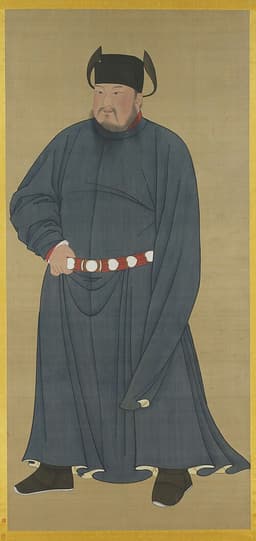
Li Cunxu
Emperor · Medieval
66.5Total
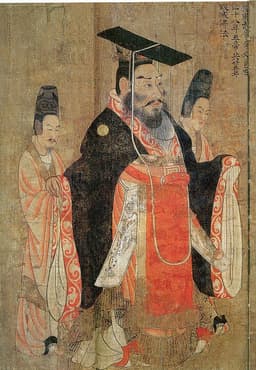
Yuwen Yong
Emperor · Medieval
67.2Total
Basic Information
Born
885
543
Died
926
578
Era
Medieval
Medieval
Nationality
China
China
Occupation
Emperor
Emperor
Civilization
Eastern
Eastern
Score Comparison
Military (10%)
76.0
78.0
Political (20%)
68.0
78.0
Influence (20%)
62.0
58.0
Legacy (20%)
58.0
54.0
Leadership (15%)
80.0
85.0
Strategy (15%)
67.2
69.1
TOTAL
66.5
67.2
Li Cunxu — Complete Timeline
908 AD
Succeeded as Prince of JinPolitical Action◆ Major
Li Cunxu inherited the title Prince of Jin from his father Li Keyong. He continued the struggle against Later Liang, consolidating the Jin state as a major power in northern China.
JinSuccessionFive Dynasties
Impact: regional
910 AD
Battle of BaixiangWar◆ Major
Li Cunxu's Jin army defeated the Later Liang forces under Zhu Wen at Baixiang. This victory established Jin as the dominant military power in the north and marked a turning point in the war.
JinLater LiangBattle
Impact: regionalconstructive
923 AD
Conquered Later LiangWar
Li Cunxu led a successful campaign against Later Liang, capturing its capital Kaifeng and ending the dynasty. He then proclaimed himself emperor, founding the Later Tang dynasty.
Later TangConquestDynastic Change
Impact: nationalconstructive
Founded Later Tang DynastyPolitical Action
Li Cunxu declared himself emperor of the Later Tang dynasty, claiming legitimacy as the restorer of the Tang lineage. He established his capital at Luoyang and reunified much of northern China.
Later TangDynasty FoundingReunification
Impact: nationalconstructive
926 AD
Killed in mutiny at XingyuanWar◆ Major
Li Cunxu faced a mutiny by his own troops at Xingyuan during a campaign against the Khitans. He was killed in the fighting, leading to the collapse of Later Tang and the rise of Later Jin.
Later TangMutinyDeath
Impact: nationaltragic
Yuwen Yong — Complete Timeline
574 AD
Suppression of Buddhism in Northern ZhouReform◆ Major
Emperor Wu of Northern Zhou (Yuwen Yong) ordered the suppression of Buddhism, confiscating monastic lands, forcing monks and nuns to return to lay life, and destroying temples. He aimed to increase state revenue and military manpower, strengthening the state.
Northern ZhouBuddhist PersecutionReform
Impact: nationaldestructive
577 AD
Conquest of Northern QiWar
Emperor Wu led a successful campaign against the rival Northern Qi dynasty, conquering its territory and unifying northern China under Northern Zhou. This victory ended the division of the north and set the stage for the Sui dynasty's unification of all China.
Northern ZhouUnificationNorthern Qi
Impact: regionalconstructive
578 AD
Death during campaign against the TurksWar◆ Major
Emperor Wu died of illness while leading a campaign against the G
Northern ZhouMilitary CampaignDeath
Impact: regionaltragic
Expert Analysis
Yuwen Yong vs Li Cunxu
# The Emperor Who Died Twice
In the spring of 926, the Emperor of the Later Tang dynasty, Li Cunxu, lay dying in the mud of Xingyuan, killed not by a foreign enemy but by his own mutinous troops. Less than three years earlier, he had stood triumphant in Kaifeng, having overthrown the Later Liang and proclaimed himself the restorer of the Tang imperial line. Just fifty years before, in 578, another northern emperor, Yuwen Yong of the Northern Zhou, had died in his tent while campaigning against the Göktürks—not at the hands of rebels, but from illness, at the height of his power. Both men unified northern China; both died young, in their forties; yet one left a dynasty that crumbled within a decade, while the other left a foundation that his son would use to conquer all of China. Why did two such similar trajectories diverge so dramatically?
Origins
Li Cunxu was born in 885 into a world of warlords. His father, Li Keyong, was a Shatuo Turk chieftain who had been granted the title Prince of Jin by the dying Tang dynasty, and who spent his life locked in a brutal feud with Zhu Wen, the founder of the Later Liang. Li Cunxu grew up in the saddle, learning war as a boy, inheriting not a stable kingdom but a blood feud and a precarious coalition of tribal allies. His legitimacy rested on his father's name and the fading memory of Tang.
Yuwen Yong, born in 543, came from a very different world. His family, the Yuwen clan, were Xianbei aristocrats who had seized power in the chaos of the Northern Wei collapse. His cousin Yuwen Hu had established the Northern Zhou dynasty and ruled as regent, a tyrant who murdered two emperors before Yuwen Yong himself took the throne. Where Li Cunxu inherited a war, Yuwen Yong inherited a prison—he spent his early years as a puppet emperor, watching his every word, waiting for his moment.
Rise to Power
Li Cunxu's path was a straight line of military glory. At twenty-three, he succeeded his father in 908 and immediately took the offensive. The Battle of Baixiang in 910 was his coming-out: he crushed the Later Liang army under the aging Zhu Wen, proving that the son was fiercer than the father. His rise was meteoric, fueled by personal courage and tactical brilliance. He was the kind of general who led cavalry charges himself, whose men would follow him into hell.
Yuwen Yong's rise was a study in patience and cunning. For twelve years, he endured the regency of Yuwen Hu, a man who had already killed two emperors. He played the fool, feigning weakness, never giving his cousin a reason to strike. Then, in 572, he struck—with his own bare hands, in the palace, killing Yuwen Hu in a single blow. It was not a battlefield victory but a surgical assassination, the work of a man who understood that power is not taken but seized at the right moment.
Leadership & Governance
As rulers, the two men could not have been more different. Li Cunxu was a conqueror, not an administrator. After founding the Later Tang in 923, he lavished rewards on his Shatuo tribesmen, alienated the Chinese bureaucrats, and neglected the tax base that sustained his wars. He trusted his eunuchs and actors more than his generals, a fatal mistake in a regime built on personal loyalty. His military score of 76.5 and strategy of 70.5 reflect a competent commander, but his political score of 62.0 reveals a man who could win battles but not peace.
Yuwen Yong, with a political score of 72.0 and a strategy score of 81.8, was a different breed. He understood that unification required more than swords. In 574, he ordered the suppression of Buddhism, confiscating monastic lands and forcing thousands of monks back into secular life. This was not religious persecution for its own sake—it was a brutal fiscal reform, breaking the economic power of the monasteries and funneling their wealth into the state treasury. He used that wealth to build a professional army, not a tribal horde, and to create a civil service that could administer a unified north.
Triumph & Tragedy
Li Cunxu's triumph was the conquest of Later Liang in 923, a campaign of breathtaking speed and audacity. He led his army across the Yellow River in winter, caught the enemy off guard, and stormed Kaifeng. For a moment, he was the master of northern China. But the triumph was hollow. He had no plan for what came next. Within three years, his own troops, unpaid and resentful, turned on him. His tragedy was not that he failed—it was that he succeeded, and then had no idea what to do with success.
Yuwen Yong's triumph came in 577, when he conquered the Northern Qi dynasty, unifying all of northern China under a single rule for the first time in decades. He was forty-four years old, at the peak of his power, with a loyal army, a full treasury, and a clear plan for expansion. His tragedy was that he died the next year, in 578, while campaigning against the Göktürks. But because he had built a stable state, his son Yuwen Yun inherited a solid foundation—and though that son was a disastrous ruler, the Northern Zhou state was strong enough that a usurper, Yang Jian, could seize it and found the Sui dynasty, which would finally reunite all of China.
Character & Destiny
Li Cunxu's character was his destiny. He was a warrior, brave and impulsive, who lived for the thrill of battle. He trusted his instincts, not his advisors. He rewarded loyalty but could not inspire it beyond the battlefield. When the mutiny came, it was because he had failed to understand that soldiers need pay, not just glory. He died as he lived—by the sword, in the mud, abandoned by the very men he had led to victory.
Yuwen Yong was cold, calculating, and disciplined. He endured twelve years of humiliation without flinching, then killed his cousin with his own hands. He suppressed a religion, broke the aristocracy, and built a state that could outlast him. He understood that the emperor's job is not to fight but to govern. His personality—patient, ruthless, strategic—allowed him to create something that would survive his own death.
Legacy
Li Cunxu is remembered as a brilliant general who could not rule. His Later Tang dynasty collapsed in chaos after his death, and he is now a footnote in the history of the Five Dynasties, a cautionary tale about the limits of military genius. His legacy score of 66.2 reflects a man who is studied but not admired, a flash in the pan.
Yuwen Yong's legacy is far greater. Though his own dynasty fell, the state he built became the foundation for the Sui and Tang dynasties, two of China's greatest imperial eras. His suppression of Buddhism, brutal as it was, broke the power of the monasteries and allowed the state to centralize. His conquest of Northern Qi set the stage for the unification of China. His legacy score of 68.6, while not dramatically higher, understates his true influence—because he is often overshadowed by the Sui and Tang emperors who came after him.
Conclusion
Standing at the crossroads of the sixth and tenth centuries, Yuwen Yong and Li Cunxu embody two faces of Chinese unification. Both were warriors who unified the north. Both died young. But one built a state, and the other built a reputation. The difference was not in their swords but in their minds. Yuwen Yong understood that an empire is not won in a single charge; it is built in the quiet years of reform, in the patient work of breaking old powers and creating new institutions. Li Cunxu understood only the charge. And so, when the dust settled, one emperor left a dynasty that would fade into legend, while the other left the seeds of an empire that would last for centuries. The saddest epitaph for Li Cunxu might be this: he died twice—once in the mud at Xingyuan, and again when history forgot him.
Rankings
🥇
Yuwen YongLeader
Mil: 78.0Pol: 78.0Inf: 58.0
67.2
🥈
Li Cunxu
Mil: 76.0Pol: 68.0Inf: 62.0
66.5
+0.7 behind
How This Comparison Works
Algorithm
Each figure is scored on 6 dimensions (0—100 scale) based on structured historical data: Military (10%), Political (20%), Influence (20%), Legacy (20%), Leadership (15%), Strategy (15%). The weighted total produces the final ranking.
Data Sources
Scores are computed from structured sub-indicators in the database. Scale factors adjust for era (Ancient ×0.85, Modern ×1.0) and civilization size (Eastern ×1.05, Other ×0.80) to account for differences in population and military scale.
Maximum 3 Figures
Comparisons are limited to 2—3 figures to ensure readability and statistical meaningfulness.
Error Margins
±5 points per dimension — Sub-scores are derived from historical records with inherent uncertainty. Two figures within 5 points on a dimension should be considered roughly equivalent in that area.
Total Score Accuracy
±3 points overall — The weighted combination of 6 dimensions produces a total score with approximately ±3 points of uncertainty. Differences of less than 3 points are not statistically significant— the figures are effectively tied.
Known Limitations
- Historical records are incomplete and uneven across civilizations
- Figures from oral-tradition societies may be underrepresented
- Occupation labels can misclassify multi-role figures
- Scores measure capability and impact, not moral character
- Quantitative scoring is a comparison tool, not absolute truth
Capability Radar
Military (10%) — Battles & Warfare
Battles
85
75
Win Rate
80
80
Expansion
75
80
Political (20%) — Governance & Reform
Reform
50
85
Diplomacy
60
70
Economy
45
75
Influence (20%) — Cultural & Global Reach
Cultural
55
40
Global
45
40
Legacy (20%) — Historical Impact
Historical
65
65
Longevity
50
50
Leadership (15%) — Power & Stability
Tenure
55
60
Stability
40
70
Strategy (15%) — Tactics & Innovation
Strategy
78
75
Tactics
82
70
Reform
60
85
Similar Comparisons
Comments & Discussion
BattleAxe586/16/2026
The real difference? Yuwen Yong built institutions, Li Cunxu built only himself. Northern Zhou had a civil-military balance under Yuwen Tai's fubing system—Yuwen Yong inherited a machine, not a personal following. Li Cunxu ruled through charisma and battlefield loyalty, which is why his own troops turned on him when the rewards dried up. You can't build an empire on personal magnetism alone; you need a bureaucracy that outlasts one man's lifetime.
铁血书虫6/16/2026
李存勖就是个打仗天才,治国白痴。你看他灭梁之后干了什么?宠信伶人,猜忌郭崇韬,把功臣一个个逼反。宇文邕灭佛整顿经济,李存勖呢?赏赐无度,国库空虚。同样统一北方,一个给儿子留了能打天下的基础,一个给后人留了一堆军阀。这不叫命运,这叫活该。
DataSkeptic426/16/2026
Everyone romanticizes these "unifiers" but let's look at the numbers. Northern Zhou's population: roughly 20 million after conquest of Northern Qi. Later Tang's population after Liang conquest? Maybe 10 million max, and that's being generous. Yuwen Yong controlled the Yellow River grain basin intact; Li Cunxu inherited a devastated economy where even tax registers were lost. You can't compare "unification" without accounting for the resource base—it's apples and armored war-elephants.
丝路讲史人6/16/2026
宇文邕的厉害在于他能克制自己。灭佛不是因为他恨佛教,而是他知道寺院占田太多影响税收。他自己生活简朴到什么程度?史载'身衣布袍,寝布被',这在北朝皇帝里罕见。李存勖相反,成功后沉迷戏剧,赏伶人动不动就封刺史。两个都是军事天才,但宇文邕知道皇帝的第一职责不是打仗,而是治理。
FourthDynasty6/16/2026
The real irony? Li Cunxu's "Tang restoration" was historically fraudulent. The Shatuo had no connection to the Li clan whatsoever—he just needed a legitimizing brand. Yuwen Yong at least had genuine Xianbei imperial lineage going back generations. So you have one emperor who conquered on borrowed legitimacy against another who built from authentic foundations. No wonder one dynasty lasted nine years and the other birthed the Sui unification. Authenticity matters in empire-building.