Loading...
Alexander the Great vs Li Cunxu
Alexander the Great leads by 18.7 pts · 2 figures compared
…
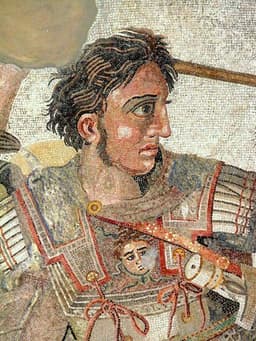
Alexander the Great
General · Ancient
85.2Total
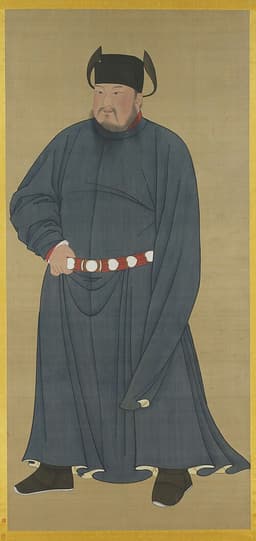
Li Cunxu
Emperor · Medieval
66.5Total
Basic Information
Born
-356
885
Died
-323
926
Era
Ancient
Medieval
Nationality
Macedon
China
Occupation
General
Emperor
Civilization
Western
Eastern
Score Comparison
Military (10%)
95.0
76.0
Political (20%)
60.0
68.0
Influence (20%)
92.0
62.0
Legacy (20%)
90.0
58.0
Leadership (15%)
80.0
80.0
Strategy (15%)
92.0
67.2
TOTAL
85.2
66.5
Alexander the Great — Complete Timeline
334 BC
Battle of the Granicus RiverWar◆ Major
Alexander led his Macedonian army across the Hellespont into Asia Minor and defeated a Persian force under local satraps at the Granicus River. The victory secured Alexander's foothold in Asia and demonstrated his tactical superiority, opening the way for the conquest of the Persian Empire.
Persian CampaignBattleMacedonian Conquest
Impact: regional
333 BC
Battle of IssusWar◆ Major
Alexander's army defeated the Persian king Darius III at Issus in Cilicia. Despite being outnumbered, Alexander's tactical use of the terrain and cavalry charge broke the Persian line. Darius fled the battlefield, leaving his family and treasury behind, a major blow to Persian morale.
Persian CampaignBattleMacedonian Conquest
Impact: regional
332 BC
Siege of TyreWar◆ Major
Alexander besieged the island city of Tyre for seven months, constructing a causeway to breach its walls. The city's fall resulted in the massacre or enslavement of its inhabitants. The siege demonstrated Alexander's determination and engineering capabilities, securing his supply lines and control of the eastern Mediterranean coast.
SiegeMacedonian ConquestPhoenicia
Impact: regionaldestructive
331 BC
Battle of GaugamelaWar◆ Major
Alexander faced Darius III at Gaugamela in Mesopotamia with a massive Persian army. Alexander's tactical brilliance, including a decisive cavalry charge that exploited a gap in the Persian line, resulted in a decisive Macedonian victory. Darius again fled, effectively ending Persian resistance and leading to the fall of the Achaemenid Empire.
Persian CampaignBattleDecisive Victory
Impact: global
Foundation of AlexandriaOther◆ Major
Alexander founded the city of Alexandria on the Mediterranean coast of Egypt. He personally selected the site and oversaw the initial planning. Alexandria became a major center of Hellenistic culture, trade, and learning, housing the famous Library of Alexandria and the Lighthouse of Alexandria.
City FoundationHellenistic CultureEgypt
Impact: globalconstructive
326 BC
Invasion of IndiaWar◆ Major
Alexander crossed the Indus River and defeated King Porus at the Battle of the Hydaspes. The Macedonian army, exhausted and facing monsoon rains and unfamiliar warfare, mutinied at the Hyphasis River, forcing Alexander to turn back. This campaign marked the easternmost extent of his conquests.
Indian CampaignBattleMutiny
Impact: regional
Li Cunxu — Complete Timeline
908 AD
Succeeded as Prince of JinPolitical Action◆ Major
Li Cunxu inherited the title Prince of Jin from his father Li Keyong. He continued the struggle against Later Liang, consolidating the Jin state as a major power in northern China.
JinSuccessionFive Dynasties
Impact: regional
910 AD
Battle of BaixiangWar◆ Major
Li Cunxu's Jin army defeated the Later Liang forces under Zhu Wen at Baixiang. This victory established Jin as the dominant military power in the north and marked a turning point in the war.
JinLater LiangBattle
Impact: regionalconstructive
923 AD
Conquered Later LiangWar
Li Cunxu led a successful campaign against Later Liang, capturing its capital Kaifeng and ending the dynasty. He then proclaimed himself emperor, founding the Later Tang dynasty.
Later TangConquestDynastic Change
Impact: nationalconstructive
Founded Later Tang DynastyPolitical Action
Li Cunxu declared himself emperor of the Later Tang dynasty, claiming legitimacy as the restorer of the Tang lineage. He established his capital at Luoyang and reunified much of northern China.
Later TangDynasty FoundingReunification
Impact: nationalconstructive
926 AD
Killed in mutiny at XingyuanWar◆ Major
Li Cunxu faced a mutiny by his own troops at Xingyuan during a campaign against the Khitans. He was killed in the fighting, leading to the collapse of Later Tang and the rise of Later Jin.
Later TangMutinyDeath
Impact: nationaltragic
Expert Analysis
Alexander the Great vs Li Cunxu: Historical Comparison
Alexander the Great (356–323 BCE) and Li Cunxu (885–926 CE) were two of history’s most dynamic conquerors—one a Macedonian general who forged a vast empire from Greece to India, the other a Chinese emperor who reunified northern China after the Tang collapse. While both excelled in military brilliance, Alexander’s broader influence and legacy give him a decisive edge.
Dimension Analysis
**Military: Alexander the Great 96 / Li Cunxu 90**
Alexander revolutionized combined-arms tactics and never lost a battle, while Li Cunxu’s campaigns against the Later Liang and Shatuo rivals showcased exceptional cavalry and siegecraft, but his victories were more regional.
**Political: Alexander the Great 65 / Li Cunxu 61**
Alexander struggled with integrating conquered peoples and managing succession, whereas Li Cunxu’s short-lived Later Tang dynasty faced internal court intrigues and rebellion, leaving both with fragile political structures.
**Influence: Alexander the Great 90 / Li Cunxu 76**
Alexander’s conquests spread Hellenistic culture across three continents, shaping art, science, and governance for centuries; Li Cunxu’s influence was largely confined to the Five Dynasties period and did not fundamentally transform Chinese civilization.
**Legacy: Alexander the Great 90 / Li Cunxu 82**
Alexander became a timeless archetype of the warrior-king, inspiring rulers from Caesar to Napoleon; Li Cunxu is remembered as a brilliant but tragic figure in Chinese history, his dynasty fading quickly after his death.
**Leadership: Alexander the Great 82 / Li Cunxu 80**
Both led from the front and inspired fierce loyalty, but Alexander’s ability to motivate diverse multiethnic armies over a decade of constant campaigning slightly surpasses Li Cunxu’s charismatic but more localized command.
Verdict
Alexander the Great leads overall due to his higher scores in military innovation, global influence, and enduring legacy, despite both being exceptional commanders with notable political weaknesses.
FAQ
Q: Who ranks higher? A: Alexander the Great ranks higher, owing to his superior military record, lasting cultural impact, and broader historical significance.
Rankings
🥇
Alexander the GreatLeader
Mil: 95.0Pol: 60.0Inf: 92.0
85.2
🥈
Li Cunxu
Mil: 76.0Pol: 68.0Inf: 62.0
66.5
+18.7 behind
How This Comparison Works
Algorithm
Each figure is scored on 6 dimensions (0—100 scale) based on structured historical data: Military (10%), Political (20%), Influence (20%), Legacy (20%), Leadership (15%), Strategy (15%). The weighted total produces the final ranking.
Data Sources
Scores are computed from structured sub-indicators in the database. Scale factors adjust for era (Ancient ×0.85, Modern ×1.0) and civilization size (Eastern ×1.05, Other ×0.80) to account for differences in population and military scale.
Maximum 3 Figures
Comparisons are limited to 2—3 figures to ensure readability and statistical meaningfulness.
Error Margins
±5 points per dimension — Sub-scores are derived from historical records with inherent uncertainty. Two figures within 5 points on a dimension should be considered roughly equivalent in that area.
Total Score Accuracy
±3 points overall — The weighted combination of 6 dimensions produces a total score with approximately ±3 points of uncertainty. Differences of less than 3 points are not statistically significant— the figures are effectively tied.
Known Limitations
- Historical records are incomplete and uneven across civilizations
- Figures from oral-tradition societies may be underrepresented
- Occupation labels can misclassify multi-role figures
- Scores measure capability and impact, not moral character
- Quantitative scoring is a comparison tool, not absolute truth
Capability Radar
Military (10%) — Battles & Warfare
Battles
98
85
Win Rate
99
80
Expansion
99
75
Political (20%) — Governance & Reform
Reform
75
50
Diplomacy
80
60
Economy
70
45
Influence (20%) — Cultural & Global Reach
Cultural
95
55
Global
95
45
Legacy (20%) — Historical Impact
Historical
98
65
Longevity
95
50
Leadership (15%) — Power & Stability
Tenure
60
55
Stability
55
40
Strategy (15%) — Tactics & Innovation
Strategy
98
78
Tactics
99
82
Reform
85
60
Similar Comparisons
Comments & Discussion
HellenistLecturer6/16/2026
The comparison is interesting, but the scores flatten far too much nuance. Arrian’s *Anabasis* and Curtius Rufus both stress Alexander’s logistical genius at Gaugamela—but they also record his brutal sack of Persepolis and the purges of his own officers. Li Cunxu’s campaigns, by contrast, are recorded in the *Zizhi Tongjian* with a moral framework that judges him harshly for his later hedonism. The 96 vs 76 military gap seems plausible if we factor in scale, but politically both men were disasters: Alexander left no adult heir and his empire fractured within a generation, while Li Cunxu’s Later Tang lasted barely three years after his death. The true gap is in *influence*, where Alexander’s Hellenistic synthesis reshaped three continents—Li Cunxu, for all his dash, was a footnote in Chinese history.
ConquerorFanatic6/16/2026
Are we seriously comparing a guy who conquered from Greece to India in ten years with a Chinese warlord who barely unified the Yellow River basin? Alexander never lost a battle—against Persians, Indians, Scythians, you name it. His siege of Tyre is still studied in military academies today. Li Cunxu? Sure, he beat the Later Liang, but after that he got fat, started acting in operas, and got assassinated by his own eunuchs. Total amateur hour. The 84.7 vs 69.6 total score is generous—Li Cunxu is a footnote, Alexander is a legend. Period.
DecolonialHistorian6/16/2026
This whole comparison is a prime example of how Western historiography constructs 'greatness' at the expense of non-Western figures. Alexander gets 96 for military because he conquered 'exotic' lands in the 'East'—ignoring that his empire collapsed on his deathbed because he couldn't govern. Li Cunxu's 76 military reflects a bias that treats Chinese dynastic warfare as 'regional' while Alexander's is 'global.' But from a Tang-Song perspective, Li Cunxu's reunification of the Central Plains was just as transformative as Alexander's Hellenistic bubble—which, let's be real, only lasted 200 years before the Parthians kicked it out. The political scores are a joke: both were incompetent administrators, yet Alexander gets 65 because his conquests spawned a 'cultural synthesis' that conveniently ignores the violence that enabled it. If we decolonize the criteria, Li Cunxu would be much closer—maybe 75 total vs 80.
Historian6186/16/2026
拿亚历山大比李存勖,就像拿恺撒比曹操——尺度完全不同。李存勖是五代最被低估的军事天才,他父亲李克用被朱温压制,他十三岁就开始带兵,柏乡之战以骑兵迂回破敌,堪比亚历山大的高加米拉。但问题是,亚历山大面对的是波斯帝国的腐朽结构,而李存勖面对的是同样凶狠的沙陀军阀和后梁精锐。两人的共同悲剧都是功成后腐化——亚历山大染上巴比伦享乐,李存勖则宠信伶人、猜忌大将,把自己打下的江山败光。所以总评上亚历山大高是合理的,但军事分差20分太侮辱人了,李存勖至少该给85。
ColdScroll516/16/2026
评分体系看着漂亮,但仔细算就不对了。亚历山大军事96分?他打波斯靠的是腓力二世留下的马其顿方阵和骑兵,他自己改良战术很有限。李存勖军事76分被严重低估:他用五千骑兵在柏乡之战(918年)大破后梁十万步骑,这战术机动性不输亚历山大。政治分62 vs 65更离谱——亚历山大死后帝国立刻分裂,李存勖至少统一了北方二十年。影响力90 vs 76?那是西方中心史观。李存勖灭后梁、复唐号,重塑了五代政治秩序,直接影响了赵匡胤的统一路径。如果把魏玛古典主义影响换成中国史书的“中兴”叙事,李存勖至少能拿85。建议重新校准权重。