Loading...
Li Cunxu vs Napoleon Bonaparte
Napoleon Bonaparte leads by 4.4 pts · 2 figures compared
…
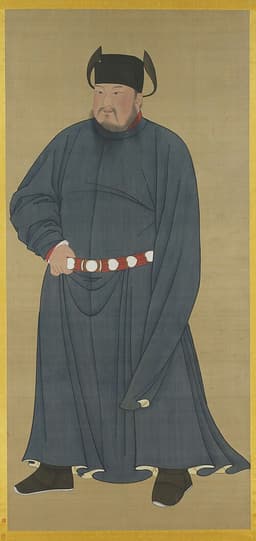
Li Cunxu
Emperor · Medieval
66.5Total

Napoleon Bonaparte
General · Modern
70.9Total
Basic Information
Born
885
1769
Died
926
1821
Era
Medieval
Modern
Nationality
China
France
Occupation
Emperor
General
Civilization
Eastern
Western
Score Comparison
Military (10%)
76.0
94.0
Political (20%)
68.0
72.0
Influence (20%)
62.0
40.0
Legacy (20%)
58.0
80.0
Leadership (15%)
80.0
78.0
Strategy (15%)
67.2
90.0
TOTAL
66.5
70.9
Li Cunxu — Complete Timeline
908 AD
Succeeded as Prince of JinPolitical Action◆ Major
Li Cunxu inherited the title Prince of Jin from his father Li Keyong. He continued the struggle against Later Liang, consolidating the Jin state as a major power in northern China.
JinSuccessionFive Dynasties
Impact: regional
910 AD
Battle of BaixiangWar◆ Major
Li Cunxu's Jin army defeated the Later Liang forces under Zhu Wen at Baixiang. This victory established Jin as the dominant military power in the north and marked a turning point in the war.
JinLater LiangBattle
Impact: regionalconstructive
923 AD
Conquered Later LiangWar
Li Cunxu led a successful campaign against Later Liang, capturing its capital Kaifeng and ending the dynasty. He then proclaimed himself emperor, founding the Later Tang dynasty.
Later TangConquestDynastic Change
Impact: nationalconstructive
Founded Later Tang DynastyPolitical Action
Li Cunxu declared himself emperor of the Later Tang dynasty, claiming legitimacy as the restorer of the Tang lineage. He established his capital at Luoyang and reunified much of northern China.
Later TangDynasty FoundingReunification
Impact: nationalconstructive
926 AD
Killed in mutiny at XingyuanWar◆ Major
Li Cunxu faced a mutiny by his own troops at Xingyuan during a campaign against the Khitans. He was killed in the fighting, leading to the collapse of Later Tang and the rise of Later Jin.
Later TangMutinyDeath
Impact: nationaltragic
Napoleon Bonaparte — Complete Timeline
1799 AD
Coup of 18 BrumaireOther◆ Major
Napoleon Bonaparte, with support from his brother Lucien and key political figures, overthrew the Directory in a bloodless coup. He established the Consulate with himself as First Consul, effectively becoming the ruler of France. This event ended the French Revolution's most unstable period.
French RevolutionCoupRise to Power
Impact: regional
1804 AD
Promulgation of the Napoleonic CodeOther◆ Major
Napoleon enacted the Civil Code of the French, known as the Napoleonic Code, a comprehensive set of laws that replaced the fragmented feudal legal systems. The code established legal equality, protected property rights, and secularized law. It became the basis for legal systems in many European and world countries.
Legal ReformNapoleonic CodeCivil Law
Impact: globalconstructive
1805 AD
Battle of AusterlitzWar◆ Major
Napoleon's Grande Arm
Napoleonic WarsBattleDecisive Victory
Impact: global
1812 AD
Invasion of RussiaWar◆ Major
Napoleon led the Grande Arm
Napoleonic WarsInvasionDisaster
Impact: globaldestructive
1815 AD
Battle of WaterlooWar◆ Major
Napoleon's French army was defeated by the combined forces of the Duke of Wellington's Anglo-Allied army and Gebhard Leberecht von Bl
Napoleonic WarsBattleFinal Defeat
Impact: globaldestructive
Expert Analysis
Napoleon Bonaparte vs Li Cunxu
# The Conqueror’s Mirror: Napoleon and Li Cunxu
In the spring of 1815, Napoleon Bonaparte stood on a balcony in Paris, watching his rejuvenated army march toward Waterloo. Twelve hundred years earlier and half a world away, Li Cunxu, the emperor of Later Tang, rode through the gates of Kaifeng, his soldiers hoisting the banners of a dynasty he had just destroyed. Both men had reached the apex of their power—one the master of Europe, the other the unifier of northern China. Yet within a decade, both would lie dead: Napoleon on a remote Atlantic island, Li Cunxu in a mutineer’s camp near Xingyuan. Their stories, separated by centuries and continents, echo with the same haunting question: Why do the greatest conquerors so often fall from their own heights?
Origins
Napoleon was born in 1769 on Corsica, an island that had only become French the year before. His family were minor nobility, but they were poor, and their Italian dialect marked them as outsiders in French society. At nine, he entered a military academy, where his classmates mocked his accent and his small stature. The French Revolution, erupting when he was twenty, shattered the old hierarchies and opened doors that had been locked for centuries. For a brilliant, ambitious young officer, it was the perfect storm.
Li Cunxu, born in 885, came from an entirely different world. His father, Li Keyong, was a Shatuo Turkic chieftain who had been granted the title Prince of Jin by the decaying Tang dynasty. The boy grew up on horseback, learning archery and swordplay before he could read. His people were warriors, and the collapse of Tang China into the chaos of the Five Dynasties and Ten Kingdoms meant that survival depended on steel, not status. Where Napoleon was a product of revolutionary upheaval, Li Cunxu was a product of dynastic collapse—both men forged in fire, but fire of different kinds.
Rise to Power
Napoleon’s ascent was meteoric. In 1793, at the age of twenty-four, he drove the British fleet from Toulon, earning promotion to brigadier general. Two years later, he saved the revolutionary government from a royalist uprising with a “whiff of grapeshot”—a ruthless artillery barrage that cleared the streets of Paris. By 1796, he was commanding the Army of Italy, and within eighteen months he had crushed the Austrians and carved out a personal empire of glory. His path was one of merit, luck, and an almost supernatural ability to seize the moment.
Li Cunxu’s rise was slower and more brutal. In 908, at age twenty-three, he inherited the title Prince of Jin after his father’s death. The Later Liang dynasty, founded by the usurper Zhu Wen, controlled the heart of China. Li Cunxu spent the next fifteen years fighting a grinding war of attrition. In 910, at the Battle of Baixiang, he crushed Zhu Wen’s army, establishing Jin as the dominant power in the north. But victory came at a cost: every campaign drained his treasury and tested his alliances. Unlike Napoleon, who could rely on a centralized state and a professional bureaucracy, Li Cunxu ruled through personal loyalty and tribal bonds—a fragile foundation for any empire.
Leadership & Governance
Napoleon’s genius was not just military but administrative. He imposed the Napoleonic Code across Europe, standardizing laws, abolishing feudalism, and creating a meritocratic system where talent could rise. He built roads, founded schools, and reformed tax collection. Yet his political wisdom was marred by arrogance. He crowned himself emperor in 1804, alienated the republicans who had supported him, and placed his brothers on thrones they could not hold. His military strategy was revolutionary—fast marches, massed artillery, and the destruction of enemy armies rather than the capture of cities. But he never understood that conquered peoples would not stay conquered.
Li Cunxu was a different kind of ruler. After conquering the Later Liang in 923 and declaring himself emperor of the Later Tang, he claimed legitimacy by restoring the Tang dynasty’s name—a shrewd political move that won him support from Confucian scholars and old Tang loyalists. But his governance was erratic. He trusted his eunuchs and actors more than his generals, and he alienated the very troops who had won his throne. His military strategy was sound but conservative: he relied on heavy cavalry and frontal assaults, lacking Napoleon’s tactical flexibility. Where Napoleon could adapt on the battlefield, Li Cunxu often fought the same way every time.
Triumph & Tragedy
Napoleon’s greatest moment came in 1805 at Austerlitz, where he lured the combined Russian and Austrian armies into a trap and destroyed them. It was a masterpiece of deception and timing, and it made him master of continental Europe. His greatest failure was the 1812 invasion of Russia—a colossal miscalculation that cost half a million men and shattered his aura of invincibility. Exiled to Elba in 1814, he escaped and returned for the Hundred Days, only to meet his final defeat at Waterloo in 1815. The tragedy was not that he fell, but that he could not stop.
Li Cunxu’s triumph came in 923, when he captured Kaifeng and ended the Later Liang. He had achieved what his father could not: unification of northern China. But his tragedy followed swiftly. In 926, while campaigning against the Khitans, his own troops mutinied at Xingyuan. They were exhausted, unpaid, and resentful of his favoritism toward actors and eunuchs. Li Cunxu tried to rally them, but he was struck down in the fighting. He died at forty-one, his dynasty crumbling around him.
Character & Destiny
Napoleon was driven by an insatiable hunger for glory. “I live only for posterity,” he once said, and he meant it. His decisions were calculated for maximum historical impact, but his ego blinded him to limits. He could not delegate, could not compromise, could not stop expanding. His destiny was to rise as high as ambition could take him—and then to fall, because there was no higher place to go.
Li Cunxu was driven by filial duty and personal honor. He inherited a war from his father and swore to avenge the humiliations of his clan. But he was also a man of the steppe, where loyalty was personal and betrayal was common. He trusted his inner circle too much, and his soldiers too little. His destiny was to win the war he had inherited, but to lose the peace he had never learned to build.
Legacy
Napoleon’s legacy is written across Europe. The Napoleonic Code still shapes civil law in dozens of countries. His military innovations are studied at every war college. He is remembered as a titan—flawed, yes, but undeniable. Li Cunxu’s legacy is more muted. The Later Tang dynasty he founded lasted only thirteen years. In Chinese history, he is a footnote, a brilliant general who could not govern. His story survives in the *Zizhi Tongjian* and the *Old History of the Five Dynasties*, but few outside China know his name.
Conclusion
Standing at the end of their stories, we see two men who conquered the world they knew, only to be destroyed by the worlds they could not control. Napoleon fell because he tried to conquer too much; Li Cunxu fell because he could not hold what he had taken. One was a revolutionary who became a tyrant; the other was a warrior who became a king. Both prove the same truth: power is not a destination, but a journey that ends only when the traveler stops moving. And for men like these, there is no stopping—only the long fall, and the silence after.
Rankings
🥇
Napoleon BonaparteLeader
Mil: 94.0Pol: 72.0Inf: 40.0
70.9
🥈
Li Cunxu
Mil: 76.0Pol: 68.0Inf: 62.0
66.5
+4.4 behind
How This Comparison Works
Algorithm
Each figure is scored on 6 dimensions (0—100 scale) based on structured historical data: Military (10%), Political (20%), Influence (20%), Legacy (20%), Leadership (15%), Strategy (15%). The weighted total produces the final ranking.
Data Sources
Scores are computed from structured sub-indicators in the database. Scale factors adjust for era (Ancient ×0.85, Modern ×1.0) and civilization size (Eastern ×1.05, Other ×0.80) to account for differences in population and military scale.
Maximum 3 Figures
Comparisons are limited to 2—3 figures to ensure readability and statistical meaningfulness.
Error Margins
±5 points per dimension — Sub-scores are derived from historical records with inherent uncertainty. Two figures within 5 points on a dimension should be considered roughly equivalent in that area.
Total Score Accuracy
±3 points overall — The weighted combination of 6 dimensions produces a total score with approximately ±3 points of uncertainty. Differences of less than 3 points are not statistically significant— the figures are effectively tied.
Known Limitations
- Historical records are incomplete and uneven across civilizations
- Figures from oral-tradition societies may be underrepresented
- Occupation labels can misclassify multi-role figures
- Scores measure capability and impact, not moral character
- Quantitative scoring is a comparison tool, not absolute truth
Capability Radar
Military (10%) — Battles & Warfare
Battles
85
95
Win Rate
80
90
Expansion
75
95
Political (20%) — Governance & Reform
Reform
50
95
Diplomacy
60
80
Economy
45
85
Influence (20%) — Cultural & Global Reach
Cultural
55
85
Global
45
90
Legacy (20%) — Historical Impact
Historical
65
95
Longevity
50
90
Leadership (15%) — Power & Stability
Tenure
55
85
Stability
40
70
Strategy (15%) — Tactics & Innovation
Strategy
78
95
Tactics
82
98
Reform
60
92
Similar Comparisons
Comments & Discussion
TACTICAL_TITAN6/16/2026
Napoleon's strategic brilliance can't overshadow Li Cunxu's sheer audacity. Li personally led cavalry charges into enemy formations—Napoleon watched from ridges with his telescope. At Waterloo, Bonaparte hesitated too long committing the Imperial Guard; Li took a crossbow bolt to the shoulder at the Battle of Baixiang and kept fighting. The Emperor of Later Tang earned every inch of his empire through frontline grit, not drawn-out maneuvers.
战史搬运工6/16/2026
拿破仑那套“炮兵洗地、步兵推进”的套路放在九世纪中国早被锤爆了。李存勖打朱温时,后梁军阵用拒马长枪当城墙使,你的炮弹能砸几个?人家直接派沙陀骑兵绕后切补给线,完事还跳个《兰陵王入阵曲》嘲讽你。历史不是游戏数值——李存勖的胜利来自对实时地形的直觉,不是巴黎军校的论文。
GLOBAL_GLITCH6/16/2026
The analogy's neat but misleading. Li Cunxu's collapse came from political rot, not military defeat—he killed his own general Guo Chongtao on suspicion, then lost the army's trust. Napoleon fell to a coalition of European powers after invading Russia. One imploded internally, the other was crushed externally. Different failure modes, different lessons. Don't conflate a court drama with a continental war.
北境观察家6/16/2026
李存勖最大的讽刺是:他灭后梁靠的是沙陀骑兵的机动性,称帝后却沉迷唱戏、学中原皇帝搞排场。拿破仑至少知道制宪法典能巩固统治,这位“战神天子”把官僚体系当提线木偶,赏罚看心情。历史反复打脸——能打的不如能管的,李存勖用十三年打下的江山,三年就因为拒绝搞军饷改革被自己人捅死了。
IRON_CLIO6/16/2026
Both were undone by their own archetypes. Napoleon embodied revolutionary meritocracy but corrupted it into dynastic nepotism, crowning his brothers kings. Li Cunxu personified steppe warrior-ethos yet tried to imitate Confucian ritual kingship. Each adopted a borrowed legitimacy system that clashed with their core strengths. They didn't just fail—they betrayed their own founding myths. And myths, once broken, don't reform armies or quiet mutineers.