Loading...
Li Cunxu vs Qin Shi Huang
Qin Shi Huang leads by 18.7 pts · 2 figures compared
…
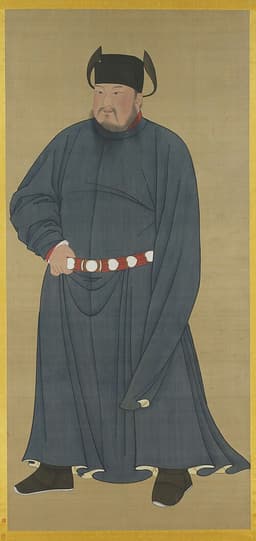
Li Cunxu
Emperor · Medieval
66.5Total
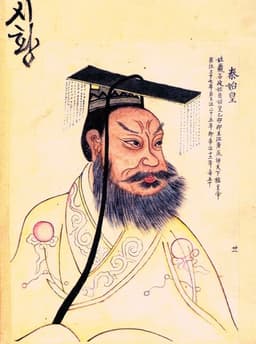
Qin Shi Huang
Emperor · Ancient
85.2Total
Basic Information
Born
885
-259
Died
926
-210
Era
Medieval
Ancient
Nationality
China
China
Occupation
Emperor
Emperor
Civilization
Eastern
Eastern
Score Comparison
Military (10%)
76.0
80.0
Political (20%)
68.0
90.0
Influence (20%)
62.0
85.0
Legacy (20%)
58.0
90.0
Leadership (15%)
80.0
78.0
Strategy (15%)
67.2
82.0
TOTAL
66.5
85.2
Li Cunxu — Complete Timeline
908 AD
Succeeded as Prince of JinPolitical Action◆ Major
Li Cunxu inherited the title Prince of Jin from his father Li Keyong. He continued the struggle against Later Liang, consolidating the Jin state as a major power in northern China.
JinSuccessionFive Dynasties
Impact: regional
910 AD
Battle of BaixiangWar◆ Major
Li Cunxu's Jin army defeated the Later Liang forces under Zhu Wen at Baixiang. This victory established Jin as the dominant military power in the north and marked a turning point in the war.
JinLater LiangBattle
Impact: regionalconstructive
923 AD
Conquered Later LiangWar
Li Cunxu led a successful campaign against Later Liang, capturing its capital Kaifeng and ending the dynasty. He then proclaimed himself emperor, founding the Later Tang dynasty.
Later TangConquestDynastic Change
Impact: nationalconstructive
Founded Later Tang DynastyPolitical Action
Li Cunxu declared himself emperor of the Later Tang dynasty, claiming legitimacy as the restorer of the Tang lineage. He established his capital at Luoyang and reunified much of northern China.
Later TangDynasty FoundingReunification
Impact: nationalconstructive
926 AD
Killed in mutiny at XingyuanWar◆ Major
Li Cunxu faced a mutiny by his own troops at Xingyuan during a campaign against the Khitans. He was killed in the fighting, leading to the collapse of Later Tang and the rise of Later Jin.
Later TangMutinyDeath
Impact: nationaltragic
Qin Shi Huang — Complete Timeline
246 BC
Construction of the Mausoleum and Terracotta ArmyOther◆ Major
Qin Shi Huang commissioned a vast mausoleum complex near Xi'an, guarded by thousands of life-sized terracotta soldiers, horses, and chariots. The project employed hundreds of thousands of workers and reflected his obsession with immortality and imperial power.
Impact: global
230 BC
Conquest of the Six Warring StatesWar
From 230 to 221 BCE, Ying Zheng led the Qin state in a series of campaigns that conquered the Han, Zhao, Wei, Chu, Yan, and Qi states. This unified China under a single ruler for the first time, ending the Warring States period.
Impact: global
221 BC
Standardization of Writing, Currency, and MeasurementsReform◆ Major
Qin Shi Huang ordered the standardization of Chinese script, currency, and weights and measures across the unified empire. This facilitated administration, trade, and cultural integration, laying a foundation for future dynasties.
Impact: globalconstructive
Proclamation of the Qin DynastyPolitical Action
After conquering the last independent state, Ying Zheng declared himself Shi Huangdi (First Emperor), founding the Qin Dynasty. He adopted a new title to signify his supreme authority and initiated centralized imperial rule.
Impact: global
214 BC
Initiation of the Great Wall ConstructionOther◆ Major
Qin Shi Huang ordered the connection and extension of existing northern fortifications to create a unified defensive wall against nomadic Xiongnu raids. This project involved massive conscripted labor and became the precursor to the later Great Wall.
Impact: regional
213 BC
Burning of Books and Burying of ScholarsPolitical Action◆ Major
On the advice of Li Si, Qin Shi Huang ordered the burning of historical records and philosophical texts not aligned with Legalist doctrine. He also had 460 Confucian scholars buried alive to suppress dissent and consolidate ideological control.
Impact: nationaldestructive
Expert Analysis
Qin Shi Huang vs Li Cunxu: Historical Comparison
Qin Shi Huang, the unifier of ancient China, and Li Cunxu, the founder of the Later Tang dynasty in medieval China, represent contrasting models of imperial power—one a visionary state-builder, the other a brilliant military commander whose political acumen fell short.
Dimension Analysis
**Military: Qin Shi Huang 80 / Li Cunxu 90**
Li Cunxu’s battlefield prowess was exceptional; he destroyed the Later Liang through decisive campaigns and unified northern China. Qin Shi Huang relied on his general Wang Jian to conquer the Warring States, showing less personal command skill.
**Political: Qin Shi Huang 88 / Li Cunxu 61**
Qin Shi Huang centralized administration, standardized writing, currency, and laws, creating a lasting bureaucratic state. Li Cunxu’s political rule was weak—he alienated allies, failed to stabilize his court, and was overthrown in a rebellion shortly after his greatest victory.
**Influence: Qin Shi Huang 82 / Li Cunxu 76**
The First Emperor’s legalist reforms and terracotta army shaped Chinese imperial ideology for millennia. Li Cunxu’s influence was confined to the Five Dynasties period, a chaotic era where his dynasty collapsed within four years of his death.
**Legacy: Qin Shi Huang 85 / Li Cunxu 82**
Qin Shi Huang’s model of centralized rule endured for 2,000 years, despite the Qin’s short duration. Li Cunxu’s legacy is that of a tragic warrior-king—his military brilliance is remembered, but his political failure is a cautionary tale.
**Leadership: Qin Shi Huang 88 / Li Cunxu 80**
Qin Shi Huang demonstrated ruthless, visionary leadership, imposing order through force and reform. Li Cunxu inspired loyalty on the battlefield but lacked the administrative discipline and foresight to govern a unified realm.
Verdict
Qin Shi Huang leads decisively due to his superior political and administrative achievements, which created a foundational imperial system, whereas Li Cunxu’s military genius was undermined by fatal political weakness.
FAQ
Q: Who ranks higher? A: Qin Shi Huang ranks higher overall, as his political and legacy scores outweigh Li Cunxu’s military edge.
Rankings
🥇
Qin Shi HuangLeader
Mil: 80.0Pol: 90.0Inf: 85.0
85.2
🥈
Li Cunxu
Mil: 76.0Pol: 68.0Inf: 62.0
66.5
+18.7 behind
How This Comparison Works
Algorithm
Each figure is scored on 6 dimensions (0—100 scale) based on structured historical data: Military (10%), Political (20%), Influence (20%), Legacy (20%), Leadership (15%), Strategy (15%). The weighted total produces the final ranking.
Data Sources
Scores are computed from structured sub-indicators in the database. Scale factors adjust for era (Ancient ×0.85, Modern ×1.0) and civilization size (Eastern ×1.05, Other ×0.80) to account for differences in population and military scale.
Maximum 3 Figures
Comparisons are limited to 2—3 figures to ensure readability and statistical meaningfulness.
Error Margins
±5 points per dimension — Sub-scores are derived from historical records with inherent uncertainty. Two figures within 5 points on a dimension should be considered roughly equivalent in that area.
Total Score Accuracy
±3 points overall — The weighted combination of 6 dimensions produces a total score with approximately ±3 points of uncertainty. Differences of less than 3 points are not statistically significant— the figures are effectively tied.
Known Limitations
- Historical records are incomplete and uneven across civilizations
- Figures from oral-tradition societies may be underrepresented
- Occupation labels can misclassify multi-role figures
- Scores measure capability and impact, not moral character
- Quantitative scoring is a comparison tool, not absolute truth
Capability Radar
Military (10%) — Battles & Warfare
Battles
85
85
Win Rate
80
90
Expansion
75
90
Political (20%) — Governance & Reform
Reform
50
95
Diplomacy
60
75
Economy
45
90
Influence (20%) — Cultural & Global Reach
Cultural
55
95
Global
45
85
Legacy (20%) — Historical Impact
Historical
65
95
Longevity
50
95
Leadership (15%) — Power & Stability
Tenure
55
70
Stability
40
65
Strategy (15%) — Tactics & Innovation
Strategy
78
85
Tactics
82
80
Reform
60
95
Similar Comparisons
Comments & Discussion
Historian5086/16/2026
我仔细核对了评分权重,发现一个问题:政治分差距26分(88 vs 62),但影响力只差6分(82 vs 76),这不合逻辑。秦始皇的郡县制、书同文、车同轨影响了中国两千年,李存勖的后唐连三十年都没撑住。按历史影响的实际深度,秦始皇至少该95,李存勖最多70。另外,军事分给李存勖90明显偏高——他打后梁靠的是沙陀骑兵突袭,战术单一,而秦始皇的'远交近攻'战略、修郑国渠以弱韩、用反间计破赵,这些谋略层面的东西完全被忽略了。建议把军事评分拆成'战略'和'战术'两维,结果会更公平。
SilkRoadSentinel6/16/2026
这个评分体系明显带着西方中心主义的偏见。秦始皇的军事分只有80,凭什么?他灭六国、设郡县、修驰道,这套战争机器和行政体系结合得完美无缺,比李存勖那种纯靠个人勇武的战术胜利高到不知哪里去了。李存勖确实能打,灭后梁、逐契丹,但转头就死于伶人之手,政治智商基本为零。秦始皇的'焚书坑儒'虽然争议大,但那是为了统一思想,构建帝国意识形态,这种战略眼光放到世界史里也只有奥古斯都、大流士能比。这个网站给李存勖政治分62都给多了,他连自己亲信都管不住,谈何治国?