Loading...
Charles de Gaulle vs Li Cunxu
Charles de Gaulle leads by 1.7 pts · 2 figures compared
…
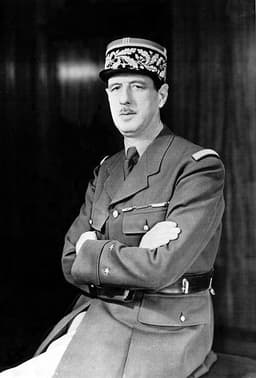
Charles de Gaulle
Politician · Modern
68.2Total
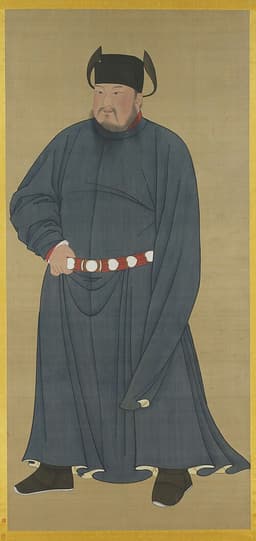
Li Cunxu
Emperor · Medieval
66.5Total
Basic Information
Born
1890
885
Died
1970
926
Era
Modern
Medieval
Nationality
France
China
Occupation
Politician
Emperor
Civilization
Western
Eastern
Score Comparison
Military (10%)
55.0
76.0
Political (20%)
75.0
68.0
Influence (20%)
65.0
62.0
Legacy (20%)
68.0
58.0
Leadership (15%)
78.0
80.0
Strategy (15%)
65.0
67.2
TOTAL
68.2
66.5
Charles de Gaulle — Complete Timeline
1940 AD
Appeal of 18 June 1940Political Action
From London, de Gaulle broadcast a radio appeal urging French resistance against Nazi occupation. He called on French soldiers and citizens to continue the fight, founding the Free French Forces and becoming the symbol of French defiance.
World War IIResistanceLeadership
Impact: nationalconstructive
1958 AD
Founding of the Fifth RepublicPolitical Action
De Gaulle returned to power during the Algerian crisis and oversaw the drafting of a new constitution. The Fifth Republic established a strong executive presidency, replacing the unstable parliamentary system of the Fourth Republic.
ConstitutionGovernment ReformPolitical System
Impact: nationalconstructive
1962 AD
End of the Algerian WarPolitical Action◆ Major
De Gaulle negotiated the
DecolonizationPeace TreatyAlgeria
Impact: regionalconstructive
1968 AD
May 1968 CrisisPolitical Action◆ Major
Mass student protests and general strikes paralyzed France, challenging de Gaulle's government. De Gaulle briefly fled to Germany, then returned to dissolve the National Assembly and call elections, which his party won, but his authority was weakened.
ProtestPolitical CrisisSocial Unrest
Impact: nationaldestructive
1969 AD
Resignation as PresidentPolitical Action
De Gaulle resigned after losing a referendum on regional reform and Senate restructuring. The defeat marked the end of his political career, as he withdrew from public life and died the following year.
ResignationPolitical DefeatReferendum
Impact: nationaltragic
Li Cunxu — Complete Timeline
908 AD
Succeeded as Prince of JinPolitical Action◆ Major
Li Cunxu inherited the title Prince of Jin from his father Li Keyong. He continued the struggle against Later Liang, consolidating the Jin state as a major power in northern China.
JinSuccessionFive Dynasties
Impact: regional
910 AD
Battle of BaixiangWar◆ Major
Li Cunxu's Jin army defeated the Later Liang forces under Zhu Wen at Baixiang. This victory established Jin as the dominant military power in the north and marked a turning point in the war.
JinLater LiangBattle
Impact: regionalconstructive
923 AD
Conquered Later LiangWar
Li Cunxu led a successful campaign against Later Liang, capturing its capital Kaifeng and ending the dynasty. He then proclaimed himself emperor, founding the Later Tang dynasty.
Later TangConquestDynastic Change
Impact: nationalconstructive
Founded Later Tang DynastyPolitical Action
Li Cunxu declared himself emperor of the Later Tang dynasty, claiming legitimacy as the restorer of the Tang lineage. He established his capital at Luoyang and reunified much of northern China.
Later TangDynasty FoundingReunification
Impact: nationalconstructive
926 AD
Killed in mutiny at XingyuanWar◆ Major
Li Cunxu faced a mutiny by his own troops at Xingyuan during a campaign against the Khitans. He was killed in the fighting, leading to the collapse of Later Tang and the rise of Later Jin.
Later TangMutinyDeath
Impact: nationaltragic
Expert Analysis
Charles de Gaulle vs Li Cunxu
# The General and the Emperor: Two Visions of Power
In the spring of 1969, Charles de Gaulle sat alone in his study at La Boisserie, the country home he had fled to a year earlier during the May Crisis that nearly toppled his government. He had just lost a referendum on regional reform—a minor issue, really, compared to the wars and revolutions he had weathered. Across the centuries and continents, in the autumn of 926, Li Cunxu, the founding emperor of the Later Tang dynasty, lay dead in the mud of Xingyuan, betrayed by his own soldiers during a campaign against the Khitans. Both men had risen from the ashes of collapse to forge new orders. Both ended their careers in defeat. But the paths they took—and the worlds they built—could not have been more different.
Origins
Charles de Gaulle was born in 1890 into a devoutly Catholic, nationalist family in Lille, northern France. His father taught philosophy and history, instilling in the young Charles a sense of France as a sacred, eternal entity. The humiliation of the Franco-Prussian War of 1870 hung over his childhood like a shadow. De Gaulle grew up believing that France’s greatness was not a luxury but a necessity—and that he was called to restore it.
Li Cunxu, born in 885, was the son of Li Keyong, a Shatuo Turkic chieftain who had been granted the title Prince of Jin by the dying Tang dynasty. His world was one of constant warfare, shifting alliances, and brutal betrayals. The Tang empire, once the glory of East Asia, was collapsing into the chaos of the Five Dynasties and Ten Kingdoms period. Li Cunxu learned to ride and fight before he learned to read. His father’s dying wish was that he destroy the Later Liang dynasty, the usurpers who had seized the imperial throne.
Rise to Power
De Gaulle’s rise was improbable. In 1940, as a little-known brigadier general, he fled to London after France’s surrender to Nazi Germany. On June 18, he broadcast a radio appeal—the famous Appeal of 18 June—calling on the French to resist. He had no army, no territory, no legitimacy. Yet he refused to accept defeat. Over the next four years, he transformed himself from a voice in the wilderness into the undisputed leader of Free France, outmaneuvering rivals like General Giraud and winning recognition from Churchill and Roosevelt—though never their full trust.
Li Cunxu’s rise was more direct. In 908, at age twenty-three, he inherited the title Prince of Jin from his father. He immediately proved himself on the battlefield. At the Battle of Baixiang in 910, his army crushed the Later Liang forces under the usurper Zhu Wen, establishing Jin as the dominant power in northern China. For thirteen years, he waged a relentless campaign, culminating in 923 when he captured the Later Liang capital of Kaifeng and declared himself emperor of the Later Tang dynasty, claiming legitimacy as the restorer of the Tang lineage.
Leadership & Governance
De Gaulle governed through vision and constitution. Returning to power in 1958 during the Algerian crisis—a moment when France teetered on the brink of civil war—he oversaw the drafting of the Fifth Republic’s constitution, concentrating power in the presidency while preserving democratic institutions. His military score of 65 reflects a general who was more a symbol than a strategist; his true genius was political, earning a 82 score. He understood that France needed institutions that could withstand the storms of modernity. He ended the Algerian War in 1962 through the Évian Accords, a decision that horrified his right-wing supporters but saved France from endless colonial bloodshed.
Li Cunxu ruled through conquest and charisma. His military score of 76.5 and strategy of 70.5 reflect a battlefield commander of exceptional skill. He personally led his troops into battle, sharing their hardships and dangers. But his political score of 62 reveals a fatal weakness: he never learned to govern what he conquered. Once emperor, he neglected administration, surrounded himself with actors and musicians, and alienated the very generals who had won him the throne. He failed to build institutions, relying instead on personal loyalty—a fragile foundation in a world of cutthroat ambition.
Triumph & Tragedy
De Gaulle’s greatest triumph was the restoration of French grandeur. He withdrew France from NATO’s integrated command, developed an independent nuclear deterrent, and vetoed Britain’s entry into the European Economic Community—all to assert France’s sovereignty. His greatest tragedy came in May 1968, when student protests and a general strike paralyzed France. De Gaulle, bewildered by the rebellion of a generation he could not understand, briefly fled to Germany to consult with French generals. He returned and called new elections, winning a landslide—but the magic was broken. He resigned in 1969 after losing a referendum on regional reform, a quiet end for a man who had once bestrode the world stage.
Li Cunxu’s triumph was the unification of northern China under the Later Tang, a feat that seemed impossible when he began. His tragedy was the speed of his fall. In 926, during a campaign against the Khitans, his own troops mutinied at Xingyuan. The soldiers, unpaid and disillusioned, turned on their emperor. Li Cunxu, the conqueror who had never lost a battle, was killed in the fighting—a victim of his own inability to build a lasting order.
Character & Destiny
De Gaulle was aloof, arrogant, and profoundly solitary. He once wrote, “The man of character is not afraid of loneliness.” His personality—cold, calculating, and deeply theatrical—shaped his destiny. He saw himself as a historical figure while still living, and he acted accordingly. This self-awareness allowed him to make painful decisions, like abandoning Algeria, that lesser men would have avoided. But it also blinded him to the grievances of ordinary French people in 1968, who saw not a savior but an aging monarch.
Li Cunxu was passionate, impulsive, and generous—but also mercurial and vengeful. He rewarded his followers lavishly, then turned on them without warning. He was a warrior emperor in the ancient mold, believing that victory in battle was enough to secure his throne. His character was his destiny: he could win a kingdom but could not keep one.
Legacy
De Gaulle’s legacy is the Fifth Republic, which endures to this day. He is remembered as the man who saved France’s honor in 1940, restored its power in 1958, and gave it a stable political system. His influence score of 65 and legacy of 75 reflect a figure who shaped not just France but the post-war world order. The term “Gaullism” still defines a strain of French politics: independent, sovereign, proud.
Li Cunxu’s legacy is more ambiguous. He is remembered as a brilliant general and a tragic emperor, one of the great “what-ifs” of Chinese history. His Later Tang dynasty collapsed within a decade of his death, plunging northern China back into chaos. His influence score of 74 and legacy of 66 reflect a figure admired for his martial prowess but pitied for his political failure. He is a cautionary tale: a conqueror who could not become a ruler.
Conclusion
Two men, separated by a thousand years and half a world, yet bound by a common fate. Both inherited ruins and built something new. Both fell from power through forces they could not control. But de Gaulle’s fall was a resignation, a quiet departure from a stage he had built himself. Li Cunxu’s fall was a bloody end in a muddy camp, betrayed by the soldiers he had led to victory. The difference lies not in their ambition—both were immense—but in their understanding of power. De Gaulle knew that power must be embodied in institutions, in constitutions, in a vision larger than any single leader. Li Cunxu believed that power was personal, that loyalty could be won by victory alone. One built a republic; the other built a grave. In the end, the general who wrote books outlasted the emperor who wielded swords.
Rankings
🥇
Charles de GaulleLeader
Mil: 55.0Pol: 75.0Inf: 65.0
68.2
🥈
Li Cunxu
Mil: 76.0Pol: 68.0Inf: 62.0
66.5
+1.7 behind
How This Comparison Works
Algorithm
Each figure is scored on 6 dimensions (0—100 scale) based on structured historical data: Military (10%), Political (20%), Influence (20%), Legacy (20%), Leadership (15%), Strategy (15%). The weighted total produces the final ranking.
Data Sources
Scores are computed from structured sub-indicators in the database. Scale factors adjust for era (Ancient ×0.85, Modern ×1.0) and civilization size (Eastern ×1.05, Other ×0.80) to account for differences in population and military scale.
Maximum 3 Figures
Comparisons are limited to 2—3 figures to ensure readability and statistical meaningfulness.
Error Margins
±5 points per dimension — Sub-scores are derived from historical records with inherent uncertainty. Two figures within 5 points on a dimension should be considered roughly equivalent in that area.
Total Score Accuracy
±3 points overall — The weighted combination of 6 dimensions produces a total score with approximately ±3 points of uncertainty. Differences of less than 3 points are not statistically significant— the figures are effectively tied.
Known Limitations
- Historical records are incomplete and uneven across civilizations
- Figures from oral-tradition societies may be underrepresented
- Occupation labels can misclassify multi-role figures
- Scores measure capability and impact, not moral character
- Quantitative scoring is a comparison tool, not absolute truth
Capability Radar
Military (10%) — Battles & Warfare
Battles
60
85
Win Rate
55
80
Expansion
20
75
Political (20%) — Governance & Reform
Reform
95
50
Diplomacy
90
60
Economy
70
45
Influence (20%) — Cultural & Global Reach
Cultural
70
55
Global
80
45
Legacy (20%) — Historical Impact
Historical
85
65
Longevity
75
50
Leadership (15%) — Power & Stability
Tenure
85
55
Stability
75
40
Strategy (15%) — Tactics & Innovation
Strategy
85
78
Tactics
70
82
Reform
80
60
Similar Comparisons
Comments & Discussion
LE GRAND OLD MAN6/16/2026
As a military historian, I see de Gaulle as the superior strategist. He rebuilt France from scratch after WWII, using his vision of a sovereign nation to defy both the US and USSR—a masterstroke of geopolitical balance. Li Cunxu won battles but couldn't secure peace; he alienated his generals, leading to mutiny in 926. De Gaulle outmaneuvered everyone: the Allies, the communists, even his own people, until the 1969 referendum. That's real power, not just sword-wielding.
铁血唐粉6/16/2026
李存勖才是最懂战争的人,他的军事霸业才叫真本事!灭后梁、平前蜀,他在二十年内统一了北方,而戴高乐只是个政治投机者。1968年五月风暴时,他跑到德国找军队撑腰,算什么统帅?李存勖死于部下背叛,不是能力问题,是时代残酷。戴高乐活到最后,靠的是运气和官僚手腕,不是军事天才。
THE BARNACLE GENERAL6/16/2026
Data skeptic here: both are overhyped. De Gaulle's "reborn France" was a myth—post-WWII economy was propped up by US Marshall Plan, not his leadership. Li Cunxu's conquests? He lost his entire empire within two years of death, suggesting his military strategy was brittle. Their "greatness" is narrative construction. Look at the numbers: de Gaulle's 1969 referendum was crushed 53% to 47%. Li's troops defected before he died. Empirically, both failed when it mattered most.
旧唐遗民6/16/2026
戴高乐是个虚伪的贵族,用民族主义掩饰精英傲慢。比如他1967年在魁北克喊“自由魁北克万岁”,煽动分裂只为自己镀金。李存勖不一样,他是打出来的真皇帝,从沙陀部落起家,继承父业,用玄武军和马步军一步步压服藩镇。戴高乐只会写回忆录美化自己,李存勖的沙场血战才是实在的。他死得惨,但那是忠义衰落的必然,不是他的错。
THE THRONE FORGER6/16/2026
As a political anthropologist, I see their key difference: de Gaulle built a constitution tailored to his ego—the Fifth Republic's strong presidency. That's institutional power that outlasted him. Li Cunxu lived by tribal loyalty, which died with him. De Gaulle "was" France; Li Cunxu "claimed" China's mandate. De Gaulle's legacy is the Élysée Palace; Li's is a muddied corpse. One created a system; the other was a system. That matters.