Loading...
Li Cunxu vs Tamar of Georgia
Tamar of Georgia leads by 5.0 pts · 2 figures compared
…
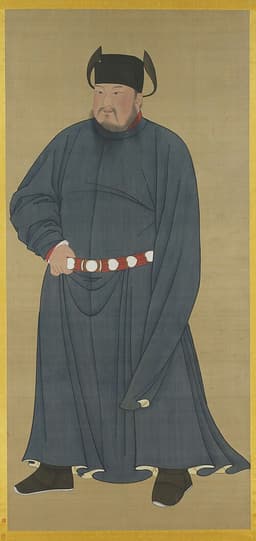
Li Cunxu
Emperor · Medieval
66.5Total
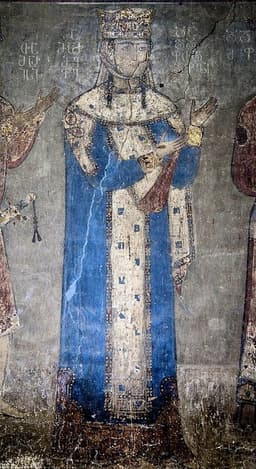
Tamar of Georgia
Emperor · Medieval
71.5Total
Basic Information
Born
885
1160
Died
926
1213
Era
Medieval
Medieval
Nationality
China
Georgia
Occupation
Emperor
Emperor
Civilization
Eastern
Western
Score Comparison
Military (10%)
76.0
78.0
Political (20%)
68.0
72.0
Influence (20%)
62.0
82.0
Legacy (20%)
58.0
55.0
Leadership (15%)
80.0
80.0
Strategy (15%)
67.2
66.3
TOTAL
66.5
71.5
Li Cunxu — Complete Timeline
908 AD
Succeeded as Prince of JinPolitical Action◆ Major
Li Cunxu inherited the title Prince of Jin from his father Li Keyong. He continued the struggle against Later Liang, consolidating the Jin state as a major power in northern China.
JinSuccessionFive Dynasties
Impact: regional
910 AD
Battle of BaixiangWar◆ Major
Li Cunxu's Jin army defeated the Later Liang forces under Zhu Wen at Baixiang. This victory established Jin as the dominant military power in the north and marked a turning point in the war.
JinLater LiangBattle
Impact: regionalconstructive
923 AD
Conquered Later LiangWar
Li Cunxu led a successful campaign against Later Liang, capturing its capital Kaifeng and ending the dynasty. He then proclaimed himself emperor, founding the Later Tang dynasty.
Later TangConquestDynastic Change
Impact: nationalconstructive
Founded Later Tang DynastyPolitical Action
Li Cunxu declared himself emperor of the Later Tang dynasty, claiming legitimacy as the restorer of the Tang lineage. He established his capital at Luoyang and reunified much of northern China.
Later TangDynasty FoundingReunification
Impact: nationalconstructive
926 AD
Killed in mutiny at XingyuanWar◆ Major
Li Cunxu faced a mutiny by his own troops at Xingyuan during a campaign against the Khitans. He was killed in the fighting, leading to the collapse of Later Tang and the rise of Later Jin.
Later TangMutinyDeath
Impact: nationaltragic
Tamar of Georgia — Complete Timeline
1184 AD
Coronation as Queen RegnantPolitical Action
Tamar was crowned as the first female ruler of Georgia after her father George III's death. Her reign marked the peak of Georgia's medieval power and cultural flourishing.
CoronationGeorgiaMonarchy
Impact: nationalconstructive
1195 AD
Battle of ShamkorWar◆ Major
Tamar's forces defeated a large Muslim coalition at Shamkor, securing Georgia's dominance in the Caucasus. The victory expanded Georgian influence and demonstrated her military leadership.
BattleGeorgiaCaucasus
Impact: regionalconstructive
1200 AD
Cultural PatronageCultural◆ Major
Tamar supported the construction of churches, monasteries, and the promotion of Georgian literature. Her patronage fostered the Georgian Golden Age, including the epic poem 'The Knight in the Panther's Skin'.
CulturePatronageGeorgia
Impact: nationalconstructive
Expert Analysis
Tamar of Georgia vs Li Cunxu
The Emperor and the Queen
History offers few spectacles more arresting than the contrast between two rulers who, though contemporaries in the broad sweep of the medieval world, never knew of each other’s existence. In 926, the Chinese emperor Li Cunxu died in a mutiny, cut down by his own soldiers in a muddy camp at Xingyuan. Across the continent, in the mountain kingdom of Georgia, Queen Tamar had been dead for thirteen years, her body laid to rest in a cathedral she had adorned, her realm still humming with the cultural energy she had unleashed. One man had shattered an empire only to be shattered by his own ambition; one woman had built a golden age that would echo for centuries. Why did their paths diverge so dramatically? The answer lies not merely in their circumstances, but in the deepest recesses of their character.
Origins
Li Cunxu was born in 885 into a world of war. His father, Li Keyong, was a Shatuo Turk chieftain who had been granted the title Prince of Jin by the dying Tang dynasty—a reward for loyalty in an age when loyalty was rare. The boy grew up in the saddle, learning to read the dust clouds of approaching cavalry before he could read a page of Confucian classics. His world was one of blood feuds, shifting alliances, and the constant threat of annihilation. When his father died in 908, the twenty-three-year-old Li Cunxu inherited not just a title but a vendetta: the struggle against the Later Liang, the dynasty that had usurped the Tang mandate.
Tamar was born in 1160 into a Georgia that was already rising. Her father, King George III, had crushed the nobility and centralized power, leaving his daughter a realm that was stable but fragile—a woman inheriting a throne in a patriarchal world. Unlike Li Cunxu, who had been forged in the furnace of military camp life, Tamar was educated in the palace, tutored in theology, philosophy, and the arts. She learned to read Greek and Arabic, to debate with monks and scholars, to wield words as weapons. Her inheritance was not a war but a balancing act: between the nobility who resented her gender and the clergy who questioned her legitimacy.
Rise to Power
Li Cunxu’s rise was a series of hammer blows. In 910, at the Battle of Baixiang, he defeated the Later Liang forces under the usurper Zhu Wen, a victory that established the Jin state as the dominant power in northern China. For thirteen years he fought, maneuvered, and waited. In 923, he launched a lightning campaign that captured the Later Liang capital of Kaifeng, ending the dynasty. That same year, he declared himself emperor of the Later Tang, claiming legitimacy as the restorer of the Tang lineage. It was a stunning achievement: he had taken a fractured inheritance and forged an empire.
Tamar’s rise was quieter but no less decisive. Crowned as queen regnant in 1184 after her father’s death, she faced immediate challenges. The nobility demanded she marry to provide a male figurehead; she chose Yuri Bogolyubsky, a Russian prince, only to divorce him after he proved tyrannical. Then she married David Soslan, a prince of Ossetia, and together they built a partnership that would define her reign. Where Li Cunxu conquered through violence, Tamar consolidated through patience, diplomacy, and the careful cultivation of loyalty.
Leadership & Governance
Li Cunxu was a military genius. His strategy score of 70.5, while not the highest among medieval commanders, reflects a man who understood the psychology of war. He knew when to strike, when to feint, when to retreat. But his political score of 62.0 tells a different story. As emperor, he proved unable to transition from warrior to administrator. He trusted his generals too much, his officials too little. He distributed lands and titles recklessly, alienating the very men who had helped him rise. His court became a nest of intrigue, and his soldiers—unpaid, exhausted, and suspicious—began to murmur.
Tamar governed differently. Her political score of 75.2 and leadership score of 82.5 suggest a ruler who understood that power is not just taken but maintained. She reformed the tax system, curbed the power of rebellious nobles, and built a network of loyal administrators. She was a patron of culture, funding churches, monasteries, and the great Georgian poet Shota Rustaveli, whose epic *The Knight in the Panther’s Skin* was written in her honor. Her military strategy score of 63.0 is lower than Li Cunxu’s, but she did not need to be a great strategist—she delegated to capable generals like David Soslan, who crushed a Muslim coalition at the Battle of Shamkor in 1195, securing Georgia’s dominance in the Caucasus.
Triumph & Tragedy
Li Cunxu’s greatest triumph was the conquest of the Later Liang—a moment of pure, intoxicating victory. But his tragedy came swiftly. In 926, while campaigning against the Khitans, his own troops mutinied at Xingyuan. The emperor who had united northern China died in the mud, killed by the very men he had led. His dynasty would collapse within a decade. The tragedy was not that he failed, but that he succeeded too brilliantly—and had no idea what to do next.
Tamar’s triumph was not a single battle but an era. Under her rule, Georgia reached its greatest territorial extent, its culture flourished, and its identity crystallized. Her tragedy was subtler: she outlived her husband, David Soslan, and spent her final years watching her successors struggle to maintain what she had built. Yet she died in 1213, probably of natural causes, still on her throne, still revered. The Golden Age continued for another generation before the Mongol invasions swept it away.
Character & Destiny
Li Cunxu was a man of fire—brilliant, impulsive, and ultimately self-destructive. He could not share power, could not delegate, could not trust. His personality was shaped by the battlefield, where decisions are instantaneous and consequences immediate. But an empire requires patience, compromise, and the willingness to be bored. He had none of these. As the historian Sima Guang later wrote, “He could conquer the world, but he could not hold it.”
Tamar was a woman of water—adaptable, patient, and persistent. She understood that power is not a hammer but a net. She could bend without breaking, wait without despairing. Her gender, which might have been a weakness, became a strength: the nobility underestimated her, the clergy doubted her, and she proved them all wrong. Her personality was shaped by the court, where decisions are layered and consequences delayed. She had the patience to build, not just to conquer.
Legacy
Li Cunxu is remembered today as a footnote—a brilliant failure, a man who could have been a great emperor but became a cautionary tale. His Later Tang dynasty is studied by historians but unknown to the general public. His total score of 69.6 reflects a life of high peaks and sudden falls. He is a ghost in the Chinese historical record, a reminder that military genius without political wisdom is like a sword without a hilt.
Tamar’s legacy is far greater. She is revered as the greatest monarch in Georgian history, a symbol of national identity and cultural achievement. Her score of 72.1, while only slightly higher, reflects a more enduring impact. Streets, universities, and even a ship bear her name. The Georgian Orthodox Church canonized her as a saint. Her reign is remembered not as a flash of brilliance but as a golden age that defined a nation.
Conclusion
What drove the different outcomes? The answer is not simply that Li Cunxu was a man and Tamar a woman, or that China was vast and Georgia small. It is that Li Cunxu saw power as something to be seized, while Tamar saw it as something to be cultivated. He conquered an empire; she built a kingdom. He died in a mutiny; she died in her bed. In the end, the difference between triumph and tragedy is not the height of the peak but the depth of the foundation. Li Cunxu built a tower on sand; Tamar built a house on rock. And the rains came, and the winds blew, and the house stood.
Rankings
🥇
Tamar of GeorgiaLeader
Mil: 78.0Pol: 72.0Inf: 82.0
71.5
🥈
Li Cunxu
Mil: 76.0Pol: 68.0Inf: 62.0
66.5
+5.0 behind
How This Comparison Works
Algorithm
Each figure is scored on 6 dimensions (0—100 scale) based on structured historical data: Military (10%), Political (20%), Influence (20%), Legacy (20%), Leadership (15%), Strategy (15%). The weighted total produces the final ranking.
Data Sources
Scores are computed from structured sub-indicators in the database. Scale factors adjust for era (Ancient ×0.85, Modern ×1.0) and civilization size (Eastern ×1.05, Other ×0.80) to account for differences in population and military scale.
Maximum 3 Figures
Comparisons are limited to 2—3 figures to ensure readability and statistical meaningfulness.
Error Margins
±5 points per dimension — Sub-scores are derived from historical records with inherent uncertainty. Two figures within 5 points on a dimension should be considered roughly equivalent in that area.
Total Score Accuracy
±3 points overall — The weighted combination of 6 dimensions produces a total score with approximately ±3 points of uncertainty. Differences of less than 3 points are not statistically significant— the figures are effectively tied.
Known Limitations
- Historical records are incomplete and uneven across civilizations
- Figures from oral-tradition societies may be underrepresented
- Occupation labels can misclassify multi-role figures
- Scores measure capability and impact, not moral character
- Quantitative scoring is a comparison tool, not absolute truth
Capability Radar
Military (10%) — Battles & Warfare
Battles
85
75
Win Rate
80
85
Expansion
75
75
Political (20%) — Governance & Reform
Reform
50
80
Diplomacy
60
75
Economy
45
85
Influence (20%) — Cultural & Global Reach
Cultural
55
80
Global
45
60
Legacy (20%) — Historical Impact
Historical
65
75
Longevity
50
70
Leadership (15%) — Power & Stability
Tenure
55
85
Stability
40
70
Strategy (15%) — Tactics & Innovation
Strategy
78
80
Tactics
82
70
Reform
60
65
Similar Comparisons
Comments & Discussion
SHATUO_SCORPION6/16/2026
Li Cunxu’s military brilliance is overrated. Sure, he broke the Later Liang, but he did it the same way all Shatuo warlords did—bribing defectors and exploiting enemy exhaustion. His real failure? Zero vision for governance. Tamar didn’t just conquer; she built institutions that outlived her. Li couldn’t even hold his own mutinous troops. Give me a queen who rebuilt a kingdom over a general who burned one down any day. His death at Xingyuan wasn’t a tragedy—it was incompetence catching up.
塔玛尔之盾6/16/2026
拿一个战场狂魔跟文明缔造者比?李存勖最烂的操作是灭梁后立刻腐化,迷上唱戏和太监,活脱脱一个后唐版‘死于安乐’。塔玛尔十三岁就开始跟贵族斗智斗勇,修教堂、办学校、推商业,哪怕死后几十年,格鲁吉亚黄金时代还在发光。而李存勖呢?926年兵变时,亲兵都懒得救他。给你选,你要一个能打但会毁国的主,还是要一个让国家繁荣百年的女主?
GOLDEN_AGE_REVISIONIST6/16/2026
Tamar’s “golden age” is a nationalist myth. Her reign coincided with the Crusades and Mongol rise—Georgia was a regional player, not an empire. She won battles, sure, but her real skill was propaganda: building churches and commissioning epics to whitewash her shaky claim as a woman on the throne. Li Cunxu actually destroyed a dynasty and unified the North under a new one. That’s real power. Tamar played the long con of cultural legacy because she couldn’t hold military expansion. Let’s stop rom
龙魂破阵6/16/2026
李存勖的悲剧在于他太像项羽了:个人勇武无敌,但战略眼光短得像马鞭。他打‘柏乡之战’时用骑兵冲垮梁军铁骑,确实帅,可这战术翻来覆去只会这一套。塔玛尔不一样,她在‘沙姆科尔战役’前就布局了外交联盟,赢了直接吞并亚美尼亚。你以为她靠祈祷?错了,她靠的是政治算计。一个莽夫和一个谋士的结局,还用比?
NOMAD_KHAN6/16/2026
Forget the moralizing. Both were warlords playing a brutal game. Tamar crushed the Shirvanshah and raided Persia; Li smashed the Later Liang and the Khitans before they got too strong. The difference? Li died because he couldn’t adapt to peacetime politics—he kept treating his generals like subordinates, not allies. Tamar mastered the art of reward and ritual, keeping her nobles