Loading...
Li Cunxu vs Taejo of Joseon
Taejo of Joseon leads by 3.9 pts · 2 figures compared
…
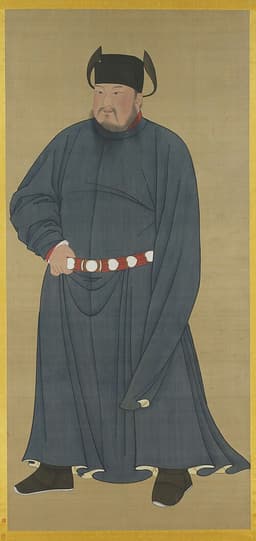
Li Cunxu
Emperor · Medieval
66.5Total
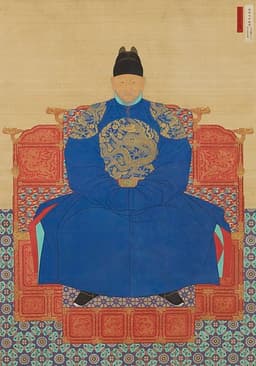
Taejo of Joseon
Emperor · Medieval
70.4Total
Basic Information
Born
885
1335
Died
926
1408
Era
Medieval
Medieval
Nationality
China
Korea
Occupation
Emperor
Emperor
Civilization
Eastern
Eastern
Score Comparison
Military (10%)
76.0
74.7
Political (20%)
68.0
65.0
Influence (20%)
62.0
65.0
Legacy (20%)
58.0
80.0
Leadership (15%)
80.0
72.0
Strategy (15%)
67.2
61.2
TOTAL
66.5
70.4
Li Cunxu — Complete Timeline
908 AD
Succeeded as Prince of JinPolitical Action◆ Major
Li Cunxu inherited the title Prince of Jin from his father Li Keyong. He continued the struggle against Later Liang, consolidating the Jin state as a major power in northern China.
JinSuccessionFive Dynasties
Impact: regional
910 AD
Battle of BaixiangWar◆ Major
Li Cunxu's Jin army defeated the Later Liang forces under Zhu Wen at Baixiang. This victory established Jin as the dominant military power in the north and marked a turning point in the war.
JinLater LiangBattle
Impact: regionalconstructive
923 AD
Conquered Later LiangWar
Li Cunxu led a successful campaign against Later Liang, capturing its capital Kaifeng and ending the dynasty. He then proclaimed himself emperor, founding the Later Tang dynasty.
Later TangConquestDynastic Change
Impact: nationalconstructive
Founded Later Tang DynastyPolitical Action
Li Cunxu declared himself emperor of the Later Tang dynasty, claiming legitimacy as the restorer of the Tang lineage. He established his capital at Luoyang and reunified much of northern China.
Later TangDynasty FoundingReunification
Impact: nationalconstructive
926 AD
Killed in mutiny at XingyuanWar◆ Major
Li Cunxu faced a mutiny by his own troops at Xingyuan during a campaign against the Khitans. He was killed in the fighting, leading to the collapse of Later Tang and the rise of Later Jin.
Later TangMutinyDeath
Impact: nationaltragic
Taejo of Joseon — Complete Timeline
1380 AD
Battle of HwangsanWar
General Yi Seong-gye defeated a Japanese pirate (wokou) force at Hwangsan. This victory enhanced his military reputation and demonstrated his capability as a commander.
WokouGoryeo Military
1388 AD
Wihwado RetreatPolitical Action
General Yi Seong-gye, ordered to invade the Ming dynasty's Liaodong region, turned his army back at Wihwado Island. This act of defiance against the Goryeo court led to a coup that eventually brought him to power.
CoupGoryeo-Ming RelationsPower Shift
Impact: national
1391 AD
Land Reform and the Gwajeon LawReform◆ Major
Taejo implemented the Gwajeon Law, a land reform that redistributed land from the old Goryeo aristocracy to his supporters and the state. This weakened the old elite and strengthened the new Joseon ruling class.
Land ReformSocial ChangeJoseon
Impact: nationalconstructive
1392 AD
Founding of the Joseon DynastyPolitical Action
Yi Seong-gye deposed the last Goryeo king and founded the Joseon dynasty, with its capital at Hanyang (modern Seoul). He established a new ruling class based on Confucian ideology, replacing the Buddhist-influenced Goryeo system.
Joseon DynastyConfucianismKorean History
Impact: regionalconstructive
1394 AD
Promulgation of the Gyeongguk DaejeonReform◆ Major
Taejo of Joseon ordered the compilation of the Gyeongguk Daejeon, a comprehensive legal code that established the administrative and social structure of the Joseon dynasty. This code remained in effect for centuries.
Legal CodeGovernanceConfucianism
Impact: nationalconstructive
Expert Analysis
Taejo of Joseon vs Li Cunxu
# The Founder’s Gamble
In the winter of 1388, a Korean general stood on the frozen banks of the Yalu River, his army poised to invade China. Yi Seong-gye looked north toward the Ming dynasty’s Liaodong region, then south toward the crumbling Goryeo court that had ordered the campaign. He made a decision that would echo through centuries: he turned his army around. Half a world away in time, another general, Li Cunxu, faced his own moment of truth in 923, when he led his cavalry across the Yellow River to storm the Later Liang capital of Kaifeng. Both men founded dynasties. One built a kingdom that lasted five hundred years. The other died in a mutiny within three. Why did their paths diverge so sharply?
Origins
Yi Seong-gye was born in 1335 into a military family serving the Goryeo dynasty, a kingdom already in its death throes. The Mongol Empire had once dominated Korea, and though its grip was loosening, the wounds of invasion and internal decay remained. Yi grew up in a frontier world where survival demanded both martial skill and political cunning. His father served as a minor official, but Yi distinguished himself early as a commander against Japanese pirates—the *wokou* who raided Korea’s coasts with terrifying regularity. His world was one of pragmatic choices, where loyalty to a failing state meant less than the survival of his people.
Li Cunxu, born in 885, emerged from the chaos of Tang China’s collapse. His father, Li Keyong, was a Shatuo Turkic chieftain who had been granted the title Prince of Jin by the dying Tang court. The boy inherited not a kingdom but a blood feud: the Later Liang dynasty, founded by the usurper Zhu Wen, had humiliated and fought his father for decades. Li Cunxu’s childhood was a forge of war. He learned to ride and shoot before he could read, and his identity was welded to revenge and restoration. Where Yi saw a state to reform, Li saw an enemy to destroy.
Rise to Power
Yi Seong-gye’s ascent was methodical, a ladder built from victories. At the Battle of Hwangsan in 1380, he crushed a Japanese pirate fleet with a cunning stratagem: he lured them into a narrow valley where his archers could decimate them. This victory made him a national hero, but it also made him a threat to the Goryeo court. The king and his faction, dominated by the old aristocracy, grew suspicious. Their order to invade Liaodong in 1388 was likely a trap—a way to eliminate a popular general by sending him against an unbeatable foe. Yi’s retreat at Wihwado Island was not cowardice but calculation. He knew the Ming dynasty was too strong, and he knew the Goryeo court was too corrupt. By turning back, he turned the army against the king.
Li Cunxu’s rise was more dramatic, a saga of pitched battles and personal courage. When his father died in 908, the fifteen-year-old Li inherited a precarious title and a war. He proved his mettle at the Battle of Baixiang in 910, where he outmaneuvered Zhu Wen’s larger army, feigning retreat before springing a trap. This victory established Jin as the dominant power in northern China. But Li’s path was always about conquest, not reform. He fought to destroy the Later Liang, not to build a new order. In 923, he achieved his goal: he captured Kaifeng, and Zhu Wen’s dynasty collapsed. Li declared himself emperor of the Later Tang, claiming to restore the Tang bloodline.
Leadership & Governance
Once crowned, Yi Seong-gye—now Taejo of Joseon—revealed himself as a builder. His first act was the Gwajeon Law of 1391, a radical land reform that seized estates from the old Goryeo aristocracy and redistributed them to his supporters and the peasantry. This was not mere generosity; it was statecraft. By breaking the economic power of the old elite, he created a new class of scholar-officials loyal to the throne. He moved the capital to Hanyang, modern Seoul, a site chosen for its geomantic harmony and defensibility. He then commissioned the *Gyeongguk Daejeon*, a comprehensive legal code that would govern Joseon for centuries. Taejo ruled not as a warlord but as a Confucian monarch, surrounding himself with advisors like Jeong Do-jeon, a scholar who argued that the king’s legitimacy came from virtue, not birth.
Li Cunxu governed as he fought: impulsively and personally. He divided his empire into military commands led by his generals, trusting them as he had trusted his cavalry. He neglected the bureaucracy, preferring to lead campaigns against the Khitans in the north. He also made a fatal error: he alienated his own troops. After conquering Later Liang, he disbanded many of his veteran soldiers without pay, believing they were no longer needed. He promoted favorites from his Shatuo tribe over Chinese officials, breeding resentment. His court became a place of intrigue and feasting, not administration. Where Taejo built institutions, Li built only a throne.
Triumph & Tragedy
Taejo’s greatest triumph was the founding itself. In 1392, when he deposed the last Goryeo king, he did so with the support of the scholar-officials and the military. He did not massacre the old dynasty; he pensioned them off. His tragedy was personal: his sons fought over succession, and he abdicated in 1398 after a bloody prince’s revolt. Yet even in failure, his dynasty endured.
Li Cunxu’s triumph was his conquest. In 923, he stood in Kaifeng as the master of northern China, the first to reunify the region since the Tang fell. His tragedy was swift and absolute. In 926, during a campaign against the Khitans, his own troops mutinied at Xingyuan. They had not been paid. They had not been fed. They had been forgotten. Li Cunxu died fighting in the chaos, cut down by his own men. His dynasty lasted only thirteen years.
Character & Destiny
Taejo was patient, pragmatic, and institutional. He understood that power was not won by battles alone but by the laws and loyalties that outlasted any general. He could retreat, as at Wihwado, because he saw the long game. Li Cunxu was a warrior-emperor in the old style: brave, charismatic, and reckless. He could win battles but not peace. His personality—proud, impulsive, and vengeful—drove him to conquer but also to neglect the boring work of governance. He trusted his sword more than his scribes.
Legacy
Taejo of Joseon is remembered as the father of a civilization. The Joseon dynasty lasted until 1910, its Confucian order shaping Korean identity, language, and law. His name is carved into Seoul’s palaces and Korea’s historical memory. Li Cunxu is a footnote, a brilliant meteor that burned out. His Later Tang is one of the Five Dynasties, a brief and bloody interlude in China’s long history. He is remembered, if at all, as a cautionary tale: a man who conquered an empire but could not govern it.
Conclusion
The difference between these two founders is not talent. Both were brilliant commanders. Both faced impossible odds. The difference is vision. Taejo saw that a dynasty required more than a sword—it required a system, a philosophy, and a bureaucracy. Li Cunxu saw only the next battle. In the end, the founder who built institutions outlived the founder who built only a legend. History’s judgment is as cold as the Yalu River in winter: it rewards not the conqueror, but the architect.
Rankings
🥇
Taejo of JoseonLeader
Mil: 74.7Pol: 65.0Inf: 65.0
70.4
🥈
Li Cunxu
Mil: 76.0Pol: 68.0Inf: 62.0
66.5
+3.9 behind
How This Comparison Works
Algorithm
Each figure is scored on 6 dimensions (0—100 scale) based on structured historical data: Military (10%), Political (20%), Influence (20%), Legacy (20%), Leadership (15%), Strategy (15%). The weighted total produces the final ranking.
Data Sources
Scores are computed from structured sub-indicators in the database. Scale factors adjust for era (Ancient ×0.85, Modern ×1.0) and civilization size (Eastern ×1.05, Other ×0.80) to account for differences in population and military scale.
Maximum 3 Figures
Comparisons are limited to 2—3 figures to ensure readability and statistical meaningfulness.
Error Margins
±5 points per dimension — Sub-scores are derived from historical records with inherent uncertainty. Two figures within 5 points on a dimension should be considered roughly equivalent in that area.
Total Score Accuracy
±3 points overall — The weighted combination of 6 dimensions produces a total score with approximately ±3 points of uncertainty. Differences of less than 3 points are not statistically significant— the figures are effectively tied.
Known Limitations
- Historical records are incomplete and uneven across civilizations
- Figures from oral-tradition societies may be underrepresented
- Occupation labels can misclassify multi-role figures
- Scores measure capability and impact, not moral character
- Quantitative scoring is a comparison tool, not absolute truth
Capability Radar
Military (10%) — Battles & Warfare
Battles
85
75
Win Rate
80
80
Expansion
75
65
Political (20%) — Governance & Reform
Reform
50
85
Diplomacy
60
70
Economy
45
65
Influence (20%) — Cultural & Global Reach
Cultural
55
80
Global
45
60
Legacy (20%) — Historical Impact
Historical
65
85
Longevity
50
80
Leadership (15%) — Power & Stability
Tenure
55
70
Stability
40
75
Strategy (15%) — Tactics & Innovation
Strategy
78
75
Tactics
82
70
Reform
60
60
Similar Comparisons
Comments & Discussion
戈壁孤狼6/16/2026
别被“王朝五百年”骗了——这根本是地理决定的伪命题。朝鲜半岛三面环海,就一个陆上强敌,Yi Seong-gye闭眼都能守住。Li Cunxu呢?他的后唐处在中原四战之地,周围全是虎狼军阀。你把Yi放在开封试试,看他能撑几年?历史学家总吹什么政治智慧,其实就是地图投胎的运气。要我说,Li Cunxu死在亲兵叛乱前就已经赢了,他才是真正的硬核赌徒。
Laurel and Spear6/16/2026
As a classicist, I see this as a moral tragedy dressed as military history. Li Cunxu’s fall wasn’t about bad strategy—it was about hubris. He defeated the Liang, then alienated his own Shatuo inner circle by favoring Chinese courtiers and opera performers. That’s straight out of a Greek play: the hero who conquers the world but forgets his own household. Yi Seong-gye, pragmatic and calm, learned from the Goryeo court’s corruption. He built institutions, not just armies. One founder read his peop
南柯太守6/16/2026
数据上看,Yi Seong-gye的朝鲜王朝在头50年里爆发了三次世子之乱,稳得那叫一个可笑。Li Cunxu呢?923年登基,926年暴毙,但他在位期间灭了梁、收服河北藩镇,扩张速度是Yi的十倍不止。你说谁更成功?稳定是苟出来的,武功是打出来的。后唐短命,但Li Cunxu那些沙陀骑兵改写了五代史的血统。别拿寿命当勋章。
Sword of the Steppe6/16/2026
Call me a revisionist, but both men were puppets of their time. Yi Seong-gye only turned back because the Ming envoys bribed his generals and a famine hit his supply lines—it wasn’t some heroic moral choice. Li Cunxu’s death at 41 was a drunkard’s accident, not a grand failure. The real founder’s gamble? Both were gambling with dice loaded by climate, inheritance, and sheer luck. The Korean academy whitewashes Yi
Chronicler41376/16/2026
The real story here isn’t about military genius—it’s about timing and restraint. Yi Seong-gye showed incredible strategic discipline by turning back at the Yalu in 1388, avoiding a disastrous campaign against the Ming that would’ve drained his forces. Li Cunxu, by contrast, won his gamble at Kaifeng in 923 but never consolidated. He trusted his Shatuo cavalry too much and ignored the political groundwork. One founder knew when to stop; the other didn’t. That’s the difference between five centuri