Loading...
Lech Walesa vs Sun Yat-sen
Sun Yat-sen leads by 0.1 pts · 2 figures compared
…

Lech Walesa
Revolutionary · Modern
52.4Total
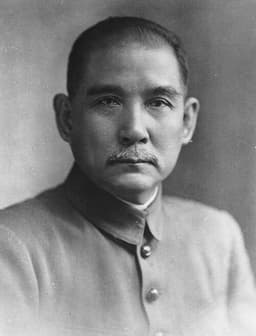
Sun Yat-sen
Revolutionary · Modern
52.5Total
Basic Information
Born
1943
1866
Died
—
1925
Era
Modern
Modern
Nationality
Poland
China
Occupation
Revolutionary
Revolutionary
Civilization
Western
Eastern
Score Comparison
Military (10%)
14.2
45.0
Political (20%)
72.0
68.0
Influence (20%)
62.0
61.0
Legacy (20%)
56.0
58.0
Leadership (15%)
48.8
33.5
Strategy (15%)
33.6
30.3
TOTAL
52.4
52.5
Lech Walesa — Complete Timeline
1980 AD
Founding of SolidarityPolitical Action
Walesa co-founded the Solidarity trade union in August 1980 after leading the Gda
SolidarityLabor Movement
Impact: globalprogressive
1981 AD
Martial Law and ImprisonmentPolitical Action◆ Major
Walesa was arrested and interned on December 13, 1981, when General Jaruzelski imposed martial law in Poland. He was held for 11 months, while Solidarity was banned and its leaders suppressed.
Martial LawRepression
Impact: nationaltragic
1983 AD
Nobel Peace PrizeCultural◆ Major
Walesa was awarded the Nobel Peace Prize on December 10, 1983, for his nonviolent struggle for workers' rights and democracy. He was unable to collect it in person due to travel restrictions.
Nobel PrizePeace
Impact: globalconstructive
1989 AD
Round Table TalksPolitical Action
Walesa led Solidarity in the Round Table Talks with the communist government from February to April 1989. The agreements led to partially free elections, which Solidarity won, ending communist rule in Poland.
TransitionDemocracy
Impact: globalconstructive
1990 AD
President of PolandPolitical Action◆ Major
Walesa was elected President of Poland on December 22, 1990, in the first direct presidential election. His presidency focused on economic reform and NATO integration, but was marked by political conflicts and declining popularity.
PresidencyDemocracy
Impact: national
Sun Yat-sen — Complete Timeline
1894 AD
Founded the Revive China SocietyPolitical Action◆ Major
Sun Yat-sen founded the Revive China Society (Xingzhonghui) in Honolulu, the first modern revolutionary organization among overseas Chinese. The society aimed to overthrow the Qing dynasty and establish a republic, marking the beginning of organized revolutionary activity.
RevolutionOverseas ChineseRepublic
Impact: nationalconstructive
1911 AD
Led the Xinhai RevolutionPolitical Action
Sun Yat-sen's revolutionary activities culminated in the Wuchang Uprising of October 1911, which sparked the Xinhai Revolution. The uprising spread across China, leading to the abdication of the Qing emperor in 1912 and the end of 2,000 years of imperial rule.
RevolutionQing DynastyRepublic
Impact: globalconstructive
1912 AD
Proclaimed the Republic of ChinaPolitical Action
On January 1, 1912, Sun Yat-sen was inaugurated as the provisional president of the Republic of China in Nanjing. He proclaimed the establishment of the first republic in Asia, based on his Three Principles of the People: nationalism, democracy, and livelihood.
RepublicPresidencyThree Principles
Impact: globalconstructive
Resigned Presidency in Favor of Yuan ShikaiPolitical Action◆ Major
To secure the abdication of the Qing emperor and avoid civil war, Sun Yat-sen resigned the provisional presidency in February 1912 in favor of Yuan Shikai. This decision, while pragmatic, allowed Yuan to consolidate power and later attempt to restore the monarchy.
Power TransferYuan ShikaiCompromise
Impact: national
1919 AD
Reorganized the KuomintangPolitical Action◆ Major
Sun Yat-sen reorganized the Chinese Revolutionary Party into the Kuomintang (KMT) in 1919, with a more centralized structure. He later accepted Soviet aid and CCP members into the party under the policy of 'alliance with Russia and the Communists,' reshaping the revolutionary movement.
KuomintangSoviet AllianceCCP
Impact: nationalconstructive
Expert Analysis
Sun Yat-sen vs Lech Walesa
### The Revolutionary’s Dilemma: Sun Yat-sen and Lech Wałęsa
In the winter of 1912, Sun Yat-sen stood in Nanjing’s provisional presidential palace, having just overthrown a dynasty that had ruled China for nearly three centuries. In the winter of 1990, Lech Wałęsa stood before the Polish parliament in Warsaw, having just been elected president after a decade of struggle against communist rule. Both men had toppled old orders, yet their paths diverged in ways that reveal the deepest chasms between revolution in the East and the West. Why did one father a nation that would soon fracture, while the other helped birth a democracy that endured?
### Origins
Sun Yat-sen was born in 1866, in a village in Guangdong province, the son of a poor farming family. He grew up under the waning Qing dynasty, a world of Confucian hierarchies, foreign humiliation, and simmering revolt. His education blended traditional Chinese classics with Western medicine in Hawaii and Hong Kong, a hybrid that made him an outsider in his own land. He was a man of ideas, not armies, and his vision was forged in the crucible of imperial decay.
Lech Wałęsa, born in 1943 in the Polish village of Popowo, grew up under Nazi occupation and then Soviet domination. His father died in a labor camp, and young Lech left school at fifteen to work as an electrician at the Gdańsk Shipyard. He was a man of the working class, not the elite, and his education was the shipyard floor—a place where grievances against the communist state festered into solidarity. Where Sun was shaped by philosophy, Wałęsa was shaped by the wrench and the strike.
### Rise to Power
Sun’s rise was slow, punctuated by exile and failure. In 1894, he founded the Revive China Society in Honolulu, the first modern revolutionary organization among Chinese overseas. For nearly two decades, he plotted from abroad, organizing uprisings that fizzled into bloodshed. It was not until the Wuchang Uprising of October 1911—sparked by a bomb accident and carried out by soldiers he barely knew—that the Xinhai Revolution caught fire. Sun, rushing back from Europe, was catapulted into the presidency of the new Republic of China on January 1, 1912. His rise was less a conquest than a convergence of timing and desperation.
Wałęsa’s rise was a thunderclap of collective action. In August 1980, after leading a strike at the Gdańsk Shipyard, he co-founded Solidarity, a trade union that swelled to ten million members—a quarter of Poland’s population. He was not a distant visionary but a man on the barricades, his mustache and electrician’s uniform symbols of defiance. When General Jaruzelski imposed martial law in December 1981, Wałęsa was arrested, but his imprisonment only burnished his legend. The Round Table Talks of 1989, which he led, were a negotiation from strength, not weakness. By 1990, he was president.
### Leadership & Governance
Sun Yat-sen’s leadership was that of a prophet, not a manager. His Three Principles of the People—nationalism, democracy, and livelihood—were a luminous blueprint, but he struggled to implement them. He resigned the presidency in February 1912 to Yuan Shikai, a warlord, hoping to preserve unity. It was a catastrophic miscalculation: Yuan soon declared himself emperor. Sun spent his remaining years reorganizing the Kuomintang (1919) and seeking foreign support, but he never held real power again. His military score of 45.4 reflects a man who commanded ideas, not armies.
Wałęsa’s leadership was pragmatic and confrontational. As Solidarity’s leader, he balanced the union’s radical workers with cautious intellectuals, using strikes and negotiations as twin levers. His presidency, however, was rocky: he clashed with parliament, and his political score of 72.0 masks a tenure marked by economic shock therapy and personal feuds. Yet he understood power’s mechanics—how to win elections, how to outmaneuver communists, how to keep the army at bay. His strategy score of 62.3 suggests a man who learned politics on the fly, but learned it well.
### Triumph & Tragedy
Sun’s greatest triumph was the Xinhai Revolution itself—the end of 2,000 years of imperial rule. His tragedy was that he could not hold the nation together. The Republic he proclaimed in 1912 dissolved into warlord chaos within years. He died in 1925, a revered but frustrated figure, his dream of a unified China unrealized. His legacy score of 72.2 captures this paradox: a father of a nation that would later be divided between two Chinas.
Wałęsa’s triumph was the collapse of communism in Poland, achieved largely nonviolently. His Nobel Peace Prize in 1983 was a global recognition of his method. His tragedy came later: as president, he became increasingly authoritarian and isolated, losing re-election in 1995. The electrician who had toppled a regime could not master the mundane art of governing. His legacy score of 66.4 reflects a man who was a hero of liberation but a flawed leader of freedom.
### Character & Destiny
Sun Yat-sen was a man of grand visions but weak execution. He was charismatic, idealistic, and stubbornly optimistic—qualities that inspired followers but also led him to trust Yuan Shikai. His character was shaped by exile: he was always an outsider, never fully in command. His destiny was to be a symbol, not a ruler.
Wałęsa was earthy, combative, and shrewd. He thrived on conflict and camaraderie, but his ego often alienated allies. His character was forged in the shipyard: he understood collective power but struggled with individual responsibility. His destiny was to be a catalyst for change, then to be overtaken by it.
### Legacy
Sun Yat-sen is revered as the “Father of the Nation” in both the People’s Republic of China and Taiwan, a rare consensus across a divided land. His Three Principles remain a touchstone for Chinese democracy movements. Yet his practical achievements were thin: he never commanded an army, never held stable power, and his revolution was completed by others.
Wałęsa is celebrated in Poland as a symbol of resistance, though his presidency is often critiqued. His greatest legacy is the peaceful transition from communism to democracy, a model that inspired Eastern Europe. But he is also a cautionary tale: the revolutionary who cannot become a statesman.
### Conclusion
Sun Yat-sen and Lech Wałęsa both toppled old worlds, but they represent two faces of revolution. Sun was a philosopher-king without a kingdom, a man who wrote the script but could not direct the play. Wałęsa was a worker who seized the stage, only to stumble in the final act. Their differences are not just personal but historical: Sun faced the collapse of a civilization, Wałęsa the decay of a system. One dreamed of a nation; the other built a movement. In the end, both remind us that revolutions are easier to start than to finish—and that the hardest victory is not against a tyrant, but against oneself.
Rankings
🥇
Sun Yat-senLeader
Mil: 45.0Pol: 68.0Inf: 61.0
52.5
🥈
Lech Walesa
Mil: 14.2Pol: 72.0Inf: 62.0
52.4
+0.1 behind
How This Comparison Works
Algorithm
Each figure is scored on 6 dimensions (0—100 scale) based on structured historical data: Military (10%), Political (20%), Influence (20%), Legacy (20%), Leadership (15%), Strategy (15%). The weighted total produces the final ranking.
Data Sources
Scores are computed from structured sub-indicators in the database. Scale factors adjust for era (Ancient ×0.85, Modern ×1.0) and civilization size (Eastern ×1.05, Other ×0.80) to account for differences in population and military scale.
Maximum 3 Figures
Comparisons are limited to 2—3 figures to ensure readability and statistical meaningfulness.
Error Margins
±5 points per dimension — Sub-scores are derived from historical records with inherent uncertainty. Two figures within 5 points on a dimension should be considered roughly equivalent in that area.
Total Score Accuracy
±3 points overall — The weighted combination of 6 dimensions produces a total score with approximately ±3 points of uncertainty. Differences of less than 3 points are not statistically significant— the figures are effectively tied.
Known Limitations
- Historical records are incomplete and uneven across civilizations
- Figures from oral-tradition societies may be underrepresented
- Occupation labels can misclassify multi-role figures
- Scores measure capability and impact, not moral character
- Quantitative scoring is a comparison tool, not absolute truth
Capability Radar
Military (10%) — Battles & Warfare
Battles
9
15
Win Rate
14
10
Expansion
17
5
Political (20%) — Governance & Reform
Reform
85
85
Diplomacy
80
60
Economy
55
20
Influence (20%) — Cultural & Global Reach
Cultural
70
70
Global
70
65
Legacy (20%) — Historical Impact
Historical
75
80
Longevity
65
75
Leadership (15%) — Power & Stability
Tenure
65
30
Stability
60
15
Strategy (15%) — Tactics & Innovation
Strategy
21
20
Tactics
24
10
Reform
27
40
Similar Comparisons
Comments & Discussion
ShipyardSkeptic6/16/2026
Walesa was a genuine working-class hero who toppled communism from the shop floor; Sun was a peripatetic intellectual who never held a real job. The Polish electrician won a Nobel Peace Prize and lived to see his nation thrive in the EU. Sun’s legacy? A chaotic republic that collapsed into warlordism within a decade. Give me the man who actually swung a wrench and faced down tanks in Gdańsk over the doctor who spent his life abroad raising funds from overseas Chinese. Practical grit beats abstra
南方老兵6/16/2026
孙中山和瓦文萨根本没法比。孙先生好歹推翻了清朝,瓦文萨不过是美帝扶植的棋子。波兰现在还在被欧盟经济殖民呢,中国至少是个大国。1930年代民国哪来的稳定?你告诉我!清帝退位后孙中山跑了东瀛,留下袁世凯这烂摊子。瓦文萨上台搞休克疗法,工人失业,波兰人现在怀念共产主义的多了去了。革命者得看结果,不是名气。