Loading...
Lech Walesa vs Shamil Basayev
Lech Walesa leads by 9.3 pts · 2 figures compared
…

Lech Walesa
Revolutionary · Modern
52.4Total
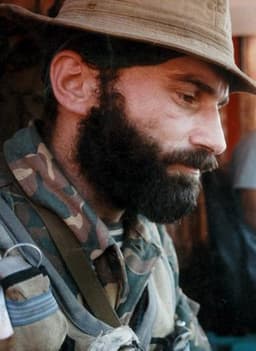
Shamil Basayev
Revolutionary · Modern
43.1Total
Basic Information
Born
1943
1965
Died
—
—
Era
Modern
Modern
Nationality
Poland
Chechnya
Occupation
Revolutionary
Revolutionary
Civilization
Western
Western
Score Comparison
Military (10%)
14.2
40.0
Political (20%)
72.0
35.0
Influence (20%)
62.0
45.5
Legacy (20%)
56.0
35.0
Leadership (15%)
48.8
57.1
Strategy (15%)
33.6
51.7
TOTAL
52.4
43.1
Lech Walesa — Complete Timeline
1980 AD
Founding of SolidarityPolitical Action
Walesa co-founded the Solidarity trade union in August 1980 after leading the Gda
SolidarityLabor Movement
Impact: globalprogressive
1981 AD
Martial Law and ImprisonmentPolitical Action◆ Major
Walesa was arrested and interned on December 13, 1981, when General Jaruzelski imposed martial law in Poland. He was held for 11 months, while Solidarity was banned and its leaders suppressed.
Martial LawRepression
Impact: nationaltragic
1983 AD
Nobel Peace PrizeCultural◆ Major
Walesa was awarded the Nobel Peace Prize on December 10, 1983, for his nonviolent struggle for workers' rights and democracy. He was unable to collect it in person due to travel restrictions.
Nobel PrizePeace
Impact: globalconstructive
1989 AD
Round Table TalksPolitical Action
Walesa led Solidarity in the Round Table Talks with the communist government from February to April 1989. The agreements led to partially free elections, which Solidarity won, ending communist rule in Poland.
TransitionDemocracy
Impact: globalconstructive
1990 AD
President of PolandPolitical Action◆ Major
Walesa was elected President of Poland on December 22, 1990, in the first direct presidential election. His presidency focused on economic reform and NATO integration, but was marked by political conflicts and declining popularity.
PresidencyDemocracy
Impact: national
Shamil Basayev — Complete Timeline
1995 AD
Budyonnovsk Hospital Hostage CrisisWar◆ Major
Basayev led a raid on the Russian town of Budyonnovsk, taking over 1,000 hostages in a hospital. The crisis ended with a negotiated settlement that allowed him to return to Chechnya. This attack demonstrated Chechen reach into Russia.
Hostage CrisisTerrorismChechnya
Impact: nationaldestructive
1999 AD
Invasion of DagestanWar
Basayev led Chechen and Islamist fighters into Dagestan to support local rebels. This invasion triggered the Second Chechen War as Russia responded with a full-scale military campaign. The invasion failed to gain local support.
DagestanChechnyaInvasion
Impact: regionaldestructive
2002 AD
Moscow Theater Hostage CrisisWar◆ Major
Basayev orchestrated the Moscow theater hostage crisis, where Chechen militants took 850 people hostage. Russian forces ended the siege with gas, killing 130 hostages. The attack increased international condemnation of Chechen rebels.
Hostage CrisisTerrorismMoscow
Impact: nationaldestructive
2004 AD
Beslan School SiegeWar◆ Major
Basayev planned the Beslan school siege, where militants took over 1,100 people hostage. The siege ended in a bloody assault, resulting in 334 deaths, mostly children. This attack was widely condemned globally.
Hostage CrisisTerrorismBeslan
Impact: globaltragic
2006 AD
Killed by Russian ExplosivesWar◆ Major
Basayev was killed in Ingushetia when a truck loaded with explosives detonated. Russian intelligence claimed responsibility. His death removed the most prominent Chechen rebel commander.
AssassinationChechnyaRussia
Impact: regional
Expert Analysis
Shamil Basayev vs Lech Walesa
# The Revolutionary’s Fork: Two Paths to Change
In the summer of 1980, a mustachioed electrician climbed over a shipyard fence in Gdańsk, Poland, and began speaking to striking workers. Fifteen years later and a thousand miles southeast, a bearded Chechen commander slipped across the Dagestan border with a band of Islamist fighters, igniting a war that would consume his homeland. Both men were revolutionaries. Both sought to overturn an existing order. But Lech Walesa would win a Nobel Peace Prize and become his nation’s president, while Shamil Basayev would die in a truck bomb, his name synonymous with terror. What made the difference? The answer lies not in the men alone, but in the soil from which they grew.
Origins
Lech Walesa was born in 1943 in the Polish village of Popowo, into a peasant family scarred by war. His father was taken to a Nazi concentration camp and died of injuries shortly after liberation. Young Walesa learned early that survival required both defiance and cunning. He left school at sixteen to work as an electrician in the Gdańsk Shipyard, a place where the clang of steel and the rhythm of labor forged a working-class identity as strong as the hulls they built. Poland in the 1970s was a communist satellite, but it was also a Catholic nation with a deep memory of independence—a memory that the Church, under the towering figure of Pope John Paul II, kept alive.
Shamil Basayev was born in 1965 in the Chechen village of Dyshne-Vedeno, into a people who had been deported en masse by Stalin in 1944—a trauma that burned into Chechen memory like a brand. His given name honored Imam Shamil, the 19th-century Chechen leader who had fought the Russian Empire for decades. Basayev grew up hearing stories of resistance, betrayal, and the longing for a homeland that was never quite secure. The Soviet Union was collapsing when he came of age, and Chechnya’s brief, chaotic independence in the early 1990s was crushed by Boris Yeltsin’s Russia in the First Chechen War. For Basayev, the enemy was not an ideology but an empire—and empires, he believed, only understood force.
Walesa’s Poland was a society with institutions—the Church, the intellectual underground, a memory of civil society—that could channel dissent. Basayev’s Chechnya was a society shattered by deportation and war, where the only structure that remained was the clan, the mosque, and the gun.
Rise to Power
Walesa rose not by seizing power but by organizing it. In August 1980, when the Gdańsk Shipyard workers struck over the firing of a colleague, Walesa climbed the fence and took command. He was not a theorist but a pragmatist, a man who could speak to workers in their own language. Within days, the strike had spread to twenty other cities. The communist government, stunned by the scale of the movement, signed the Gdańsk Agreement, legalizing the Solidarity trade union. Walesa became its leader. He was not a general commanding an army; he was a union boss negotiating across a table.
Basayev’s rise was forged in fire. In 1995, during the First Chechen War, he led a raid on the Russian town of Budyonnovsk, taking over a thousand hostages in a hospital. The crisis ended with the Russians negotiating—a humiliating concession that made Basayev a hero to Chechens and a demon to Moscow. He had no union, no legal framework, no international support. His power came from his willingness to go where Russian tanks could not—into the hearts of cities, into the terror of civilians. Where Walesa built a movement, Basayev built a legend.
Leadership & Governance
As president of Poland from 1990 to 1995, Walesa was often criticized as a poor administrator—brash, impulsive, suspicious of his own allies. He had led a revolution, but governing required compromise, patience, and the quiet work of building institutions. His greatest achievement was not any single policy but the peaceful transition from communism to democracy. He presided over the Round Table Talks of 1989 that allowed Solidarity to contest elections, and he accepted defeat when he lost the presidency in 1995. He was a democrat because he believed in democracy, not just in his own rule.
Basayev never governed. He fought. In 1999, his invasion of Dagestan triggered the Second Chechen War, a conflict that devastated Chechnya and turned it into a Russian fortress. After 2002, he shifted from fighting the Russian army to attacking civilians: the Moscow theater hostage crisis, where 850 people were taken and 130 died; the Beslan school siege of 2004, where over 1,100 hostages, mostly children, were held and more than 330 killed. These were not acts of war but of terror—designed to break the Russian will, but instead breaking any sympathy for the Chechen cause. Walesa’s strategy was to build legitimacy; Basayev’s was to destroy it.
Triumph & Tragedy
Walesa’s triumph was the Nobel Peace Prize in 1983, awarded while he was interned under martial law. It was a moment that told the world: this man represents something larger than himself. His tragedy was the slow erosion of his political influence, the loneliness of a revolutionary who outlived his revolution and found himself a figure of the past.
Basayev’s triumph was the Budyonnovsk raid, which forced Russia to negotiate. His tragedy was everything that followed: the Beslan school, where children died in a hail of Russian bullets and explosions; his own death in 2006, killed by a bomb planted by Russian intelligence. He died as he lived—violently, in the middle of a war he could not win.
Character & Destiny
Walesa was a man of the crowd, of the factory floor, of the negotiating table. He was stubborn but not fanatical, ambitious but not messianic. He believed that change came through the slow, patient work of organizing people and winning hearts. Basayev was a man of the mountain, of the ambush, of the martyr’s path. He was a believer in jihad, in the idea that violence could purify and redeem. Walesa’s faith was in the power of the people; Basayev’s was in the power of the bomb.
Their characters shaped their fates. Walesa’s pragmatism allowed him to accept half-loaves—the Round Table, the negotiated transition, the imperfect democracy. Basayev’s absolutism allowed no compromise. For him, the fight was holy, and holy fights do not end at the negotiating table.
Legacy
Walesa is remembered as a hero of freedom, a man who helped topple the Iron Curtain without firing a shot. His legacy is Poland’s democracy, its membership in NATO and the European Union, its place in the West. Basayev is remembered as a terrorist, a man who killed children in the name of a cause that never came close to succeeding. His legacy is Chechnya’s devastation, Russia’s authoritarian turn, and a warning about what happens when violence becomes an end in itself.
Conclusion
In the end, the difference between Walesa and Basayev is not a matter of courage or conviction. Both had those in abundance. It is a matter of context and choice. Walesa’s Poland had a civil society, a Church, a tradition of nonviolent resistance, and a Soviet Union that was too weak to crush it. Basayev’s Chechnya had a history of genocide, a culture of blood revenge, and a Russia that was too strong to defeat. Walesa chose the path of the union hall; Basayev chose the path of the suicide bomber. One built a nation; the other burned one. Their stories remind us that revolutionaries are shaped not just by their dreams, but by the nightmares they are trying to escape.
Rankings
🥇
Lech WalesaLeader
Mil: 14.2Pol: 72.0Inf: 62.0
52.4
🥈
Shamil Basayev
Mil: 40.0Pol: 35.0Inf: 45.5
43.1
+9.3 behind
How This Comparison Works
Algorithm
Each figure is scored on 6 dimensions (0—100 scale) based on structured historical data: Military (10%), Political (20%), Influence (20%), Legacy (20%), Leadership (15%), Strategy (15%). The weighted total produces the final ranking.
Data Sources
Scores are computed from structured sub-indicators in the database. Scale factors adjust for era (Ancient ×0.85, Modern ×1.0) and civilization size (Eastern ×1.05, Other ×0.80) to account for differences in population and military scale.
Maximum 3 Figures
Comparisons are limited to 2—3 figures to ensure readability and statistical meaningfulness.
Error Margins
±5 points per dimension — Sub-scores are derived from historical records with inherent uncertainty. Two figures within 5 points on a dimension should be considered roughly equivalent in that area.
Total Score Accuracy
±3 points overall — The weighted combination of 6 dimensions produces a total score with approximately ±3 points of uncertainty. Differences of less than 3 points are not statistically significant— the figures are effectively tied.
Known Limitations
- Historical records are incomplete and uneven across civilizations
- Figures from oral-tradition societies may be underrepresented
- Occupation labels can misclassify multi-role figures
- Scores measure capability and impact, not moral character
- Quantitative scoring is a comparison tool, not absolute truth
Capability Radar
Military (10%) — Battles & Warfare
Battles
9
45
Win Rate
14
40
Expansion
17
15
Political (20%) — Governance & Reform
Reform
85
5
Diplomacy
80
10
Economy
55
5
Influence (20%) — Cultural & Global Reach
Cultural
70
20
Global
70
20
Legacy (20%) — Historical Impact
Historical
75
25
Longevity
65
15
Leadership (15%) — Power & Stability
Tenure
65
10
Stability
60
5
Strategy (15%) — Tactics & Innovation
Strategy
21
35
Tactics
24
55
Reform
27
20
Similar Comparisons
Comments & Discussion
RedBannerReformer6/16/2026
The crucial difference isn't ideology but political soil. Walesa had Solidarity—a concrete, organized movement with 10 million members, the Catholic Church’s institutional backing, and explicit Western support. Basayev had scattered clan loyalties and foreign jihadist money. Movements, not men, determine outcomes. Walesa's success was pre-written by Poland's geopolitical position; Basayev's failure was sealed by Chechnya's isolation. The Nobel committee wasn't rewarding individual virtue—they we
钢铁历史学家6/16/2026
拿诺贝尔奖和炸卡车本质上都是政治博弈的终极手段,只是舞台不同。瓦文萨背后是西方想要打垮苏联的战略需求,而巴萨耶夫面对的是普京想重建俄罗斯帝国版图的决心。1980年波兰团结工会能得到西方媒体的一致赞美,2000年的车臣却被全面贴上恐怖标签——这不是道德差异,是冷战话语霸权与现实反恐战争的时代断层。一个人的自由战士是另一个人的恐怖分子,这句老话在这里无限适用。
DataSkeptic6/16/2026
Stop romanticizing. Walesa dismantled communism with strikes, negotiation, and Western media pressure. Basayev attacked Budyonnovsk hospital and Dubrovka theater—367 civilians dead combined. The "circumstances" argument only goes so far when one man's tactics include hostage-taking and the other's involve factory occupation. Poland had grievances; Chechnya had grievances. But grievance doesn't justify shooting a mother in front of her child. Call me when Basayev signed an agreement without 200 b
古典学信徒6/16/2026
历史的讽刺在于,瓦文萨和巴萨耶夫都象征着各自民族的集体记忆创伤。波兰人记得卡廷森林,车臣人记得1944年斯大林整族流放。两人都是民族伤口发言的喉咙,但瓦文萨学会了用教会钟声代替枪声。1789年法国大革命告诉我们,剑可以砍下旧制度的头,却无法建立新社会的根基。巴萨耶夫至死不明白,车臣需要的不是更多的烈士,而是能在国际法庭上清晰陈述民族苦难的律师。
RevisionistSharp6/16/2026
Let's be honest: both used violence. Walesa's Solidarity wasn't a pacifist picnic—there were street clashes, police deaths, and martial law resistance. The difference is that Walesa's violence was sanitized by Western media as "worker resistance" while Basayev's was framed as "terrorist savagery." Neither man was a saint; both were products of broken systems. The glorification of one and demonization of the other tells us more about power structures than about moral truth. History is written by