Loading...
Lech Walesa vs Li Zicheng
Lech Walesa leads by 8.9 pts · 2 figures compared
…

Lech Walesa
Revolutionary · Modern
52.4Total
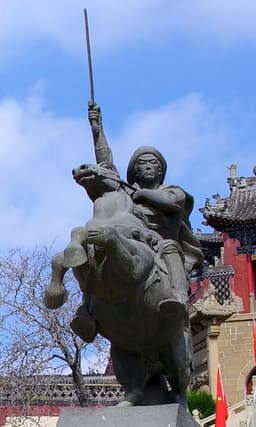
Li Zicheng
Revolutionary · Modern
43.5Total
Basic Information
Born
1943
1606
Died
—
1645
Era
Modern
Modern
Nationality
Poland
China
Occupation
Revolutionary
Revolutionary
Civilization
Western
Eastern
Score Comparison
Military (10%)
14.2
50.0
Political (20%)
72.0
27.9
Influence (20%)
62.0
52.5
Legacy (20%)
56.0
44.2
Leadership (15%)
48.8
39.0
Strategy (15%)
33.6
43.3
TOTAL
52.4
43.5
Lech Walesa — Complete Timeline
1980 AD
Founding of SolidarityPolitical Action
Walesa co-founded the Solidarity trade union in August 1980 after leading the Gda
SolidarityLabor Movement
Impact: globalprogressive
1981 AD
Martial Law and ImprisonmentPolitical Action◆ Major
Walesa was arrested and interned on December 13, 1981, when General Jaruzelski imposed martial law in Poland. He was held for 11 months, while Solidarity was banned and its leaders suppressed.
Martial LawRepression
Impact: nationaltragic
1983 AD
Nobel Peace PrizeCultural◆ Major
Walesa was awarded the Nobel Peace Prize on December 10, 1983, for his nonviolent struggle for workers' rights and democracy. He was unable to collect it in person due to travel restrictions.
Nobel PrizePeace
Impact: globalconstructive
1989 AD
Round Table TalksPolitical Action
Walesa led Solidarity in the Round Table Talks with the communist government from February to April 1989. The agreements led to partially free elections, which Solidarity won, ending communist rule in Poland.
TransitionDemocracy
Impact: globalconstructive
1990 AD
President of PolandPolitical Action◆ Major
Walesa was elected President of Poland on December 22, 1990, in the first direct presidential election. His presidency focused on economic reform and NATO integration, but was marked by political conflicts and declining popularity.
PresidencyDemocracy
Impact: national
Li Zicheng — Complete Timeline
1644 AD
Captured Beijing and Ended the Ming DynastyWar
Li Zicheng led his rebel army to capture Beijing. The Chongzhen Emperor committed suicide, ending the Ming dynasty. Li Zicheng proclaimed the Shun dynasty and briefly ruled from the Forbidden City before being defeated by Qing forces.
Ming-Qing TransitionRebellionBeijing
Impact: globaldestructive
Defeated at the Battle of Shanhai PassWar◆ Major
Li Zicheng's army was defeated by the combined forces of Wu Sangui and the Manchus at the Battle of Shanhai Pass. The defeat forced him to abandon Beijing and retreat westward, effectively ending his control over northern China.
Ming-Qing TransitionBattleDefeat
Impact: globaltragic
Proclaimed the Shun DynastyPolitical Action◆ Major
After capturing Beijing, Li Zicheng formally proclaimed the establishment of the Shun dynasty in Xi'an. He adopted the title of emperor and began implementing his own administrative policies, though his rule was short-lived.
Shun DynastyProclamationRebellion
Impact: nationalconstructive
1645 AD
Killed in Jiugong MountainWar◆ Major
Li Zicheng was killed by a local militia while fleeing through Jiugong Mountain in Hubei province. His death marked the end of the Shun dynasty and the collapse of his rebellion, though some accounts claim he survived and became a monk.
Shun DynastyDeathRebellion
Impact: nationaltragic
Expert Analysis
Li Zicheng vs Lech Walesa
# The Rebel and the Electrician
On a spring morning in 1644, Li Zicheng rode through the gates of Beijing as the last Ming emperor hanged himself on Coal Hill. The peasant boy who had lost everything to famine and corruption now ruled the greatest empire on earth. He held it for exactly forty-two days. Three and a half centuries later, in the gray winter of 1981, an electrician from Gdańsk named Lech Wałęsa was dragged from his apartment in the middle of the night and locked away in a government compound. Unlike Li Zicheng, he would emerge from confinement to become his nation's president, and die in his own bed. Both men rose from nothing to shake the foundations of their worlds. One built a dynasty that lasted weeks; the other built a movement that outlived an empire. Why?
Origins
Li Zicheng was born in 1606 into a world collapsing. The Ming dynasty was choking on corruption, the Little Ice Age had brought relentless drought, and famine stalked northern China like a specter. When locusts devoured his family's crops, Li's father died of starvation. By his twenties, Li had lost his wife, his land, and his job as a postal courier when the government eliminated the service to save money. He joined a rebel band not out of ideology but out of desperation—a man with nothing left to lose.
Lech Wałęsa was born in 1943 in a village called Popowo, into a Poland crushed between Nazi occupation and Soviet ambition. His father died of exhaustion in a labor camp. He grew up under communist rule, but the communism he knew was not the famine of Li Zicheng's China—it was gray, suffocating, and corrupt, but it fed its people. Wałęsa trained as an electrician, a practical trade in a practical age. Where Li was a creature of catastrophe, Wałęsa was a creature of the system itself, working within it until he could no longer bear its lies.
Rise to Power
Li Zicheng rose through violence. He was not a great military strategist—his score of 59.6 in strategy reflects a man who won through desperation and mass rather than brilliance. His army swelled with starving peasants who had no other choice. By 1644, he marched on Beijing with a force that seemed unstoppable, not because he had forged a disciplined army, but because the Ming state had rotted from within. His capture of the capital was a collapse as much as a conquest.
Wałęsa rose through organization. In August 1980, when he climbed over the fence of the Gdańsk Shipyard to lead striking workers, he carried no sword—only a list of demands. The founding of Solidarity was a turning point not because of violence but because of numbers: ten million Poles joined the union, a movement of workers, intellectuals, and priests. Wałęsa’s political score of 72.0 reflects a man who understood that in the modern age, power came not from seizing cities but from mobilizing people.
Leadership & Governance
Li Zicheng’s rule in Beijing was a disaster. He had no administrative experience, no political score above 40.3, and no plan beyond plunder. His soldiers looted the city, tortured officials for their gold, and alienated the very people who might have supported him. When the Ming general Wu Sangui refused to surrender, Li made a fatal miscalculation: he executed Wu’s family and sent a weak army to Shanhai Pass. The result was the Battle of Shanhai Pass in 1644, where Wu allied with the Manchus and crushed Li’s forces. Li had conquered an empire but could not govern a city.
Wałęsa governed through negotiation. His leadership score of 72.0 was built on a different skill: the ability to sit across a table from men who had imprisoned him and find common ground. The Round Table Talks of 1989 were a masterpiece of political patience. Wałęsa did not demand the immediate end of communism; he demanded free elections, and then won them. Where Li tried to destroy the old order overnight, Wałęsa dismantled it piece by piece, understanding that a revolution that cannot be negotiated cannot survive.
Triumph & Tragedy
Li Zicheng’s greatest moment was also his greatest failure. The capture of Beijing in 1644 was a triumph that lasted forty-two days. His defeat at Shanhai Pass sent him fleeing west, and in 1645, he was killed by a local militia in Jiugong Mountain—not by Manchu soldiers, but by peasants defending their village. The man who had led the hungry died at the hands of the hungry.
Wałęsa’s tragedy was more subtle. He won the Nobel Peace Prize in 1983 while still a prisoner. He became president of Poland in 1990, the first democratically elected leader in the Eastern Bloc. But his presidency was messy, marked by infighting and economic pain. He was voted out in 1995. His triumph was not personal power but the peaceful transition of power—something Li Zicheng never understood.
Character & Destiny
Li Zicheng was a man of his time: brutal, impulsive, and unable to trust. He executed allies and enemies alike, and his leadership score of 33.8 reflects a man who could inspire a mob but not command a nation. He was a revolutionary who could only destroy.
Wałęsa was a man of his time too: stubborn, charismatic, and deeply pragmatic. He wore a mustache that became a symbol, spoke in a thick working-class accent, and knew when to compromise. His leadership score of 72.0 came from an instinct for the possible. He was a revolutionary who could build.
Legacy
Li Zicheng is remembered as a cautionary tale—a rebel who toppled a dynasty but could not hold it. His influence score of 74.3 is high because he changed history, but his legacy score of 62.0 reflects the bitter truth: he opened the door for the Manchus, who ruled China for nearly three centuries. The Shun dynasty he proclaimed is a footnote, not an era.
Wałęsa is remembered as a hero. His influence score of 76.2 and legacy score of 66.4 place him among the great figures of the twentieth century. Solidarity survived martial law, outlasted the Soviet Union, and inspired movements across Eastern Europe. His face appears on stamps, his name in textbooks, and his voice in history.
Conclusion
The difference between Li Zicheng and Lech Wałęsa is not simply one of skill or luck. It is the difference between a world where power came from the barrel of a gun and a world where power came from the ballot box. Li Zicheng lived in an age of famine and empire, where the only way to change your fate was to seize it by force. Wałęsa lived in an age of industry and ideology, where the only way to change your fate was to organize, negotiate, and wait.
Both men were revolutionaries. One left a corpse in the mountains. The other left a democracy. The difference was not in their courage, but in their century.
Rankings
🥇
Lech WalesaLeader
Mil: 14.2Pol: 72.0Inf: 62.0
52.4
🥈
Li Zicheng
Mil: 50.0Pol: 27.9Inf: 52.5
43.5
+8.9 behind
How This Comparison Works
Algorithm
Each figure is scored on 6 dimensions (0—100 scale) based on structured historical data: Military (10%), Political (20%), Influence (20%), Legacy (20%), Leadership (15%), Strategy (15%). The weighted total produces the final ranking.
Data Sources
Scores are computed from structured sub-indicators in the database. Scale factors adjust for era (Ancient ×0.85, Modern ×1.0) and civilization size (Eastern ×1.05, Other ×0.80) to account for differences in population and military scale.
Maximum 3 Figures
Comparisons are limited to 2—3 figures to ensure readability and statistical meaningfulness.
Error Margins
±5 points per dimension — Sub-scores are derived from historical records with inherent uncertainty. Two figures within 5 points on a dimension should be considered roughly equivalent in that area.
Total Score Accuracy
±3 points overall — The weighted combination of 6 dimensions produces a total score with approximately ±3 points of uncertainty. Differences of less than 3 points are not statistically significant— the figures are effectively tied.
Known Limitations
- Historical records are incomplete and uneven across civilizations
- Figures from oral-tradition societies may be underrepresented
- Occupation labels can misclassify multi-role figures
- Scores measure capability and impact, not moral character
- Quantitative scoring is a comparison tool, not absolute truth
Capability Radar
Military (10%) — Battles & Warfare
Battles
9
55
Win Rate
14
60
Expansion
17
65
Political (20%) — Governance & Reform
Reform
85
15
Diplomacy
80
20
Economy
55
10
Influence (20%) — Cultural & Global Reach
Cultural
70
40
Global
70
35
Legacy (20%) — Historical Impact
Historical
75
55
Longevity
65
30
Leadership (15%) — Power & Stability
Tenure
65
20
Stability
60
5
Strategy (15%) — Tactics & Innovation
Strategy
21
55
Tactics
24
50
Reform
27
30
Similar Comparisons
Comments & Discussion
SOVEREIGN SCEPTIC6/16/2026
"Forty-two days vs. a Nobel Peace Prize? You can't compare a Chinese peasant rebel with a Solidarity leader without noting the context collapse. Li Zicheng never had a backing superpower's media machine, no Western unions bankrolling his pamphlets. Walesa rode Cold War tides; Li rode a horse into a capital already starving itself. Apples to oranges—unless your metric is 'who lasted longer.' And by that logic, Li lost to Qing mercenaries, not a unified free vote."
铁蹄与铁锤6/16/2026
"李自成和瓦文萨都是底层起义者,但一个靠杀,一个靠谈。李自成进北京后三天就开始拷打官员追赃助饷,瓦文萨学的是非暴力罢工。别说制度不同,就说手段——造反也要讲政治智慧。李自成如果学会谈判,也许能少牺牲几十万条命。"
NEVER A FENCE SITTER6/16/2026
"Both men started from nothing, but Li Zicheng's 'kingdom' was a brutal sack cycle: loot, kill, retreat. Walesa's movement was a sustained moral crusade that outlasted communism. Li never built a union, never had a plan past the throne. He counted on mandarins bending the knee; they didn't. Walesa counted on workers holding the line; they did. One failure was tactical, the other was character."
破格论者6/16/2026
"别天真了——李自成根本没想当皇帝?他只想抢够粮食回家种地。但历史逼他坐上龙椅,而瓦文萨早就准备好了当总统。成事的关键不是出身,是心里有没有蓝图。李被俘后死于微末,瓦被抓后还在写计划。赢家不是最狠的,是最能忍的。"
THE LONG VIEW6/16/2026
"Chemist turned timeline checker: Li Zicheng caused the Ming collapse within 42 days, yes, but that empire was rotting for decades—famine, corruption, plague. Walesa catalyzed Poland's shift, but the USSR was already bankrupting itself in Afghanistan. Both were accelerants, not primary causes. Stop romanticizing 'peasant vs. electrician'—it's 'two men who kicked crumbling doors down at the exact right moment.'"
折剑客6/16/2026
"李自成和瓦文萨最大的差别在哪?不是制度,不是时代,是知识。李自成的队伍靠‘均田免赋’这种口号起家,但入了北京连税册都看不懂,不懂管理等于自掘坟墓。瓦文萨身边有一群经济学家、律师、知识分子帮他转型。单枪匹马的英雄是神话,但集体智慧才是江山根基。"