Loading...
Lazare Carnot vs Mao Zedong
Mao Zedong leads by 11.2 pts · 2 figures compared
…
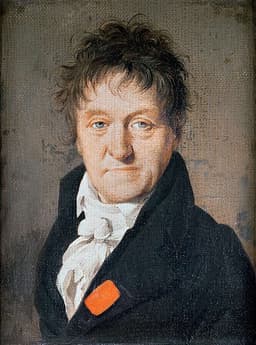
Lazare Carnot
Politician · Modern
68.2Total
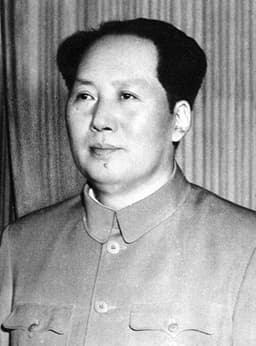
Mao Zedong
Politician · Modern
79.4Total
Basic Information
Born
1753
1893
Died
1823
1976
Era
Modern
Modern
Nationality
France
China
Occupation
Politician
Politician
Civilization
Western
Eastern
Score Comparison
Military (10%)
61.7
75.0
Political (20%)
72.0
88.0
Influence (20%)
68.0
85.0
Legacy (20%)
65.0
70.0
Leadership (15%)
72.0
85.0
Strategy (15%)
72.0
72.0
TOTAL
68.2
79.4
Lazare Carnot — Complete Timeline
1793 AD
Directed the Victory at the Battle of WattigniesWar◆ Major
Carnot personally directed French forces at the Battle of Wattignies, a key victory that relieved the siege of Maubeuge. His strategic planning helped turn the tide against the Austrian army.
French RevolutionBattleVictory
Impact: regionalconstructive
Organized the Levée en MasseReform◆ Major
Carnot helped implement the lev
French RevolutionConscriptionMilitary Reform
Impact: globalconstructive
Appointed to the Committee of Public SafetyPolitical Action◆ Major
Carnot was appointed to the Committee of Public Safety, where he took charge of military organization. He reorganized the French army, introduced mass conscription, and coordinated the war effort against foreign coalitions.
French RevolutionCommittee of Public SafetyMilitary
Impact: nationalconstructive
1815 AD
Exiled as a RegicidePolitical Action
After the Bourbon restoration, Carnot was exiled as a regicide for having voted for the execution of Louis XVI. He spent his remaining years in Germany and died in Magdeburg.
ExileRegicideBourbon
Impact: nationaltragic
Mao Zedong — Complete Timeline
1934 AD
Long MarchWar
Mao Zedong led the Chinese Red Army on a strategic retreat from Nationalist forces, covering approximately 6,000 miles over 370 days. The march solidified Mao's leadership within the Chinese Communist Party and became a foundational myth of the Communist revolution.
Chinese Civil WarCommunist RevolutionRetreat
Impact: national
1949 AD
Proclamation of the People's Republic of ChinaPolitical Action
Mao Zedong declared the founding of the People's Republic of China from Tiananmen Gate in Beijing. This ended the Chinese Civil War and established Communist rule over mainland China, with Mao as Chairman of the Central People's Government.
Founding of PRCCommunist VictoryRevolution
Impact: global
1958 AD
Great Leap ForwardReform◆ Major
Mao launched a campaign to rapidly industrialize China and collectivize agriculture. The policy led to widespread mismanagement, resulting in a famine that caused an estimated 15-45 million deaths between 1959 and 1961.
FamineIndustrializationCollectivization
Impact: nationaldestructive
1960 AD
Sino-Soviet SplitPolitical Action◆ Major
Mao's ideological differences with Soviet leader Nikita Khrushchev led to a breakdown in relations between China and the Soviet Union. The split ended the Sino-Soviet alliance and reshaped global Cold War dynamics, with China pursuing an independent path.
Cold WarIdeological ConflictAlliance Breakdown
Impact: global
1966 AD
Cultural RevolutionPolitical Action
Mao initiated a sociopolitical movement to purge capitalist and traditional elements from Chinese society. The Red Guard youth groups attacked intellectuals and officials, leading to widespread violence, destruction of cultural artifacts, and an estimated 1-2 million deaths.
Political PurgeSocial UpheavalRed Guard
Impact: nationaldestructive
1971 AD
Ping-Pong DiplomacyCultural◆ Major
Mao approved an invitation for the U.S. table tennis team to visit China, initiating a thaw in Sino-American relations. This cultural exchange paved the way for President Nixon's visit to China in 1972 and the eventual normalization of diplomatic ties.
DiplomacyU.S.-China RelationsCultural Exchange
Impact: globalconstructive
Expert Analysis
Mao Zedong vs Lazare Carnot
# The Organizer and the Visionary
In the winter of 1793, as French revolutionary armies faced collapse on multiple fronts, a quiet engineer named Lazare Carnot sat in a cramped Paris office, scribbling orders that would mobilize an entire nation. A century and a half later, on a muddy October night in 1934, Mao Zedong stood on a riverbank in southern China, watching his exhausted Red Army cross the Xiang River under enemy fire, knowing that survival meant everything. Both men faced existential crises for their revolutions. Both would reshape their nations. But the paths they took—and the worlds they left behind—could not have been more different.
Origins
Lazare Carnot was born in 1753 into a provincial legal family in Burgundy, France. The son of a notary, he trained as a military engineer at the prestigious École du Génie in Mézières, where mathematics and discipline shaped his mind. The Enlightenment was his classroom: he read Rousseau, studied fortifications, and believed in reason’s power to perfect society. When revolution came in 1789, Carnot was forty-six years old, a seasoned officer who saw the old order crumbling and chose the new.
Mao Zedong entered the world in 1893, the son of a prosperous peasant in Shaoshan, Hunan. His father beat him; his mother prayed for him. He escaped to a modern school, devoured books on Chinese history and Western philosophy, and watched his ancient empire collapse into warlord chaos. Where Carnot inherited a stable monarchy that shattered, Mao inherited a shattered civilization. The difference in their starting points—one a mature professional in a nation finding its footing, the other a young rebel in a nation losing its way—would echo through every decision they made.
Rise to Power
Carnot’s rise was bureaucratic and swift. In August 1793, with France besieged by foreign armies and royalist revolts, the Committee of Public Safety appointed him to oversee military organization. He was not a charismatic speaker or a political infighter; he was the man who could make armies appear. Within weeks, he had reorganized the chaotic supply lines, standardized training, and—most crucially—implemented the *levée en masse* in August 1793, conscripting hundreds of thousands of citizens into a people’s army. His victory at the Battle of Wattignies that October, where he personally directed artillery placements, proved that an engineer could command.
Mao’s rise was the opposite: a long, bloody climb through failure. He was a founding member of the Chinese Communist Party in 1921, but his early rural organizing was dismissed by Moscow-trained urbanites. The Long March, beginning in 1934, was not a rise but a retreat—a desperate 6,000-mile flight from Nationalist encirclement. Yet it was on that march that Mao seized control of the party at the Zunyi Conference, arguing that peasants, not proletarians, would make revolution in China. He did not inherit a committee; he forged a following out of starvation and survival.
Leadership & Governance
Carnot governed through systems. As the “Organizer of Victory,” he created the first modern military bureaucracy: divided France into military districts, established centralized arms production, and wrote manuals that turned farmers into soldiers. His political wisdom lay in delegation—he let generals fight while he supplied. Yet he was also a Jacobin who voted for Louis XVI’s execution, a decision that would haunt him. His reforms were rational, but they served a revolution that devoured its children.
Mao governed through vision and chaos. After proclaiming the People’s Republic in 1949, he launched the Great Leap Forward in 1958, a forced industrialization that collectivized agriculture and demanded backyard steel furnaces. Where Carnot counted muskets, Mao counted slogans. The result was famine: tens of millions died. Then came the Cultural Revolution in 1966, a purge of “capitalist roaders” that turned students into Red Guards and schools into battlegrounds. Mao’s military genius—guerrilla warfare, strategic retreat—won China, but his peacetime governance was a catastrophe of ideology over evidence.
Triumph & Tragedy
Carnot’s greatest moment was also his quietest: the victory at Fleurus in 1794, where his reorganized armies broke the Austrian coalition. France was saved. His tragedy came later: exiled in 1815 as a regicide, he spent his final years in Magdeburg, writing about fortifications and watching Napoleon’s empire crumble. He died forgotten by the nation he had saved.
Mao’s triumph was the Long March, a feat of endurance that became communist legend. His tragedy was the Great Leap Forward, a policy that killed more people than any war he fought. And yet, the same man who caused famine also opened China to the world: Ping-Pong Diplomacy in 1971, a table tennis match that thawed Sino-American relations. He was both destroyer and builder.
Character & Destiny
Carnot was methodical, cautious, and loyal to institutions. He believed in process—that a well-supplied army wins without genius. This made him indispensable but not immortal: when the revolution turned against its own, he had no cult to protect him. Mao was mercurial, ruthless, and contemptuous of bureaucracy. He believed in will—that a determined peasant could overcome a machine gun. This made him dangerous in peace: the same instincts that won wars destroyed economies.
Their characters reflected their eras. Carnot’s France was a nation of laws being invented; Mao’s China was a civilization of traditions being shattered. One built systems; the other broke them.
Legacy
Carnot’s legacy is invisible but foundational. Every modern military—conscription, logistics, staff organization—owes something to his 1793 reforms. His name lives in engineering schools and textbooks, not statues. Mao’s legacy is visible and contested. China’s economic rise rests on the unified state he created, but the scars of his policies remain. He is remembered as a god by some, a monster by others, a man who lifted China from humiliation and drowned it in blood.
Conclusion
Standing at their graves, one sees a strange symmetry. Carnot, the engineer who saved a revolution and was exiled by it. Mao, the poet who destroyed a revolution and was deified by it. Both believed they were serving history. History, in turn, served them differently: Carnot gave France an army; Mao gave China an idea. The first built a machine that won wars. The second built a myth that outlasted him. In the end, perhaps the question is not which was greater, but which is more fragile—a system of order, or a dream of fire.
Rankings
🥇
Mao ZedongLeader
Mil: 75.0Pol: 88.0Inf: 85.0
79.4
🥈
Lazare Carnot
Mil: 61.7Pol: 72.0Inf: 68.0
68.2
+11.2 behind
How This Comparison Works
Algorithm
Each figure is scored on 6 dimensions (0—100 scale) based on structured historical data: Military (10%), Political (20%), Influence (20%), Legacy (20%), Leadership (15%), Strategy (15%). The weighted total produces the final ranking.
Data Sources
Scores are computed from structured sub-indicators in the database. Scale factors adjust for era (Ancient ×0.85, Modern ×1.0) and civilization size (Eastern ×1.05, Other ×0.80) to account for differences in population and military scale.
Maximum 3 Figures
Comparisons are limited to 2—3 figures to ensure readability and statistical meaningfulness.
Error Margins
±5 points per dimension — Sub-scores are derived from historical records with inherent uncertainty. Two figures within 5 points on a dimension should be considered roughly equivalent in that area.
Total Score Accuracy
±3 points overall — The weighted combination of 6 dimensions produces a total score with approximately ±3 points of uncertainty. Differences of less than 3 points are not statistically significant— the figures are effectively tied.
Known Limitations
- Historical records are incomplete and uneven across civilizations
- Figures from oral-tradition societies may be underrepresented
- Occupation labels can misclassify multi-role figures
- Scores measure capability and impact, not moral character
- Quantitative scoring is a comparison tool, not absolute truth
Capability Radar
Military (10%) — Battles & Warfare
Battles
60
85
Win Rate
65
80
Expansion
80
85
Political (20%) — Governance & Reform
Reform
90
95
Diplomacy
60
80
Economy
75
70
Influence (20%) — Cultural & Global Reach
Cultural
60
90
Global
75
90
Legacy (20%) — Historical Impact
Historical
85
95
Longevity
70
85
Leadership (15%) — Power & Stability
Tenure
70
95
Stability
50
60
Strategy (15%) — Tactics & Innovation
Strategy
85
85
Tactics
70
75
Reform
95
90
Similar Comparisons
Comments & Discussion
湘江夜行者6/16/2026
作为一名军事史爱好者,我站毛。Carnot是个天才后勤官,但他在1793年维也纳联军压境时的“规模动员”本质上是依赖法国已有的人口基数与官僚体系。而毛在1934年湘江血战后,部队锐减至三万人,却能从绝境中重构军队政治灵魂——这不是工程学能解释的。Carnot赢了战役,毛塑造了战争的本体。没有Carnot,法国还有拿破仑;没有毛,中共可能就断在湘江了。
CarnotTheCalculator6/16/2026
Let’s not romanticize this. Carnot’s “victory” at Wattignies was a sloppy mess: he overrode his own general’s plan, nearly got the army encircled, and only won because the Austrians blundered. Meanwhile, Mao’s Long March is statistically overhyped—80% of his force died or deserted. That’s not “strategy,” that’s a humanitarian catastrophe with good propaganda. Both men survived by luck, not genius. And Carnot at least built enduring institutions (École Polytechnique); Mao built a cult.
青衫墨客6/16/2026
从古典史学视角看,两者本质差异在时间观。Carnot是启蒙之子,相信线性进步——他的《防御体系》论文试图用几何证明胜利。而毛是循环史观的践行者,他把《资治通鉴》里王朝更迭的逻辑嫁接到阶级斗争上。Carnot要“建立不朽”,毛要“打碎重来”。前者造了法兰西的骨干,后者翻了五千年棋盘。但讽刺的是,两人晚年都陷入同一悲剧:被自己创造的机器碾过。
RevolutionaryScalpel6/16/2026
Revisionist critique: Carnot and Mao are both overrated middle managers. Carnot’s “Organization of Victory” was a euphemism for Terror-era conscription—300,000 dead from starvation and disease in his “levée en masse.” Mao’s Yan’an years? See the 1942–44 rectification where he purged intellectuals to consolidate power. These aren’t visionaries; they’re control freaks who weaponized arithmetic. Want real revolutionary genius? Look at Toussaint Louverture, who freed 500,000 slaves without killing h
咸鱼翻身者6/16/2026
作为数据控,我注意到底层逻辑:Carnot用天赋平等假设推动全民动员(“每个公民都是士兵”),毛则靠“阶级筛选”分配牺牲(无产阶级优先送死)。前者留下《战争论》前的高效数学思维,后者用《矛盾论》把苦难哲学化。两人都擅长把组织暴力公式化,但Carnot的“胜利”花了十五年就垮台为波旁复辟,毛的框架