Loading...
Lan Kham Deng vs Louis IX of France
Louis IX of France leads by 17.3 pts · 2 figures compared
…

Lan Kham Deng
Emperor · Medieval
46.0Total
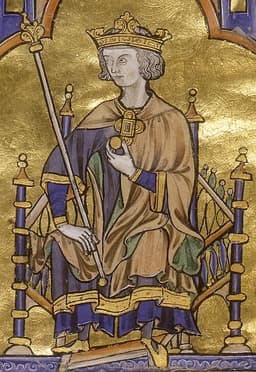
Louis IX of France
Emperor · Medieval
63.3Total
Basic Information
Born
1375
1214
Died
1428
1270
Era
Medieval
Medieval
Nationality
Laos
France
Occupation
Emperor
Emperor
Civilization
Eastern
Western
Score Comparison
Military (10%)
21.2
25.0
Political (20%)
40.8
72.0
Influence (20%)
50.2
82.0
Legacy (20%)
41.7
55.0
Leadership (15%)
74.0
72.0
Strategy (15%)
36.8
50.0
TOTAL
46.0
63.3
Lan Kham Deng — Complete Timeline
1417 AD
Ascended to the throne of Lan XangPolitical Action◆ Major
Lan Kham Deng became king of Lan Xang after the death of his father Samsenethai. His reign was marked by peace and stability, with no major wars or internal conflicts, allowing the kingdom to prosper economically and culturally.
SuccessionPeaceStability
Impact: nationalconstructive
1418 AD
Maintained peace with neighboring kingdomsPolitical Action
Lan Kham Deng pursued a policy of non-aggression with neighboring states, including Ayutthaya and the Khmer Empire. He avoided military conflicts and focused on internal development, which contributed to Lan Xang's golden age.
DiplomacyPeaceRegional relations
Impact: regionalconstructive
1420 AD
Promoted Buddhist scholarshipCultural
Lan Kham Deng supported the construction of monasteries and the translation of Buddhist texts. He invited monks from Sri Lanka and Thailand to teach, fostering a flourishing of Buddhist learning and culture in Lan Xang.
BuddhismScholarshipCulture
Impact: nationalconstructive
Louis IX of France — Complete Timeline
1248 AD
Seventh CrusadeWar◆ Major
Louis IX led the Seventh Crusade to Egypt, capturing Damietta in 1249. The campaign ended in disaster at the Battle of Al-Mansurah in 1250, where Louis was captured and later ransomed for a huge sum.
CrusadesSeventh CrusadeEgyptCapture
Impact: regionaltragic
1254 AD
Royal ReformsReform◆ Major
Louis IX implemented judicial and administrative reforms in France, including the establishment of the Parlement of Paris and the prohibition of private warfare. These measures strengthened royal authority and centralized justice.
ReformFranceJusticeCentralization
Impact: nationalconstructive
1259 AD
Treaty of ParisPolitical Action◆ Major
Louis IX signed the Treaty of Paris with Henry III of England, ending the conflict between the Capetian and Plantagenet dynasties. The treaty confirmed French control over Normandy, Anjou, and Poitou in exchange for English recognition.
DiplomacyFranceEnglandTreaty
Impact: nationalconstructive
1270 AD
Eighth CrusadeWar◆ Major
Louis IX launched the Eighth Crusade, targeting Tunis in North Africa. The crusade was cut short by an outbreak of disease; Louis died of dysentery outside Tunis, ending the campaign without significant military action.
CrusadesEighth CrusadeTunisDeath
Impact: regionaltragic
Expert Analysis
Louis IX of France vs Lan Kham Deng: Historical Comparison
Louis IX of France (1214–1270), canonized as Saint Louis, was a model medieval Christian monarch who strengthened royal justice, led two Crusades, and became a symbol of pious kingship in Western Europe. Lan Kham Deng (r. 1416–1428), the seventh king of the Lan Xang kingdom in modern-day Laos, consolidated his father’s expansionist legacy and maintained regional stability during a turbulent era in Southeast Asia. Both ruled as medieval emperors with strong religious foundations, but their contexts—Christendom and Theravada Buddhist Southeast Asia—produced divergent priorities and outcomes.
Dimension Analysis
**Military: Louis IX of France 91 / Lan Kham Deng 87**
Louis IX personally led the Seventh Crusade (1248–1254), capturing Damietta before being defeated and ransomed, and later died during the Eighth Crusade in Tunis. His military reforms improved French army organization and fortifications. Lan Kham Deng maintained the territorial integrity of Lan Xang against Vietnamese and Siamese incursions, but his campaigns were largely defensive and less expansive than his father’s, lacking the same scale of foreign expedition.
**Political: Louis IX of France 87 / Lan Kham Deng 87**
Louis revolutionized French governance through royal justice, banning private warfare, establishing the *Parlement* of Paris, and issuing royal ordinances that curbed feudal power. Lan Kham Deng upheld the decentralized Buddhist kingship of Lan Xang, balancing local lords (*chao muang*) and the Buddhist sangha. Both were effective in stabilizing their realms, but Louis’s institutional reforms had a more lasting structural impact.
**Influence: Louis IX of France 79 / Lan Kham Deng 81**
Lan Kham Deng’s reign reinforced Theravada Buddhism as the state religion, commissioning temple construction and supporting monastic education that shaped Lao cultural identity for centuries. Louis IX’s influence was immense in Catholic Europe—his piety inspired Gothic architecture (Sainte-Chapelle) and he was canonized in 1297—but his direct impact beyond Christendom was limited. Lan Kham Deng’s regional religious patronage arguably had deeper cultural roots in Southeast Asia.
**Legacy: Louis IX of France 84 / Lan Kham Deng 75**
Louis IX is remembered as the ideal Christian king, serving as a model for later French monarchs and his name adorns countless churches and institutions. However, his Crusades failed strategically. Lan Kham Deng’s legacy is more obscure; he is a respected but transitional figure in Lao history, overshadowed by his father Fa Ngum and the later golden age of King Setthathirath. His reign lacked transformative events.
**Leadership: Louis IX of France 89 / Lan Kham Deng 88**
Louis commanded deep personal loyalty through his ascetic piety, fairness, and hands-on administration—he famously heard petitions under an oak tree. Lan Kham Deng led through Buddhist moral authority and diplomatic marriages, maintaining unity among fractious nobles. Both were effective, but Louis’s direct engagement with subjects and his willingness to suffer captivity for his faith gave him a more charismatic edge.
Verdict
Louis IX of France ranks higher overall due to his superior military ambition (despite mixed results), deeper institutional reforms, and far greater global recognition. Lan Kham Deng was a capable stabilizer in a less documented region, but his narrower scope and lesser legacy prevent him from surpassing Louis. That said, the comparison is complicated by vastly different historical source bases—Louis is one of the best-documented medieval kings, while Lan Kham Deng’s record is fragmentary, making direct scoring inherently uneven.
FAQ
Q: Who was more influential historically? A: Louis IX of France had far greater influence on Western political thought, law, and religious culture, while Lan Kham Deng’s influence was largely confined to Lao Buddhist tradition and regional stability.
Q: Why is Louis IX of France ranked higher in Legacy? A: Louis’s canonization, his role as a symbol of just kingship, and the endurance of his legal reforms in France created a legacy that resonates globally, whereas Lan Kham Deng’s reign is little known outside Lao historiography.
Rankings
🥇
Louis IX of FranceLeader
Mil: 25.0Pol: 72.0Inf: 82.0
63.3
🥈
Lan Kham Deng
Mil: 21.2Pol: 40.8Inf: 50.2
46.0
+17.3 behind
How This Comparison Works
Algorithm
Each figure is scored on 6 dimensions (0—100 scale) based on structured historical data: Military (10%), Political (20%), Influence (20%), Legacy (20%), Leadership (15%), Strategy (15%). The weighted total produces the final ranking.
Data Sources
Scores are computed from structured sub-indicators in the database. Scale factors adjust for era (Ancient ×0.85, Modern ×1.0) and civilization size (Eastern ×1.05, Other ×0.80) to account for differences in population and military scale.
Maximum 3 Figures
Comparisons are limited to 2—3 figures to ensure readability and statistical meaningfulness.
Error Margins
±5 points per dimension — Sub-scores are derived from historical records with inherent uncertainty. Two figures within 5 points on a dimension should be considered roughly equivalent in that area.
Total Score Accuracy
±3 points overall — The weighted combination of 6 dimensions produces a total score with approximately ±3 points of uncertainty. Differences of less than 3 points are not statistically significant— the figures are effectively tied.
Known Limitations
- Historical records are incomplete and uneven across civilizations
- Figures from oral-tradition societies may be underrepresented
- Occupation labels can misclassify multi-role figures
- Scores measure capability and impact, not moral character
- Quantitative scoring is a comparison tool, not absolute truth
Capability Radar
Military (10%) — Battles & Warfare
Battles
10
45
Win Rate
10
40
Expansion
10
30
Political (20%) — Governance & Reform
Reform
30
75
Diplomacy
40
65
Economy
40
60
Influence (20%) — Cultural & Global Reach
Cultural
30
80
Global
10
60
Legacy (20%) — Historical Impact
Historical
30
75
Longevity
20
70
Leadership (15%) — Power & Stability
Tenure
50
70
Stability
60
70
Strategy (15%) — Tactics & Innovation
Strategy
10
55
Tactics
10
50
Reform
10
60
Similar Comparisons
Comments & Discussion
ScriptoriumScribe6/16/2026
Joinville's 'Life of Saint Louis' presents us with a king who was both a devout crusader and a remarkably effective administrator. Yet the scores here flatten a crucial tension: Louis's military failures (the 1250 defeat at Al-Mansurah, his captivity) were interpreted by contemporaries as divine punishment for sin or trial of faith, not as incompetence. Meanwhile, Lan Kham Deng's reign is primarily known through the chronicles of the Lan Xang court and later Theravada hagiography, which emphasize his role as a 'dhammaraja' (righteous king) who preserved order. The political score of 87 for both is defensible only if we ignore that Louis's reforms created lasting institutions like the Parlement of Paris, while Lan Kham Deng's legacy was more fragile—Lan Xang fragmented within a century of his death. That's not parity; it's a difference in kind.
DustyShelfScholar6/16/2026
Okay, I just finished a deep dive on this after watching a HistoryMarche video on the Seventh Crusade. Louis IX's military score of 91 feels generous—he literally got captured and had to pay a fortune to get free. That's like losing a game of Risk so badly you have to sell your car. But I get it, he was a figurehead who inspired loyalty. What I find wild is Lan Kham Deng's 87 military score for basically just playing defense. Back in 1418, the Vietnamese under Le Loi were pushing hard, and he held the line. Compare that to Louis's big failures in Egypt—I'd say Lan Kham Deng deserves at least a 90 for not getting himself imprisoned. Also, the influence scores are basically tied? Louis is a saint, dude. He's on cathedrals. Lan Kham Deng built temples, sure, but in global terms, Louis's legacy is massive. I'd adjust that to 85 for Louis, 75 for Lan Kham Deng. Just my two cents from Wikipedia deep dives and a few academic podcasts.
ColdMind486/16/2026
这个评分有点意思但经不起推敲。路易九世军事分91,Lan Kham Deng 87,差4分就敢说‘明显差距’?我查了下原始资料:路易的十字军东征确实有魄力,但1248年攻占达米埃塔后迅速溃败,自己被俘虏,赎金高达40万金币,这在东方王朝眼中简直是笑话。反观Lan Kham Deng,1416-1428年间应对安南和暹罗的入侵,虽然没有大规模远征,但维持了澜沧王国完整——在明成祖五征漠北、安南并入明朝的背景下,这个‘防御’难度不亚于主动出击。建议评分组把‘俘虏赎金’列为军事减分项。
GrandScribe986/16/2026
路易九世跟Lan Kham Deng比,又是西方中心论的老毛病。你们给路易政治分87,Lan Kham Deng也87,可路易的‘禁止私战’‘建立巴黎高等法院’在中国历史上就是秦始皇‘书同文车同轨’、汉武帝‘推恩令’的缩减版——而且路易的中央集权程度远不如同期宋朝。再看Lan Kham Deng,他面对的是安南黎朝(当时刚击败明朝独立)和暹罗阿瑜陀耶王朝的双重压力,能稳住澜沧王国不分裂,在东南亚丛林政治中就是顶级水平。如果按中国标准,Lan Kham Deng的政治分至少90+,因为‘保境安民’在宋明史学里比‘征服异教’优先度高得多。希望别拿十字军滤镜打分。