Loading...
This comparison has not been analyzed yet.
One-time AI generation (~1 minute). Scores and timeline are already available below.
Kunwar Singh vs Sun Yat-sen
Sun Yat-sen leads by 11.5 pts · 2 figures compared
…

Kunwar Singh
Revolutionary · Modern
41.0Total
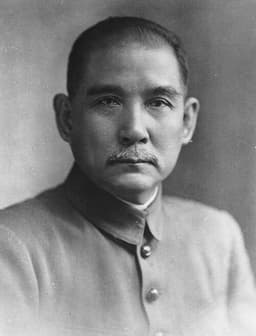
Sun Yat-sen
Revolutionary · Modern
52.5Total
Basic Information
Born
1777
1866
Died
1858
1925
Era
Modern
Modern
Nationality
India
China
Occupation
Revolutionary
Revolutionary
Civilization
Indian
Eastern
Score Comparison
Military (10%)
47.5
45.0
Political (20%)
30.7
68.0
Influence (20%)
47.9
61.0
Legacy (20%)
40.0
58.0
Leadership (15%)
35.4
33.5
Strategy (15%)
43.7
30.3
TOTAL
41.0
52.5
Kunwar Singh — Complete Timeline
1857 AD
Battle of ArrahWar◆ Major
Kunwar Singh led a rebel force in besieging the British garrison at Arrah in Bihar. The siege lasted eight days before British relief forces arrived, forcing Kunwar Singh to retreat.
Indian Rebellion of 1857Siege
Impact: regional
1858 AD
Battle of JagdishpurWar
Kunwar Singh defeated a British force at Jagdishpur, his ancestral home. He recaptured the town and held it briefly before British reinforcements arrived, forcing him to retreat into the hills.
Indian Rebellion of 1857Battle
Impact: regional
Death from woundsOther◆ Major
Kunwar Singh died from wounds sustained in battle near Jagdishpur. He had led the rebellion in Bihar for over a year, and his death marked the end of organized resistance in the region.
Indian Rebellion of 1857Death
Impact: regionaltragic
Sun Yat-sen — Complete Timeline
1894 AD
Founded the Revive China SocietyPolitical Action◆ Major
Sun Yat-sen founded the Revive China Society (Xingzhonghui) in Honolulu, the first modern revolutionary organization among overseas Chinese. The society aimed to overthrow the Qing dynasty and establish a republic, marking the beginning of organized revolutionary activity.
RevolutionOverseas ChineseRepublic
Impact: nationalconstructive
1911 AD
Led the Xinhai RevolutionPolitical Action
Sun Yat-sen's revolutionary activities culminated in the Wuchang Uprising of October 1911, which sparked the Xinhai Revolution. The uprising spread across China, leading to the abdication of the Qing emperor in 1912 and the end of 2,000 years of imperial rule.
RevolutionQing DynastyRepublic
Impact: globalconstructive
1912 AD
Proclaimed the Republic of ChinaPolitical Action
On January 1, 1912, Sun Yat-sen was inaugurated as the provisional president of the Republic of China in Nanjing. He proclaimed the establishment of the first republic in Asia, based on his Three Principles of the People: nationalism, democracy, and livelihood.
RepublicPresidencyThree Principles
Impact: globalconstructive
Resigned Presidency in Favor of Yuan ShikaiPolitical Action◆ Major
To secure the abdication of the Qing emperor and avoid civil war, Sun Yat-sen resigned the provisional presidency in February 1912 in favor of Yuan Shikai. This decision, while pragmatic, allowed Yuan to consolidate power and later attempt to restore the monarchy.
Power TransferYuan ShikaiCompromise
Impact: national
1919 AD
Reorganized the KuomintangPolitical Action◆ Major
Sun Yat-sen reorganized the Chinese Revolutionary Party into the Kuomintang (KMT) in 1919, with a more centralized structure. He later accepted Soviet aid and CCP members into the party under the policy of 'alliance with Russia and the Communists,' reshaping the revolutionary movement.
KuomintangSoviet AllianceCCP
Impact: nationalconstructive
This comparison has not been analyzed yet.
One-time AI generation (~1 minute). Scores and timeline are already available below.
Rankings
🥇
Sun Yat-senLeader
Mil: 45.0Pol: 68.0Inf: 61.0
52.5
🥈
Kunwar Singh
Mil: 47.5Pol: 30.7Inf: 47.9
41.0
+11.5 behind
How This Comparison Works
Algorithm
Each figure is scored on 6 dimensions (0—100 scale) based on structured historical data: Military (10%), Political (20%), Influence (20%), Legacy (20%), Leadership (15%), Strategy (15%). The weighted total produces the final ranking.
Data Sources
Scores are computed from structured sub-indicators in the database. Scale factors adjust for era (Ancient ×0.85, Modern ×1.0) and civilization size (Eastern ×1.05, Other ×0.80) to account for differences in population and military scale.
Maximum 3 Figures
Comparisons are limited to 2—3 figures to ensure readability and statistical meaningfulness.
Error Margins
±5 points per dimension — Sub-scores are derived from historical records with inherent uncertainty. Two figures within 5 points on a dimension should be considered roughly equivalent in that area.
Total Score Accuracy
±3 points overall — The weighted combination of 6 dimensions produces a total score with approximately ±3 points of uncertainty. Differences of less than 3 points are not statistically significant— the figures are effectively tied.
Known Limitations
- Historical records are incomplete and uneven across civilizations
- Figures from oral-tradition societies may be underrepresented
- Occupation labels can misclassify multi-role figures
- Scores measure capability and impact, not moral character
- Quantitative scoring is a comparison tool, not absolute truth
Capability Radar
Military (10%) — Battles & Warfare
Battles
35
15
Win Rate
40
10
Expansion
15
5
Political (20%) — Governance & Reform
Reform
10
85
Diplomacy
25
60
Economy
15
20
Influence (20%) — Cultural & Global Reach
Cultural
35
70
Global
20
65
Legacy (20%) — Historical Impact
Historical
40
80
Longevity
30
75
Leadership (15%) — Power & Stability
Tenure
20
30
Stability
15
15
Strategy (15%) — Tactics & Innovation
Strategy
30
20
Tactics
45
10
Reform
10
40
Similar Comparisons
Comments & Discussion
No comments yet. Be the first to share your thoughts!