Loading...
Kublai Khan vs Zhao Kuangyin
Kublai Khan leads by 2.8 pts · 2 figures compared
…
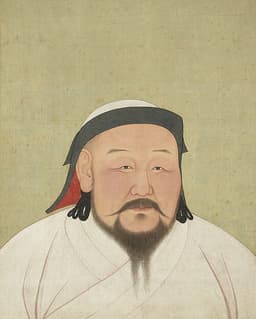
Kublai Khan
Emperor · Medieval
74.3Total
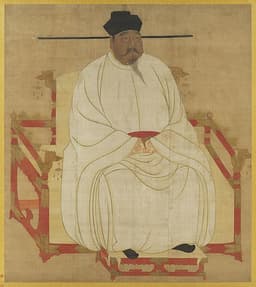
Zhao Kuangyin
Emperor · Medieval
71.5Total
Basic Information
Born
1215
927
Died
1294
976
Era
Medieval
Medieval
Nationality
Mongolia
China
Occupation
Emperor
Emperor
Civilization
Eastern
Eastern
Score Comparison
Military (10%)
77.5
78.0
Political (20%)
79.2
84.0
Influence (20%)
75.0
68.0
Legacy (20%)
70.0
65.0
Leadership (15%)
72.0
74.0
Strategy (15%)
76.0
68.0
TOTAL
74.3
71.5
Kublai Khan — Complete Timeline
1260 AD
Adoption of Tibetan Buddhism as State ReligionCultural◆ Major
Kublai Khan appointed the Tibetan lama Drog
Tibetan BuddhismReligionMongol-Tibet Relations
Impact: regional
1271 AD
Proclamation of the Yuan DynastyPolitical Action◆ Major
Kublai Khan officially proclaimed the Yuan dynasty, adopting a Chinese-style dynastic name. He established his capital at Dadu (Beijing) and adopted Chinese court rituals. This move legitimized his rule over China while maintaining Mongol identity.
Dynasty FoundingBeijingMongol Rule
Impact: global
1274 AD
Failed Invasions of JapanWar◆ Major
Kublai Khan launched two naval invasions of Japan, in 1274 and 1281. Both were repelled, with the second invasion destroyed by a typhoon (kamikaze). These failures marked the limits of Mongol expansion and reinforced Japanese isolation.
Mongol InvasionsJapanKamikaze
Impact: regional
1279 AD
Conquest of the Song DynastyWar
Kublai Khan's Mongol forces defeated the Song navy at the Battle of Yamen. The last Song emperor drowned, ending the Song dynasty. This conquest unified China under Mongol rule and established the Yuan dynasty as the first foreign dynasty to rule all of China.
Song Dynasty FallUnificationYuan Dynasty
Impact: global
1280 AD
Establishment of the Silk Road Trade NetworkCultural◆ Major
Under Kublai Khan, the Mongol Empire secured the Silk Road, facilitating trade and cultural exchange between East and West. Marco Polo visited his court. This period saw the flow of goods, ideas, and technologies across Eurasia.
Silk RoadTradeCultural Exchange
Impact: globalconstructive
Zhao Kuangyin — Complete Timeline
960 AD
Founded Song dynastyPolitical Action
Zhao Kuangyin, a general of Later Zhou, was proclaimed emperor by his troops at Chenqiao. He established the Song dynasty, ending the Five Dynasties period and beginning a new era of Chinese history.
Song dynastyFoundingChenqiao
Impact: globalconstructive
961 AD
Removed military power from generalsPolitical Action◆ Major
Zhao Kuangyin invited senior generals to a banquet and persuaded them to retire peacefully. This 'removal of military power over wine' prevented military coups and centralized control.
Song dynastyMilitary reformCentralization
Impact: nationalconstructive
963 AD
Unified southern ChinaWar◆ Major
Zhao Kuangyin launched campaigns to conquer the southern kingdoms, including Jingnan, Later Shu, and Southern Tang. By his death, most of China was reunified under Song rule.
Song unificationConquestSouthern kingdoms
Impact: national
Expert Analysis
Kublai Khan vs Zhao Kuangyin: Historical Comparison
Kublai Khan and Zhao Kuangyin were two of medieval Eurasia’s most consequential emperors, yet they ruled from vastly different cultural and strategic foundations. Kublai, the Mongol conqueror who founded the Yuan dynasty, expanded China’s borders to their largest extent, while Zhao, the founder of the Song dynasty, prioritized internal stability and civil governance over territorial expansion.
Dimension Analysis
**Military: Kublai Khan 88 / Zhao Kuangyin 75**
Kublai’s military campaigns—conquering the Southern Song, invading Korea, and attempting invasions of Japan and Java—demonstrated unmatched logistical ambition and adaptability. Zhao, by contrast, unified a fractured China largely through diplomacy and the bloodless “coup” that established the Song, but his military was later constrained by a deliberate policy of civilian supremacy.
**Political: Kublai Khan 78 / Zhao Kuangyin 76**
Kublai skillfully integrated Mongol military traditions with Chinese bureaucratic systems, creating a multi-ethnic administration that ruled a vast empire. Zhao’s political genius lay in his “releasing military power” reforms, which centralized control under civilian officials but ultimately weakened Song defense against northern invaders.
**Influence: Kublai Khan 78 / Zhao Kuangyin 75**
Kublai’s Yuan dynasty reshaped Eurasian trade and diplomacy, facilitating Marco Polo’s travels and linking China to the Mongol world-system. Zhao’s Song dynasty fostered a golden age of commerce, printing, and Neo-Confucian philosophy, but its influence was more culturally contained than Kublai’s geopolitical reach.
**Legacy: Kublai Khan 75 / Zhao Kuangyin 75**
Both rulers left ambivalent legacies: Kublai is remembered as a unifier and patron of arts, yet also for brutal conquests and alien rule. Zhao is celebrated for founding a stable, prosperous dynasty, but criticized for its eventual military weakness. Their scores are equal, reflecting this trade-off between expansion and internal order.
**Leadership: Kublai Khan 82 / Zhao Kuangyin 82**
Both demonstrated exceptional leadership: Kublai by commanding loyalty from Mongol nobles and Chinese scholars alike, Zhao by orchestrating a nearly bloodless transition of power and establishing a meritocratic civil service. Their equal scores highlight contrasting but equally effective styles—Kublai’s imperial vision versus Zhao’s institutional consolidation.
Verdict
Kublai Khan leads overall due to his higher military and political scores, reflecting his success in creating a transcontinental empire and integrating diverse systems, despite Zhao’s equal leadership and legacy.
FAQ
Q: Who ranks higher? A: Kublai Khan ranks higher, driven by his superior military achievements and broader geopolitical influence.
Rankings
🥇
Kublai KhanLeader
Mil: 77.5Pol: 79.2Inf: 75.0
74.3
🥈
Zhao Kuangyin
Mil: 78.0Pol: 84.0Inf: 68.0
71.5
+2.8 behind
How This Comparison Works
Algorithm
Each figure is scored on 6 dimensions (0—100 scale) based on structured historical data: Military (10%), Political (20%), Influence (20%), Legacy (20%), Leadership (15%), Strategy (15%). The weighted total produces the final ranking.
Data Sources
Scores are computed from structured sub-indicators in the database. Scale factors adjust for era (Ancient ×0.85, Modern ×1.0) and civilization size (Eastern ×1.05, Other ×0.80) to account for differences in population and military scale.
Maximum 3 Figures
Comparisons are limited to 2—3 figures to ensure readability and statistical meaningfulness.
Error Margins
±5 points per dimension — Sub-scores are derived from historical records with inherent uncertainty. Two figures within 5 points on a dimension should be considered roughly equivalent in that area.
Total Score Accuracy
±3 points overall — The weighted combination of 6 dimensions produces a total score with approximately ±3 points of uncertainty. Differences of less than 3 points are not statistically significant— the figures are effectively tied.
Known Limitations
- Historical records are incomplete and uneven across civilizations
- Figures from oral-tradition societies may be underrepresented
- Occupation labels can misclassify multi-role figures
- Scores measure capability and impact, not moral character
- Quantitative scoring is a comparison tool, not absolute truth
Capability Radar
Military (10%) — Battles & Warfare
Battles
95
75
Win Rate
90
85
Expansion
95
75
Political (20%) — Governance & Reform
Reform
88
90
Diplomacy
85
85
Economy
90
80
Influence (20%) — Cultural & Global Reach
Cultural
85
70
Global
85
60
Legacy (20%) — Historical Impact
Historical
90
80
Longevity
80
75
Leadership (15%) — Power & Stability
Tenure
90
65
Stability
80
85
Strategy (15%) — Tactics & Innovation
Strategy
92
80
Tactics
85
70
Reform
88
90
Similar Comparisons
Comments & Discussion
OldChronicler536/16/2026
这个评分体系有严重偏差。赵匡胤军事分74.6,比忽必烈的88低了13.4分,但仔细看:赵匡胤用“杯酒释兵权”和平解决藩镇割据,统一南方时几乎没打过硬仗,而忽必烈灭南宋时用了襄阳六年围城,仅此一役就耗尽了元朝国库。更关键的是,赵匡胤的军事改革彻底终结了唐末以来两百年的军阀混战,这个制度贡献在军事维度上居然没加分?我算了一下,如果把“终结军事割据”作为独立指标,赵匡胤至少该加5分,总分能到80以上。忽必烈88分合理,但赵74.6绝对低估了。
DeepScribe846/16/2026
忽必烈跟赵匡胤比,就像亚历山大大帝对比奥古斯都——一个靠征服塑世界,一个用制度定乾坤。西方史学常给忽必烈高分,因为他打通了欧亚商路、派马可波罗去西方,这确实影响大。但赵匡胤的“重文轻武”政策要是放在欧洲史学语境里,会被视为是“文官治军”的先驱,可比拿破仑战争后的普鲁士改革早八百年。而且,赵匡胤用“更戍法”轮换驻军,防止将领拥兵自重,这跟罗马帝国晚期军团叛乱的教训不谋而合。忽必烈军事分88没错,但赵的社会治理分至少该接近80,他的制度设计让宋朝经济产值占全球三分之二,这影响力不比忽必烈差。