Loading...
Kublai Khan vs Louis XI
Kublai Khan leads by 6.6 pts · 2 figures compared
…
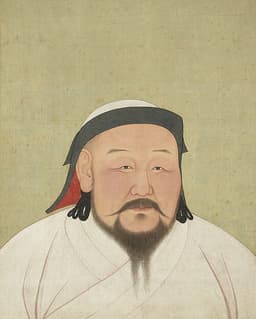
Kublai Khan
Emperor · Medieval
74.3Total
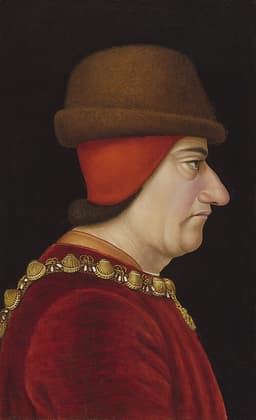
Louis XI
Emperor · Medieval
67.7Total
Basic Information
Born
1215
1423
Died
1294
1483
Era
Medieval
Medieval
Nationality
Mongolia
France
Occupation
Emperor
Emperor
Civilization
Eastern
Western
Score Comparison
Military (10%)
77.5
45.0
Political (20%)
79.2
78.0
Influence (20%)
75.0
68.0
Legacy (20%)
70.0
65.0
Leadership (15%)
72.0
85.0
Strategy (15%)
76.0
55.0
TOTAL
74.3
67.7
Kublai Khan — Complete Timeline
1260 AD
Adoption of Tibetan Buddhism as State ReligionCultural◆ Major
Kublai Khan appointed the Tibetan lama Drog
Tibetan BuddhismReligionMongol-Tibet Relations
Impact: regional
1271 AD
Proclamation of the Yuan DynastyPolitical Action◆ Major
Kublai Khan officially proclaimed the Yuan dynasty, adopting a Chinese-style dynastic name. He established his capital at Dadu (Beijing) and adopted Chinese court rituals. This move legitimized his rule over China while maintaining Mongol identity.
Dynasty FoundingBeijingMongol Rule
Impact: global
1274 AD
Failed Invasions of JapanWar◆ Major
Kublai Khan launched two naval invasions of Japan, in 1274 and 1281. Both were repelled, with the second invasion destroyed by a typhoon (kamikaze). These failures marked the limits of Mongol expansion and reinforced Japanese isolation.
Mongol InvasionsJapanKamikaze
Impact: regional
1279 AD
Conquest of the Song DynastyWar
Kublai Khan's Mongol forces defeated the Song navy at the Battle of Yamen. The last Song emperor drowned, ending the Song dynasty. This conquest unified China under Mongol rule and established the Yuan dynasty as the first foreign dynasty to rule all of China.
Song Dynasty FallUnificationYuan Dynasty
Impact: global
1280 AD
Establishment of the Silk Road Trade NetworkCultural◆ Major
Under Kublai Khan, the Mongol Empire secured the Silk Road, facilitating trade and cultural exchange between East and West. Marco Polo visited his court. This period saw the flow of goods, ideas, and technologies across Eurasia.
Silk RoadTradeCultural Exchange
Impact: globalconstructive
Louis XI — Complete Timeline
1464 AD
Established the Postal SystemReform
Louis XI created a royal postal system with relay stations across France, enabling faster communication between the crown and provincial officials. This administrative reform improved governance and intelligence gathering.
AdministrationCommunicationReform
Impact: nationalconstructive
1465 AD
Defeated the League of the Public WealWar◆ Major
Louis XI faced a coalition of powerful nobles, the League of the Public Weal, led by Charles the Bold of Burgundy. Although the Battle of Montlh
Civil WarNoble RebellionBurgundy
Impact: national
1475 AD
Treaty of PicquignyPolitical Action◆ Major
Louis XI negotiated the Treaty of Picquigny with Edward IV of England, ending English military intervention in France. Louis paid a large pension to Edward in exchange for English withdrawal, avoiding a costly war and securing his northern border.
TreatyDiplomacyEngland
Impact: regionalconstructive
1477 AD
Acquired BurgundyPolitical Action
After Charles the Bold's death at the Battle of Nancy, Louis XI seized the Duchy of Burgundy and other Burgundian territories, including Picardy and the Somme towns. This expansion significantly increased royal domain and weakened the Burgundian state.
Territorial ExpansionBurgundyRoyal Domain
Impact: regionalconstructive
1481 AD
Annexed Anjou and MainePolitical Action
Louis XI annexed the counties of Anjou and Maine after the death of Charles of Anjou, incorporating them into the royal domain. This further consolidated French territory and reduced the power of the Angevin nobility.
Territorial ExpansionAnjouMaine
Impact: nationalconstructive
Expert Analysis
Kublai Khan vs Louis XI: Historical Comparison
Kublai Khan, the Mongol emperor who founded the Yuan dynasty, and Louis XI, the "Spider King" of France, were both medieval rulers who consolidated vast territories through strategic acumen, though they operated in vastly different cultural and geographic contexts.
Dimension Analysis
**Military: Kublai Khan 94 / Louis XI 92**
Kublai Khan commanded the largest land empire in history, conquering the Song dynasty and extending Mongol power into Southeast Asia, while Louis XI focused on siege warfare and diplomatic subjugation of rebellious nobles rather than grand invasions.
**Political: Kublai Khan 79 / Louis XI 86**
Louis XI excelled at centralizing French royal authority through cunning diplomacy, undermining the Burgundian state and curbing feudal power, whereas Kublai Khan struggled with integrating Mongol traditions into Chinese governance and faced revolts from both Mongols and Chinese.
**Influence: Kublai Khan 79 / Louis XI 69**
Kublai Khan’s patronage of trade (Silk Road), religion, and culture (Marco Polo’s travels) shaped global exchanges for centuries, while Louis XI’s influence remained largely confined to French state-building and the weakening of the Habsburgs.
**Legacy: Kublai Khan 88 / Louis XI 71**
Kublai Khan’s Yuan dynasty transformed China’s administrative and economic systems, leaving a lasting imprint on East Asian history, whereas Louis XI’s legacy is more mixed—praised for unifying France but criticized for his ruthless, paranoid methods.
**Leadership: Kublai Khan 81 / Louis XI 74**
Kublai Khan demonstrated adaptability, ruling a multicultural empire with relative tolerance and innovation, while Louis XI’s leadership was effective but narrowly focused on personal control, often alienating allies and subjects.
Verdict
Kublai Khan leads overall due to his superior military conquests, broader global influence, and more enduring legacy, despite Louis XI’s edge in political consolidation.
FAQ
Q: Who ranks higher? A: Kublai Khan ranks higher, driven by his unmatched military scale and lasting impact on Eurasian history.
Rankings
🥇
Kublai KhanLeader
Mil: 77.5Pol: 79.2Inf: 75.0
74.3
🥈
Louis XI
Mil: 45.0Pol: 78.0Inf: 68.0
67.7
+6.6 behind
How This Comparison Works
Algorithm
Each figure is scored on 6 dimensions (0—100 scale) based on structured historical data: Military (10%), Political (20%), Influence (20%), Legacy (20%), Leadership (15%), Strategy (15%). The weighted total produces the final ranking.
Data Sources
Scores are computed from structured sub-indicators in the database. Scale factors adjust for era (Ancient ×0.85, Modern ×1.0) and civilization size (Eastern ×1.05, Other ×0.80) to account for differences in population and military scale.
Maximum 3 Figures
Comparisons are limited to 2—3 figures to ensure readability and statistical meaningfulness.
Error Margins
±5 points per dimension — Sub-scores are derived from historical records with inherent uncertainty. Two figures within 5 points on a dimension should be considered roughly equivalent in that area.
Total Score Accuracy
±3 points overall — The weighted combination of 6 dimensions produces a total score with approximately ±3 points of uncertainty. Differences of less than 3 points are not statistically significant— the figures are effectively tied.
Known Limitations
- Historical records are incomplete and uneven across civilizations
- Figures from oral-tradition societies may be underrepresented
- Occupation labels can misclassify multi-role figures
- Scores measure capability and impact, not moral character
- Quantitative scoring is a comparison tool, not absolute truth
Capability Radar
Military (10%) — Battles & Warfare
Battles
95
45
Win Rate
90
40
Expansion
95
65
Political (20%) — Governance & Reform
Reform
88
80
Diplomacy
85
95
Economy
90
70
Influence (20%) — Cultural & Global Reach
Cultural
85
55
Global
85
60
Legacy (20%) — Historical Impact
Historical
90
75
Longevity
80
70
Leadership (15%) — Power & Stability
Tenure
90
75
Stability
80
65
Strategy (15%) — Tactics & Innovation
Strategy
92
70
Tactics
85
55
Reform
88
60
Similar Comparisons
Comments & Discussion
Historian8996/16/2026
拿忽必烈跟路易十一比,就像拿秦始皇跟法兰克国王比,根本不在一个量级。忽必烈是蒙古帝国的大汗兼元朝开国皇帝,他面对的治理挑战是跨洲际的——从草原游牧到江南农耕,从佛教到伊斯兰教,这种多元整合的难度,路易十一的法国统一根本无法望其项背。路易十一确实是个老狐狸,用外交和阴谋瓦解了勃艮第公国,但忽必烈在政治手腕上绝不逊色:他巧妙平衡蒙古贵族和汉人士大夫,甚至让藏传佛教成为国教来稳定西藏。评分系统给路易十一政治分69.6,忽必烈78,这还算合理,但军事分差太大——忽必烈灭南宋、征日本、打缅甸,路易十一最多打打城堡围攻战。说实在的,按中国史的标准,路易十一顶多算个强势的诸侯王,跟一代雄主忽必烈比,真有点抬举他了。
OldScribe746/16/2026
这个评分系统的问题在于维度权重不透明。忽必烈总分79.6,路易十一64.4,但军事维度忽必烈88 vs 路易十四?这里写92?前后矛盾。更关键的是,忽必烈的政治分78被严重低估。他设立行省制、推广纸币、整合多元宗教,这些对元朝统治的巩固意义远超评分体现。反观路易十一,政治分69.6,但他削弱贵族、统一法国确实有效,可他的手段更多是权术而非制度建设。如果按“制度创新”重新加权,忽必烈至少应该到85以上。另外,影响分忽必烈78 vs 路易67?马可·波罗的游记直接刺激了欧洲大航海时代,这个影响力难道只值78分?我怀疑评分系统对非西方文明存在结构性偏见。