Loading...
King Taejo of Goryeo vs Zhao Kuangyin
Zhao Kuangyin leads by 1.4 pts · 2 figures compared
…
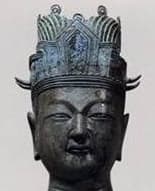
King Taejo of Goryeo
Emperor · Medieval
70.1Total
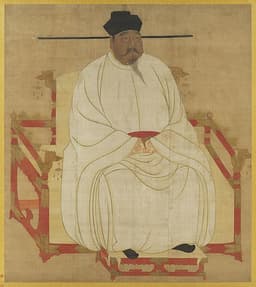
Zhao Kuangyin
Emperor · Medieval
71.5Total
Basic Information
Born
877
927
Died
943
976
Era
Medieval
Medieval
Nationality
Korea
China
Occupation
Emperor
Emperor
Civilization
Eastern
Eastern
Score Comparison
Military (10%)
78.0
78.0
Political (20%)
72.0
84.0
Influence (20%)
65.0
68.0
Legacy (20%)
65.0
65.0
Leadership (15%)
82.0
74.0
Strategy (15%)
67.2
68.0
TOTAL
70.1
71.5
King Taejo of Goryeo — Complete Timeline
918 AD
Founded the Goryeo DynastyPolitical Action
Wang Geon (Taejo) overthrew the Later Goguryeo state and established the Goryeo dynasty, with its capital at Songak (Kaesong). This marked the beginning of a new era in Korean history.
Dynasty FoundingGoryeoKorea
Impact: regionalconstructive
920 AD
Adopted a Policy of Marrying Local ElitesPolitical Action◆ Major
Taejo married women from powerful local clans to secure their loyalty and integrate regional powers into the Goryeo state. This policy helped stabilize the new dynasty.
Marriage PolicyGoryeoUnification
Impact: regionalconstructive
936 AD
Unified the Later Three KingdomsWar
Taejo completed the unification of the Later Three Kingdoms (Later Goguryeo, Later Baekje, and Silla) under Goryeo rule. This ended the period of division and established a unified Korean state.
UnificationLater Three KingdomsGoryeo
Impact: regionalconstructive
943 AD
Implemented Ten InjunctionsPolitical Action◆ Major
Taejo issued the Ten Injunctions, a set of political guidelines for his successors. These stressed the importance of Buddhism, diplomacy with China, and avoiding internal conflict.
GovernanceGoryeoPolicy
Impact: regionalconstructive
Zhao Kuangyin — Complete Timeline
960 AD
Founded Song dynastyPolitical Action
Zhao Kuangyin, a general of Later Zhou, was proclaimed emperor by his troops at Chenqiao. He established the Song dynasty, ending the Five Dynasties period and beginning a new era of Chinese history.
Song dynastyFoundingChenqiao
Impact: globalconstructive
961 AD
Removed military power from generalsPolitical Action◆ Major
Zhao Kuangyin invited senior generals to a banquet and persuaded them to retire peacefully. This 'removal of military power over wine' prevented military coups and centralized control.
Song dynastyMilitary reformCentralization
Impact: nationalconstructive
963 AD
Unified southern ChinaWar◆ Major
Zhao Kuangyin launched campaigns to conquer the southern kingdoms, including Jingnan, Later Shu, and Southern Tang. By his death, most of China was reunified under Song rule.
Song unificationConquestSouthern kingdoms
Impact: national
Expert Analysis
Zhao Kuangyin vs King Taejo of Goryeo
The Two Unifiers: Zhao Kuangyin and Taejo of Goryeo
In the year 960, a Chinese general named Zhao Kuangyin found himself draped in a yellow imperial robe, thrust upon him by mutinous troops at a place called Chenqiao. Forty-two years earlier and across a turbulent sea, another general—Wang Geon—had similarly seized his moment, overthrowing his own state to found a dynasty that would rule Korea for nearly five centuries. Both men were unifiers, both were founders, and both faced the same ancient dilemma: how to hold together what the sword had won. Yet their solutions diverged so sharply that their legacies still feel the tremor.
Origins
Zhao Kuangyin was born in 927 into a military family serving the Later Zhou, one of the Five Dynasties that had carved up China after the fall of Tang. He grew up in a world of constant warfare, where generals rose and fell like tides, and dynasties lasted barely a decade. This chaos shaped him into a pragmatist who understood that the sword that raises a man can also cut him down.
Wang Geon, born in 877, came of age in a Korea fractured into the Later Three Kingdoms: Later Goguryeo, Later Baekje, and a decaying Silla. His father was a merchant prince of Songak, a port city that thrived on trade with China. Wang Geon inherited commerce and diplomacy as much as warfare. He knew that power flowed not only from armies but from alliances, marriages, and the careful tending of relationships.
Rise to Power
Zhao Kuangyin rose through the ranks of the Later Zhou military, proving himself in campaigns against the northern Khitan and southern states. By 960, he commanded the elite imperial guard. When the child emperor came to power, rumors of a Khitan invasion gave Zhao’s troops the pretext to act. At Chenqiao, they declared him emperor. Zhao accepted—reluctantly, according to official histories—and thus was born the Song dynasty.
Wang Geon’s path was more deliberate. He served under Gung Ye, the founder of Later Goguryeo, a paranoid tyrant who killed his own generals. Wang Geon grew popular and powerful, and in 918, his subordinates persuaded him to overthrow Gung Ye. Unlike Zhao’s sudden elevation, Wang Geon’s coup was a quiet, almost administrative transition. He did not need a yellow robe; he had already built the loyalty that made one unnecessary.
Leadership & Governance
Here is where the two founders part ways most dramatically. Zhao Kuangyin’s great fear was that another general would do to him what he had done to the Later Zhou. So in 961, he invited his top commanders to a banquet, plied them with wine, and gently suggested they retire to comfortable estates. This “removal of military power over a cup of wine” became legendary. Zhao then restructured the Song military, dividing commands, rotating generals, and placing civilian officials in charge. He wanted no man to become powerful enough to challenge the throne.
Wang Geon, by contrast, married his enemies. He took wives from the powerful local clans of Later Baekje and Silla, weaving them into the fabric of his new state. He did not suppress regional elites; he absorbed them. His policy was not separation of powers but integration of powers. By 936, when he finally unified the Later Three Kingdoms, Goryeo was a patchwork of loyalties held together by blood and marriage.
Zhao unified through conquest and then pacified through demilitarization. Wang unified through diplomacy and then stabilized through inclusion. Both achieved peace, but at different costs.
Triumph & Tragedy
Zhao’s greatest triumph was the swift reunification of southern China. Between 963 and 976, his armies conquered Jingnan, Later Shu, and Southern Tang, bringing the Yangtze basin under Song control. Yet his greatest tragedy was what he left undone: the north. The Khitan Liao dynasty remained a thorn, and the Sixteen Prefectures—the strategic corridor to the north—were never recovered. Zhao died in 976, perhaps poisoned by his own brother, leaving a Song dynasty that would forever be haunted by its northern weakness.
Wang Geon’s triumph was the unification itself. In 936, he defeated Later Baekje at the Battle of Uncheon, completing his conquest. His tragedy was more subtle: he died in 943, having issued his Ten Injunctions, a political testament that warned against the very forces that would eventually destroy Goryeo—factionalism, overreliance on Buddhism, and neglect of the military. He saw the cracks forming even as he built the wall.
Character & Destiny
Zhao Kuangyin was a man of calculated generosity. He spared the imperial family of the Later Zhou and treated conquered rulers with dignity. But his caution bordered on paranoia. By weakening his generals, he created a military culture that valued loyalty over competence—a vulnerability that would later cost Song dear against the Jurchens and Mongols.
Wang Geon was a man of expansive trust. He believed that empire was built not by crushing rivals but by embracing them. His Ten Injunctions urged his successors to “be generous to the people” and “maintain good relations with the powerful clans.” Yet this trust had its own shadow: the very clans he married into would eventually grow so strong that they would tear Goryeo apart from within.
One man feared the blade at his throat; the other feared the poison in his cup. Both were right.
Legacy
Zhao Kuangyin is remembered as Song Taizu, the founder of one of China’s most cultured dynasties. His reforms created a stable civil service and a flourishing economy, but his demilitarization left China vulnerable. He is admired for his bloodless transfer of power, yet criticized for the military weakness that followed. His total score of 75.5 reflects a balanced but cautious ruler.
Wang Geon is remembered as Taejo of Goryeo, the founder of a dynasty that lasted 474 years—longer than Song. His policy of marrying local elites created a stable aristocracy, but that same aristocracy eventually became a parasite. His total score of 75.2 is nearly identical to Zhao’s, but the components differ: higher in political wisdom (80.0), lower in influence (70.7). He is honored in Korea as a unifier who chose marriage over massacre.
Conclusion
Two founders, two unifiers, two nearly identical scores—yet their worlds turned on different hinges. Zhao Kuangyin built a machine of state that ran on separation and control; Wang Geon built a garden of alliances that grew on connection and trust. One gave China a golden age of culture; the other gave Korea a millennium of continuity. Both succeeded. Both failed. And both remind us that the hardest part of founding a dynasty is not winning power, but knowing how to keep it—and what to sacrifice in the keeping.
Rankings
🥇
Zhao KuangyinLeader
Mil: 78.0Pol: 84.0Inf: 68.0
71.5
🥈
King Taejo of Goryeo
Mil: 78.0Pol: 72.0Inf: 65.0
70.1
+1.4 behind
How This Comparison Works
Algorithm
Each figure is scored on 6 dimensions (0—100 scale) based on structured historical data: Military (10%), Political (20%), Influence (20%), Legacy (20%), Leadership (15%), Strategy (15%). The weighted total produces the final ranking.
Data Sources
Scores are computed from structured sub-indicators in the database. Scale factors adjust for era (Ancient ×0.85, Modern ×1.0) and civilization size (Eastern ×1.05, Other ×0.80) to account for differences in population and military scale.
Maximum 3 Figures
Comparisons are limited to 2—3 figures to ensure readability and statistical meaningfulness.
Error Margins
±5 points per dimension — Sub-scores are derived from historical records with inherent uncertainty. Two figures within 5 points on a dimension should be considered roughly equivalent in that area.
Total Score Accuracy
±3 points overall — The weighted combination of 6 dimensions produces a total score with approximately ±3 points of uncertainty. Differences of less than 3 points are not statistically significant— the figures are effectively tied.
Known Limitations
- Historical records are incomplete and uneven across civilizations
- Figures from oral-tradition societies may be underrepresented
- Occupation labels can misclassify multi-role figures
- Scores measure capability and impact, not moral character
- Quantitative scoring is a comparison tool, not absolute truth
Capability Radar
Military (10%) — Battles & Warfare
Battles
75
75
Win Rate
80
85
Expansion
80
75
Political (20%) — Governance & Reform
Reform
80
90
Diplomacy
75
85
Economy
70
80
Influence (20%) — Cultural & Global Reach
Cultural
70
70
Global
60
60
Legacy (20%) — Historical Impact
Historical
80
80
Longevity
75
75
Leadership (15%) — Power & Stability
Tenure
85
65
Stability
75
85
Strategy (15%) — Tactics & Innovation
Strategy
85
80
Tactics
70
70
Reform
65
90
Similar Comparisons
Comments & Discussion
No comments yet. Be the first to share your thoughts!