Loading...
King Gwangjong vs Li Yu
King Gwangjong leads by 5.3 pts · 2 figures compared
…

King Gwangjong
Emperor · Medieval
57.5Total
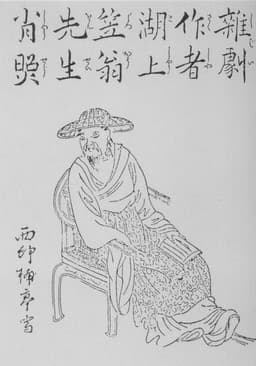
Li Yu
Emperor · Medieval
52.2Total
Basic Information
Born
925
727
Died
975
779
Era
Medieval
Medieval
Nationality
Korea
China
Occupation
Emperor
Emperor
Civilization
Eastern
Eastern
Score Comparison
Military (10%)
50.0
20.0
Political (20%)
72.0
68.0
Influence (20%)
53.3
54.9
Legacy (20%)
50.0
50.0
Leadership (15%)
66.0
53.2
Strategy (15%)
60.0
57.5
TOTAL
57.5
52.2
King Gwangjong — Complete Timeline
956 AD
Promulgation of Slave Emancipation EdictReform◆ Major
Gwangjong issued an edict freeing many slaves and reclassifying them as commoners. This measure aimed to undermine the economic base of powerful clans who relied on slave labor, while increasing the tax-paying population under direct royal control.
Social ReformSlaveryCentralization
Impact: nationalprogressive
Purge of Powerful ClansPolitical Action◆ Major
King Gwangjong initiated a systematic purge of powerful aristocratic clans that had dominated Goryeo politics. He ordered the execution or exile of many nobles, confiscated their lands, and freed thousands of slaves to weaken the old elite and strengthen royal authority.
CentralizationPurgeAristocracy
Impact: nationaldestructive
958 AD
Institution of Civil Service ExaminationsReform◆ Major
Gwangjong established the gwageo civil service examination system in Goryeo, based on the Chinese Tang model. This reform allowed talented individuals from lower social classes to enter government service, reducing the power of hereditary aristocrats and creating a merit-based bureaucracy.
MeritocracyBureaucracyConfucian Reform
Impact: nationalprogressive
960 AD
Enactment of Purple Robe EdictPolitical Action
Gwangjong decreed that only the king could grant the right to wear purple robes, a symbol of high office. This edict stripped powerful nobles of their self-assumed privileges and reinforced the king's sole authority to confer rank and status.
Royal AuthoritySumptuary LawCentralization
Impact: national
Li Yu — Complete Timeline
763 AD
Suppression of the An Lushan RebellionWar
Under Li Yu's reign, the An Lushan Rebellion was finally crushed after eight years of war. The rebel state of Yan collapsed, and Tang authority was restored over most of the empire, though the dynasty was permanently weakened.
An Lushan RebellionCivil War EndTang Restoration
Impact: nationalconstructive
Tibetan Invasion of Chang'anWar◆ Major
The Tibetan Empire launched a surprise invasion, capturing the Tang capital Chang'an. Li Yu fled to Shanzhou. The Tibetans installed a puppet emperor before being driven out by Tang forces and Uyghur allies. This exposed Tang military weakness.
Tibetan InvasionCapital LostMilitary Weakness
Impact: nationaldestructive
Rise of the Fanzhen SystemPolitical Action◆ Major
Li Yu granted amnesty to many rebel generals and allowed them to retain control of their provinces as military governors (jiedushi). This created semi-autonomous fanzhen that weakened central authority and led to future rebellions.
FanzhenDecentralizationMilitary Governors
Impact: nationaldestructive
765 AD
Peace Treaty with TibetPolitical Action
Li Yu negotiated a peace treaty with the Tibetan Empire, establishing a border and ending hostilities for a time. The treaty stabilized the western frontier but did not prevent future conflicts.
TibetDiplomacyBorder Treaty
Impact: regionalconstructive
Expert Analysis
Origins
King Gwangjong (born 925) was the fourth monarch of Goryeo, a kingdom that had unified the Korean Peninsula in 936. He was the son of King Taejo, the founder of Goryeo, and a concubine. His early life was shaped by the court's power struggles among aristocratic clans, which had grown powerful through land grants and intermarriage with the royal family. Gwangjong received a Confucian education and ascended the throne in 949 at age 24.
Li Yu (born 727) was the eldest son of Emperor Suzong of Tang China. He grew up amidst the An Lushan Rebellion (755-763), which devastated the empire. Educated in Confucian classics and military strategy, he was appointed crown prince in 758 and became emperor in 762 after his father's death. His reign (as Emperor Daizong) focused on restoring imperial authority after the rebellion.
Rise to Power
Gwangjong's rise was as a hereditary monarch, but he faced immediate challenges from entrenched clans. In 956, he initiated the Slave Emancipation Edict, freeing slaves to weaken noble economic power. He then established the gwageo civil service exams in 958, allowing talented commoners to enter bureaucracy, bypassing aristocratic networks. By 960, he began a systematic purge of powerful clans, executing or exiling hundreds.
Li Yu's rise was defined by the An Lushan Rebellion. As a prince, he commanded troops and coordinated with Uighur allies. In 762, he became emperor after his father's death. His key turning point was the final suppression of the rebellion in 763, when the rebel capital fell. However, he lacked the military strength to fully restore central control, leading to compromises.
Leadership & Governance
Gwangjong's leadership was autocratic and reformist. He used the Civil Service Examinations (scoring 60.0 in strategy) to create a meritocratic bureaucracy, reducing clan influence. His Purple Robe Edict (964) centralized symbolic power, while land reforms redistributed holdings to the crown. His methods were harsh: estimates suggest 70% of noble families were affected by purges. However, his reforms laid the foundation for Goryeo's centralized state.
Li Yu's governance was pragmatic but weak. He granted amnesty to rebel generals, allowing them to become military governors (jiedushi) in the Fanzhen system. This stabilized the empire temporarily but created semi-independent provinces. He also faced a Tibetan invasion that captured Chang'an in 763, forcing him to flee. His political score of 68.0 reflects his ability to negotiate peace with Tibet in 764, but his legacy is one of diminished imperial power.
Triumph & Tragedy
Gwangjong's greatest triumph was centralizing Goryeo: he established a bureaucracy based on talent, weakened aristocratic clans, and freed slaves. His tragedy was the brutality of his purges, which created a climate of fear and led to his posthumous reputation as a tyrant. His reforms were partially reversed after his death in 975.
Li Yu's triumph was ending the An Lushan Rebellion, restoring peace after eight years of war. His tragedy was the rise of the Fanzhen system, which fragmented the empire and led to later rebellions. He also failed to prevent the Tibetan sack of Chang'an, a humiliating event. His military score of 20.0 reflects his reliance on allies and inability to defend the capital.
Character & Destiny
Gwangjong was determined and ruthless. He systematically eliminated opponents, but his reforms showed a visionary side. His character shaped his fate: his harsh methods secured power but alienated the nobility, leading to instability after his death. Historians note his political score of 72.0 as evidence of his strategic acumen, but his legacy is mixed.
Li Yu was cautious and conciliatory. He prioritized stability over reform, which preserved the dynasty but at the cost of central authority. His character made him a peacemaker but a weak emperor. His total score of 52.2 reflects his limited impact compared to Gwangjong's 57.5.
Legacy
Gwangjong's legacy is the gwageo system, which lasted until 1894 in Korea, and his centralization efforts that shaped Goryeo's governance. He is remembered as a reformer who broke aristocratic power. His influence score of 53.3 reflects his long-term impact.
Li Yu's legacy is the Fanzhen system, which weakened the Tang and led to its decline. He is often overshadowed by his father and son. His influence score of 54.9 is slightly higher due to his role in ending the An Lushan Rebellion, but his structural failures outweighed his successes.
Conclusion
King Gwangjong had greater impact than Li Yu. Despite a lower influence score (53.3 vs 54.9), Gwangjong's reforms were more transformative: he restructured Goryeo's government and society, creating a meritocratic system that endured. Li Yu's actions were reactive and preserved a decaying system. Gwangjong's total score of 57.5 vs Li Yu's 52.2 underscores his stronger leadership and political acumen. While both faced challenges, Gwangjong's vision for a centralized state was more consequential for his nation's history.
Rankings
🥇
King GwangjongLeader
Mil: 50.0Pol: 72.0Inf: 53.3
57.5
🥈
Li Yu
Mil: 20.0Pol: 68.0Inf: 54.9
52.2
+5.3 behind
How This Comparison Works
Algorithm
Each figure is scored on 6 dimensions (0—100 scale) based on structured historical data: Military (10%), Political (20%), Influence (20%), Legacy (20%), Leadership (15%), Strategy (15%). The weighted total produces the final ranking.
Data Sources
Scores are computed from structured sub-indicators in the database. Scale factors adjust for era (Ancient ×0.85, Modern ×1.0) and civilization size (Eastern ×1.05, Other ×0.80) to account for differences in population and military scale.
Maximum 3 Figures
Comparisons are limited to 2—3 figures to ensure readability and statistical meaningfulness.
Error Margins
±5 points per dimension — Sub-scores are derived from historical records with inherent uncertainty. Two figures within 5 points on a dimension should be considered roughly equivalent in that area.
Total Score Accuracy
±3 points overall — The weighted combination of 6 dimensions produces a total score with approximately ±3 points of uncertainty. Differences of less than 3 points are not statistically significant— the figures are effectively tied.
Known Limitations
- Historical records are incomplete and uneven across civilizations
- Figures from oral-tradition societies may be underrepresented
- Occupation labels can misclassify multi-role figures
- Scores measure capability and impact, not moral character
- Quantitative scoring is a comparison tool, not absolute truth
Capability Radar
Military (10%) — Battles & Warfare
Battles
20
55
Win Rate
25
50
Expansion
15
20
Political (20%) — Governance & Reform
Reform
85
55
Diplomacy
60
60
Economy
55
50
Influence (20%) — Cultural & Global Reach
Cultural
40
40
Global
20
30
Legacy (20%) — Historical Impact
Historical
55
55
Longevity
50
45
Leadership (15%) — Power & Stability
Tenure
70
65
Stability
65
55
Strategy (15%) — Tactics & Innovation
Strategy
40
60
Tactics
30
45
Reform
45
40
Similar Comparisons
Comments & Discussion
No comments yet. Be the first to share your thoughts!