Loading...
Itzcoatl vs Li Yu
Itzcoatl leads by 5.9 pts · 2 figures compared
…
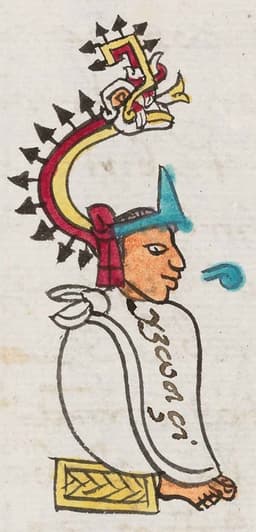
Itzcoatl
Emperor · Medieval
58.1Total
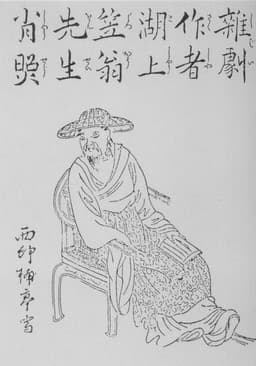
Li Yu
Emperor · Medieval
52.2Total
Basic Information
Born
1380
727
Died
1440
779
Era
Medieval
Medieval
Nationality
Aztec Empire
China
Occupation
Emperor
Emperor
Civilization
Other
Eastern
Score Comparison
Military (10%)
61.7
20.0
Political (20%)
55.0
68.0
Influence (20%)
61.0
54.9
Legacy (20%)
52.0
50.0
Leadership (15%)
66.0
53.2
Strategy (15%)
55.0
57.5
TOTAL
58.1
52.2
Li Yu — Complete Timeline
763 AD
Suppression of the An Lushan RebellionWar
Under Li Yu's reign, the An Lushan Rebellion was finally crushed after eight years of war. The rebel state of Yan collapsed, and Tang authority was restored over most of the empire, though the dynasty was permanently weakened.
An Lushan RebellionCivil War EndTang Restoration
Impact: nationalconstructive
Tibetan Invasion of Chang'anWar◆ Major
The Tibetan Empire launched a surprise invasion, capturing the Tang capital Chang'an. Li Yu fled to Shanzhou. The Tibetans installed a puppet emperor before being driven out by Tang forces and Uyghur allies. This exposed Tang military weakness.
Tibetan InvasionCapital LostMilitary Weakness
Impact: nationaldestructive
Rise of the Fanzhen SystemPolitical Action◆ Major
Li Yu granted amnesty to many rebel generals and allowed them to retain control of their provinces as military governors (jiedushi). This created semi-autonomous fanzhen that weakened central authority and led to future rebellions.
FanzhenDecentralizationMilitary Governors
Impact: nationaldestructive
765 AD
Peace Treaty with TibetPolitical Action
Li Yu negotiated a peace treaty with the Tibetan Empire, establishing a border and ending hostilities for a time. The treaty stabilized the western frontier but did not prevent future conflicts.
TibetDiplomacyBorder Treaty
Impact: regionalconstructive
Expert Analysis
Origins
Itzcoatl, born around 1380, was the illegitimate son of Acamapichtli, the first Huey Tlatoani of Tenochtitlan. His mother was a Tepanec slave, which initially limited his prospects. He rose through military ranks, serving as a general under his predecessor, Chimalpopoca. His early life was shaped by the growing power of the Aztec city-state and the oppressive dominance of the Tepanec Empire of Azcapotzalco.
Li Yu, born in 727, was the eldest son of Emperor Li Heng (later Suzong) of the Tang Dynasty. His mother was Lady Wu, a concubine. He was raised in the imperial palace, receiving a thorough Confucian education. His early life was overshadowed by the An Lushan Rebellion (755-763), which forced the imperial court to flee Chang'an. He accompanied his father during the flight, gaining firsthand experience of crisis management.
Rise to Power
Itzcoatl was elected Huey Tlatoani in 1427 after his predecessor, Chimalpopoca, was assassinated by the Tepanec ruler Maxtla. This event triggered a war of independence. Itzcoatl formed the Triple Alliance with the city-states of Texcoco and Tlacopan in 1428, leading a successful revolt against Azcapotzalco. The alliance defeated Maxtla in 1430, establishing the Aztec Empire as the dominant power in the Valley of Mexico.
Li Yu became crown prince in 758 during the An Lushan Rebellion. In 762, after his father's death, he ascended the throne as Emperor Daizong. He inherited a war-torn empire still grappling with rebel remnants. His rise was marked by the final suppression of the rebellion in 763, when the rebel state of Yan collapsed. He also faced the Tibetan invasion of Chang'an in 763, which forced him to flee and then retake the capital with the help of Uyghur allies.
Leadership & Governance
Itzcoatl's leadership was expansionist and centralizing. He reorganized the Aztec state, initiating the construction of Tenochtitlan's main temple (Templo Mayor) and expanding the empire through military campaigns. He codified Aztec history, ordering the burning of earlier codices to impose a unified narrative. His governance relied on the Triple Alliance structure, with tribute flowing from conquered territories. He scored 55.0 in political skill, reflecting his ability to forge and maintain alliances.
Li Yu's governance was conciliatory and pragmatic. He ended the An Lushan Rebellion by granting amnesty to rebel generals, allowing them to retain power as military governors (jiedushi). This created the Fanzhen system, which decentralized imperial authority. He negotiated a peace treaty with the Tibetan Empire in 765, stabilizing the western frontier. His political score of 68.0 reflects his diplomatic acumen, but his reliance on regional warlords weakened central control.
Triumph & Tragedy
Itzcoatl's greatest triumph was the formation of the Triple Alliance and the defeat of the Tepanecs, which laid the foundation for the Aztec Empire. His military campaigns expanded Aztec territory significantly, and he scored 61.7 in military. However, his tragedy was that his empire was short-lived; it fell to the Spanish within a century of his death. His burning of historical codices also erased much pre-Aztec history.
Li Yu's triumph was ending the An Lushan Rebellion, restoring Tang authority after eight years of war. He also repelled the Tibetan invasion and secured a peace treaty. However, his greatest tragedy was the Fanzhen system, which led to semi-autonomous provinces that later fragmented the Tang Empire. His flight from Chang'an during the Tibetan invasion was a humiliating episode.
Character & Destiny
Itzcoatl was a decisive and ruthless leader. His illegitimate birth likely drove his ambition. He was a skilled strategist and diplomat, forging alliances that allowed a small city-state to dominate Mesoamerica. His destiny was to create an empire that would be destroyed by forces he could not have anticipated—European conquest. His character shaped a centralized, militaristic state that was both powerful and brittle.
Li Yu was a cautious and diplomatic emperor. He prioritized stability over centralization, which led to the fragmentation of imperial power. His character was shaped by the trauma of the rebellion and invasion, making him risk-averse. His destiny was to preside over a restored but weakened empire, setting the stage for its eventual decline.
Legacy
Itzcoatl's legacy is the Aztec Empire itself—the political and military structure that dominated Mesoamerica until 1521. He is remembered as a founding figure, but his empire's collapse overshadows his achievements. His influence score of 61.0 reflects his role in creating a civilization that continues to fascinate.
Li Yu's legacy is more complex. He restored the Tang Dynasty, but his policies accelerated its decline. The Fanzhen system persisted for over a century, leading to the Tang's eventual disintegration. He is often seen as a transitional figure, not a great emperor. His legacy score of 50.0 and total score of 52.2 reflect this ambivalent assessment.
Conclusion
Itzcoatl had a greater impact, despite his lower total score (58.1 vs 52.2). He created an empire from scratch, while Li Yu merely restored an existing one. Itzcoatl's military and strategic achievements (61.7 and 55.0) were more transformative than Li Yu's political maneuvers (68.0). The Aztec Empire, though short-lived, left a profound cultural and historical legacy, while Li Yu's Tang restoration was a holding action. Itzcoatl's influence endures in modern Mexican identity, whereas Li Yu is a footnote in Chinese history. Therefore, Itzcoatl's impact was greater.
Rankings
🥇
ItzcoatlLeader
Mil: 61.7Pol: 55.0Inf: 61.0
58.1
🥈
Li Yu
Mil: 20.0Pol: 68.0Inf: 54.9
52.2
+5.9 behind
How This Comparison Works
Algorithm
Each figure is scored on 6 dimensions (0—100 scale) based on structured historical data: Military (10%), Political (20%), Influence (20%), Legacy (20%), Leadership (15%), Strategy (15%). The weighted total produces the final ranking.
Data Sources
Scores are computed from structured sub-indicators in the database. Scale factors adjust for era (Ancient ×0.85, Modern ×1.0) and civilization size (Eastern ×1.05, Other ×0.80) to account for differences in population and military scale.
Maximum 3 Figures
Comparisons are limited to 2—3 figures to ensure readability and statistical meaningfulness.
Error Margins
±5 points per dimension — Sub-scores are derived from historical records with inherent uncertainty. Two figures within 5 points on a dimension should be considered roughly equivalent in that area.
Total Score Accuracy
±3 points overall — The weighted combination of 6 dimensions produces a total score with approximately ±3 points of uncertainty. Differences of less than 3 points are not statistically significant— the figures are effectively tied.
Known Limitations
- Historical records are incomplete and uneven across civilizations
- Figures from oral-tradition societies may be underrepresented
- Occupation labels can misclassify multi-role figures
- Scores measure capability and impact, not moral character
- Quantitative scoring is a comparison tool, not absolute truth
Capability Radar
Military (10%) — Battles & Warfare
Battles
65
55
Win Rate
70
50
Expansion
70
20
Political (20%) — Governance & Reform
Reform
80
55
Diplomacy
75
60
Economy
60
50
Influence (20%) — Cultural & Global Reach
Cultural
55
40
Global
50
30
Legacy (20%) — Historical Impact
Historical
70
55
Longevity
60
45
Leadership (15%) — Power & Stability
Tenure
65
65
Stability
70
55
Strategy (15%) — Tactics & Innovation
Strategy
75
60
Tactics
60
45
Reform
55
40
Similar Comparisons
Comments & Discussion
No comments yet. Be the first to share your thoughts!