Loading...
King Gojong of Korea vs Pedro I of Brazil
Pedro I of Brazil leads by 1.8 pts · 2 figures compared
…
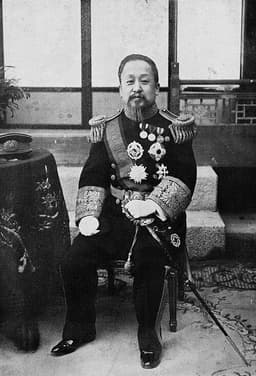
King Gojong of Korea
Emperor · Modern
52.8Total
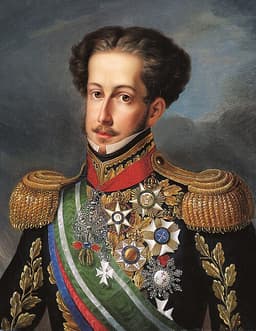
Pedro I of Brazil
Emperor · Modern
54.6Total
Basic Information
Born
1852
1798
Died
1919
1834
Era
Modern
Modern
Nationality
Korea
Brazil
Occupation
Emperor
Emperor
Civilization
Eastern
Western
Score Comparison
Military (10%)
50.0
55.0
Political (20%)
68.0
62.7
Influence (20%)
56.4
59.0
Legacy (20%)
48.3
50.0
Leadership (15%)
40.0
53.2
Strategy (15%)
54.6
45.0
TOTAL
52.8
54.6
King Gojong of Korea — Complete Timeline
1894 AD
Gabo ReformsReform◆ Major
Gojong's government implemented the Gabo Reforms, a series of modernization measures including the abolition of slavery, reform of the civil service exam, and adoption of a solar calendar. These reforms aimed to strengthen Korea against foreign encroachment.
ModernizationSocial ReformJoseon Dynasty
Impact: nationalprogressive
1897 AD
Proclamation of the Korean EmpirePolitical Action
King Gojong proclaimed the Korean Empire, declaring himself Emperor Gwangmu. This was an attempt to assert Korea's sovereignty and independence from foreign influence, particularly China and Japan, and to modernize the state.
Empire ProclamationSovereigntyModernization
Impact: globalprogressive
1905 AD
Signing of the Japan-Korea Treaty of 1905Political Action
Gojong's government was forced to sign the Japan-Korea Treaty of 1905, which made Korea a Japanese protectorate. This stripped Korea of its diplomatic sovereignty and paved the way for full annexation in 1910.
ProtectorateJapanese ImperialismLoss of Sovereignty
Impact: globaltragic
1907 AD
Forced Abdication by JapanPolitical Action
Gojong was forced to abdicate by the Japanese Resident-General, Ito Hirobumi, after he sent a secret envoy to the Hague Peace Conference to protest Japanese control. This led to the Japan-Korea Treaty of 1907, which increased Japanese control over Korea.
Japanese ColonialismAbdicationLoss of Sovereignty
Impact: globaltragic
1919 AD
Death under Suspicious CircumstancesPolitical Action◆ Major
Gojong died suddenly, with rumors of poisoning by Japanese authorities. His death sparked the March 1st Movement, a nationwide protest against Japanese rule, which became a pivotal event in the Korean independence movement.
DeathIndependence MovementJapanese Colonialism
Impact: nationaltragic
Pedro I of Brazil — Complete Timeline
1822 AD
Declaration of Independence of BrazilPolitical Action
Pedro I declared Brazil's independence from Portugal on September 7, 1822, at the Ipiranga River in S
Impact: globalprogressive
Coronation as Emperor of BrazilPolitical Action◆ Major
Pedro I was crowned Emperor of Brazil on December 1, 1822, in Rio de Janeiro. The coronation formalized the new imperial government, with Pedro I as constitutional monarch, though he retained significant executive powers.
Impact: nationalconstructive
1823 AD
War of Independence of BrazilWar◆ Major
Pedro I led Brazilian forces against Portuguese loyalists in the War of Independence. Key battles occurred in Bahia, Maranh
Impact: national
Dissolution of the Constituent AssemblyPolitical Action◆ Major
Pedro I dissolved the Constituent Assembly after conflicts over the constitution's limits on imperial power. He then imposed the 1824 Constitution, which granted the emperor extensive powers, including the Moderating Power, centralizing authority.
Impact: nationaldestructive
1831 AD
Abdication of the Brazilian ThronePolitical Action
Pedro I abdicated the Brazilian throne in favor of his five-year-old son Pedro II on April 7, 1831. He returned to Portugal to claim the Portuguese throne, leaving Brazil under a regency until his son came of age.
Impact: national
Expert Analysis
Pedro I of Brazil vs King Gojong of Korea
# The Emperor's Two Fates: Pedro I of Brazil and King Gojong of Korea
On a September morning in 1822, a young prince stood at the banks of the Ipiranga River in São Paulo, tore the Portuguese blue-and-white armband from his uniform, and shouted "Independence or Death!" Half a world away and seven decades later, another monarch—graying, weary, and cornered—proclaimed his own empire from a palace in Seoul, only to watch it crumble into Japanese hands within thirteen years. Both men were emperors in an age of empires. Both faced the impossible task of steering their nations through the turbulent waters of the 19th century. But one died a hero who had given birth to a nation, while the other died under suspicious circumstances, his kingdom already erased from the map. What made the difference?
Origins
Pedro I of Brazil was born in 1798 into the Portuguese royal family, but he was no ordinary prince. When Napoleon's armies swept across Portugal in 1807, the entire Braganza court fled to Rio de Janeiro, making Brazil the temporary seat of the Portuguese Empire. Young Pedro grew up not in European palaces, but in the tropical heat of a colony that felt increasingly like home. He was impulsive, charming, and fiercely independent—a man who rode horses through the streets of Rio and spoke with a Brazilian accent that marked him as different from his Portuguese courtiers.
King Gojong, born in 1852, entered a very different world. Korea's Joseon dynasty had ruled for over five centuries, a hermit kingdom that had deliberately shut itself off from the West. Gojong was placed on the throne at age twelve, a puppet king controlled by his father, the regent Heungseon Daewongun. Where Pedro had been shaped by exile and exposure to the wider world, Gojong was shaped by isolation and the suffocating grip of Confucian tradition. His Korea was a civilization that had not yet learned the brutal lesson that the 19th century would teach: that standing still meant being devoured.
Rise to Power
Pedro's path to power was dramatic and swift. When his father, King João VI, returned to Portugal in 1821, leaving Pedro as regent in Brazil, the Portuguese parliament tried to reduce Brazil back to colonial status. Pedro refused. On September 7, 1822, he declared independence—a moment that combined personal conviction with political necessity. He was crowned emperor two months later, at age twenty-four, with a military score of 65 and political acumen of 60—respectable but not extraordinary. Yet he had something more valuable: timing.
Gojong's rise was slower and more constrained. He became king in 1864, but real power eluded him until the 1880s. When he finally proclaimed the Korean Empire in 1897, declaring himself Emperor Gwangmu, it was a desperate act of defiance. The Sino-Japanese War (1894–1895) had already shattered China's influence over Korea, and Japan was circling. Gojong's political score of 84.8 suggests genuine diplomatic skill, but his strategy score of 30 reveals a fatal weakness: he was playing chess while Japan was playing war.
Leadership & Governance
Pedro I governed with the energy of a man who believed his nation was destined for greatness. He led Brazilian forces personally during the War of Independence in 1823, defeating Portuguese loyalists in Bahia and Maranhão. His leadership score of 74.5 reflects a ruler who could inspire soldiers and command loyalty. But he was also volatile. When the Constituent Assembly tried to limit his powers in 1823, he dissolved it by force and imposed his own constitution—a move that revealed both his authoritarian streak and his political vulnerability.
Gojong's governance was more cautious and reform-minded. The Gabo Reforms of 1894 abolished slavery, overhauled the civil service, and attempted to modernize Korea's economy. But these reforms were implemented under Japanese pressure, and Gojong's government was never truly independent. Where Pedro could act unilaterally, Gojong had to negotiate with foreign powers, conservative Confucian scholars, and the ever-present threat of Japanese intervention.
Triumph & Tragedy
Pedro's greatest triumph was the independence of Brazil itself—a vast, unified nation that emerged from the colonial crucible without the bloody civil wars that fractured Spanish America. His tragedy came later: mounting unpopularity, conflicts with the Brazilian elite, and the loss of his wife, Empress Leopoldina. In 1831, after just nine years on the throne, he abdicated in favor of his five-year-old son, Pedro II, and returned to Portugal to fight for his daughter's claim to the Portuguese throne. He died in 1834 at age thirty-five, a romantic figure who had burned brightly and briefly.
Gojong's tragedy was longer and more painful. His triumph—the Korean Empire of 1897—was a hollow victory, a flag planted on sinking sand. In 1905, Japan forced Korea to become a protectorate. In 1907, after Gojong secretly sent envoys to the Hague Peace Conference to protest Japanese domination, the Japanese Resident-General Ito Hirobumi forced him to abdicate. He died in 1919, officially from natural causes, but rumors of poisoning by Japanese agents have never been silenced. His death sparked the March 1st Movement, a nationwide protest that became a founding moment of Korean nationalism.
Character & Destiny
Pedro I was a man of action, not reflection. He was impulsive, brave, and sometimes reckless—qualities that served him well in revolution but poorly in governance. He could inspire devotion but also resentment. His character was perfectly suited to the moment of independence, but ill-suited to the long, slow work of building a stable empire.
Gojong, by contrast, was a man of patience and calculation—perhaps too patient. He watched and waited, hoping for diplomatic solutions that never came. His political score of 84.8 suggests he understood the game of international politics, but his strategy score of 30 reveals a leader who could not translate understanding into action. He was like a chess master who sees every move but cannot stop the opponent's pieces from advancing.
Legacy
Pedro I is remembered as the "Liberator" of Brazil, the father of the nation. His legacy score of 70 reflects a figure who, despite his flaws, gave Brazil its independence and its identity. Today, his image appears on currency, his name adorns streets and squares, and his cry at the Ipiranga River is taught to every Brazilian schoolchild.
Gojong's legacy is more complex. His influence score of 72.9 is surprisingly high, but it is the influence of a martyr rather than a victor. He is remembered as the last emperor of Korea, the man who tried to save his nation and failed. His death sparked the March 1st Movement, which in turn fueled the Korean independence struggle that would continue for decades. In South Korea today, he is honored as a symbol of resistance, but also mourned as a symbol of lost sovereignty.
Conclusion
The difference between these two emperors is not simply a matter of character or skill. Pedro I succeeded because he faced a weakened Portugal, a supportive Brazilian elite, and a world order that still allowed for new nations to emerge. Gojong failed because he faced a rising Japan, a divided Korean court, and an international system that had no room for weak empires. One man rode the wave of history; the other was crushed by it. Their stories remind us that leadership is never purely individual—it is always a conversation between the ruler and the age. And sometimes, the age has already made up its mind.
Rankings
🥇
Pedro I of BrazilLeader
Mil: 55.0Pol: 62.7Inf: 59.0
54.6
🥈
King Gojong of Korea
Mil: 50.0Pol: 68.0Inf: 56.4
52.8
+1.8 behind
How This Comparison Works
Algorithm
Each figure is scored on 6 dimensions (0—100 scale) based on structured historical data: Military (10%), Political (20%), Influence (20%), Legacy (20%), Leadership (15%), Strategy (15%). The weighted total produces the final ranking.
Data Sources
Scores are computed from structured sub-indicators in the database. Scale factors adjust for era (Ancient ×0.85, Modern ×1.0) and civilization size (Eastern ×1.05, Other ×0.80) to account for differences in population and military scale.
Maximum 3 Figures
Comparisons are limited to 2—3 figures to ensure readability and statistical meaningfulness.
Error Margins
±5 points per dimension — Sub-scores are derived from historical records with inherent uncertainty. Two figures within 5 points on a dimension should be considered roughly equivalent in that area.
Total Score Accuracy
±3 points overall — The weighted combination of 6 dimensions produces a total score with approximately ±3 points of uncertainty. Differences of less than 3 points are not statistically significant— the figures are effectively tied.
Known Limitations
- Historical records are incomplete and uneven across civilizations
- Figures from oral-tradition societies may be underrepresented
- Occupation labels can misclassify multi-role figures
- Scores measure capability and impact, not moral character
- Quantitative scoring is a comparison tool, not absolute truth
Capability Radar
Military (10%) — Battles & Warfare
Battles
5
35
Win Rate
5
40
Expansion
0
30
Political (20%) — Governance & Reform
Reform
40
45
Diplomacy
30
50
Economy
20
30
Influence (20%) — Cultural & Global Reach
Cultural
40
40
Global
30
45
Legacy (20%) — Historical Impact
Historical
50
55
Longevity
40
50
Leadership (15%) — Power & Stability
Tenure
60
55
Stability
15
25
Strategy (15%) — Tactics & Innovation
Strategy
5
35
Tactics
5
30
Reform
10
20
Similar Comparisons
Comments & Discussion
No comments yet. Be the first to share your thoughts!