Loading...
Justo Rufino Barrios vs Shi Dakai
Shi Dakai leads by 1.0 pts · 2 figures compared
…
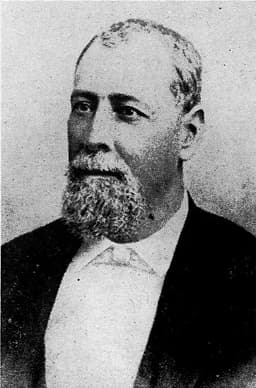
Justo Rufino Barrios
General · Modern
58.6Total
Shi Dakai
General · Modern
59.6Total
Basic Information
Born
1835
1831
Died
1885
1863
Era
Modern
Modern
Nationality
Guatemala
China
Occupation
General
General
Civilization
Western
Eastern
Score Comparison
Military (10%)
52.5
76.0
Political (20%)
72.0
45.0
Influence (20%)
60.0
56.7
Legacy (20%)
49.2
54.0
Leadership (15%)
65.0
72.0
Strategy (15%)
55.0
68.1
TOTAL
58.6
59.6
Justo Rufino Barrios — Complete Timeline
1871 AD
Enacted the Liberal Reforms of 1871Reform
Justo Rufino Barrios, after coming to power, implemented sweeping liberal reforms. These included the separation of church and state, confiscation of church lands, establishment of secular education, and promotion of coffee cultivation for export.
GuatemalaLiberal ReformSecularization
Impact: nationalprogressive
1873 AD
Modernized Guatemala's InfrastructureReform◆ Major
Barrios oversaw the construction of roads, telegraph lines, and railways, particularly to support coffee exports. He also promoted immigration and foreign investment, transforming Guatemala's economy.
GuatemalaInfrastructureEconomic Development
Impact: nationalconstructive
1885 AD
Killed at the Battle of ChalchuapaWar
Barrios was killed in battle at Chalchuapa, El Salvador, while leading an invasion to forcibly reunify Central America. His death ended the unification attempt and preserved the sovereignty of the individual Central American states.
Central AmericaBattleDeath
Impact: regionaltragic
Declared the Unification of Central AmericaPolitical Action◆ Major
Barrios unilaterally declared the reunification of the Central American republics by force. He issued a decree proclaiming himself supreme military commander of a unified Central America, leading to war with neighboring states.
Central AmericaUnificationWar
Impact: regionaldestructive
Shi Dakai — Complete Timeline
1851 AD
Jintian UprisingWar◆ Major
Shi Dakai joined the Taiping Rebellion at its inception in Jintian, Guangxi. As a core leader, he helped organize the rebel forces and was appointed Wing King, becoming one of the key military commanders of the Taiping Heavenly Kingdom.
Taiping RebellionUprisingMilitary Command
Impact: national
1854 AD
Battle of XiangtanWar◆ Major
Shi Dakai led Taiping forces to a major victory at Xiangtan, Hunan, defeating Qing imperial troops. This battle secured Taiping control over key territories in the Yangtze River valley and demonstrated his military skill.
Taiping RebellionBattleVictory
Impact: regional
1856 AD
Tianjing IncidentPolitical Action
Shi Dakai returned to Tianjing (Nanjing) after the internal purge of the Eastern King Yang Xiuqing and the murder of the Northern King Wei Changhui. He condemned the violence and was forced to flee, leading to a split in Taiping leadership.
Taiping RebellionInternal ConflictPurge
Impact: nationaltragic
1858 AD
Campaign in Zhejiang and FujianWar
Shi Dakai led a separate Taiping army into Zhejiang and Fujian provinces, capturing several cities. This campaign expanded Taiping influence into southeastern China but also isolated his forces from the main Taiping base.
Taiping RebellionCampaignExpansion
Impact: regional
1863 AD
Battle of Baishui RiverWar◆ Major
Shi Dakai's army was trapped and defeated by Qing forces at the Baishui River in Sichuan. He was captured and executed shortly after, marking the end of his military career and a significant loss for the Taiping cause.
Taiping RebellionBattleDefeatDeath
Impact: nationaltragic
Expert Analysis
Shi Dakai vs Justo Rufino Barrios
### The Rebel and the Reformer: Two Paths to Glory and Ruin
On a spring day in 1863, a thirty-two-year-old general knelt by the Baishui River in Sichuan, China. His army was shattered, his kingdom dying. Shi Dakai, the Wing King of the Taiping Heavenly Kingdom, faced his executioners with a calm that belied a life of unimaginable violence. Twenty-two years later and half a world away, another general, Justo Rufino Barrios of Guatemala, fell in battle at Chalchuapa, El Salvador, his horse shot from under him, his dream of a unified Central America dying with him. Both men were warriors, both were reformers, both met violent ends in their forties. Yet their stories diverge in ways that reveal the profound chasm between Eastern rebellion and Western state-building—and the cruel caprice of history.
### Origins
Shi Dakai was born in 1831 into a prosperous Hakka family in Guangxi, southern China. The Qing Dynasty was in its death throes, weakened by the Opium Wars, internal corruption, and a population explosion that bred famine and resentment. Shi was educated in the Confucian classics, but he was also a restless youth, drawn to martial arts and the strange, millenarian teachings of Hong Xiuquan, a failed civil service exam candidate who believed he was the brother of Jesus Christ. The Taiping Rebellion was a fusion of Christian heresy, Chinese folk religion, and a desperate cry for land and justice. Shi Dakai joined the uprising in 1851 at the Jintian Uprising, when he was just twenty years old. He was not a peasant; he was a member of the local gentry, but his loyalty to Hong’s vision was absolute.
Justo Rufino Barrios, born in 1835 in San Lorenzo, Guatemala, came from a different world entirely. Guatemala was a young nation, barely thirty years independent from Spain, torn between conservative landowners who clung to colonial traditions and liberals who dreamed of progress, coffee, and secularism. Barrios was a *mestizo* of modest means, a lawyer and soldier who rose through the chaos of Central America’s endless civil wars. Where Shi Dakai was shaped by a collapsing empire, Barrios was forged in the furnace of a fragile republic. His enemy was not a foreign dynasty but the entrenched power of the Catholic Church and the landed aristocracy.
### Rise to Power
Shi Dakai’s rise was meteoric. In the Taiping hierarchy, he was named the Wing King, one of the original “kings” who led the rebellion. His military brilliance shone at the Battle of Xiangtan in 1854, where he crushed Qing imperial troops in Hunan, securing the Taiping’s hold on the Yangtze River valley. At twenty-three, he commanded armies of tens of thousands. But the Taiping was a house of cards. In 1856, the Tianjing Incident tore the kingdom apart. The Eastern King, Yang Xiuqing, attempted a coup; the Heavenly King, Hong Xiuquan, ordered his murder; and in the ensuing bloodbath, over twenty thousand Taiping loyalists were slaughtered. Shi Dakai returned to the capital to find chaos. He condemned the massacre, only to be branded a traitor. Forced to flee, he led a separate army into Zhejiang and Fujian, a wandering campaign that stretched his resources and his loyalty.
Barrios’s rise was more systematic. He seized power in 1871 after a liberal revolt, becoming president of Guatemala. He was not a prophet or a king; he was a caudillo, a strongman in the Latin American tradition. His path was political, not apocalyptic. He enacted the Liberal Reforms of 1871, stripping the Church of its land and power, building roads and telegraph lines, and modernizing the economy around coffee exports. By 1873, he was laying railways and inviting foreign investment. He was ruthless—he exiled his opponents and crushed indigenous uprisings—but his ambition was focused on the state, not the soul.
### Leadership & Governance
Shi Dakai was a military genius but a political naif. His strategy at Xiangtan was brilliant: he used the terrain, outmaneuvered the Qing, and inspired his troops with a fervor that bordered on religious ecstasy. But he could not navigate the paranoid court of Hong Xiuquan. The Taiping’s governance was a theocratic nightmare—Hong claimed to be God’s son, issued bizarre decrees, and trusted no one. Shi’s strength was his integrity; he refused to participate in the purges. His weakness was his inability to build a political base beyond his army. When he split from the main Taiping force in 1858, he became a warlord, not a statesman. His campaign in Zhejiang and Fujian was a series of tactical victories that led nowhere, a brilliant march into a strategic dead end.
Barrios ruled as a modernizer with an iron fist. He built schools, promoted coffee as a cash crop, and encouraged immigration. His military leadership was competent but not inspired—his score of 65.4 in military skill reflects a man who was more politician than general. He fought wars to consolidate power, but his real genius was in governance: he separated church and state, reformed the legal system, and created a centralized bureaucracy. His leadership score of 77.2 is higher than Shi’s 76.6, but the gap is narrow. Both men commanded loyalty, but Barrios commanded institutions; Shi commanded only men.
### Triumph & Tragedy
Shi Dakai’s greatest moment was Xiangtan in 1854, a victory that seemed to promise that the Taiping could conquer all of China. His greatest tragedy was the Tianjing Incident in 1856, which shattered the movement’s unity. After that, he was a man without a home, fighting for a cause that had already died. His final campaign in Sichuan was a desperate gamble. At the Battle of Baishui River in 1863, his army was trapped between Qing forces and the river. He surrendered to spare his men, but the Qing executed him by slow slicing—a death reserved for the worst traitors. He was thirty-two.
Barrios’s triumph was the Liberal Reforms, which transformed Guatemala from a backward colony into a modern state. His tragedy was his hubris. In 1885, he declared the reunification of Central America by force, issuing a decree that proclaimed himself the leader of a new federation. He invaded El Salvador, but at Chalchuapa, he was killed by a bullet. His dream died with him. Unlike Shi, he died in battle, a soldier’s death, but his legacy was ambiguous: he had unified nothing, and his reforms were soon rolled back by his successors.
### Character & Destiny
Shi Dakai was a man of principle in a movement that had abandoned principle. He was loyal to Hong Xiuquan even when Hong betrayed him. He was merciful to his enemies even when mercy was weakness. His character was his destiny: he could not be ruthless enough to survive the Taiping’s internal wars, nor pragmatic enough to build a separate kingdom. He was a knight in an age of butchers.
Barrios was a pragmatist who dreamed too big. He knew how to build a state but not a federation. His character was aggressive, impatient, and visionary. He could not wait for diplomacy; he had to force history. His destiny was to die on a battlefield, a martyr to an idea that was ahead of its time.
### Legacy
Shi Dakai is remembered in China as a tragic hero, a brilliant general who was too good for his cause. His legacy score of 65.9 reflects a man overshadowed by the Taiping’s ultimate failure. He is a footnote in the history of a rebellion that killed twenty million people and changed nothing.
Barrios is remembered as Guatemala’s great reformer, the father of its modernization. His legacy score of 67.7 is slightly higher, but it is contested. To some, he is a liberator; to others, a dictator who sold the country to coffee barons. His statue stands in Guatemala City, but his dream of Central American unity remains a ghost.
### Conclusion
Two generals, two failures, two different worlds. Shi Dakai fought for a heavenly kingdom that was always a delusion; Barrios fought for a republic that was always a compromise. One died as a rebel, the other as a president. One was executed, the other fell in battle. Their lives remind us that history does not reward purity or ambition—it rewards timing. Shi Dakai was born too late, into a dynasty that was dying but not dead. Barrios was born too early, into a region that was not ready for unity. Both were men of courage and vision, but courage without context is just a story. And stories, however tragic, are all that remain.
Rankings
🥇
Shi DakaiLeader
Mil: 76.0Pol: 45.0Inf: 56.7
59.6
🥈
Justo Rufino Barrios
Mil: 52.5Pol: 72.0Inf: 60.0
58.6
+1.0 behind
How This Comparison Works
Algorithm
Each figure is scored on 6 dimensions (0—100 scale) based on structured historical data: Military (10%), Political (20%), Influence (20%), Legacy (20%), Leadership (15%), Strategy (15%). The weighted total produces the final ranking.
Data Sources
Scores are computed from structured sub-indicators in the database. Scale factors adjust for era (Ancient ×0.85, Modern ×1.0) and civilization size (Eastern ×1.05, Other ×0.80) to account for differences in population and military scale.
Maximum 3 Figures
Comparisons are limited to 2—3 figures to ensure readability and statistical meaningfulness.
Error Margins
±5 points per dimension — Sub-scores are derived from historical records with inherent uncertainty. Two figures within 5 points on a dimension should be considered roughly equivalent in that area.
Total Score Accuracy
±3 points overall — The weighted combination of 6 dimensions produces a total score with approximately ±3 points of uncertainty. Differences of less than 3 points are not statistically significant— the figures are effectively tied.
Known Limitations
- Historical records are incomplete and uneven across civilizations
- Figures from oral-tradition societies may be underrepresented
- Occupation labels can misclassify multi-role figures
- Scores measure capability and impact, not moral character
- Quantitative scoring is a comparison tool, not absolute truth
Capability Radar
Military (10%) — Battles & Warfare
Battles
45
75
Win Rate
55
70
Expansion
55
75
Political (20%) — Governance & Reform
Reform
70
50
Diplomacy
45
45
Economy
55
40
Influence (20%) — Cultural & Global Reach
Cultural
40
55
Global
30
40
Legacy (20%) — Historical Impact
Historical
50
60
Longevity
35
45
Leadership (15%) — Power & Stability
Tenure
50
55
Stability
30
35
Strategy (15%) — Tactics & Innovation
Strategy
50
80
Tactics
40
85
Reform
60
60
Similar Comparisons
Comments & Discussion
BladeAndBamboo6/16/2026
As a military historian, I’d say Shi Dakai was the better warrior, but Barrios was the smarter strategist. Shi’s tactical brilliance at the Battle of Lake Dongting in 1855 against the Qing was epic—he used river currents to trap enemy boats—but his fatal flaw was loyalty to a deluded cult. Barrios, a ruthless modernizer, built railroads and centralized power before his doomed campaign. Shi died with dignity; Barrios died as a fool chasing a pipe dream. Give me Shi’s honor over Barrios’s ‘progres
数据利剑6/16/2026
作为数据怀疑论者,我质疑这次对比的前提。你把一个19世纪中国叛乱领袖跟一个中美洲强人放在天平上,却忽略关键变量:人口规模、地理阻隔、经济基础。Taiping Rebellion伤亡达2000万,而Barrios统一中美洲的战争不过几千人。量级差了几百倍,历史结果自然不同。这种跨文明对比常沦为虚浮寓言,缺乏统计依据。别拿血统当故事线索,不如先看看GDP和死亡率。|
ClassicSpectrum6/16/2026
From a classics scholar’s lens, both men embody tragedy, but Shi Dakai’s Confucian-infused martyrdom mirrors the ancient Greek 'hubris and nemesis' cycle—his fatalism was noble, his surrender to save followers, epic. Barrios, by contrast, was pure Roman ambition: a caudillo who believed raw will could forge nations. Yet history judges: Shi’s poetry survives, Barrios’s monuments crumble. The soul of rebellion outlasts the shell of reform.|
火药桶与柳枝6/16/2026
作为历史迷,我直言不讳:Shi Dakai是个悲剧英雄,但Barrios只是个带枪的暴发户。你看,Shi在安顺场慷慨赴死前还怒斥清廷腐败,留下绝命诗,那是真风骨。Barrios呢?他靠卖咖啡起家,当上总统后疯狂镇压原住民,最后在萨尔瓦多边境被老乡打死。一个为天国理想殉道,一个为个人野心送命。高下立判,别拿他们相提并论。|
RevisionistRust6/16/2026
Call me a revisionist, but both figures are romanticized myths. Shi Dakai wasn’t a saint—he burned villages in Hunan, his ‘humanity’ was a Taiping propaganda trick. Barrios wasn’t just a regressive caudillo; his liberal reforms (land redistribution, secular schools) planted seeds for later democracy. Comparing them as rebels vs reformers is lazy. Shi was a sectarian warlord; Barrios a flawed nation-builder. Stop whitewashing rebellion with martyrdom.