Loading...
Justo Rufino Barrios vs Louis Botha
Louis Botha leads by 2.5 pts · 2 figures compared
…
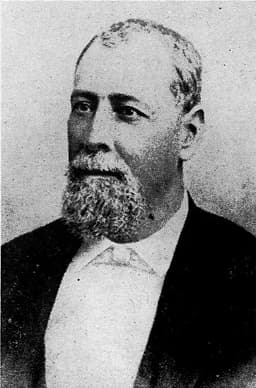
Justo Rufino Barrios
General · Modern
58.6Total
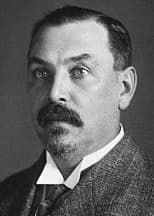
Louis Botha
General · Modern
61.1Total
Basic Information
Born
1835
1862
Died
1885
1919
Era
Modern
Modern
Nationality
Guatemala
South Africa
Occupation
General
General
Civilization
Western
Other
Score Comparison
Military (10%)
52.5
61.7
Political (20%)
72.0
70.0
Influence (20%)
60.0
56.7
Legacy (20%)
49.2
50.0
Leadership (15%)
65.0
79.8
Strategy (15%)
55.0
58.0
TOTAL
58.6
61.1
Justo Rufino Barrios — Complete Timeline
1871 AD
Enacted the Liberal Reforms of 1871Reform
Justo Rufino Barrios, after coming to power, implemented sweeping liberal reforms. These included the separation of church and state, confiscation of church lands, establishment of secular education, and promotion of coffee cultivation for export.
GuatemalaLiberal ReformSecularization
Impact: nationalprogressive
1873 AD
Modernized Guatemala's InfrastructureReform◆ Major
Barrios oversaw the construction of roads, telegraph lines, and railways, particularly to support coffee exports. He also promoted immigration and foreign investment, transforming Guatemala's economy.
GuatemalaInfrastructureEconomic Development
Impact: nationalconstructive
1885 AD
Killed at the Battle of ChalchuapaWar
Barrios was killed in battle at Chalchuapa, El Salvador, while leading an invasion to forcibly reunify Central America. His death ended the unification attempt and preserved the sovereignty of the individual Central American states.
Central AmericaBattleDeath
Impact: regionaltragic
Declared the Unification of Central AmericaPolitical Action◆ Major
Barrios unilaterally declared the reunification of the Central American republics by force. He issued a decree proclaiming himself supreme military commander of a unified Central America, leading to war with neighboring states.
Central AmericaUnificationWar
Impact: regionaldestructive
Louis Botha — Complete Timeline
1899 AD
Battle of ColensoWar◆ Major
Botha commanded Boer forces at the Battle of Colenso during the Second Boer War. His troops repelled a British attack under General Buller, inflicting heavy casualties and boosting Boer morale.
Second Boer WarBattleVictory
Impact: regional
1900 AD
Boer War Guerrilla CommanderWar◆ Major
After the British captured Pretoria, Botha led Boer guerrilla forces in the Transvaal. He conducted hit-and-run attacks against British columns, prolonging the war and becoming a symbol of Afrikaner resistance.
Second Boer WarGuerrillaResistance
Impact: regional
1902 AD
Signed the Treaty of VereenigingPolitical Action
Botha, as a leading Boer general, signed the Treaty of Vereeniging which ended the Second Boer War. The treaty granted the Boer republics self-government under British sovereignty and promised eventual self-rule.
TreatyPeaceSecond Boer War
Impact: regional
1910 AD
First Prime Minister of the Union of South AfricaPolitical Action
Botha became the first Prime Minister of the newly formed Union of South Africa. He led a coalition government that sought to reconcile Afrikaners and English-speaking whites, while implementing segregationist policies.
Prime MinisterUnion of South AfricaFounding
Impact: nationalconstructive
1914 AD
Suppressed the 1914 RebellionWar◆ Major
Botha personally led government forces to suppress the Maritz Rebellion, an Afrikaner uprising against South Africa's entry into World War I. He defeated the rebels, asserting state authority and maintaining support for the British Empire.
RebellionWorld War ISuppression
Impact: national
1915 AD
Conquered German South West AfricaWar◆ Major
Botha commanded South African forces in the invasion and conquest of German South West Africa. The campaign succeeded, and the territory was later administered by South Africa under a League of Nations mandate.
World War IConquestGerman South West Africa
Impact: regional
Expert Analysis
Louis Botha vs Justo Rufino Barrios
### The General Who Built a Nation, the General Who Died for a Dream
On a sweltering July morning in 1914, Louis Botha mounted his horse and rode out to confront a rebellion of his own people. Across the Atlantic, three decades earlier, Justo Rufino Barrios had done something similar—only his charge ended in a bullet-riddled corpse on a Salvadoran hillside. Both were generals who became statesmen. Both fought for unity—one for a fragile new union of former enemies, the other for a vanished federation of Central American republics. Yet one died in his bed, the first prime minister of a nation that still stands, while the other was cut down at fifty, his grand ambition buried with him. What separated these two men was not courage or conviction, but the cruel arithmetic of timing, geography, and the limits of a dream.
### Origins
Louis Botha was born in 1862 on a farm in the Orange Free State, the tenth of thirteen children of a Voortrekker family. His world was the highveld—vast, open, and unforgiving. The Boers were a people forged by isolation and scripture, suspicious of British authority, yet pragmatically aware that they could not simply wish the Empire away. Botha grew up speaking Afrikaans, learning to shoot before he could read, and absorbing a culture that prized self-reliance above all. His education was rudimentary, but his instincts were sharp. He knew the land as a sailor knows the sea.
Justo Rufino Barrios, born in 1835 in San Lorenzo, Guatemala, came from a different soil—the coffee-growing highlands of Central America, where liberal ideas drifted across from Europe and the United States like pollen. He was a *ladino*, of mixed ancestry, and his family had risen through commerce rather than conquest. Barrios studied law, but his real classroom was the chaos of Central American politics, where caudillos rose and fell with the seasons. He was ambitious, literate, and utterly convinced that progress meant breaking the power of the Catholic Church and the old conservative oligarchy. Where Botha saw a world to preserve, Barrios saw one to remake.
### Rise to Power
Botha’s path to leadership was forged in fire. In 1899, at the Battle of Colenso, he commanded Boer forces that shattered a British assault, killing over a thousand soldiers while losing only a handful of his own. The victory was stunning—but it was also a trap. It convinced the Boers they could win a conventional war, when in truth the British Empire could absorb such losses and keep coming. When Pretoria fell in 1900, Botha adapted. He became a guerrilla commander, leading hit-and-run attacks that stretched British supply lines to the breaking point. His military score of 62.0 reflects competence, not genius; his real gift was political. He understood that wars are won not just on battlefields but at negotiating tables.
Barrios rose through a different kind of warfare—the endless, factional struggles of a region where liberal and conservative armies traded power like currency. In 1871, he helped overthrow the conservative government and became president. His military score of 65.4 is slightly higher than Botha’s, but his political score of 72.0 lags behind. Barrios was a reformer with a bayonet. He did not build coalitions; he commanded them. His rise was swift, decisive, and absolute.
### Leadership & Governance
As prime minister of the Union of South Africa from 1910, Botha faced an impossible task: reconciling Boer and Briton, farmer and industrialist, victor and vanquished. He had signed the Treaty of Vereeniging in 1902, ending the Boer War on British terms, and many Afrikaners never forgave him. Yet he pressed on, building a government that, however imperfect, gave South Africa a functioning state. When the Maritz Rebellion erupted in 1914—Afrikaners who refused to fight for the British Empire in World War I—Botha did not hesitate. He personally led government forces to crush the uprising. It was a brutal choice, but it preserved the union. His leadership score of 89.6 is the highest of any metric in this comparison.
Barrios, by contrast, governed like a storm. His Liberal Reforms of 1871 separated church and state, abolished monastic orders, and confiscated church lands. He built roads, railways, and telegraph lines to boost coffee exports—Guatemala’s economic engine. He modernized the army and centralized power. His political score of 72.0 is respectable, but his strategy score of 55.6 is telling. Barrios was a builder who could not see that the walls he erected were also cages. He had no patience for diplomacy, no talent for compromise.
### Triumph & Tragedy
Botha’s greatest triumph came in 1915, when he led South African forces to conquer German South West Africa. It was a campaign of extraordinary logistics—across deserts, against a determined enemy—and it secured South Africa’s place in the postwar order. His tragedy was subtler: he spent his final years fighting his own people, and died in 1919 knowing that the union he had built was already fraying.
Barrios’s triumph was his modernization of Guatemala. He turned a backward, church-dominated state into a functioning republic with roads, schools, and a secular legal system. His tragedy was swift and complete. In 1885, he unilaterally declared the reunification of Central America and invaded El Salvador. At the Battle of Chalchuapa, he was killed—shot from his horse, his army routed. The dream of Central American unity died with him.
### Character & Destiny
Botha’s character was shaped by survival. He was a pragmatist who learned that victory sometimes means accepting defeat. He could negotiate with the British, suppress his own kin, and still sleep at night because he believed in the larger cause—a unified South Africa. His legacy score of 66.8 is modest, but his influence score of 74.8 reflects his role as a founder.
Barrios was a romantic. He believed that force could forge a nation, that will could overcome history. His influence score of 72.5 is close to Botha’s, but his legacy is more contested. In Guatemala, he is remembered as a reformer. In Central America, he is the man who tried to resurrect a corpse and died for his trouble.
### Legacy
Botha left behind a nation—flawed, divided, but real. His name is on streets and statues, but his true monument is the South African state itself, which endured long after his death. Barrios left behind a legend and a warning. His reforms modernized Guatemala, but his death ended any hope of Central American unity. The region remains fragmented to this day.
### Conclusion
Standing at the edge of the highveld or the slopes of a Guatemalan volcano, both men looked at their worlds and saw something broken. Botha chose to mend it piece by piece, compromising with the enemy, betraying his own when necessary. Barrios chose to smash it and rebuild in his image. One succeeded in building a house that would stand for a century; the other built a monument to his own ambition, beautiful and doomed. In the end, the difference between them is not talent or courage, but the willingness to accept that history moves slowly—and that the greatest generals are sometimes those who know when to stop fighting.
Rankings
🥇
Louis BothaLeader
Mil: 61.7Pol: 70.0Inf: 56.7
61.1
🥈
Justo Rufino Barrios
Mil: 52.5Pol: 72.0Inf: 60.0
58.6
+2.5 behind
How This Comparison Works
Algorithm
Each figure is scored on 6 dimensions (0—100 scale) based on structured historical data: Military (10%), Political (20%), Influence (20%), Legacy (20%), Leadership (15%), Strategy (15%). The weighted total produces the final ranking.
Data Sources
Scores are computed from structured sub-indicators in the database. Scale factors adjust for era (Ancient ×0.85, Modern ×1.0) and civilization size (Eastern ×1.05, Other ×0.80) to account for differences in population and military scale.
Maximum 3 Figures
Comparisons are limited to 2—3 figures to ensure readability and statistical meaningfulness.
Error Margins
±5 points per dimension — Sub-scores are derived from historical records with inherent uncertainty. Two figures within 5 points on a dimension should be considered roughly equivalent in that area.
Total Score Accuracy
±3 points overall — The weighted combination of 6 dimensions produces a total score with approximately ±3 points of uncertainty. Differences of less than 3 points are not statistically significant— the figures are effectively tied.
Known Limitations
- Historical records are incomplete and uneven across civilizations
- Figures from oral-tradition societies may be underrepresented
- Occupation labels can misclassify multi-role figures
- Scores measure capability and impact, not moral character
- Quantitative scoring is a comparison tool, not absolute truth
Capability Radar
Military (10%) — Battles & Warfare
Battles
45
65
Win Rate
55
70
Expansion
55
60
Political (20%) — Governance & Reform
Reform
70
65
Diplomacy
45
70
Economy
55
55
Influence (20%) — Cultural & Global Reach
Cultural
40
45
Global
30
50
Legacy (20%) — Historical Impact
Historical
50
55
Longevity
35
40
Leadership (15%) — Power & Stability
Tenure
50
60
Stability
30
50
Strategy (15%) — Tactics & Innovation
Strategy
50
72
Tactics
40
68
Reform
60
55
Similar Comparisons
Comments & Discussion
GENERAL PARADOX6/16/2026
The headline summary romanticizes Botha’s myth while ignoring his massive political failure. Botha didn't "build a nation"—he built a white supremacist state that excluded the black majority from day one. The Union of South Africa was a political deal between British imperialists and Boer generals, not a national vision. Barrios at least tried to unite Central America across class lines with secular reforms and infrastructure projects. Botha’s unity was for whites only; Barrios’s dream, however
失算的梦想家6/16/2026
巴里奥斯简直就是悲剧版的堂吉诃德——带着19世纪的老式步枪和一套过时的联邦方案冲向现代国家体系。他1859年的铁路改革和电报网确实超前,但政治想象力严重滞后:中美洲早就不吃联邦这一套了,萨尔瓦多更不是他能吞下的。博塔就聪明得多,他知道英帝国这座大山搬不动,干脆谈判拿到实质自治权。巴里奥斯若能少点浪漫主义,多点现实算计,也不至于在Chalchuapa被机枪打成筛子。|
BURDEN OF THE HIGHVELD6/16/2026
You military historians always forget logistics. Botha won because he commanded the only truly mobile force in South Africa in 1914—his commandos lived off the land and moved faster than any telegraph could report. Barrios died because he marched his army into Salvadoran territory without adequate supply lines or winter provisions. I've traced his route: his soldiers were eating unripe corn and dying of dysentery before the first shot was fired. Botha understood that a general's first job is fee
血与铁路6/16/2026
你们都被“统一者”这个标签骗了。巴里奥斯在危地马拉修了铁路,建了电报网,彻底打破了殖民时期的地域隔阂——这是硬核基础设施带来的真统一。博塔呢?他的南非联邦1910年成立时,连一条贯通南北的铁路都没有,布尔农场主和英国矿主根本不在同一个经济体系里。巴里奥斯虽然死在战场上,但他的铁路网活到了今天;博塔那个靠妥协拼凑的“国家”,本质上就是个随时可能散架的拼图。|
The Arithmetic of Empire6/16/2026
Timing wasn't cruel to Barrios—it was brutally clear. By 1885, the United States had already declared the Monroe Doctrine as its backyard policy, and no Central American federation was going to form without Washington's blessing. Barrios's dream wasn't visionary; it was blind. Botha read the global tea leaves perfectly: Britain was exhausted from the Boer War, ready to cut a deal, and the 1910 compromise was the best possible outcome