Loading...
Jung Bahadur Rana vs Marouf al-Bakhit
Jung Bahadur Rana leads by 19.8 pts · 2 figures compared
…
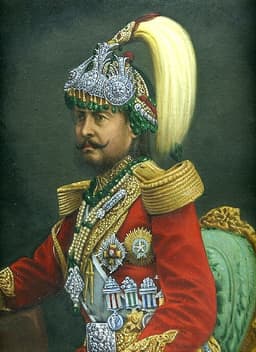
Jung Bahadur Rana
General · Modern
61.4Total
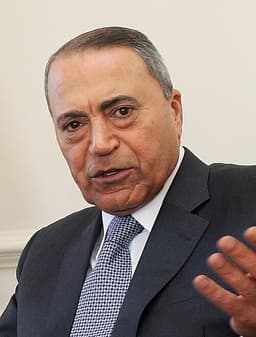
Marouf al-Bakhit
General · Modern
41.6Total
Basic Information
Born
1817
1947
Died
1877
—
Era
Modern
Modern
Nationality
Nepal
Jordan
Occupation
General
General
Civilization
Indian
Middle Eastern
Score Comparison
Military (10%)
55.0
10.2
Political (20%)
72.0
61.3
Influence (20%)
56.7
48.6
Legacy (20%)
55.0
38.3
Leadership (15%)
78.0
40.0
Strategy (15%)
55.0
36.8
TOTAL
61.4
41.6
Jung Bahadur Rana — Complete Timeline
1846 AD
Kot MassacrePolitical Action
Jung Bahadur Runa orchestrated the Kot Massacre in Kathmandu, where dozens of nobles and courtiers were killed. This event eliminated his political rivals and allowed him to seize effective control of the Nepalese government, establishing the hereditary Rana prime ministership.
CoupMassacreRana Dynasty
Impact: nationaldestructive
Establishment of Rana DynastyPolitical Action◆ Major
Following the Kot Massacre, Jung Bahadur Rana appointed himself prime minister and commander-in-chief. He made the position hereditary, founding the Rana dynasty that ruled Nepal for over a century, reducing the Shah monarchs to figureheads.
DynastyGovernmentNepal
Impact: national
1850 AD
Visit to EuropeCultural
Jung Bahadur Rana traveled to Britain and France, becoming the first South Asian ruler to visit Europe. He observed Western military and industrial technology, which influenced his modernization efforts in Nepal, including army reforms.
DiplomacyModernizationTravel
Impact: nationalconstructive
1856 AD
Nepal-Tibet War and Treaty of ThapathaliWar◆ Major
Jung Bahadur Rana led a Nepalese military campaign into Tibet. The conflict ended with the Treaty of Thapathali, which secured Nepalese territorial claims and established a tributary relationship with Tibet, enhancing Nepal's regional influence.
WarTreatyTibet
Impact: regional
Marouf al-Bakhit — Complete Timeline
2005 AD
Appointed Prime Minister of JordanPolitical Action◆ Major
King Abdullah II appointed Marouf al-Bakhit as Prime Minister of Jordan in November 2005, following the 2005 Amman bombings. Al-Bakhit, a former intelligence chief, was tasked with restoring security and stability.
JordanPrime MinisterAppointment
Impact: national
2007 AD
Resigned as Prime MinisterPolitical Action
Marouf al-Bakhit resigned as Prime Minister of Jordan in November 2007 after parliamentary elections. His resignation followed criticism of economic policies and political reforms.
JordanPrime MinisterResignation
Impact: national
2011 AD
Appointed Prime Minister for Second TermPolitical Action◆ Major
King Abdullah II appointed Marouf al-Bakhit as Prime Minister again in February 2011, during the Arab Spring protests. Al-Bakhit was tasked with implementing political reforms to address public demands.
JordanArab SpringPrime Minister
Impact: national
Resigned as Prime Minister for Second TermPolitical Action
Marouf al-Bakhit resigned as Prime Minister in October 2011, after failing to satisfy protesters' demands for faster political reforms. His resignation marked the end of his second term.
JordanArab SpringResignation
Impact: national
Expert Analysis
Marouf al-Bakhit vs Jung Bahadur Rana
### The General and the Shadow
In the winter of 1846, the courtyard of Kathmandu’s royal palace ran red. Dozens of Nepal’s most powerful nobles, summoned for what they thought was a routine court assembly, were hacked to death in a single, bloody evening. One man orchestrated the carnage from the shadows, and when the swords were cleaned, he stepped forward not as a usurper, but as the new prime minister. In another world, a century and a half later, a different general stood in a different palace. In February 2011, Marouf al-Bakhit received a phone call from King Abdullah II of Jordan, who asked him to form a government as protests swelled across the Arab world. Bakhit accepted, promising reform, yet within eight months he was gone, swept away by the very forces he had been sent to contain. Both men were generals. Both were handed power in moments of crisis. But their paths, their choices, and their legacies could not have been more different.
### Origins
Jung Bahadur Rana was born in 1817 into the minor nobility of a fragile, landlocked Nepal. The kingdom was a patchwork of warring clans, the Shah monarchy was weak, and power was a prize taken by the boldest hand. From childhood, Jung Bahadur learned that loyalty was a weapon and violence a tool. His uncle was a court favorite, his family skilled in the brutal calculus of palace politics. He grew up watching men rise and fall—often into graves. His world was one of honor, betrayal, and the cold certainty that a man who hesitated would not survive.
Marouf al-Bakhit, born in 1947, came of age in a different kind of shadow: the long, quiet twilight of Hashemite Jordan. The grandson of a tribal leader from Salt, he was raised in a society where stability was the highest good. Jordan, surrounded by enemies and filled with refugees, survived by balancing tradition with the careful management of crisis. Bakhit studied military science and rose through the ranks of the intelligence service, the *Mukhabarat*. He was a fixer, not a conqueror. His world was one of dossiers, quiet negotiations, and the understanding that power in Jordan was a loan from the king, never a possession.
### Rise to Power
Jung Bahadur’s rise was a coup d’état carved in blood. The Kot Massacre of 1846 was not a spontaneous brawl but a meticulously planned elimination of every rival who could challenge him. He lured the court to the palace armory, then ordered his soldiers to seal the gates. When the killing stopped, the monarchy was intact but hollow. Jung Bahadur named himself prime minister and commander-in-chief, and made both positions hereditary. In one night, he had not just seized power; he had invented a dynasty.
Marouf al-Bakhit’s rise was the opposite: a summons, not a seizure. In November 2005, after al-Qaeda bombed three hotels in Amman, killing sixty people, King Abdullah II needed a steady hand. Bakhit, a former intelligence chief known for his calm, was appointed prime minister. His job was to restore order, not to take power. He served for two years, then resigned quietly after elections. When the Arab Spring erupted in 2011, the king called him again. The protesters wanted reform; the king wanted control. Bakhit was the bridge—but a bridge that would soon be washed away.
### Leadership & Governance
Jung Bahadur Rana governed with an iron pragmatism. He modernized Nepal’s administration, reformed the legal code, and abolished the *sati* tradition of widow burning—but only after his visit to Europe in 1850, where he saw how Western powers operated. He was no idealist. He maintained Nepal’s independence by playing the British Empire against China, and in 1856, he led a military campaign into Tibet that ended with the Treaty of Thapathali, securing Nepal’s northern borders and extracting tribute. His strategy was simple: consolidate power at home, project strength abroad, and let no rival live long enough to challenge him.
Marouf al-Bakhit governed in a straitjacket. As prime minister, he could propose reforms, but the king held the real power—over the military, the intelligence services, and the budget. Bakhit’s first term was marked by economic stabilization and security. His second, in 2011, was a disaster. He promised political liberalization but moved too slowly for the street, while appearing too reformist for the palace. He arrested protesters, then released them; he amended election laws, then watered them down. He was caught between a monarchy that wanted order and a people that wanted change. In the end, he satisfied neither.
### Triumph & Tragedy
Jung Bahadur’s greatest triumph was survival. He ruled Nepal for thirty-one years, founded a dynasty that would last 104 years, and died in his bed in 1877—an almost impossible feat in the blood-soaked politics of his era. His tragedy was that his system was built on fear. After his death, his successors were weaker, crueler, and more corrupt. The Rana dynasty became a byword for nepotism and stagnation, and when it fell in 1951, it collapsed overnight, leaving nothing but a vacuum.
Marouf al-Bakhit’s triumph was smaller but no less real: he kept Jordan stable during a regional earthquake. In 2011, while Syria burned and Egypt’s regime fell, Jordan held. Bakhit’s tragedy was that he was never allowed to do more. He was a technocrat asked to solve a political crisis, a general ordered to fight a war of ideas with no weapons but compromise. He resigned in October 2011, a footnote in a revolution that never quite came to Amman.
### Character & Destiny
Jung Bahadur Rana was a man who believed that history was made by the ruthless. He was charming when he needed to be, terrifying when he had to be, and always calculating. He saw politics as a battlefield, and he never forgot that the loser’s fate was death. His character forged a destiny of absolute power, but also of isolation. He trusted no one, and no one truly trusted him.
Marouf al-Bakhit was a man of duty, not ambition. He was described by colleagues as loyal, cautious, and uncharismatic. He did not want to be a historical figure; he wanted to be a good soldier and a competent administrator. But history does not ask permission. In 2011, he was thrust onto a stage he never sought, and his caution—so valuable in intelligence work—became a liability in the face of a crowd that demanded everything, now.
### Legacy
Jung Bahadur Rana is remembered as the founder of modern Nepal’s autocratic tradition. His legacy score of 80.0 reflects his enduring impact: he shaped Nepal’s borders, its legal system, and its relationship with the outside world. But he is also a cautionary tale. The dynasty he built became a prison for the nation, and when it fell, Nepal descended into decades of instability.
Marouf al-Bakhit is barely remembered outside Jordan. His legacy score of 50.0 is a testament to his transience. He was a caretaker in a storm, not a builder. Yet his story holds a mirror to the fate of moderate, loyal men in revolutionary times: they are used, discarded, and forgotten. He did not shape history; history shaped him.
### Conclusion
One general seized power with a massacre and built a dynasty. The other accepted power with a phone call and left without a trace. Jung Bahadur Rana and Marouf al-Bakhit stand at opposite ends of the same spectrum—the spectrum of what a soldier can do when the state cracks open. The first believed that power was a prize to be taken. The second believed it was a burden to be borne. Both were right, in their own time and place. But their stories remind us that the line between a founder and a footnote is often drawn not by talent, but by the willingness to shed blood—and by the simple, terrible luck of being born into a world that demands either a tyrant or a servant.
Rankings
🥇
Jung Bahadur RanaLeader
Mil: 55.0Pol: 72.0Inf: 56.7
61.4
🥈
Marouf al-Bakhit
Mil: 10.2Pol: 61.3Inf: 48.6
41.6
+19.8 behind
How This Comparison Works
Algorithm
Each figure is scored on 6 dimensions (0—100 scale) based on structured historical data: Military (10%), Political (20%), Influence (20%), Legacy (20%), Leadership (15%), Strategy (15%). The weighted total produces the final ranking.
Data Sources
Scores are computed from structured sub-indicators in the database. Scale factors adjust for era (Ancient ×0.85, Modern ×1.0) and civilization size (Eastern ×1.05, Other ×0.80) to account for differences in population and military scale.
Maximum 3 Figures
Comparisons are limited to 2—3 figures to ensure readability and statistical meaningfulness.
Error Margins
±5 points per dimension — Sub-scores are derived from historical records with inherent uncertainty. Two figures within 5 points on a dimension should be considered roughly equivalent in that area.
Total Score Accuracy
±3 points overall — The weighted combination of 6 dimensions produces a total score with approximately ±3 points of uncertainty. Differences of less than 3 points are not statistically significant— the figures are effectively tied.
Known Limitations
- Historical records are incomplete and uneven across civilizations
- Figures from oral-tradition societies may be underrepresented
- Occupation labels can misclassify multi-role figures
- Scores measure capability and impact, not moral character
- Quantitative scoring is a comparison tool, not absolute truth
Capability Radar
Military (10%) — Battles & Warfare
Battles
45
5
Win Rate
50
5
Expansion
40
5
Political (20%) — Governance & Reform
Reform
75
30
Diplomacy
70
40
Economy
65
30
Influence (20%) — Cultural & Global Reach
Cultural
55
10
Global
40
10
Legacy (20%) — Historical Impact
Historical
65
10
Longevity
60
10
Leadership (15%) — Power & Stability
Tenure
80
40
Stability
60
35
Strategy (15%) — Tactics & Innovation
Strategy
60
10
Tactics
55
10
Reform
70
10
Similar Comparisons
Comments & Discussion
ShadowMarshal6/16/2026
Jung Bahadur didn't just seize power—he engineered a coup so surgical that it's still studied in military academies. He played the long game, cultivating alliances for years before the Kot Massacre. Bakhit? He got a call from the king, said yes, and folded within months. One man built a dynasty that lasted 104 years; the other couldn't survive a single Arab Spring. If you're a general, you better know how to hold power, not just take it.
兵变观察者6/16/2026
从军事政变角度看,荣格·巴哈杜尔是大师级操盘手:科特屠杀一夜清除37名政敌,事后还让国王亲自任命他为首相,这是典型的“枪杆子出政权”教科书案例。而巴希特呢?国王打电话让他组阁,他连军队都没调动就上阵了,结果被抗议潮冲垮。一个用血写历史,一个用纸写履历,高下立判。
DataSkepticDan6/16/2026
Let's look at the numbers: Bakhit's government lasted 8 months, faced street protests, and he left without violence. Jung Bahadur's regime? He killed 30+ nobles in one night, executed thousands over his rule, and his family monopolized power for over a century. The "success" narrative is just survivorship bias—Rana didn't succeed because he was smarter; he succeeded because he was willing to murder more people. That's not strategy, that's butchery with a PR team.
史海钩沉6/16/2026
数据不会骗人:巴希特执政8个月,0政治谋杀,下台后平安退休;荣格·巴哈杜尔执政20年,科特屠杀37人,后来铲除政敌动辄灭门。所谓“一百年王朝”不过是血腥镇压的副产品。历史书总把屠夫写成英雄,但换作你是那晚被砍头的贵族,你还觉得他“高明”吗?暴力不是才能的证明,只是下限的体现。
ClassicsScholar6/16/2026
Both men faced a crisis of legitimacy, but their responses reveal a fundamental difference in political philosophy. Jung Bahadur acted like a Thucydidean realist—power is the only currency, and he spent it freely. Bakhit, by contrast, tried to play the Machiavellian reformer, promising liberalization while clinging to authoritarian tools. The result? Rana built a dynasty; Bakhit became a footnote. Machiavelli warned that half-measures destroy you. Bakhit proved him right.
哲思游侠6/16/2026
从政治哲学看,巴希特犯了“转型陷阱”的经典错误:想用改革平息民怨,却又不愿放弃压制手段,结果两头不讨好。荣格·巴哈杜尔反而更纯粹——