Loading...
Julius Maada Bio vs Sitiveni Rabuka
Sitiveni Rabuka leads by 0.5 pts · 2 figures compared
…
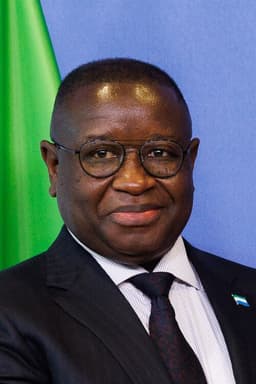
Julius Maada Bio
General · Modern
51.2Total
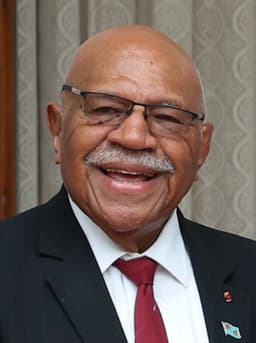
Sitiveni Rabuka
General · Modern
51.7Total
Basic Information
Born
1964
1948
Died
—
—
Era
Modern
Modern
Nationality
Sierra Leone
Fiji
Occupation
General
General
Civilization
Other
Other
Score Comparison
Military (10%)
50.0
10.2
Political (20%)
45.0
60.0
Influence (20%)
53.3
53.3
Legacy (20%)
45.0
46.7
Leadership (15%)
70.0
85.0
Strategy (15%)
43.7
39.6
TOTAL
51.2
51.7
Julius Maada Bio — Complete Timeline
1992 AD
1992 Sierra Leonean coup d'étatPolitical Action◆ Major
Julius Maada Bio was a member of the National Provisional Ruling Council (NPRC) that overthrew President Joseph Momoh in a military coup. Bio served as a key figure in the junta, which promised to end the civil war but faced criticism for human rights abuses.
CoupSierra LeoneCivil War
Impact: nationaldestructive
1996 AD
Brief tenure as head of statePolitical Action◆ Major
Bio led a palace coup within the NPRC in January 1996, becoming head of state. He oversaw the transition to civilian rule, handing over power to Ahmad Tejan Kabbah after elections in March 1996, a move that earned him praise for restoring democracy.
TransitionDemocracyCoup
Impact: nationalconstructive
2018 AD
Election as President of Sierra LeonePolitical Action◆ Major
Bio won the 2018 Sierra Leonean presidential election as the candidate of the Sierra Leone People's Party, defeating Samura Kamara in a runoff. His victory marked a return to power for the SLPP after a decade in opposition.
ElectionSierra LeonePresidency
Impact: nationalconstructive
2023 AD
Re-election amid economic challengesPolitical Action◆ Major
Bio was re-elected in 2023 with 56.6% of the vote, but the election was disputed by the opposition. His second term has been marked by economic difficulties, including high inflation and debt, as well as allegations of authoritarianism.
ElectionSierra LeoneEconomy
Impact: national
Sitiveni Rabuka — Complete Timeline
1987 AD
1987 Fijian Coup d'étatPolitical Action
Rabuka, as a colonel in the Fijian military, led a coup overthrowing the elected government of Timoci Bavadra. The coup was motivated by ethnic Fijian opposition to Indo-Fijian political influence. Rabuka declared Fiji a republic.
CoupMilitary InterventionEthnic Tension
Impact: nationaldestructive
1992 AD
1992 Election as Prime MinisterPolitical Action◆ Major
Rabuka transitioned from military leader to civilian politician, winning the 1992 general election as leader of the Fijian Political Party. He became Prime Minister, serving until 1999.
ElectionCivilian GovernmentPolitical Transition
Impact: national
1997 AD
1997 Constitution ReformReform◆ Major
Rabuka's government oversaw the adoption of a new constitution that removed ethnic-based voting and provided for a multi-ethnic government. The constitution aimed to reduce ethnic tensions and promote national unity.
ConstitutionReformEthnic Reconciliation
Impact: nationalconstructive
1999 AD
1999 General Election DefeatPolitical Action◆ Major
Rabuka's government was defeated in the general election by the Labour Party led by Mahendra Chaudhry. Rabuka stepped down as Prime Minister, marking the end of his first period in power.
Election DefeatGovernment ChangeChaudhry
Impact: national
2022 AD
2022 Return as Prime MinisterPolitical Action◆ Major
Rabuka led the People's Alliance to victory in the 2022 general election, forming a coalition government. He became Prime Minister again, 23 years after his previous tenure, promising democratic reforms.
ElectionReturn to PowerCoalition Government
Impact: national
Expert Analysis
Sitiveni Rabuka vs Julius Maada Bio
### The General Who Came Home: Sitiveni Rabuka and Julius Maada Bio
In the humid darkness of a May morning in 1987, a Fijian colonel named Sitiveni Rabuka stormed the Parliament building in Suva, ending a month-old government and setting his nation on a path of ethnic division. Nine years later, and nearly ten thousand miles away, another young officer, Julius Maada Bio, sat in the State House in Freetown, Sierra Leone, having just seized power from his own comrades to ensure elections would go ahead. Both were soldiers who overthrew democracies. Both would later return to lead those same democracies as elected presidents. But the roads they traveled, and the shadows they left behind, could not have been more different. Why did one man’s coup lead to a constitution that entrenched racial politics, while the other’s led to a fragile, multi-ethnic peace? The answer lies not in their uniforms, but in the soil of their homelands.
### Origins
Sitiveni Rabuka was born in 1948 on the island of Vanua Levu, into a world of chiefly tradition and colonial order. Fiji was a British colony where indigenous Fijians owned most of the land, but Indo-Fijians, descendants of indentured laborers, dominated commerce and politics. Rabuka was a devout Methodist, a product of the elite Queen Victoria School, and a man steeped in the belief that indigenous Fijians were losing control of their own country. His military career, first in the British Army and then the Fijian military, was a story of discipline and quiet ambition.
Julius Maada Bio, born in 1964 in the small town of Tihun, Sierra Leone, grew up in a different kind of fracture. Sierra Leone was a postcolonial mess: a patrimonial state where the All People’s Congress (APC) had ruled for decades through corruption and violence. Bio’s family was from the Mende ethnic group, one of the country’s two largest, and he joined the army not out of a sense of destiny, but because it was a job. The army itself was a microcosm of the nation’s rot—underpaid, underfed, and used by politicians to bully opponents. When the civil war erupted in 1991, fueled by Liberian warlord Charles Taylor, the army collapsed into a rabble. For Bio, the coup of 1992 was not about ideology; it was about survival.
### Rise to Power
Rabuka’s rise was swift and clean. In 1987, as a 38-year-old colonel, he led a coup against the newly elected coalition government of Timoci Bavadra, which was dominated by Indo-Fijians. Rabuka claimed he was protecting indigenous Fijian land rights and the Christian faith. The coup was bloodless, almost polite. He handed power to a civilian governor-general, then staged a second coup when that arrangement failed. By 1992, he had shed his uniform and won the general election as the leader of the Fijian Political Party. His path from soldier to prime minister took just five years.
Bio’s rise was messier. In 1992, he was a 28-year-old captain when he and a group of young officers toppled President Joseph Momoh, blaming him for the civil war. They formed the National Provisional Ruling Council (NPRC), and Bio became its spokesman. But the NPRC was a house of knives. In 1996, Bio led a palace coup against his own chairman, Valentine Strasser, who had become a corrupt autocrat. As head of state, Bio’s tenure lasted just a few months. He did something remarkable: he held elections and handed power to a civilian, Ahmad Tejan Kabbah. Then he retired, quietly, to study in the United States. For a coup leader, it was an almost unprecedented act of restraint.
### Leadership & Governance
As prime minister from 1992 to 1999, Rabuka governed as a champion of indigenous Fijian supremacy. His signature achievement was the 1997 Constitution, which removed ethnic-based voting and created a multi-racial parliament. But it was a reluctant reform, forced by international pressure and economic collapse. Rabuka’s Fijian Political Party had won elections on a platform of ethnic nationalism, and the constitution was a bitter pill. He was a better soldier than politician: his government was plagued by corruption scandals and economic mismanagement. His military score of 19.9 reflects a man who was never a great strategist, but his political score of 72.0 shows a man who learned to compromise, however grudgingly.
Bio’s leadership, by contrast, has been about stitching together a broken nation. Elected president in 2018, he inherited a country still scarred by a brutal civil war (1991–2002) and the Ebola epidemic (2014–2016). His military score of 37.5 is higher than Rabuka’s, a nod to his role in the NPRC’s battlefield efforts. But his true strength is political: a 72.0 score that matches Rabuka’s, but earned differently. Bio has focused on free education, women’s empowerment, and infrastructure. Yet his re-election in 2023, with 56.6% of the vote, was marred by opposition claims of fraud and violent protests. His Sierra Leone People’s Party is seen by many as a Mende party, and ethnic tensions simmer beneath the surface.
### Triumph & Tragedy
Rabuka’s greatest triumph was his return. After losing the 1999 election to Mahendra Chaudhry, Fiji’s first Indo-Fijian prime minister, Rabuka faded into obscurity, a symbol of a divisive past. But in 2022, at age 74, he led the People’s Alliance to victory and became prime minister again. It was a stunning redemption. His tragedy, however, is that his first coup set a precedent. In 2000, another coup ousted Chaudhry; in 2006, yet another. Rabuka’s ghost haunted Fiji for decades.
Bio’s triumph is survival itself. He is the first president since independence to serve two full terms without being overthrown. His tragedy is that the peace he helped build remains fragile. In 2023, his re-election sparked protests and a brief attempted coup by former soldiers. The country’s economic challenges—youth unemployment, corruption—are as deep as ever. Bio’s legacy is a work in progress.
### Character & Destiny
Rabuka is a man of contradictions. He is a devout churchgoer who broke the law; a coup leader who became a democrat. His character is defined by a deep, almost mystical attachment to Fijian land and custom. He once said, “I am a Fijian first, a Christian second, and a politician third.” That hierarchy explains his actions: the coup was about preserving a way of life, and the return to democracy was about accepting that the world had changed.
Bio is more pragmatic. He is a soldier who studied international affairs, a coup leader who wrote a book about peace. His character is shaped by the chaos he witnessed. He once remarked, “I have seen what war does to children. I have no desire to see it again.” That desire for stability has made him cautious, even conservative. He is not a charismatic reformer; he is a manager of crises.
### Legacy
Rabuka’s legacy is already written in two chapters. The first is the coup leader of 1987, a figure of ethnic division. The second is the elder statesman of 2022, a symbol of reconciliation. His total score of 61.0 reflects this duality. He is neither a villain nor a hero; he is a man who did immense damage and then spent decades trying to repair it.
Bio’s legacy is still being written. His total score of 64.7 is slightly higher, but it is a fragile number. He has kept Sierra Leone democratic, but democracy here is a thin reed. If his second term ends in chaos, his score will fall. If it ends in peace, he may be remembered as the general who broke the cycle.
### Conclusion
Both men are cautionary tales and testaments to the possibility of change. Rabuka and Bio began as soldiers who broke the law, and ended as elected leaders who upheld it. Their paths diverged because of the nations they served: Fiji’s ethnic divisions demanded a reckoning with identity, while Sierra Leone’s war demanded a reckoning with survival. In the end, they remind us that history is not written by saints or sinners, but by men who must live with their choices. The question they leave behind is not whether a coup leader can become a democrat, but whether a nation can forgive a soldier for doing what he thought was right.
Rankings
🥇
Sitiveni RabukaLeader
Mil: 10.2Pol: 60.0Inf: 53.3
51.7
🥈
Julius Maada Bio
Mil: 50.0Pol: 45.0Inf: 53.3
51.2
+0.5 behind
How This Comparison Works
Algorithm
Each figure is scored on 6 dimensions (0—100 scale) based on structured historical data: Military (10%), Political (20%), Influence (20%), Legacy (20%), Leadership (15%), Strategy (15%). The weighted total produces the final ranking.
Data Sources
Scores are computed from structured sub-indicators in the database. Scale factors adjust for era (Ancient ×0.85, Modern ×1.0) and civilization size (Eastern ×1.05, Other ×0.80) to account for differences in population and military scale.
Maximum 3 Figures
Comparisons are limited to 2—3 figures to ensure readability and statistical meaningfulness.
Error Margins
±5 points per dimension — Sub-scores are derived from historical records with inherent uncertainty. Two figures within 5 points on a dimension should be considered roughly equivalent in that area.
Total Score Accuracy
±3 points overall — The weighted combination of 6 dimensions produces a total score with approximately ±3 points of uncertainty. Differences of less than 3 points are not statistically significant— the figures are effectively tied.
Known Limitations
- Historical records are incomplete and uneven across civilizations
- Figures from oral-tradition societies may be underrepresented
- Occupation labels can misclassify multi-role figures
- Scores measure capability and impact, not moral character
- Quantitative scoring is a comparison tool, not absolute truth
Capability Radar
Military (10%) — Battles & Warfare
Battles
15
5
Win Rate
20
5
Expansion
5
5
Political (20%) — Governance & Reform
Reform
50
50
Diplomacy
55
45
Economy
45
40
Influence (20%) — Cultural & Global Reach
Cultural
30
30
Global
20
20
Legacy (20%) — Historical Impact
Historical
35
40
Longevity
25
30
Leadership (15%) — Power & Stability
Tenure
55
55
Stability
40
35
Strategy (15%) — Tactics & Innovation
Strategy
20
10
Tactics
25
10
Reform
10
5
Similar Comparisons
Comments & Discussion
RabukaTheRacist6/16/2026
Rabuka’s 1987 coup wasn’t about democracy—it was about keeping Indo-Fijians out of power. He literally ripped up the constitution to establish a system where indigenous Fijians got guaranteed parliamentary seats. That’s not “protecting tradition,” it’s ethnic apartheid in a tropical suit. Bio at least had the decency to coups for elections. Rabuka couped for segregation.
数据拆穿侠6/16/2026
两家都在讲“回归民主”,但你一查数字就露馅:Rabuka那场1987年政变后,斐济宪法直接写进种族配额—本土斐济人占议会多数席位,印裔躺着也中枪。Bio 1996年政变是冲着选举去的,9个月后真交权。别拿“军政府转型”糊弄人,Rabuka打的牌永远是种族牌,Bio好歹打出过选举牌。
ClassicsChad6/16/2026
Both men embody the Plutarchian paradox—same arc from barracks to ballot box, yet polar outcomes. Rabuka’s Fiji became a ethnic citadel, a modern-day Sparta for indigenous Fijians, while Bio’s Sierra Leone staggered toward something like Athenian fragility. But remember: Rabuka’s coup directly triggered a 19-year cycle of racial resentment and military unrest. Bio’s coup, ironically, broke a similar cycle. The soil made them, yes, but the choices unmade their nations.
历史修正弹6/16/2026
别再美化Rabuka的“宽容形象”。他1997年当总理、2000年再政变不成后,才假装转向民主。你细看:他推动的1997年宪法虽然名义上取消种族配额,但保留了土著土地权,印裔照样没戏。Bio在2007年败选后老老实实认输,Rabuka却一辈子都在打“土著优先”牌。一个假装拥抱多元,一个真正实践退让,天壤之别。