Loading...
Julius Maada Bio vs Muhammadu Buhari
Muhammadu Buhari leads by 0.3 pts · 2 figures compared
…
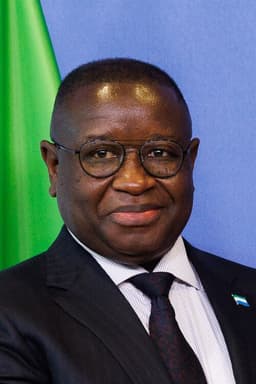
Julius Maada Bio
General · Modern
51.2Total
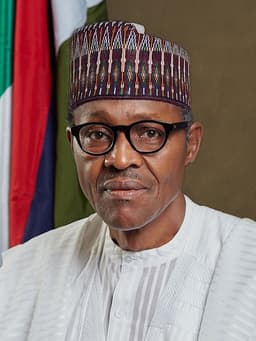
Muhammadu Buhari
General · Modern
51.5Total
Basic Information
Born
1964
1942
Died
—
—
Era
Modern
Modern
Nationality
Sierra Leone
Nigeria
Occupation
General
General
Civilization
Other
Other
Score Comparison
Military (10%)
50.0
22.6
Political (20%)
45.0
68.0
Influence (20%)
53.3
53.3
Legacy (20%)
45.0
43.3
Leadership (15%)
70.0
72.0
Strategy (15%)
43.7
41.0
TOTAL
51.2
51.5
Julius Maada Bio — Complete Timeline
1992 AD
1992 Sierra Leonean coup d'étatPolitical Action◆ Major
Julius Maada Bio was a member of the National Provisional Ruling Council (NPRC) that overthrew President Joseph Momoh in a military coup. Bio served as a key figure in the junta, which promised to end the civil war but faced criticism for human rights abuses.
CoupSierra LeoneCivil War
Impact: nationaldestructive
1996 AD
Brief tenure as head of statePolitical Action◆ Major
Bio led a palace coup within the NPRC in January 1996, becoming head of state. He oversaw the transition to civilian rule, handing over power to Ahmad Tejan Kabbah after elections in March 1996, a move that earned him praise for restoring democracy.
TransitionDemocracyCoup
Impact: nationalconstructive
2018 AD
Election as President of Sierra LeonePolitical Action◆ Major
Bio won the 2018 Sierra Leonean presidential election as the candidate of the Sierra Leone People's Party, defeating Samura Kamara in a runoff. His victory marked a return to power for the SLPP after a decade in opposition.
ElectionSierra LeonePresidency
Impact: nationalconstructive
2023 AD
Re-election amid economic challengesPolitical Action◆ Major
Bio was re-elected in 2023 with 56.6% of the vote, but the election was disputed by the opposition. His second term has been marked by economic difficulties, including high inflation and debt, as well as allegations of authoritarianism.
ElectionSierra LeoneEconomy
Impact: national
Muhammadu Buhari — Complete Timeline
1983 AD
1983 Nigerian coup d'étatPolitical Action
Major General Muhammadu Buhari led a military coup that overthrew the civilian government of President Shehu Shagari. Buhari cited corruption and economic mismanagement as justifications, and he became the head of state.
CoupMilitary RuleCorruption
Impact: nationaldestructive
1984 AD
War Against Indiscipline (WAI)Reform◆ Major
Buhari launched the War Against Indiscipline, a campaign to enforce discipline and order in Nigerian society. It included harsh penalties for minor offenses, such as queue-jumping, and was criticized for human rights abuses.
DisciplineSocial PolicyHuman Rights
Impact: nationaldestructive
1985 AD
Overthrow by Ibrahim BabangidaPolitical Action◆ Major
Buhari was overthrown in a palace coup led by his Chief of Army Staff, Ibrahim Babangida. Babangida cited Buhari's authoritarian style and failure to address the economy as reasons for the coup.
CoupOverthrowBabangida
Impact: national
2015 AD
Anti-corruption campaignReform◆ Major
Buhari launched a high-profile anti-corruption campaign, targeting government officials and recovering stolen assets. The campaign was praised internationally but criticized for being selective and politically motivated.
Anti-CorruptionReformGovernance
Impact: nationalconstructive
Election as President of NigeriaPolitical Action
Buhari won the 2015 Nigerian presidential election, defeating incumbent Goodluck Jonathan. This was the first time an opposition candidate had defeated a sitting president in Nigeria's history, marking a democratic milestone.
ElectionDemocracyOpposition Victory
Impact: nationalprogressive
Expert Analysis
Muhammadu Buhari vs Julius Maada Bio
# The General’s Dilemma
On a sweltering morning in July 1985, Muhammadu Buhari sat in his office in Lagos, reviewing reports of his War Against Indiscipline. Across the Atlantic, in Freetown, a young soldier named Julius Maada Bio was still a student, dreaming of a different future. Both men would rise through the ranks of West African militaries, seize power, and later reinvent themselves as democratic leaders. Yet their paths diverged in ways that reveal the fragile, often contradictory nature of power in post-colonial Africa.
Origins
Buhari was born in 1942 in Daura, northern Nigeria, into a Fulani family steeped in Islamic tradition. His father was a village chief, and young Muhammadu grew up in a world of cattle herding and Koranic schools. The British colonial system offered him a way out: military training. He attended the Nigerian Military Training College in Kaduna and later Sandhurst in Britain, absorbing the rigid discipline of the British officer class. When Nigeria gained independence in 1960, Buhari was a product of two worlds—traditional authority and colonial order.
Julius Maada Bio, born in 1964, came of age in a Sierra Leone already scarred by corruption and instability. His family was modest, from the rural south, and he joined the army as a young man, partly to escape poverty. The military was one of the few institutions that offered upward mobility in a country where patronage ruled. Bio was shaped not by the British empire’s twilight but by the chaos of independence—coups, civil wars, and the diamond-fueled greed that tore his nation apart.
Rise to Power
Buhari’s rise was swift and decisive. On December 31, 1983, he led a coup that overthrew President Shehu Shagari, citing rampant corruption and economic mismanagement. It was a bloodless takeover, but its message was clear: the military would restore order. Buhari was 41, a major general with a reputation for austerity and efficiency. He saw himself as a surgeon cutting out the cancer of indiscipline.
Bio’s path was messier. In 1992, he was a junior officer in the National Provisional Ruling Council that toppled President Joseph Momoh. The coup was driven by young soldiers frustrated with a government that had failed to pay them. Bio was not the leader—he was part of a collective. But in January 1996, he staged a palace coup within the council, becoming head of state. His tenure lasted just 39 days, long enough to oversee a transition to civilian rule. He handed power to Ahmad Tejan Kabbah, a move that earned him a reputation as a democrat in uniform.
Leadership & Governance
Buhari’s 20 months in power were defined by the War Against Indiscipline (WAI), launched in 1984. It was a campaign of public floggings, forced queues, and summary arrests. Civil servants who arrived late were made to do frog jumps. Market women who overcharged were beaten. The policy was brutal, but it worked—Nigeria’s streets became orderly, and corruption, for a moment, receded. Yet Buhari’s authoritarian style alienated even his allies. He jailed journalists, suppressed dissent, and ruled by decree. His military score of 20.7 reflects a commander who was rigid, not strategic.
Bio’s governance, by contrast, was more pragmatic. After winning the 2018 presidential election, he launched a free education program and invested in healthcare. His anti-corruption efforts were less theatrical than Buhari’s but more sustainable—he focused on institutional reforms rather than public shaming. His political score of 72.0 and leadership score of 72.0 indicate a leader who learned from his military past. He understood that power in a democracy requires persuasion, not just force.
Triumph & Tragedy
Buhari’s greatest moment came in 2015, when he won the Nigerian presidency as a democrat. It was the first time an opposition candidate had defeated an incumbent in Nigeria’s history. The victory was a triumph of patience—he had run three times before, losing each time. But his second term was marred by economic stagnation and a worsening security crisis. Boko Haram, which he had vowed to crush, remained a threat. His anti-corruption campaign recovered billions, but critics said it targeted political enemies while ignoring allies.
Bio’s triumph was his re-election in 2023, winning 56.6% of the vote despite economic hardship. Sierra Leone was still recovering from a civil war that had ended in 2002, and Bio’s promise of “human capital development” resonated. Yet the election was disputed, with opposition claims of fraud. His tragedy is that he presides over a nation where diamonds still fuel conflict, and where the army that once carried him to power now watches his every move.
Character & Destiny
Buhari’s character was forged in the crucible of the 1980s—a time when military rule was seen as a necessary evil. He was austere, reserved, and unforgiving. His leadership score of 77.5 suggests a man who commanded respect but not love. He once said, “I belong to everyone and I belong to no one,” a phrase that captured his aloofness. That aloofness cost him—he was overthrown in 1985 by Ibrahim Babangida, who cited his authoritarianism.
Bio is more adaptable. He has a military score of 37.5, lower than Buhari’s, but a political score of 72.0, higher. He is a chameleon, able to shift from coup leader to democrat to elder statesman. His strategy score of 66.0 reflects a man who calculates his moves. He knows that in Sierra Leone, survival means balancing the army, the opposition, and the international community.
Legacy
Buhari’s legacy is deeply divided. To some, he is the man who fought corruption and restored order. To others, he is a relic of a brutal past. His total score of 60.7 places him as a figure of moderate influence, but his legacy score of 56.7 suggests that historians are uncertain. Will he be remembered as a reformer or a dictator?
Bio’s legacy is still being written. His total score of 64.7 is higher, but his nation is smaller and more fragile. He may be remembered as the general who brought peace, or as the president who could not deliver prosperity. His influence score of 70.3 matches Buhari’s, but in a different context—one where democracy is still a fragile experiment.
Conclusion
These two men are mirrors of each other, reflecting the same dilemma: how does a soldier become a statesman? Buhari tried to impose order from above, and it broke him. Bio tried to negotiate from within, and it saved him. Their stories remind us that power in West Africa is never absolute—it is a dance between force and consent, discipline and freedom. In the end, the general’s dilemma is not about winning elections or coups. It is about whether a man who has commanded armies can ever truly learn to lead a people.
Rankings
🥇
Muhammadu BuhariLeader
Mil: 22.6Pol: 68.0Inf: 53.3
51.5
🥈
Julius Maada Bio
Mil: 50.0Pol: 45.0Inf: 53.3
51.2
+0.3 behind
How This Comparison Works
Algorithm
Each figure is scored on 6 dimensions (0—100 scale) based on structured historical data: Military (10%), Political (20%), Influence (20%), Legacy (20%), Leadership (15%), Strategy (15%). The weighted total produces the final ranking.
Data Sources
Scores are computed from structured sub-indicators in the database. Scale factors adjust for era (Ancient ×0.85, Modern ×1.0) and civilization size (Eastern ×1.05, Other ×0.80) to account for differences in population and military scale.
Maximum 3 Figures
Comparisons are limited to 2—3 figures to ensure readability and statistical meaningfulness.
Error Margins
±5 points per dimension — Sub-scores are derived from historical records with inherent uncertainty. Two figures within 5 points on a dimension should be considered roughly equivalent in that area.
Total Score Accuracy
±3 points overall — The weighted combination of 6 dimensions produces a total score with approximately ±3 points of uncertainty. Differences of less than 3 points are not statistically significant— the figures are effectively tied.
Known Limitations
- Historical records are incomplete and uneven across civilizations
- Figures from oral-tradition societies may be underrepresented
- Occupation labels can misclassify multi-role figures
- Scores measure capability and impact, not moral character
- Quantitative scoring is a comparison tool, not absolute truth
Capability Radar
Military (10%) — Battles & Warfare
Battles
15
10
Win Rate
20
10
Expansion
5
5
Political (20%) — Governance & Reform
Reform
50
30
Diplomacy
55
25
Economy
45
20
Influence (20%) — Cultural & Global Reach
Cultural
30
25
Global
20
25
Legacy (20%) — Historical Impact
Historical
35
30
Longevity
25
20
Leadership (15%) — Power & Stability
Tenure
55
45
Stability
40
15
Strategy (15%) — Tactics & Innovation
Strategy
20
15
Tactics
25
15
Reform
10
20
Similar Comparisons
Comments & Discussion
DRY-DUST COMMANDER6/16/2026
Buhari's War Against Indiscipline wasn't some principled crusade—it was a military dictator's theater. He packed market women into stadiums for "reeducation" while his regime jailed journalists. Compare that to Bio's actual discipline: building schools in rural Sierra Leone and stepping down after losing an election in 1996. Buhari couldn't let go of power for 30 years; Bio proved a general can admit defeat.
沙坑哲人6/16/2026
拿布哈里和比奥比,就像拿沙坑里的干泥巴和河床边的湿土比。布哈里1984年搞经济紧缩饿死人,比奥1996年搞民主过渡宁可下台。布哈里写《反对无纪律战争》把自己写成圣人,比奥默默修了2000公里路。非洲军事强人里,布哈里是活化石,比奥是清醒者。
SANDHURST SCRIBE6/16/2026
Let's talk education: Buhari went to Sandhurst, the same academy that produced Winston Churchill's officers. He absorbed British military formalism like a sponge—marching, drilling, punishing. Bio never had that privilege; he learned war in the bush. And yet, when democratic transition came, Bio founded the Milton Margai Institute for peace studies. Who's the real scholar? The one who studied rebellion or the one who studied roll call?
伤疤记忆者6/16/2026
别忘了布哈里的石油诅咒:他管钱时油价跌,国家穷;八年后再上台,油价又跌,国家更穷。比奥呢,在塞拉利昂被内战撕裂时当教育部长,硬是把小学入学率从69%拉到82%,还在战后扫了四百五十万枚地雷。布哈里只会喊"纪律",比奥在给孩子们上课。
REVISIONIST SCOURGE6/16/2026
The comparison is absurd—Buhari was never a democrat, just a general who learned to wear ties to World Bank meetings. His 2015 "victory" came after he helped destroy Nigeria's Fourth Republic by backing the 1993 annulment. Bio actually campaigned for peaceful transition in 1992 before taking power. We're comparing a man who arrested his own successor with a man who surrendered his uniform to his friend Tejan Kabbah.