Loading...
Julius Maada Bio vs Ramon Castilla
Ramon Castilla leads by 8.5 pts · 2 figures compared
…
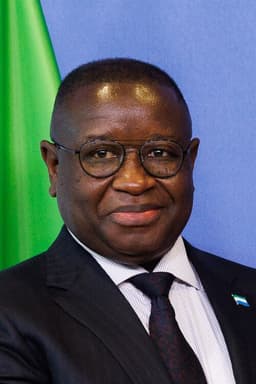
Julius Maada Bio
General · Modern
51.2Total
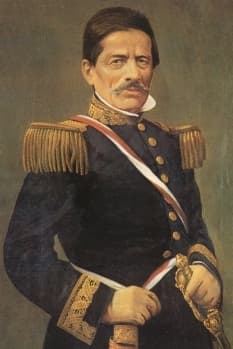
Ramon Castilla
General · Modern
59.7Total
Basic Information
Born
1964
1797
Died
—
1867
Era
Modern
Modern
Nationality
Sierra Leone
Peru
Occupation
General
General
Civilization
Other
Western
Score Comparison
Military (10%)
50.0
40.0
Political (20%)
45.0
72.0
Influence (20%)
53.3
56.7
Legacy (20%)
45.0
52.0
Leadership (15%)
70.0
78.0
Strategy (15%)
43.7
60.0
TOTAL
51.2
59.7
Julius Maada Bio — Complete Timeline
1992 AD
1992 Sierra Leonean coup d'étatPolitical Action◆ Major
Julius Maada Bio was a member of the National Provisional Ruling Council (NPRC) that overthrew President Joseph Momoh in a military coup. Bio served as a key figure in the junta, which promised to end the civil war but faced criticism for human rights abuses.
CoupSierra LeoneCivil War
Impact: nationaldestructive
1996 AD
Brief tenure as head of statePolitical Action◆ Major
Bio led a palace coup within the NPRC in January 1996, becoming head of state. He oversaw the transition to civilian rule, handing over power to Ahmad Tejan Kabbah after elections in March 1996, a move that earned him praise for restoring democracy.
TransitionDemocracyCoup
Impact: nationalconstructive
2018 AD
Election as President of Sierra LeonePolitical Action◆ Major
Bio won the 2018 Sierra Leonean presidential election as the candidate of the Sierra Leone People's Party, defeating Samura Kamara in a runoff. His victory marked a return to power for the SLPP after a decade in opposition.
ElectionSierra LeonePresidency
Impact: nationalconstructive
2023 AD
Re-election amid economic challengesPolitical Action◆ Major
Bio was re-elected in 2023 with 56.6% of the vote, but the election was disputed by the opposition. His second term has been marked by economic difficulties, including high inflation and debt, as well as allegations of authoritarianism.
ElectionSierra LeoneEconomy
Impact: national
Ramon Castilla — Complete Timeline
1824 AD
Battle of AyacuchoWar
Castilla fought as a junior officer in the decisive Battle of Ayacucho, which ended Spanish rule in Peru. This victory secured Peruvian independence and marked the end of the Spanish Empire in South America, shaping Castilla's nationalist views.
Peruvian War of IndependenceBattleLiberation
Impact: regional
1845 AD
First Presidency of PeruPolitical Action◆ Major
Castilla was elected President of Peru in 1845, serving until 1851. His first term focused on economic development, including the guano boom, and infrastructure projects such as railroads and ports, modernizing the Peruvian state.
PresidencyEconomic DevelopmentGuano
Impact: nationalconstructive
1854 AD
Abolition of Slavery in PeruReform◆ Major
During his second presidency, Castilla issued a decree abolishing slavery in Peru on December 3, 1854. This reform freed approximately 25,000 slaves and was part of a broader liberal agenda, though it faced opposition from slave-owning elites.
AbolitionSlaveryHuman Rights
Impact: nationalprogressive
Abolition of Indigenous TributeReform◆ Major
Castilla also abolished the indigenous tribute tax in 1854, which had been a burden on native communities since colonial times. This measure aimed to integrate indigenous peoples into the Peruvian state as equal citizens, though its implementation was uneven.
Indigenous RightsTax ReformCitizenship
Impact: nationalprogressive
1855 AD
Second Presidency and Guano BoomPolitical Action◆ Major
Castilla served a second term from 1855 to 1862, during the peak of the guano export boom. He used guano revenues to fund public works, pay off foreign debt, and modernize the military, but also faced criticism for corruption and over-reliance on a single resource.
PresidencyGuanoModernization
Impact: nationalconstructive
1860 AD
Constitutional Reform of 1860Reform◆ Major
Castilla oversaw the adoption of a new constitution in 1860, which established a centralized republic with a strong executive. The constitution remained in effect until 1920 and shaped Peru's political structure, though it limited regional autonomy.
ConstitutionPolitical ReformCentralization
Impact: nationalconstructive
Expert Analysis
Ramon Castilla vs Julius Maada Bio
# The General and the Democrat: Two Paths to Power in Peru and Sierra Leone
On a December morning in 1854, Ramon Castilla sat in his field tent in the Peruvian highlands, surrounded by the smoke of campfires and the distant rumble of cannon. He dipped his pen into ink and signed a decree that would change the lives of tens of thousands: the abolition of slavery in Peru. Across the Atlantic and more than a century later, in January 1996, Julius Maada Bio stood in the presidential palace in Freetown, having just ousted his own military comrades in a palace coup. He too would sign a decree—but his was a promise to hand power back to civilians. Two generals, two nations, two eras. Both rose from military coups and civil wars to lead their countries. Yet one became a towering reformer who modernized a nation, while the other became a democratic pioneer who struggled to deliver on his promises. What made the difference?
Origins
Ramon Castilla was born in 1797 in Tarapacá, then part of the Spanish Viceroyalty of Peru, into a family of modest means. His father was a Spanish colonial official, his mother a local woman of mixed ancestry. The world of his youth was one of rigid colonial hierarchy, where the Spanish crown ruled with an iron hand and the indigenous majority lived under tribute and forced labor. Castilla joined the royalist army as a young man, fighting for Spain against the independence movements sweeping Latin America. But in 1821, he switched sides, joining the patriot forces of José de San Martín. By 1824, he was a junior officer at the Battle of Ayacucho, the decisive engagement that ended Spanish rule in South America. That battlefield forged him: he saw that war could destroy an old world, but also that building a new one required more than guns.
Julius Maada Bio was born in 1964 in a small village in Sierra Leone, into a country emerging from British colonial rule. His father was a farmer, his mother a trader. Sierra Leone in the 1960s and 1970s was a fragile democracy, plagued by corruption and ethnic tensions. Bio joined the army as a young man, rising through the ranks during the brutal civil war that erupted in 1991. The conflict pitted the government against the Revolutionary United Front, a rebel group notorious for amputating civilians' limbs. Bio witnessed the collapse of the state, the breakdown of law, and the horrors of a war fought with machetes and child soldiers. Where Castilla saw the end of an empire, Bio saw the failure of a nation.
Rise to Power
Castilla entered the political stage through war. After Ayacucho, he served in various military and administrative posts, building a reputation for competence and honesty. When Peru descended into chaos in the 1840s—with caudillos fighting for power—Castilla emerged as a stabilizing figure. In 1845, he was elected president, beginning a term that would define his career. His path was not a coup but a gradual ascent through the institutions of a fledgling republic.
Bio's rise was swifter and bloodier. In 1992, he was a young captain in the Sierra Leonean army when a group of officers overthrew President Joseph Momoh, citing corruption and the army's neglect. Bio joined the National Provisional Ruling Council, the military junta that took power. But the NPRC was riven by internal rivalries. In January 1996, Bio led a palace coup, ousting his own chairman and becoming head of state. He was 31 years old. Unlike Castilla, who inherited a nation at peace, Bio inherited a country in the grip of a civil war, with rebels at the gates of the capital.
Leadership & Governance
Castilla's first presidency from 1845 to 1851 was a masterclass in using natural resources for national development. Peru was entering the guano boom—the bird droppings on its coastal islands were suddenly worth a fortune as fertilizer. Castilla nationalized the guano trade, using the revenues to pay off foreign debt, build railroads, modernize the military, and fund education. He understood that Peru's wealth was a curse if mismanaged, a blessing if invested. His second term, from 1855 to 1862, was even more ambitious. On December 3, 1854, he abolished slavery, freeing an estimated 25,000 enslaved people. He also abolished the indigenous tribute tax, a colonial-era burden that had impoverished native communities for three centuries. In 1860, he oversaw the adoption of a new constitution, creating a centralized republic with a strong executive—a framework that would last for decades.
Bio's governance was defined by a different challenge: ending a war and building democracy. After his 1996 coup, he surprised the world by handing power to an elected civilian president, Ahmad Tejan Kabbah, later that year. It was a rare act in a region where military rulers clung to power. But the war continued, and Kabbah was ousted by another coup in 1997. Bio went into exile, returning to run for president in 2018. He won, promising free education, economic revival, and anti-corruption reforms. His first term saw the introduction of free primary and secondary education, a significant achievement. But his second term, beginning with his re-election in 2023 with 56.6% of the vote, has been plagued by economic crisis, inflation, and disputed elections. The opposition cries foul; the streets simmer with discontent.
Triumph & Tragedy
Castilla's greatest triumph was the abolition of slavery. It was not merely a moral act but a strategic one: he needed the support of black and indigenous soldiers to fight a civil war against conservative rebels. The decree was signed in the field, a gesture of solidarity with his troops. His tragedy came later: the guano boom eventually collapsed, and Peru fell into debt and war with Chile. Castilla died in 1867, before seeing the full consequences of his policies.
Bio's triumph was the peaceful transfer of power in 1996, a rare moment in Sierra Leone's history. His tragedy is the weight of expectation. He promised transformation, but the economy remains fragile, corruption persists, and the scars of the civil war—amputated limbs, orphaned children—remain unhealed. His re-election in 2023 was marred by allegations of fraud, and his government has been accused of cracking down on dissent. The general who once handed over power now clings to it.
Character & Destiny
Castilla was pragmatic and patient. He understood that power came from legitimacy, not just force. He used the guano wealth not to enrich himself but to build institutions. He was a caudillo who transcended caudillismo, a military man who believed in civilian rule. Bio, by contrast, is a product of a broken state. His early act of democratic transition was genuine, but his later years have shown the difficulty of governing a country where the state barely functions. Where Castilla had a booming economy and a coherent national project, Bio inherited a failed state and a fractured society.
Legacy
Castilla is remembered as Peru's great reformer, the man who ended slavery and modernized the nation. His statue stands in Lima, his name adorns streets and schools. His legacy is a cautionary tale as well: the guano boom created a dependency that later generations could not escape. Bio's legacy is still being written. He may be remembered as the man who ended military rule and brought free education, or as a leader who could not deliver on his promises. The verdict depends on what comes next.
Conclusion
Two generals, two centuries, two continents. Castilla and Bio both rose from war to lead their nations, both faced the challenge of turning military power into lasting reform. Castilla succeeded because he had a coherent vision and the resources to achieve it. Bio has struggled because he inherited a broken state and a globalized economy that offers few easy answers. Their stories remind us that leadership is not just about will—it is about context. The same qualities that made Castilla a hero might have made Bio a failure, and vice versa. In the end, history judges not only the leader but the world they were given to shape.
Rankings
🥇
Ramon CastillaLeader
Mil: 40.0Pol: 72.0Inf: 56.7
59.7
🥈
Julius Maada Bio
Mil: 50.0Pol: 45.0Inf: 53.3
51.2
+8.5 behind
How This Comparison Works
Algorithm
Each figure is scored on 6 dimensions (0—100 scale) based on structured historical data: Military (10%), Political (20%), Influence (20%), Legacy (20%), Leadership (15%), Strategy (15%). The weighted total produces the final ranking.
Data Sources
Scores are computed from structured sub-indicators in the database. Scale factors adjust for era (Ancient ×0.85, Modern ×1.0) and civilization size (Eastern ×1.05, Other ×0.80) to account for differences in population and military scale.
Maximum 3 Figures
Comparisons are limited to 2—3 figures to ensure readability and statistical meaningfulness.
Error Margins
±5 points per dimension — Sub-scores are derived from historical records with inherent uncertainty. Two figures within 5 points on a dimension should be considered roughly equivalent in that area.
Total Score Accuracy
±3 points overall — The weighted combination of 6 dimensions produces a total score with approximately ±3 points of uncertainty. Differences of less than 3 points are not statistically significant— the figures are effectively tied.
Known Limitations
- Historical records are incomplete and uneven across civilizations
- Figures from oral-tradition societies may be underrepresented
- Occupation labels can misclassify multi-role figures
- Scores measure capability and impact, not moral character
- Quantitative scoring is a comparison tool, not absolute truth
Capability Radar
Military (10%) — Battles & Warfare
Battles
15
45
Win Rate
20
50
Expansion
5
30
Political (20%) — Governance & Reform
Reform
50
85
Diplomacy
55
70
Economy
45
75
Influence (20%) — Cultural & Global Reach
Cultural
30
55
Global
20
50
Legacy (20%) — Historical Impact
Historical
35
65
Longevity
25
60
Leadership (15%) — Power & Stability
Tenure
55
65
Stability
40
60
Strategy (15%) — Tactics & Innovation
Strategy
20
45
Tactics
25
40
Reform
10
55
Similar Comparisons
Comments & Discussion
ThePenInsurgent6/16/2026
Ramon Castilla understood that true reform requires ink as well as iron. His 1854 abolition decree wasn't just moral theater—it was strategic genius. He wiped out slavery while simultaneously stripping the old aristocracy of its labor force and securing loyalty from newly freed Peruvians. Maada Bio's 1996 handover was noble but naive. Handing power to civilians who hadn't built democratic institutions is like giving a child a loaded rifle. Castilla built a state first. Bio built a photo op.
枪炮与玫瑰6/16/2026
拿卡斯蒂利亚和比奥比较?这根本是战马和玩具马赛跑。卡斯蒂利亚在硝烟里签署废除奴隶制时,周围是真正流血的真实战场。比奥呢?1996年他"光荣"交权,结果塞拉利昂后来内战更惨,血流成河到2002年。嘴上说民主好听,可卡斯蒂利亚知道:真正的解放不是交接仪式,是打破旧秩序后重建的制度。比奥的承诺像雨季的彩虹,远看美,一碰就散。
SkepticalSifter6/16/2026
Let's be honest: the data doesn't support the romantic narrative. Castilla abolished slavery in 1854? Technically yes, but Peru's Chinese coolie labor system exploded immediately after, with over 90,000 indentured workers imported by 1874. He ended one form of exploitation and enabled another. Maada Bio at least stuck to his 1996 promise of civilian rule and returned to barracks. Castilla stayed in power for years afterward. Measured by actual human freedom metrics, Bio's single act of self-limi
古典风骨6/16/2026
你们都在比谁更"进步",却忘了时代格局天差地别。卡斯蒂利亚出生在1797年的殖民地,战场上从保皇党叛变到独立军,他的路是用马刀砍出来的。他废除奴隶制时,秘鲁刚独立不到三十年,根基如纸薄。比奥是冷战后的政变者,面对的是已经建立好的国际民主规范。卡斯蒂利亚在混沌中创造秩序,比奥在秩序中假装反抗。前者是开国者,后者是过渡者,根本不同量级。
MineralWaterRevolution6/16/2026
Castilla didn't just abolish slavery—he used guano revenues to pay former slave owners compensation, proving he understood political economy better than any modern African leader. Peru's guano boom from 1840-1880 funded railways, port modernization, and public education. Maada Bio's Sierra Leone had diamonds and rutile, yet what did he build? Nothing structural. By the time Bio left power in 1996, Sierra Leone's GDP per capita was barely $200. Castilla left Peru with transformed infrastructure.