Loading...
Julius Maada Bio vs Plutarco Elias Calles
Plutarco Elias Calles leads by 7.3 pts · 2 figures compared
…
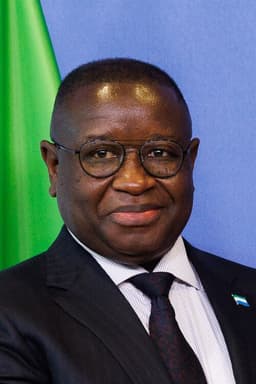
Julius Maada Bio
General · Modern
51.2Total
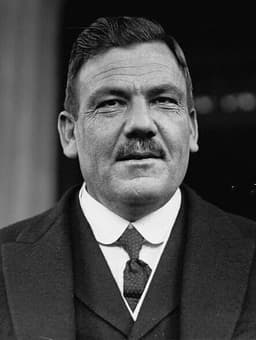
Plutarco Elias Calles
General · Modern
58.5Total
Basic Information
Born
1964
1877
Died
—
1945
Era
Modern
Modern
Nationality
Sierra Leone
Mexico
Occupation
General
General
Civilization
Other
Western
Score Comparison
Military (10%)
50.0
40.0
Political (20%)
45.0
70.3
Influence (20%)
53.3
68.0
Legacy (20%)
45.0
40.0
Leadership (15%)
70.0
78.0
Strategy (15%)
43.7
52.5
TOTAL
51.2
58.5
Julius Maada Bio — Complete Timeline
1992 AD
1992 Sierra Leonean coup d'étatPolitical Action◆ Major
Julius Maada Bio was a member of the National Provisional Ruling Council (NPRC) that overthrew President Joseph Momoh in a military coup. Bio served as a key figure in the junta, which promised to end the civil war but faced criticism for human rights abuses.
CoupSierra LeoneCivil War
Impact: nationaldestructive
1996 AD
Brief tenure as head of statePolitical Action◆ Major
Bio led a palace coup within the NPRC in January 1996, becoming head of state. He oversaw the transition to civilian rule, handing over power to Ahmad Tejan Kabbah after elections in March 1996, a move that earned him praise for restoring democracy.
TransitionDemocracyCoup
Impact: nationalconstructive
2018 AD
Election as President of Sierra LeonePolitical Action◆ Major
Bio won the 2018 Sierra Leonean presidential election as the candidate of the Sierra Leone People's Party, defeating Samura Kamara in a runoff. His victory marked a return to power for the SLPP after a decade in opposition.
ElectionSierra LeonePresidency
Impact: nationalconstructive
2023 AD
Re-election amid economic challengesPolitical Action◆ Major
Bio was re-elected in 2023 with 56.6% of the vote, but the election was disputed by the opposition. His second term has been marked by economic difficulties, including high inflation and debt, as well as allegations of authoritarianism.
ElectionSierra LeoneEconomy
Impact: national
Plutarco Elias Calles — Complete Timeline
1915 AD
Governorship of SonoraPolitical Action
Calles served as Governor of Sonora from 1915 to 1919, implementing radical reforms including land redistribution, anti-clerical laws, and labor rights. His governorship established him as a key figure in the Sonoran dynasty and a proponent of revolutionary change.
GovernorshipSonoraReforms
Impact: regionalconstructive
1924 AD
Presidency of MexicoPolitical Action◆ Major
Calles was elected President of Mexico in 1924, serving until 1928. His administration continued revolutionary reforms, including land reform, labor rights, and secularization, but also faced opposition from the Catholic Church and conservative groups.
PresidencyMexican RevolutionReforms
Impact: nationalconstructive
1926 AD
Cristero WarWar◆ Major
Calles enforced anti-clerical laws, including the Calles Law, which restricted the Catholic Church's role in society. This sparked the Cristero War (1926-1929), a violent rebellion by Catholic peasants against the state, resulting in tens of thousands of deaths.
Cristero WarAnti-clericalismReligious Conflict
Impact: nationaldestructive
1928 AD
MaximatoPolitical Action◆ Major
After his presidency, Calles remained the de facto ruler of Mexico during the Maximato (1928-1934), controlling puppet presidents. He continued to influence policy, but his power waned as President L
MaximatoPolitical ControlCárdenas
Impact: national
1929 AD
Founding of the National Revolutionary Party (PNR)Political Action
Calles founded the National Revolutionary Party (PNR) in 1929, which later became the Institutional Revolutionary Party (PRI). This party dominated Mexican politics for over 70 years, institutionalizing the revolution's legacy and centralizing power.
Political PartyPRIInstitutionalization
Impact: nationalconstructive
Expert Analysis
Plutarco Elias Calles vs Julius Maada Bio
# The General and the Reformer: Two Paths to Power in Mexico and Sierra Leone
In the summer of 1926, Plutarco Elías Calles stood before the Mexican Congress and signed into law a decree that would ignite a firestorm across his nation. The Calles Law, as it came to be known, stripped the Catholic Church of its property, banned religious orders, and forbade priests from wearing clerical garb in public. Within weeks, Mexico erupted in the Cristero War, a bloody three-year conflict that would claim tens of thousands of lives. Half a world away and seven decades later, Julius Maada Bio, a young army officer in Sierra Leone, participated in a very different kind of upheaval—a coup that toppled a corrupt civilian government, setting in motion a journey from barracks to ballot box that would eventually make him a democratically elected president. Two generals, two nations, two radically different outcomes. What drove them apart?
Origins
Plutarco Elías Calles was born in 1877 in Guaymas, Sonora, a rugged frontier state that bred revolutionaries. His father was a failed alcoholic who died when Calles was young; his mother worked as a laundress. Calles grew up in poverty, became a schoolteacher, then a hotelkeeper, and later a small-time farmer. Mexico in his youth was a dictatorship under Porfirio Díaz, a regime of order and progress that enriched the few and crushed the many. The Mexican Revolution of 1910 shattered that world, and Calles, like thousands of others, found his path through violence. He was a natural organizer and a ruthless fighter, rising through the ranks of the revolutionary armies. His era was one of chaos, ideology, and the forging of a new state—a crucible that demanded iron will.
Julius Maada Bio was born in 1964 in Tihun, Sierra Leone, to a family of modest means. His father was a farmer; his mother, a trader. Sierra Leone in the 1960s and 1970s was a fragile postcolonial state, rich in diamonds but poor in governance. Corruption and ethnic rivalries had hollowed out the institutions inherited from British rule. Bio joined the army as a young man, motivated by patriotism and the promise of a stable career. But by the early 1990s, Sierra Leone was collapsing into civil war, fueled by rebels who hacked off limbs to terrorize villages. Bio’s generation of soldiers saw themselves not as revolutionaries but as saviors—men who might rescue a nation from itself.
Rise to Power
Calles’s ascent was forged in the crucible of the Mexican Revolution. He became governor of Sonora in 1915, at age 38, and immediately set about implementing radical reforms: land redistribution to peasants, laws against alcohol and gambling, and the creation of a secular school system. His governorship was a laboratory for the policies he would later impose on all of Mexico. In 1924, riding the wave of revolutionary legitimacy, he was elected president. His path was linear, violent, and ideological—a man who believed that the state must crush all rivals, whether landlords, foreign oil companies, or the Catholic Church.
Bio’s rise was more abrupt and less ideological. In 1992, at age 28, he was a captain in the Sierra Leone army when a group of young officers, disgusted by the government’s incompetence in fighting the rebel war, staged a coup. Bio was among them, a junior member of the National Provisional Ruling Council. The coup was popular at first—the old president had been a disaster. But the junta struggled to govern. In January 1996, Bio led an internal coup against his own comrades, becoming head of state for a few months. His goal was not power for its own sake: he oversaw elections, handed over authority to a civilian president, and went into exile. It was a stunning act of self-restraint for a military ruler.
Leadership & Governance
Calles governed as a modernizer and a builder. His presidency from 1924 to 1928 was a whirlwind of institutional creation: he founded the Bank of Mexico, built roads and irrigation projects, expanded public education, and enforced the anti-clerical laws that sparked the Cristero War. His military score of 64.3 reflects a competent but not brilliant commander; his political score of 79.8 reveals his true genius. Calles understood that power in post-revolutionary Mexico required a party, not just an army. In 1929, he founded the National Revolutionary Party (PNR), a coalition of generals, labor unions, and peasant organizations that would dominate Mexican politics for seven decades. Even after his presidency ended in 1928, he remained the de facto ruler during the Maximato (1928–1934), controlling puppet presidents from behind the scenes. He was a master of the political machine.
Bio’s governance is a study in contrasts. His military score of 37.5 is low—he was never a battlefield commander. His political score of 72.0 shows a man who learned democracy from the ground up. After his brief 1996 rule, he spent years in exile and then returned to civilian life, running for president as the candidate of the Sierra Leone People’s Party. He lost in 2007 and 2012, but kept campaigning. In 2018, at age 53, he finally won, defeating an incumbent. As president, Bio has focused on education, free healthcare for pregnant women, and anti-corruption efforts. But his second term, won in 2023 with 56.6% of the vote amid disputed results, has been shadowed by economic hardship and accusations of authoritarian drift. He is a general who chose the ballot box—but the box is fragile.
Triumph & Tragedy
Calles’s greatest triumph was the creation of the PRI, the party that gave Mexico political stability for generations. His tragedy was the Cristero War, a conflict born of his stubborn secularism that killed an estimated 90,000 people. His anti-clerical laws were so harsh that they turned peaceful Catholics into armed insurgents. Calles never wavered; he saw the Church as a rival to the state, and he crushed it. But the war scarred Mexico’s soul and left a legacy of bitterness.
Bio’s triumph was his 1996 decision to hand over power—a rare moment in African military history where a coup leader voluntarily stepped aside. His tragedy is the slow erosion of that promise. His re-election in 2023 was marred by opposition boycotts and allegations of vote-rigging. The general who once restored democracy now faces accusations of undermining it.
Character & Destiny
Calles was a man of granite certainty. He believed in the state as the engine of progress, and he was willing to burn the country to save it. His personality—authoritarian, visionary, ruthless—shaped every decision. He left office in 1928 but never left power, pulling strings until 1934 when his handpicked successor, Lázaro Cárdenas, finally exiled him. Calles died in 1945, bitter and forgotten by the party he created.
Bio is a man of calculation and patience. He waited 22 years between his first taste of power and his election. He adapted: from soldier to coup-maker to democrat. But his personality is more opaque—a survivor who bends with the wind. His destiny is still unfolding.
Legacy
Calles’s legacy is the PRI, which ruled Mexico until 2000. He is remembered as the father of modern Mexican secularism and the architect of its one-party system. His total score of 74.5 places him as a significant but controversial figure—a builder who built with blood.
Bio’s legacy is uncertain. His total score of 64.7 reflects a figure still in the making. He may be remembered as the general who gave Sierra Leone democracy—or as the one who took it back.
Conclusion
Two generals, two nations, two centuries. Calles came from a world of revolution, where power was seized and held by force. Bio came from a world of fragile democracies, where power must be earned at the ballot box—but can be lost just as easily. Calles built a party that outlasted him; Bio is still building. One man’s tragedy was his certainty; the other’s challenge is his ambiguity. In the end, both remind us that generals who enter politics carry their swords into a different kind of war—and the outcome is never certain.
Rankings
🥇
Plutarco Elias CallesLeader
Mil: 40.0Pol: 70.3Inf: 68.0
58.5
🥈
Julius Maada Bio
Mil: 50.0Pol: 45.0Inf: 53.3
51.2
+7.3 behind
How This Comparison Works
Algorithm
Each figure is scored on 6 dimensions (0—100 scale) based on structured historical data: Military (10%), Political (20%), Influence (20%), Legacy (20%), Leadership (15%), Strategy (15%). The weighted total produces the final ranking.
Data Sources
Scores are computed from structured sub-indicators in the database. Scale factors adjust for era (Ancient ×0.85, Modern ×1.0) and civilization size (Eastern ×1.05, Other ×0.80) to account for differences in population and military scale.
Maximum 3 Figures
Comparisons are limited to 2—3 figures to ensure readability and statistical meaningfulness.
Error Margins
±5 points per dimension — Sub-scores are derived from historical records with inherent uncertainty. Two figures within 5 points on a dimension should be considered roughly equivalent in that area.
Total Score Accuracy
±3 points overall — The weighted combination of 6 dimensions produces a total score with approximately ±3 points of uncertainty. Differences of less than 3 points are not statistically significant— the figures are effectively tied.
Known Limitations
- Historical records are incomplete and uneven across civilizations
- Figures from oral-tradition societies may be underrepresented
- Occupation labels can misclassify multi-role figures
- Scores measure capability and impact, not moral character
- Quantitative scoring is a comparison tool, not absolute truth
Capability Radar
Military (10%) — Battles & Warfare
Battles
15
45
Win Rate
20
50
Expansion
5
30
Political (20%) — Governance & Reform
Reform
50
85
Diplomacy
55
65
Economy
45
60
Influence (20%) — Cultural & Global Reach
Cultural
30
70
Global
20
60
Legacy (20%) — Historical Impact
Historical
35
75
Longevity
25
70
Leadership (15%) — Power & Stability
Tenure
55
70
Stability
40
55
Strategy (15%) — Tactics & Innovation
Strategy
20
55
Tactics
25
40
Reform
10
60
Similar Comparisons
Comments & Discussion
战场上的账房先生6/16/2026
别拿数字吓人。Calles的Cristero War死了八万人不假,但Bio治下的塞拉利昂人均GDP还不到墨西哥的十分之一,婴儿死亡率高出三倍。哪个更“成功”?你要是把暴力同等看待,那就是忘了贫穷本身也是钝刀子割肉。Calles至少建了学校和公路,Bio连矿都没管住。
The Iron Pharisee6/16/2026
Calles was a revolutionary who became the very thing he fought against. His Calles Law didn’t just antagonize the Church—it sparked the Cristero War, killing over 80,000 Mexicans. He was a moral dictator, imposing state atheism with the same iron fist he used to crush rivals. Bio, for all his flaws, at least learned to bend his uniform to democracy. Calles bent Mexico to his will, and it bled dry.
The Coup Chronographer6/16/2026
Here’s what the analysis skips: Bio participated in the 1992 coup because the government hadn’t paid soldiers for months—an economic failure, not idealism. He then led his own coup in 1996, promising elections, which he won decades later. Calles never left power willingly; he created the Maximato, ruling through puppets. One general learned to dress his ambition in ballots; the other just stopped wearing a uniform.
丝绸手套与铁血拳6/16/2026
别把两人放在天平上称,那是侮辱历史。Calles打的是反教权战争,目标是终结教会控制教育和土地——这是现代化进程中不得不流的血。Bio呢?1996年政变后迅速交权给文官政府,的确是道德高光。但别忘了,他后来的总统任期里,2019年通胀超过15%,2020年GDP负增长。两个都沾血,但一个在修路,一个在修路牌。
The Unrepentant Classicist6/16/2026
Calles saw himself as a Jacobin, a Mexican Robespierre smashing superstition. Bio, oddly, reminds me more of Cincinnatus—the Roman who took power only to save the republic, then returned to his farm. Calles died in exile, bitter and unmourned by the people he claimed to liberate. Bio died in office, still revered by many. The ancient historian in me says: the sword can build a state, but only the plow can keep it.
地缘政治盲点6/16/2026
你们都在吵数字和道德,却漏了最关键的两点:石油和钻石。Calles执政时墨西哥石油产量全球第二,他把油公司往死里抽税来养军队和基建。Bio呢?塞拉利昂的血钻战争刚结束,他的最大挑战是让钻石收益不流进叛军和军阀口袋。一个坐在金山上,一个坐在火药桶上。别拿起点不同的人比较