Loading...
Joseph Stalin vs Suleiman the Magnificent
Suleiman the Magnificent leads by 4.4 pts · 2 figures compared
…
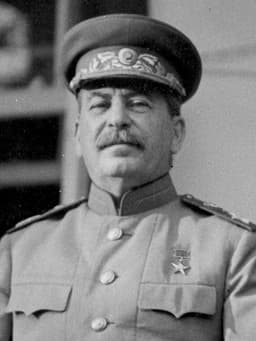
Joseph Stalin
Politician · Modern
68.8Total
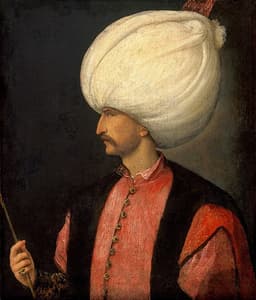
Suleiman the Magnificent
Emperor · Medieval
73.2Total
Basic Information
Born
1878
1494
Died
1953
1566
Era
Modern
Medieval
Nationality
Russia
Ottoman Empire
Occupation
Politician
Emperor
Civilization
Western
Middle Eastern
Score Comparison
Military (10%)
75.0
85.0
Political (20%)
70.0
78.0
Influence (20%)
72.0
72.0
Legacy (20%)
55.0
68.0
Leadership (15%)
80.0
72.0
Strategy (15%)
70.0
72.0
TOTAL
68.8
73.2
Joseph Stalin — Complete Timeline
1928 AD
Launched the First Five-Year PlanReform
Stalin initiated a series of centralized economic plans aimed at rapid industrialization and collectivization of agriculture. The First Five-Year Plan set ambitious targets for heavy industry, leading to significant growth but also severe shortages and human cost.
Impact: global
1929 AD
Implemented forced collectivization of agricultureReform
Stalin ordered the consolidation of individual peasant farms into collective farms (kolkhozy). This was met with resistance, leading to the liquidation of kulaks (wealthy peasants) as a class. The policy caused a catastrophic famine, particularly in Ukraine (Holodomor), resulting in millions of deaths.
Impact: nationaldestructive
1937 AD
Conducted the Great Purge (Great Terror)Political Action
Stalin orchestrated a campaign of political repression against alleged enemies of the state. Millions were arrested, executed, or sent to the Gulag labor camps. The purges targeted the Communist Party, military leadership, intellectuals, and ordinary citizens, consolidating Stalin's absolute power.
Impact: nationaldestructive
1945 AD
Led the Soviet Union to victory in World War IIWar
Stalin served as Supreme Commander of the Soviet armed forces. The Soviet Union bore the brunt of the war against Nazi Germany, suffering immense casualties. The Red Army's victory at Stalingrad and the capture of Berlin were key turning points. The war ended with Soviet domination of Eastern Europe.
Impact: global
Established the Eastern Bloc and the Iron CurtainPolitical Action◆ Major
After WWII, Stalin imposed communist governments in Eastern European countries occupied by the Red Army, creating a buffer zone against the West. This division of Europe into Soviet and Western spheres of influence marked the beginning of the Cold War.
Impact: globaldestructive
Suleiman the Magnificent — Complete Timeline
1522 AD
Siege of RhodesWar◆ Major
Suleiman personally led a massive Ottoman campaign against the Knights Hospitaller on Rhodes. After a six-month siege, the knights surrendered and were allowed to leave. This victory secured Ottoman control over the eastern Mediterranean.
SiegeMediterraneanKnights Hospitaller
Impact: regional
1526 AD
Battle of MohácsWar
Suleiman's Ottoman army defeated the Hungarian forces of King Louis II at Moh
BattleHungaryOttoman expansion
Impact: regional
1529 AD
Siege of ViennaWar◆ Major
Suleiman besieged Vienna, the Habsburg capital, with a large army. The siege failed due to supply issues, disease, and strong defenses. This defeat halted Ottoman expansion into central Europe and marked the empire's furthest advance westward.
SiegeViennaDefeat
Impact: regional
1530 AD
Codification of Ottoman lawReform◆ Major
Suleiman oversaw the compilation and standardization of Ottoman legal codes, known as Kanun. These laws regulated criminal justice, land tenure, and taxation, creating a unified legal system that balanced sharia with secular law. He earned the title 'Kanuni' (the Lawgiver).
Legal reformKanunOttoman Empire
Impact: nationalconstructive
1536 AD
Execution of Ibrahim PashaPolitical Action◆ Major
Suleiman ordered the execution of his grand vizier and close friend Ibrahim Pasha, who had served for 13 years. The reasons remain debated, but likely involved Ibrahim's growing power and conflicts with Suleiman's wife, Hurrem Sultan. This event demonstrated the absolute power of the sultan.
ExecutionCourt politicsPower
Impact: nationaltragic
Expert Analysis
Suleiman the Magnificent vs Joseph Stalin
# The Magnificent and the Terrible: Suleiman and Stalin, Two Architects of Empire
In the autumn of 1529, Suleiman the Magnificent stood before the walls of Vienna, his army of perhaps 100,000 men stretching across the Hungarian plain. The city's defenders, outnumbered and exhausted, watched the Ottoman campfires flicker in the darkness and prayed for a miracle. Four centuries later, in the winter of 1941, another man—Joseph Stalin—sat in his Kremlin study as German panzers rolled within sight of Moscow, the fate of his empire hanging by a thread. Both men faced the same fundamental question: Would their creations survive? Their answers—and the paths they took to power—could not have been more different, yet both reshaped the world in ways that still echo today.
Origins
Suleiman was born into destiny. The only surviving son of Sultan Selim I, he grew up in the gilded cage of the Topkapi Palace, tutored in poetry, law, and the Quran. The Ottoman Empire he inherited in 1520 was already a formidable power, straddling three continents. His era was one of faith and steel, where a sultan's legitimacy rested on conquest and justice. Suleiman absorbed this world like a sponge, learning that a ruler must be both a warrior and a judge.
Stalin emerged from the opposite end of the social spectrum. Born Ioseb Dzhugashvili in 1878 in the Georgian town of Gori, his father was a cobbler, his mother a devout washerwoman. His world was one of poverty, violence, and ethnic marginalization. A seminary student turned revolutionary, he cut his teeth in the underground world of bank robberies and exile, where trust was a weakness and paranoia a survival instinct. The Russian Empire of his youth was cracking under the weight of industrialization and war, and Stalin learned early that power belonged to those willing to seize it without mercy.
Rise to Power
Suleiman ascended the throne at twenty-six, smoothly and without bloodshed. His father had eliminated potential rivals, leaving the young sultan free to focus on expansion. Within two years, he captured Belgrade; by 1522, he personally led the siege of Rhodes, a six-month campaign that broke the Knights Hospitaller and opened the eastern Mediterranean. His path was one of inherited legitimacy, burnished by military glory.
Stalin's rise was a labyrinth of cunning and elimination. After the 1917 Revolution, he maneuvered through the Bolshevik bureaucracy, accumulating positions of control—Commissar of Nationalities, head of the Workers' and Peasants' Inspectorate—while Lenin's health declined. By 1928, he had outmaneuvered Trotsky, Zinoviev, and Kamenev, not through battlefield triumphs but through patient manipulation of the party apparatus. Where Suleiman conquered cities, Stalin conquered committees.
Leadership & Governance
Suleiman's genius lay in synthesis. He was both conqueror and lawgiver. In 1530, he oversaw the codification of Ottoman law—the Kanun—standardizing criminal, land, and tax regulations across a sprawling, multi-ethnic empire. He balanced Islamic sharia with secular edicts, creating a system that allowed Christians and Jews to flourish. His court became a center of art and architecture: the architect Sinan built mosques that still define Istanbul's skyline. Suleiman governed through a meritocratic bureaucracy, elevating men like his grand vizier Ibrahim Pasha, a Greek-born slave who rose to become the empire's second-most powerful figure.
Stalin governed through terror. In 1928, he launched the First Five-Year Plan, a forced march toward industrialization that built factories and dams but also created famine. The collectivization of agriculture, begun in 1929, led to the deaths of millions of Ukrainian peasants and the destruction of centuries-old farming traditions. The Great Purge of 1937 turned the Soviet state against its own people: party officials, army officers, intellectuals—anyone suspected of disloyalty was arrested, shot, or sent to the Gulag. Stalin ruled not through law but through fear, and his bureaucracy was a machine of surveillance and denunciation.
Triumph & Tragedy
Suleiman's greatest triumph was the Battle of Mohács in 1526, where his army annihilated the Hungarian forces of King Louis II. The king drowned in a creek, and the victory opened Central Europe to Ottoman influence for 150 years. His greatest tragedy was personal: the execution of Ibrahim Pasha in 1536, a man he had loved like a brother. The reasons remain murky—suspicion of disloyalty, pressure from his wife Roxelana, or the corrosive effect of absolute power. Suleiman never recovered from the act, and it marked the beginning of a more isolated, paranoid phase of his reign.
Stalin's triumph was World War II. As Supreme Commander, he rallied the Soviet Union after the catastrophic losses of 1941, overseeing the defense of Moscow, the victory at Stalingrad, and the final advance into Berlin in 1945. Yet this triumph was built on earlier tragedy: the purges had decimated the Red Army's officer corps, contributing to the disasters of 1941. After the war, Stalin imposed the Eastern Bloc across Europe, creating the Iron Curtain that divided the continent for half a century. His tragedy was the human cost of his rule: estimates of deaths under Stalin range from 6 to 20 million, through famine, execution, and labor camps.
Character & Destiny
Suleiman was a man of contradictions: a poet who wrote tender verses about his wife, a conqueror who wept at the death of his sons, a lawgiver who ordered the execution of his closest friend. His personality was shaped by the confidence of inherited power—he could afford to be merciful, to patronize the arts, to codify justice, because his throne was secure. But absolute power also isolated him, and his later years were marked by suspicion and the tragedy of succession struggles between his sons.
Stalin was shaped by insecurity. The son of a violent alcoholic father, a Georgian in a Russian-dominated empire, he learned that the world was a zero-sum game. His personality was a fortress of paranoia and calculation. He trusted no one, eliminated everyone who could threaten him, and saw history as a struggle where the ends justified any means. Where Suleiman's cruelty was often personal and impulsive, Stalin's was systematic and ideological.
Legacy
Suleiman left behind an empire at its zenith, a legal system that endured for centuries, and a cultural legacy in architecture, poetry, and law. In Turkey today, he is remembered as "Kanuni"—the Lawgiver—a figure of golden-age nostalgia. But his empire's decline began within decades of his death, and his failure to establish a stable succession haunted the Ottomans for generations.
Stalin left behind a superpower. The Soviet Union he forged defeated Nazi Germany, industrialized a backward nation, and became a nuclear-armed rival to the United States. His legacy is profoundly ambiguous: millions revere him as the man who won the war and built the factories; millions more curse him as a tyrant who destroyed lives. In modern Russia, his image is contested—a statue here, a street name there—but the memory of his terror lingers.
Conclusion
Two men, two empires, two ways of ruling. Suleiman built his power on inherited legitimacy and military glory, governing through law and patronage. Stalin built his on revolutionary ideology and systematic terror, governing through fear and control. Both were products of their times: Suleiman of a medieval world where a sultan's word was law, Stalin of a modern age where ideology could justify mass mobilization. Yet both faced the same eternal challenge of power: how to hold it, how to use it, and what to leave behind. Suleiman's mosques still stand in Istanbul, testaments to a golden age. Stalin's factories still rust across Russia, monuments to a brutal transformation. The question they leave us is not which was better, but what each reveals about the human capacity for both creation and destruction—and how thin the line between magnificence and terror can be.
Rankings
🥇
Suleiman the MagnificentLeader
Mil: 85.0Pol: 78.0Inf: 72.0
73.2
🥈
Joseph Stalin
Mil: 75.0Pol: 70.0Inf: 72.0
68.8
+4.4 behind
How This Comparison Works
Algorithm
Each figure is scored on 6 dimensions (0—100 scale) based on structured historical data: Military (10%), Political (20%), Influence (20%), Legacy (20%), Leadership (15%), Strategy (15%). The weighted total produces the final ranking.
Data Sources
Scores are computed from structured sub-indicators in the database. Scale factors adjust for era (Ancient ×0.85, Modern ×1.0) and civilization size (Eastern ×1.05, Other ×0.80) to account for differences in population and military scale.
Maximum 3 Figures
Comparisons are limited to 2—3 figures to ensure readability and statistical meaningfulness.
Error Margins
±5 points per dimension — Sub-scores are derived from historical records with inherent uncertainty. Two figures within 5 points on a dimension should be considered roughly equivalent in that area.
Total Score Accuracy
±3 points overall — The weighted combination of 6 dimensions produces a total score with approximately ±3 points of uncertainty. Differences of less than 3 points are not statistically significant— the figures are effectively tied.
Known Limitations
- Historical records are incomplete and uneven across civilizations
- Figures from oral-tradition societies may be underrepresented
- Occupation labels can misclassify multi-role figures
- Scores measure capability and impact, not moral character
- Quantitative scoring is a comparison tool, not absolute truth
Capability Radar
Military (10%) — Battles & Warfare
Battles
85
95
Win Rate
80
90
Expansion
85
95
Political (20%) — Governance & Reform
Reform
90
90
Diplomacy
70
88
Economy
85
85
Influence (20%) — Cultural & Global Reach
Cultural
70
90
Global
95
88
Legacy (20%) — Historical Impact
Historical
95
92
Longevity
80
85
Leadership (15%) — Power & Stability
Tenure
95
95
Stability
60
85
Strategy (15%) — Tactics & Innovation
Strategy
85
92
Tactics
60
85
Reform
90
80
Similar Comparisons
Comments & Discussion
SultanSpy6/16/2026
Comparing Suleiman to Stalin is like comparing a scalpel to a sledgehammer. Suleiman expanded the Ottoman Empire through calculated military campaigns and legal reforms—he personally led 13 campaigns and codified the Kanun law system. Stalin relied on terror, purging 1.2 million party members by 1939. Suleiman built a legal framework that lasted centuries; Stalin built a personality cult that collapsed in decades. One ruled by justice, the other by fear. That's not a comparison—that's a contrast
数据屠夫6/16/2026
拿苏莱曼跟斯大林比?简直是拿金丝雀和秃鹫比。苏莱曼时期的奥斯曼帝国人均寿命约35岁,生育率稳定;斯大林时期苏联在1932-33年大饥荒中死了600万人,生育率暴跌40%多。数据不会撒谎:苏莱曼的帝国自然增长率是正的,斯大林的是负数。你说谁更"伟大"?这根本是个数据伦理问题。
ClassicistCato6/16/2026
The comparison misses the fundamental difference in legacy. Suleiman's reign saw the flourishing of Ottoman architecture—Sinan designed over 300 structures, including the Süleymaniye Mosque that still defines Istanbul's skyline. Stalin's architectural legacy is the drab Soviet apartment block. More importantly, Suleiman's legal code influenced the Balkans for 400 years; Stalin's constitution was a facade while the NKVD ran the show. One built for eternity, the other for fear. Alexander the Great
血色档案员6/16/2026
你们这些美化奥斯曼的人真可笑。苏莱曼屠杀的基督徒比斯大林杀的还多吗?1526年莫哈奇战役后,他下令处死所有俘虏,约2万人。但斯大林的大清洗是按照社会阶层系统性消灭的:1937-38年,超过68万人被处决,其中40%是工农。苏莱曼的暴力是战争行为,斯大林的是社会工程。前者有宗教光环,后者有意识形态伪装。本质上都是独裁者的数字游戏。
OttomanOptimist6/16/2026
Let's get real: Suleiman inherited a stable empire and mostly maintained it. Stalin inherited a peasant nation in chaos and industrialized it in a decade. Suleiman's army used 16th-century logistics; Stalin's Red Army stopped the Wehrmacht at Stalingrad. Both were ruthless, but only one faced an existential threat. Stalin's purges killed millions, yet the Soviet Union survived Hitler's onslaught. Suleiman lost at Vienna and retreated. That's not moral equivalence—it's historical context. Pick yo