Loading...
Abraham Lincoln vs Joseph Stalin
Abraham Lincoln leads by 8.7 pts · 2 figures compared
…
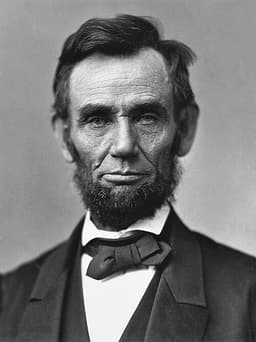
Abraham Lincoln
Politician · Modern
77.5Total
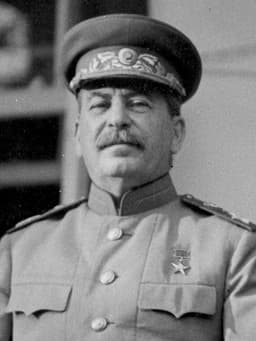
Joseph Stalin
Politician · Modern
68.8Total
Basic Information
Born
1809
1878
Died
1865
1953
Era
Modern
Modern
Nationality
United States
Russia
Occupation
Politician
Politician
Civilization
Western
Western
Score Comparison
Military (10%)
50.0
75.0
Political (20%)
88.0
70.0
Influence (20%)
80.0
72.0
Legacy (20%)
82.0
55.0
Leadership (15%)
85.0
80.0
Strategy (15%)
60.0
70.0
TOTAL
77.5
68.8
Abraham Lincoln — Complete Timeline
1861 AD
Suspension of Habeas CorpusPolitical Action◆ Major
Lincoln suspended the writ of habeas corpus in parts of the Union, allowing the military to arrest and detain suspected Confederate sympathizers without trial. This action was controversial and challenged civil liberties during wartime.
Habeas CorpusCivil LibertiesCivil War
Impact: nationaldestructive
1862 AD
Signing of the Homestead ActPolitical Action◆ Major
Lincoln signed the Homestead Act, granting 160 acres of public land to settlers for a small fee. This encouraged westward expansion and agricultural development, but also displaced Native American tribes.
Homestead ActWestward ExpansionLand Policy
Impact: nationalconstructive
1863 AD
Emancipation ProclamationPolitical Action
Lincoln issued the Emancipation Proclamation, declaring slaves in Confederate states free. This shifted the Civil War's focus to ending slavery and allowed African Americans to join the Union Army.
EmancipationCivil WarSlavery
Impact: globalprogressive
Gettysburg AddressCultural◆ Major
Lincoln delivered the Gettysburg Address at the dedication of the Soldiers' National Cemetery. The speech redefined the Civil War as a struggle for national unity and equality, and became one of the most famous speeches in US history.
Gettysburg AddressCivil WarOratory
Impact: nationalconstructive
1865 AD
Assassination by John Wilkes BoothOther
Lincoln was shot by John Wilkes Booth at Ford's Theatre in Washington, D.C., and died the next day. His assassination occurred just days after the Civil War ended, plunging the nation into mourning and affecting Reconstruction.
AssassinationCivil WarReconstruction
Impact: nationaltragic
Joseph Stalin — Complete Timeline
1928 AD
Launched the First Five-Year PlanReform
Stalin initiated a series of centralized economic plans aimed at rapid industrialization and collectivization of agriculture. The First Five-Year Plan set ambitious targets for heavy industry, leading to significant growth but also severe shortages and human cost.
Impact: global
1929 AD
Implemented forced collectivization of agricultureReform
Stalin ordered the consolidation of individual peasant farms into collective farms (kolkhozy). This was met with resistance, leading to the liquidation of kulaks (wealthy peasants) as a class. The policy caused a catastrophic famine, particularly in Ukraine (Holodomor), resulting in millions of deaths.
Impact: nationaldestructive
1937 AD
Conducted the Great Purge (Great Terror)Political Action
Stalin orchestrated a campaign of political repression against alleged enemies of the state. Millions were arrested, executed, or sent to the Gulag labor camps. The purges targeted the Communist Party, military leadership, intellectuals, and ordinary citizens, consolidating Stalin's absolute power.
Impact: nationaldestructive
1945 AD
Led the Soviet Union to victory in World War IIWar
Stalin served as Supreme Commander of the Soviet armed forces. The Soviet Union bore the brunt of the war against Nazi Germany, suffering immense casualties. The Red Army's victory at Stalingrad and the capture of Berlin were key turning points. The war ended with Soviet domination of Eastern Europe.
Impact: global
Established the Eastern Bloc and the Iron CurtainPolitical Action◆ Major
After WWII, Stalin imposed communist governments in Eastern European countries occupied by the Red Army, creating a buffer zone against the West. This division of Europe into Soviet and Western spheres of influence marked the beginning of the Cold War.
Impact: globaldestructive
Expert Analysis
Abraham Lincoln vs Joseph Stalin
# The Emancipator and the Tyrant
On April 14, 1865, a single bullet fired from John Wilkes Booth’s derringer ended Abraham Lincoln’s life in a Washington theater box. The nation mourned a martyr. Twenty-eight years later, in a small Georgian town, a boy named Ioseb Dzhugashvili watched his father beat his mother, and a different kind of leader began to take shape. One died believing he had preserved a fragile democracy; the other would spend decades crushing one. Both men reshaped their nations in fire and blood, yet their paths could not have diverged more starkly. Why did Lincoln, with a military score of 50.0, become the Great Emancipator, while Stalin, with a higher military score of 75.0, became the Great Terror?
Origins
Lincoln was born into a log cabin in Kentucky in 1809, the son of illiterate farmers. His mother died when he was nine, and his father remarried a woman who encouraged young Abraham’s hunger for books. He read by firelight, borrowed law texts from neighbors, and taught himself surveying. The frontier was his classroom—a place where self-reliance and moral conviction grew together. His America was a young, sprawling democracy, still wrestling with the contradiction of slavery in a land of liberty.
Stalin was born in 1878 in Gori, Georgia, then part of the Russian Empire. His father was a violent cobbler; his mother, a devout washerwoman who wanted her son to become a priest. He entered a theological seminary in Tiflis, but instead of scripture, he discovered the works of Karl Marx. The Russia of his youth was a crumbling autocracy, where the tsar ruled by divine right, peasants starved, and revolutionaries plotted in shadows. Where Lincoln learned to reason from books, Stalin learned to conspire from necessity.
Rise to Power
Lincoln’s ascent was a slow, grinding climb through the muddy tracks of American politics. He served in the Illinois state legislature, lost a Senate race to Stephen Douglas in 1858, and then, improbably, won the presidency in 1860 with less than 40 percent of the popular vote. His election triggered secession, not triumph. He entered office as seven Southern states had already left the Union, a crisis that would define his entire tenure.
Stalin’s rise was a masterclass in bureaucratic ruthlessness. He joined the Bolsheviks, survived Siberian exile, and after the 1917 Revolution, became the party’s fixer—first as Commissar for Nationalities, then as General Secretary. He did not lead a revolution; he inherited one. By 1928, he had sidelined Trotsky, crushed internal rivals, and launched the First Five-Year Plan. Lincoln had to win a war to hold power; Stalin merely had to outlast his enemies in a system he helped make paranoid.
Leadership & Governance
Lincoln governed through persuasion, patience, and a profound understanding of constitutional limits. He suspended habeas corpus in 1861 to suppress dissent in border states, a controversial act that he justified as necessary to save the Union. Yet he never declared himself dictator. He signed the Homestead Act in 1862, giving 160 acres of public land to settlers—a quiet revolution that opened the West to ordinary Americans. His Emancipation Proclamation in 1863 was a political masterstroke: it freed slaves only in Confederate territory, preserving the loyalty of border slave states while turning the Civil War into a moral crusade. His Gettysburg Address, just 272 words, redefined the nation as “conceived in Liberty, and dedicated to the proposition that all men are created equal.”
Stalin governed through fear, calculation, and absolute control. The First Five-Year Plan (1928–1932) forced rapid industrialization, but at a staggering cost: millions died in famines caused by forced collectivization. The Great Purge of 1937–1938 executed or imprisoned over a million people, including most of the Red Army’s officer corps. Yet when World War II came, Stalin proved a capable Supreme Commander. He held Moscow, broke the siege of Stalingrad, and drove the Nazis back to Berlin. He was ruthless enough to sacrifice entire armies for strategic gain—a calculus Lincoln could never have made, not because he lacked steel, but because his moral framework forbade it.
Triumph & Tragedy
Lincoln’s greatest triumph was the preservation of the Union and the abolition of slavery. His greatest tragedy was dying just as victory was secured. He never saw the Thirteenth Amendment fully ratified, never oversaw Reconstruction. His assassination in 1865 cut short the one man who might have healed the wounds of war with magnanimity. “With malice toward none, with charity for all,” he had said—and then he was gone.
Stalin’s greatest triumph was leading the Soviet Union to victory in 1945, standing atop Lenin’s Mausoleum as the Red Army raised the hammer and sickle over Berlin. His greatest tragedy was that this victory came atop a mountain of his own people’s bones. By 1945, he had already killed more Soviets than the Nazis ever would. After the war, he imposed the Iron Curtain across Eastern Europe, creating a buffer zone of satellite states that would define the Cold War. He died in 1953, still in absolute power, never facing judgment.
Character & Destiny
Lincoln was a melancholic man, prone to dark humor and long silences. He read Shakespeare and the Bible, told rambling stories, and suffered from depression. His empathy was real—he wept over casualty lists, visited wounded soldiers, and pardoned deserters. His political score of 88.0 reflects a man who could bend principle without breaking it, who understood that democracy required patience, not purity.
Stalin was a paranoid man, suspicious of everyone, including his own doctors. He had a coarse sense of humor and a taste for revenge. He once said, “A single death is a tragedy; a million deaths is a statistic.” His political score of 72.0 is lower than Lincoln’s, not because he was less effective, but because he ruled by terror, not consent. Where Lincoln built institutions, Stalin hollowed them out.
Legacy
Lincoln is remembered as the Great Emancipator, the martyr of democracy, the man who saved the Union. His legacy score of 80.0 is a testament to his enduring moral authority. Monuments, holidays, and countless books honor him. He is the face of the $5 bill and the Lincoln Memorial.
Stalin’s legacy is contested. His influence score of 72.0 reflects the Soviet Union’s rise to superpower status, but his legacy score of 55.0 is dragged down by the purges, famines, and gulags. In Russia today, some view him as a wartime savior; others, as a butcher. He has no monuments that stand unchallenged.
Conclusion
What separates the two men is not ambition—both had it in abundance. What separates them is the answer to a single question: What are you willing to sacrifice for power? Lincoln was willing to sacrifice his life, but not his soul. Stalin was willing to sacrifice both—and everyone else’s besides. One preserved a democracy by bending it; the other destroyed one by twisting it. In the end, Lincoln’s story reminds us that leadership can be moral without being weak. Stalin’s warns us that it can be strong without being human.
Rankings
🥇
Abraham LincolnLeader
Mil: 50.0Pol: 88.0Inf: 80.0
77.5
🥈
Joseph Stalin
Mil: 75.0Pol: 70.0Inf: 72.0
68.8
+8.7 behind
How This Comparison Works
Algorithm
Each figure is scored on 6 dimensions (0—100 scale) based on structured historical data: Military (10%), Political (20%), Influence (20%), Legacy (20%), Leadership (15%), Strategy (15%). The weighted total produces the final ranking.
Data Sources
Scores are computed from structured sub-indicators in the database. Scale factors adjust for era (Ancient ×0.85, Modern ×1.0) and civilization size (Eastern ×1.05, Other ×0.80) to account for differences in population and military scale.
Maximum 3 Figures
Comparisons are limited to 2—3 figures to ensure readability and statistical meaningfulness.
Error Margins
±5 points per dimension — Sub-scores are derived from historical records with inherent uncertainty. Two figures within 5 points on a dimension should be considered roughly equivalent in that area.
Total Score Accuracy
±3 points overall — The weighted combination of 6 dimensions produces a total score with approximately ±3 points of uncertainty. Differences of less than 3 points are not statistically significant— the figures are effectively tied.
Known Limitations
- Historical records are incomplete and uneven across civilizations
- Figures from oral-tradition societies may be underrepresented
- Occupation labels can misclassify multi-role figures
- Scores measure capability and impact, not moral character
- Quantitative scoring is a comparison tool, not absolute truth
Capability Radar
Military (10%) — Battles & Warfare
Battles
15
85
Win Rate
20
80
Expansion
0
85
Political (20%) — Governance & Reform
Reform
95
90
Diplomacy
80
70
Economy
70
85
Influence (20%) — Cultural & Global Reach
Cultural
85
70
Global
85
95
Legacy (20%) — Historical Impact
Historical
95
95
Longevity
90
80
Leadership (15%) — Power & Stability
Tenure
65
95
Stability
55
60
Strategy (15%) — Tactics & Innovation
Strategy
55
85
Tactics
10
60
Reform
60
90
Similar Comparisons
Comments & Discussion
EmancipatorStan6/16/2026
Comparing Lincoln’s 50.0 military score to Stalin’s 75.0 is like comparing a surgeon to a butcher. Lincoln waged war to preserve the Union and end slavery—his General Grant’s brutal 1864 Overland Campaign proved he wasn’t squeamish, but he never ordered mass executions. Stalin’s score reflects the Great Purge’s 700,000+ deaths, not battlefield genius. Stop the numbers game: one man saved democracy; the other buried it in a gulag.
历史数字痴6/16/2026
军事评分75.0对50.0?这数据纯属扯淡!林肯指挥了南北战争,靠战略赢了——比如葛底斯堡战役控制维克斯堡,切断南方补给线。斯大林靠大清洗和集体农庄的死人堆刷分,数字能衡量道德深渊吗?我宁愿要一个务实解放者,也不要一个数据包装的暴君。数据上75分,人性上负无穷!
Skeptical Scholar6/16/2026
The military score metric is intellectually bankrupt—it measures casualties caused, not ethical outcomes. Lincoln’s 50.0 reflects his 1862 Emancipation Proclamation, a strategic move that silenced British support for the Confederacy and freed 3.5 million slaves. Stalin’s 75.0 ignores that his World War II strategy cost 26 million Soviet lives, including 9 million soldiers. Numbers without context are just propaganda tools.
儒家老兵6/16/2026
林肯像孔子修春秋,用法律和战争重塑道德秩序;斯大林像秦始皇焚书坑儒,用恐惧统一意志。林肯死前看过美国宪法第13修正案通过,解放了400万奴隶;斯大林死时留下2,000万古拉格囚犯的哭声。一个是用鲜血赎罪,一个是用鲜血筑尸山。别被数字蒙蔽,历史是灵魂的选择,不是统计表。