Loading...
Joseph Stalin vs Lazare Carnot
Joseph Stalin leads by 0.6 pts · 2 figures compared
…
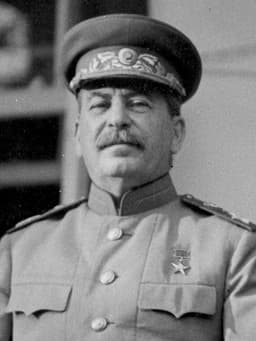
Joseph Stalin
Politician · Modern
68.8Total
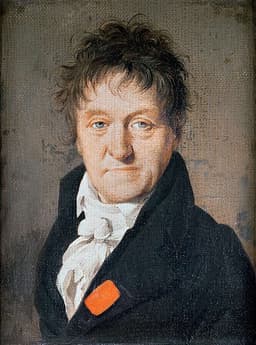
Lazare Carnot
Politician · Modern
68.2Total
Basic Information
Born
1878
1753
Died
1953
1823
Era
Modern
Modern
Nationality
Russia
France
Occupation
Politician
Politician
Civilization
Western
Western
Score Comparison
Military (10%)
75.0
61.7
Political (20%)
70.0
72.0
Influence (20%)
72.0
68.0
Legacy (20%)
55.0
65.0
Leadership (15%)
80.0
72.0
Strategy (15%)
70.0
72.0
TOTAL
68.8
68.2
Joseph Stalin — Complete Timeline
1928 AD
Launched the First Five-Year PlanReform
Stalin initiated a series of centralized economic plans aimed at rapid industrialization and collectivization of agriculture. The First Five-Year Plan set ambitious targets for heavy industry, leading to significant growth but also severe shortages and human cost.
Impact: global
1929 AD
Implemented forced collectivization of agricultureReform
Stalin ordered the consolidation of individual peasant farms into collective farms (kolkhozy). This was met with resistance, leading to the liquidation of kulaks (wealthy peasants) as a class. The policy caused a catastrophic famine, particularly in Ukraine (Holodomor), resulting in millions of deaths.
Impact: nationaldestructive
1937 AD
Conducted the Great Purge (Great Terror)Political Action
Stalin orchestrated a campaign of political repression against alleged enemies of the state. Millions were arrested, executed, or sent to the Gulag labor camps. The purges targeted the Communist Party, military leadership, intellectuals, and ordinary citizens, consolidating Stalin's absolute power.
Impact: nationaldestructive
1945 AD
Led the Soviet Union to victory in World War IIWar
Stalin served as Supreme Commander of the Soviet armed forces. The Soviet Union bore the brunt of the war against Nazi Germany, suffering immense casualties. The Red Army's victory at Stalingrad and the capture of Berlin were key turning points. The war ended with Soviet domination of Eastern Europe.
Impact: global
Established the Eastern Bloc and the Iron CurtainPolitical Action◆ Major
After WWII, Stalin imposed communist governments in Eastern European countries occupied by the Red Army, creating a buffer zone against the West. This division of Europe into Soviet and Western spheres of influence marked the beginning of the Cold War.
Impact: globaldestructive
Lazare Carnot — Complete Timeline
1793 AD
Directed the Victory at the Battle of WattigniesWar◆ Major
Carnot personally directed French forces at the Battle of Wattignies, a key victory that relieved the siege of Maubeuge. His strategic planning helped turn the tide against the Austrian army.
French RevolutionBattleVictory
Impact: regionalconstructive
Organized the Levée en MasseReform◆ Major
Carnot helped implement the lev
French RevolutionConscriptionMilitary Reform
Impact: globalconstructive
Appointed to the Committee of Public SafetyPolitical Action◆ Major
Carnot was appointed to the Committee of Public Safety, where he took charge of military organization. He reorganized the French army, introduced mass conscription, and coordinated the war effort against foreign coalitions.
French RevolutionCommittee of Public SafetyMilitary
Impact: nationalconstructive
1815 AD
Exiled as a RegicidePolitical Action
After the Bourbon restoration, Carnot was exiled as a regicide for having voted for the execution of Louis XVI. He spent his remaining years in Germany and died in Magdeburg.
ExileRegicideBourbon
Impact: nationaltragic
Expert Analysis
Joseph Stalin vs Lazare Carnot
# The Organizer and the Tyrant
In the winter of 1793, as the armies of Europe closed in on revolutionary France, a fifty-year-old engineer named Lazare Carnot sat in a cramped Paris office, drafting decrees that would transform a rabble into a fighting force. Across the centuries, another man, Joseph Stalin, stood in the Kremlin in 1928, sketching out a vision of steel and tractors that would remake a backward empire. Both men were organizers of victory, architects of national survival. Yet one is remembered as the savior of the French Revolution, the other as a mass murderer. What drove them down such different paths?
Origins
Lazare Carnot was born in 1753 in Nolay, Burgundy, the son of a lawyer and notary. His world was that of the Old Regime—hierarchical, Catholic, and deeply rooted in local custom. Educated at the prestigious École du Génie at Mézières, he became a military engineer, a profession that prized calculation over charisma. The Enlightenment shaped him: he read Rousseau, admired Voltaire, and believed in reason’s power to perfect society. When revolution came in 1789, he embraced it not as a fanatic but as a patriot who saw a chance to reform a corrupt monarchy.
Joseph Stalin was born Ioseb Besarionis dze Jughashvili in 1878 in Gori, Georgia, a province of the Russian Empire. His father was a violent shoemaker, his mother a devout washerwoman. Unlike Carnot’s orderly education, Stalin’s was erratic: expelled from seminary for Marxist activity, he drifted into revolutionary underground. His formative years were spent robbing banks, evading police, and absorbing the brutal lessons of conspiracy. Where Carnot had the Enlightenment, Stalin had the Orthodox Church’s fatalism and Lenin’s ruthlessness. One man’s world was ordered by law; the other’s by survival.
Rise to Power
Carnot entered history through the Committee of Public Safety. In 1793, with France invaded from all sides, the revolutionary government appointed him to oversee military organization. He was not a politician in the usual sense—he never sought power for its own sake. Instead, he became the “Organizer of Victory” by sheer competence. When the army needed cannons, he found them; when generals failed, he replaced them. His great turning point came at the Battle of Wattignies in October 1793, where he personally directed French forces to break the Austrian siege of Maubeuge. It was a victory of logistics and nerve, not genius.
Stalin’s rise was more Machiavellian. He entered the Bolshevik inner circle as a fixer—the man who could get things done. After Lenin’s death in 1924, he outmaneuvered rivals like Trotsky by mastering the party apparatus. By 1928, he was absolute. Where Carnot’s power came from appointment, Stalin’s came from elimination. He used the First Five-Year Plan, launched that same year, not just to industrialize but to cement his control: every factory, every farm, every worker became a lever of state power.
Leadership & Governance
Carnot governed through persuasion and expertise. As a member of the Committee of Public Safety, he worked alongside men like Robespierre, but he avoided their ideological excesses. He reorganized the army into the *levée en masse*—a mass conscription that mobilized 300,000 men in 1793 alone. His military reforms were practical: standardized training, better supply chains, promotion by merit. He believed in victory through organization, not terror. When the Reign of Terror turned bloody, he distanced himself, though not enough to save his conscience.
Stalin governed through fear. His Great Purge of 1937–1938 decimated the Red Army’s officer corps, executing three of five marshals, 13 of 15 army commanders, and tens of thousands of lesser officers. His economic reforms—forced collectivization of agriculture—caused a famine that killed millions in Ukraine and Kazakhstan. Yet his leadership was not devoid of strategy: the Five-Year Plans transformed the Soviet Union into an industrial power, producing the tanks and planes that would defeat Nazi Germany. Carnot organized a nation to fight; Stalin organized a nation to survive him.
Triumph & Tragedy
Carnot’s greatest moment was the victory at Wattignies, but his true triumph was the system he built. By 1794, France’s armies were winning on all fronts, and the revolution was saved. His tragedy came later: after the Bourbon restoration in 1815, he was exiled as a regicide for having voted to execute Louis XVI. He died in Magdeburg, Prussia, in 1823, a forgotten hero.
Stalin’s triumph was World War II. As Supreme Commander, he led the Soviet Union to victory in 1945, overseeing the defeat of Nazi Germany at a cost of 27 million Soviet lives. His tragedy was the price: the Gulag, the purges, the engineered famines. He died in 1953, surrounded by sycophants, leaving a nation victorious but traumatized.
Character & Destiny
Carnot was an engineer: methodical, rational, and humane. He believed that systems could save people. Stalin was a conspirator: paranoid, calculating, and cruel. He believed that people were means to an end. Carnot’s character led him to build institutions that outlasted him; Stalin’s led him to destroy anyone who might threaten his legacy. One man’s destiny was to be remembered as a savior; the other’s, as a monster.
Legacy
Carnot’s legacy is the modern citizen army. His *levée en masse* inspired national conscription across Europe, and his organizational principles shaped military thought for a century. Today, he is honored in France as a revolutionary hero, his name carved on the Arc de Triomphe.
Stalin’s legacy is more ambiguous. He is vilified in the West, revered by Russian nationalists, and studied by autocrats. His industrialization built the Soviet superpower, but his terror left a scar that still haunts Russia. In polls, many Russians view him positively as a wartime leader, but historians rank him among history’s worst tyrants.
Conclusion
Carnot and Stalin both organized victory, but they organized it for different ends. Carnot wanted to save a revolution; Stalin wanted to save himself. One built a system that liberated; the other built one that enslaved. Their contrast is a reminder that the same tools—organization, conscription, industrialization—can serve either freedom or tyranny. The difference lies not in the plans but in the men who make them.
Rankings
🥇
Joseph StalinLeader
Mil: 75.0Pol: 70.0Inf: 72.0
68.8
🥈
Lazare Carnot
Mil: 61.7Pol: 72.0Inf: 68.0
68.2
+0.6 behind
How This Comparison Works
Algorithm
Each figure is scored on 6 dimensions (0—100 scale) based on structured historical data: Military (10%), Political (20%), Influence (20%), Legacy (20%), Leadership (15%), Strategy (15%). The weighted total produces the final ranking.
Data Sources
Scores are computed from structured sub-indicators in the database. Scale factors adjust for era (Ancient ×0.85, Modern ×1.0) and civilization size (Eastern ×1.05, Other ×0.80) to account for differences in population and military scale.
Maximum 3 Figures
Comparisons are limited to 2—3 figures to ensure readability and statistical meaningfulness.
Error Margins
±5 points per dimension — Sub-scores are derived from historical records with inherent uncertainty. Two figures within 5 points on a dimension should be considered roughly equivalent in that area.
Total Score Accuracy
±3 points overall — The weighted combination of 6 dimensions produces a total score with approximately ±3 points of uncertainty. Differences of less than 3 points are not statistically significant— the figures are effectively tied.
Known Limitations
- Historical records are incomplete and uneven across civilizations
- Figures from oral-tradition societies may be underrepresented
- Occupation labels can misclassify multi-role figures
- Scores measure capability and impact, not moral character
- Quantitative scoring is a comparison tool, not absolute truth
Capability Radar
Military (10%) — Battles & Warfare
Battles
85
60
Win Rate
80
65
Expansion
85
80
Political (20%) — Governance & Reform
Reform
90
90
Diplomacy
70
60
Economy
85
75
Influence (20%) — Cultural & Global Reach
Cultural
70
60
Global
95
75
Legacy (20%) — Historical Impact
Historical
95
85
Longevity
80
70
Leadership (15%) — Power & Stability
Tenure
95
70
Stability
60
50
Strategy (15%) — Tactics & Innovation
Strategy
85
85
Tactics
60
70
Reform
90
95
Similar Comparisons
Comments & Discussion
RedArmyEngineer6/16/2026
History's hype machine is working overtime here. Carnot's "miracle" was just basic logistics and mobilization—any competent engineer with dictatorial war powers could have done it. Stalin industrialized a feudal nation in a decade while fighting a world war, and he gets "mass murderer" while Carnot gets "savior"? Come on. Carnot's Committee of Public Safety sent people to the guillotine too, just on a smaller, less documented scale. Selective memory, plain and simple.
数据大砍刀6/16/2026
把斯大林和卡诺放在一起比?根本是数据作弊。卡诺1793年管的是3700万人口的国家,征召30万士兵就累吐血了。斯大林1928年接手1.5亿人口的苏联,硬是搞出年产6万辆坦克的工业机器。规模差了几个数量级,拿个体伤亡说事纯属情感绑架。要真比效率,斯大林每百万人口动员的军队和工业产出,卡诺连影子都摸不到。
ScrollBreaker6/16/2026
The core difference isn't morality—it's philosophy. Carnot was an Enlightenment engineer who believed in limited, rational reform. His "levée en masse" was a temporary mobilisation of citizens, not a permanent war against society itself. Stalin was a Leninist who believed in total transformation through permanent revolution. One created armies; the other created a system that devoured itself. That's not just scale; it's a fundamentally different conception of power and human life.
左翼青年6/16/2026
有意思,但别假装这是道德平等主义。卡诺的恐怖时期持续了几个月,处决了几千人,目的是为了保卫革命成果——后来他本人也被流放过,清贫一生。斯大林干了三十年,用古拉格和饥荒消灭了整整几代人,只为保住自己的权力。一个组织者在天灾中救火,另一个故意制造人祸。这哪是什么“不同路径”,根本就是正义与反人类的区别。
ReformWatchdog6/16/2026
You want specific facts? Carnot's 1793 levée en masse decree was 13 laws. Thirteen. He created 14 armies from scratch, standardized training, and implemented the first modern draft. Stalin's 1928 Five-Year Plan was a 250-page panic attack involving forced collectivization, show trials, and the elimination of the kulaks as a class. Carnot organized a nation for a crisis. Stalin organized a crisis for a nation. That's not a comparison; it's a warning.