Loading...
Jose Rizal vs Shamil Basayev
Jose Rizal leads by 3.6 pts · 2 figures compared
…
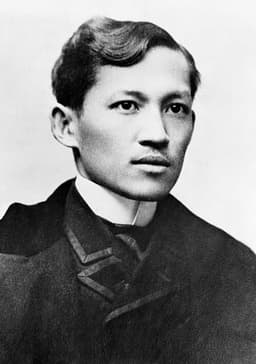
Jose Rizal
Revolutionary · Modern
46.7Total
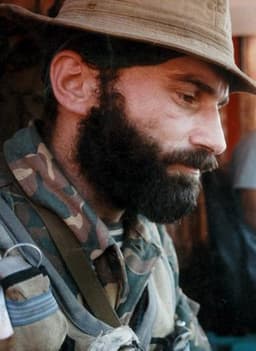
Shamil Basayev
Revolutionary · Modern
43.1Total
Basic Information
Born
1861
1965
Died
1896
—
Era
Modern
Modern
Nationality
Philippines
Chechnya
Occupation
Revolutionary
Revolutionary
Civilization
Eastern
Western
Score Comparison
Military (10%)
11.9
40.0
Political (20%)
33.6
35.0
Influence (20%)
62.0
45.5
Legacy (20%)
58.0
35.0
Leadership (15%)
40.4
57.1
Strategy (15%)
44.5
51.7
TOTAL
46.7
43.1
Jose Rizal — Complete Timeline
1887 AD
Publication of Noli Me TangereCultural
Rizal published his first novel, Noli Me Tangere, in Berlin. The book exposed the corruption and abuses of Spanish colonial rule and the Catholic Church in the Philippines, sparking nationalist sentiment among Filipinos.
LiteratureNationalismColonial Critique
Impact: nationalprogressive
1891 AD
Publication of El FilibusterismoCultural◆ Major
Rizal published his second novel, El Filibusterismo, in Ghent, Belgium. A darker sequel to Noli Me Tangere, it advocated for revolution and further criticized Spanish oppression, intensifying calls for reform and independence.
LiteratureRevolutionColonial Critique
Impact: nationalprogressive
1892 AD
Exile to DapitanPolitical Action◆ Major
Rizal was exiled by Spanish authorities to Dapitan in Mindanao for his alleged involvement in revolutionary activities. During his four-year exile, he practiced medicine, taught, and conducted scientific research, but remained under surveillance.
ExileSpanish ColonialismDapitan
Impact: nationaltragic
1896 AD
Execution of José RizalPolitical Action
Rizal was executed by firing squad in Manila on charges of sedition and rebellion, following a trial by Spanish military court. His martyrdom galvanized the Philippine Revolution, making him a national hero and symbol of resistance.
ExecutionMartyrdomPhilippine Revolution
Impact: nationaltragic
Shamil Basayev — Complete Timeline
1995 AD
Budyonnovsk Hospital Hostage CrisisWar◆ Major
Basayev led a raid on the Russian town of Budyonnovsk, taking over 1,000 hostages in a hospital. The crisis ended with a negotiated settlement that allowed him to return to Chechnya. This attack demonstrated Chechen reach into Russia.
Hostage CrisisTerrorismChechnya
Impact: nationaldestructive
1999 AD
Invasion of DagestanWar
Basayev led Chechen and Islamist fighters into Dagestan to support local rebels. This invasion triggered the Second Chechen War as Russia responded with a full-scale military campaign. The invasion failed to gain local support.
DagestanChechnyaInvasion
Impact: regionaldestructive
2002 AD
Moscow Theater Hostage CrisisWar◆ Major
Basayev orchestrated the Moscow theater hostage crisis, where Chechen militants took 850 people hostage. Russian forces ended the siege with gas, killing 130 hostages. The attack increased international condemnation of Chechen rebels.
Hostage CrisisTerrorismMoscow
Impact: nationaldestructive
2004 AD
Beslan School SiegeWar◆ Major
Basayev planned the Beslan school siege, where militants took over 1,100 people hostage. The siege ended in a bloody assault, resulting in 334 deaths, mostly children. This attack was widely condemned globally.
Hostage CrisisTerrorismBeslan
Impact: globaltragic
2006 AD
Killed by Russian ExplosivesWar◆ Major
Basayev was killed in Ingushetia when a truck loaded with explosives detonated. Russian intelligence claimed responsibility. His death removed the most prominent Chechen rebel commander.
AssassinationChechnyaRussia
Impact: regional
Expert Analysis
Jose Rizal vs Shamil Basayev
# The Pen and the Sword
On a cold December morning in 1896, José Rizal stood before a firing squad in Manila, his back to the soldiers, refusing to be shot as a traitor. He turned around to face his executioners, and at the final moment, the command was given. A single, sharp volley ended the life of a man who had never fired a weapon in anger. Across the world, a century later, Shamil Basayev died not by a firing squad but by a truck bomb in Ingushetia, obliterated by explosives he himself had likely intended for others. One man died for words he had written; the other died for wars he had waged. Why did two revolutionaries, both fighting against empires they deemed oppressive, take such radically different paths—and meet such different ends?
Origins
José Rizal was born in 1861 in Calamba, Philippines, into a prosperous Creole family. He was a child prodigy: by age eight, he wrote poetry in Tagalog; by eleven, he mastered Latin; by his twenties, he was a polyglot fluent in over a dozen languages. His world was one of books, science, and the Enlightenment ideals of reason and liberty. He studied medicine in Madrid, Paris, and Heidelberg, absorbing the liberalism of 19th-century Europe. His enemy was not a foreign army but a colonial system—the Spanish Empire, decaying but brutal.
Shamil Basayev was born in 1965 in the Chechen village of Dyshne-Vedeno, a land scarred by centuries of Russian conquest. His childhood was shaped not by libraries but by the trauma of Stalin’s 1944 deportation of the Chechen people, a collective punishment that killed a quarter of the population. Basayev grew up hearing stories of resistance, of the 19th-century Imam Shamil (after whom he was named), who fought the Russian Empire for decades. His education was practical: he served in the Soviet army, then worked as a computer salesman. But the collapse of the USSR in 1991 opened a door—and a wound. Chechnya declared independence, and Russia answered with war.
Rise to Power
Rizal’s rise was intellectual. He did not lead armies; he led minds. In 1887, he published *Noli Me Tangere* in Berlin, a novel that laid bare the corruption of Spanish friars and colonial officials. The book spread like fire through the Philippines, smuggled in luggage and read aloud in secret gatherings. Four years later, *El Filibusterismo* followed, darker and more radical, advocating for revolution if reform failed. Rizal did not call for violence—he called for awakening. But the Spanish authorities saw him as a threat. In 1892, they exiled him to Dapitan, a remote town in Mindanao, where he practiced medicine, taught children, and built a water system. He was isolated, but his ideas were not.
Basayev’s rise was military. In 1995, he led a raid on Budyonnovsk, a Russian town, seizing a hospital with over 1,000 hostages. The siege ended with a negotiated withdrawal, but Basayev emerged as a folk hero to Chechens—a man who could make Moscow bleed. In 1999, he invaded Dagestan, a neighboring republic, aiming to ignite an Islamist uprising. That invasion triggered the Second Chechen War, a brutal conflict that would destroy Grozny and kill tens of thousands. Basayev’s name became synonymous with terror: the 2002 Moscow theater hostage crisis, where 850 people were taken and 130 died; the 2004 Beslan school siege, where over 330 died, half of them children. He was not a writer; he was a commander.
Leadership & Governance
Rizal governed through persuasion. He founded the La Liga Filipina, a civic organization that sought peaceful reform—better representation, education, rights. But the Spanish arrested him before it could grow. In Dapitan, he ruled a small community through example: he built a school, a hospital, and a farm, teaching by doing. His leadership was moral, not martial.
Basayev governed through fear and loyalty. He commanded fighters who were willing to die, but his strategy was destruction, not construction. He never built a state; he only tore one down. His military tactics—hostage-taking, suicide bombings, ambushes—were effective in the short term but alienated potential allies. He could inspire devotion, but he could not build institutions.
Triumph & Tragedy
Rizal’s greatest triumph was his martyrdom. In 1896, the Philippine Revolution erupted, and the Spanish authorities, panicked, arrested Rizal for sedition. He was tried, convicted, and executed on December 30, 1896. His death turned a writer into a symbol. As he wrote in his farewell poem, *Mi Último Adiós*: “Farewell, my adored Land, region of the sun caressed, / Pearl of the Orient Sea, our Eden lost.” His execution catalyzed a revolution that, within two years, would force Spain to leave.
Basayev’s greatest triumph was also his greatest tragedy. The Beslan school siege, in 2004, was meant to force Russian withdrawal from Chechnya. Instead, it ended in a firefight and explosion that killed over 330 people, most of them children. The world condemned him. Russia used the atrocity to justify even harsher crackdowns. Basayev had won a battle of terror but lost the war for sympathy. In 2006, he was killed by a bomb—possibly planted by Russian intelligence—on a truck in Ingushetia. He died as he lived: by explosion.
Character & Destiny
Rizal was a rationalist. He believed in the power of ideas, in the arc of history bending toward justice. He wrote, “He who does not know how to look back at where he came from will never get to his destination.” His tragedy was that he was too moderate for the radicals and too radical for the moderates. He was executed not because he led a rebellion but because his name inspired one.
Basayev was a nihilist. He believed in the power of violence, in the necessity of blood. He said, “We are not fighting for territory. We are fighting for our souls.” His tragedy was that he became the monster his enemies said he was. He started as a nationalist and ended as a terrorist, his cause drowned in the screams of children.
Legacy
Rizal is remembered as the national hero of the Philippines. His face is on the currency, his books are required reading, and his execution date is a national holiday. He is a symbol of peaceful resistance, of the pen being mightier than the sword.
Basayev is remembered as a terrorist. In Chechnya, some still call him a freedom fighter, but the world calls him a monster. His legacy is not a nation but a warning—of how oppression can twist a man into something unrecognizable.
Conclusion
Two revolutionaries, two empires, two paths. Rizal chose the pen, and it made him immortal. Basayev chose the sword, and it consumed him. Perhaps the difference lies not in their causes but in their character. Rizal believed that the truth would set his people free. Basayev believed that only fire could cleanse the wound. History judges both, but it remembers one with honor and the other with horror. What drove them apart was not the weight of their oppression—both were crushed by empires—but the light they carried within. Rizal carried a lantern; Basayev carried a match.
Rankings
🥇
Jose RizalLeader
Mil: 11.9Pol: 33.6Inf: 62.0
46.7
🥈
Shamil Basayev
Mil: 40.0Pol: 35.0Inf: 45.5
43.1
+3.6 behind
How This Comparison Works
Algorithm
Each figure is scored on 6 dimensions (0—100 scale) based on structured historical data: Military (10%), Political (20%), Influence (20%), Legacy (20%), Leadership (15%), Strategy (15%). The weighted total produces the final ranking.
Data Sources
Scores are computed from structured sub-indicators in the database. Scale factors adjust for era (Ancient ×0.85, Modern ×1.0) and civilization size (Eastern ×1.05, Other ×0.80) to account for differences in population and military scale.
Maximum 3 Figures
Comparisons are limited to 2—3 figures to ensure readability and statistical meaningfulness.
Error Margins
±5 points per dimension — Sub-scores are derived from historical records with inherent uncertainty. Two figures within 5 points on a dimension should be considered roughly equivalent in that area.
Total Score Accuracy
±3 points overall — The weighted combination of 6 dimensions produces a total score with approximately ±3 points of uncertainty. Differences of less than 3 points are not statistically significant— the figures are effectively tied.
Known Limitations
- Historical records are incomplete and uneven across civilizations
- Figures from oral-tradition societies may be underrepresented
- Occupation labels can misclassify multi-role figures
- Scores measure capability and impact, not moral character
- Quantitative scoring is a comparison tool, not absolute truth
Capability Radar
Military (10%) — Battles & Warfare
Battles
14
45
Win Rate
21
40
Expansion
22
15
Political (20%) — Governance & Reform
Reform
15
5
Diplomacy
20
10
Economy
5
5
Influence (20%) — Cultural & Global Reach
Cultural
75
20
Global
65
20
Legacy (20%) — Historical Impact
Historical
80
25
Longevity
75
15
Leadership (15%) — Power & Stability
Tenure
0
10
Stability
5
5
Strategy (15%) — Tactics & Innovation
Strategy
27
35
Tactics
28
55
Reform
28
20
Similar Comparisons
Comments & Discussion
LinguistWarlord6/16/2026
Rizal died facing his executioners, turning to meet death on his terms—his final act a piece of rhetoric. Basayev got vaporized by his own chaos. That’s not just two different paths; that’s two entirely different civilizations of thought. Rizal read Kant in German and wrote novels in Spanish. Basayev learned combat in the forests. One fought with grammar, the other with grenades. Both effective in their contexts, but comparing them is like comparing a surgeon to a grenade launcher.
火药罗密欧6/16/2026
拿黎刹和巴萨耶夫放一起,简直是侮辱智力。一个是启蒙运动的产物,用笔杆子和手术刀对抗殖民暴政;一个是炸弹专家,在幼儿园搞人质屠杀。能相提并论?巴萨耶夫的遗产就是三千多具别斯兰的尸体,黎刹留下的是菲律宾觉醒的民族魂。把文人和屠夫并列,要么历史盲到可悲,要么揣着明白装糊涂。
DataSkeptic426/16/2026
Look, the summary frames this as two “revolutionaries fighting empires,” but that’s absurdly reductive. Rizal’s direct actions literally didn’t kill anyone; his execution made him a martyr. Basayev’s body count is in the thousands. The death tolls don’t even belong in the same decimal system. To put them in a comparison like this is to suggest some kind of equivalence in method or morality. There’s no equivalence. It’s mapping a chess grandmaster onto a street brawler. Apples and cluster bombs.
帝国灰烬6/16/2026
有趣的是,两人都死在帝国手里,但死法天差地别。黎刹是被西班牙行刑队处决,死前还说“这就是我栽下的种子”;巴萨耶夫是被俄军炸弹消灭,连个完整尸体都没留。一个死得像圣人,一个像土匪。这不只是个人选择,是时代变了。1896年帝国死前还要搞个正式仪式,2006年帝国直接雇特种兵炸平你。帝国的暴力从不进化,只是变得更不耐烦。
ClassicsPolymath6/16/2026
What strikes me is the education divide. Rizal could quote Virgil in Latin and argue nationalism with European intellectuals. Basayev’s upbringing was in a village that had been systematically ethnically cleansed by Stalin. You cannot compare the man who wrote *Noli Me Tangere*—a novel designed to awaken a sleeping giant—with the man who led the Budyonnovsk hospital siege, holding babies and patients hostage for leverage. One believed in enlightenment; the other lost faith in humanity before he