Loading...
Jose Maria Sison vs Li Zicheng
Jose Maria Sison leads by 4.8 pts · 2 figures compared
…

Jose Maria Sison
Revolutionary · Modern
48.3Total
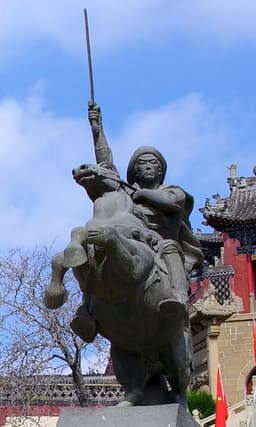
Li Zicheng
Revolutionary · Modern
43.5Total
Basic Information
Born
1939
1606
Died
—
1645
Era
Modern
Modern
Nationality
Philippines
China
Occupation
Revolutionary
Revolutionary
Civilization
Eastern
Eastern
Score Comparison
Military (10%)
41.6
50.0
Political (20%)
35.1
27.9
Influence (20%)
53.3
52.5
Legacy (20%)
45.0
44.2
Leadership (15%)
58.8
39.0
Strategy (15%)
54.6
43.3
TOTAL
48.3
43.5
Jose Maria Sison — Complete Timeline
1968 AD
Founded the Communist Party of the PhilippinesPolitical Action◆ Major
Sison re-established the Communist Party of the Philippines (CPP) along Maoist lines, breaking from the old Partido Komunista ng Pilipinas. The CPP launched a protracted people's war against the Philippine state, becoming one of Asia's longest-running insurgencies.
CommunismMaoismInsurgency
Impact: nationaldestructive
1969 AD
Founded the New People's ArmyPolitical Action◆ Major
Sison established the New People's Army (NPA) as the armed wing of the CPP. The NPA began guerrilla operations in rural areas, targeting government forces and infrastructure. The group has been designated a terrorist organization by the Philippines and the US.
GuerrillaInsurgencyArmed Struggle
Impact: nationaldestructive
1977 AD
Arrested and imprisoned under MarcosPolitical Action◆ Major
Sison was arrested by the Marcos regime and imprisoned for seven years. During his detention, he continued to direct the CPP/NPA through written orders smuggled out of prison. He was released in 1986 after the People Power Revolution.
ImprisonmentMartial LawMarcos
Impact: nationaltragic
1987 AD
Exiled to the NetherlandsPolitical Action◆ Major
After the 1986 revolution, Sison went into self-exile in the Netherlands. From there, he continued to lead the CPP/NPA, issuing directives and negotiating peace talks with the Philippine government. He remains in exile as of 2024.
ExilePeace TalksLeadership
Impact: national
Li Zicheng — Complete Timeline
1644 AD
Captured Beijing and Ended the Ming DynastyWar
Li Zicheng led his rebel army to capture Beijing. The Chongzhen Emperor committed suicide, ending the Ming dynasty. Li Zicheng proclaimed the Shun dynasty and briefly ruled from the Forbidden City before being defeated by Qing forces.
Ming-Qing TransitionRebellionBeijing
Impact: globaldestructive
Defeated at the Battle of Shanhai PassWar◆ Major
Li Zicheng's army was defeated by the combined forces of Wu Sangui and the Manchus at the Battle of Shanhai Pass. The defeat forced him to abandon Beijing and retreat westward, effectively ending his control over northern China.
Ming-Qing TransitionBattleDefeat
Impact: globaltragic
Proclaimed the Shun DynastyPolitical Action◆ Major
After capturing Beijing, Li Zicheng formally proclaimed the establishment of the Shun dynasty in Xi'an. He adopted the title of emperor and began implementing his own administrative policies, though his rule was short-lived.
Shun DynastyProclamationRebellion
Impact: nationalconstructive
1645 AD
Killed in Jiugong MountainWar◆ Major
Li Zicheng was killed by a local militia while fleeing through Jiugong Mountain in Hubei province. His death marked the end of the Shun dynasty and the collapse of his rebellion, though some accounts claim he survived and became a monk.
Shun DynastyDeathRebellion
Impact: nationaltragic
Expert Analysis
Li Zicheng vs Jose Maria Sison
# The Rebel's Path: Two Revolutions, Two Fates
On a spring morning in 1644, a peasant-turned-warlord named Li Zicheng rode through the gates of Beijing at the head of a ragged army, ending 276 years of Ming rule. The Chongzhen Emperor had hanged himself on Coal Hill, and the capital lay prostrate before the man they called the "Daring King." Just over three centuries later, on a different continent, another revolutionary—Jose Maria Sison—founded the Communist Party of the Philippines in a quiet university town, armed not with swords but with Maoist theory and a vision of peasant uprising. One seized an empire and lost it in forty-two days. The other built a movement that has outlasted dictatorships, endured for decades, and still fights today. Why did one rebel dynasty crumble like autumn leaves while the other's revolution refuses to die?
Origins
Li Zicheng was born in 1606 to a poor farming family in Shaanxi province, a region that would become synonymous with rebellion. The Ming dynasty was already rotting from within—corrupt officials bled the countryside dry, drought turned fields to dust, and famine drove peasants to eat bark and clay. Li lost his father to debt, his wife to starvation, and his livelihood to tax collectors. He took work as a postal courier, then as a soldier, but when the Ming government dissolved his unit without pay, he had nothing left to lose. Desperation, not ideology, made him a rebel.
Jose Maria Sison, born in 1939 in Cabugao, Ilocos Sur, came from a different world. His father was a provincial governor; his family owned land and influence. Sison attended the University of the Philippines, where he devoured Marx, Lenin, and Mao. His rebellion was intellectual before it was armed. Where Li Zicheng was forged by hunger, Sison was forged by books. The first fought because there was no food; the second fought because there was no justice—and he believed he knew how to build it.
Rise to Power
Li Zicheng's ascent was a slow burn of chaos. He joined rebel bands in the early 1630s, surviving a Ming counterinsurgency that killed thousands. By 1643, he had unified several peasant armies through a mix of charisma and ruthlessness, promising land to the poor and mercy to the starving. His army swelled like a flood—peasants, deserters, bandits. In 1644, he marched on Beijing with perhaps 200,000 men. The Ming generals, long unpaid and demoralized, either fled or defected. The city gates opened without a fight.
Sison's rise was quieter but more deliberate. In 1968, he gathered a small group of young radicals in Pangasinan and refounded the Communist Party of the Philippines, purging it of old-guard corruption. The next year, he formed the New People's Army (NPA) with just sixty fighters and a handful of rifles. His strategy was Maoist: surround the cities from the countryside, win the peasants through land reform and education, and outlast the state. There was no dramatic capture of a capital—only the slow, patient work of building cells in villages and mountains.
Leadership & Governance
Li Zicheng's rule over Beijing lasted forty-two days. He tried to be magnanimous—he ordered his soldiers not to loot, he distributed grain, and he offered amnesty to Ming officials. But he could not control his army. His men, drunk on victory, raped and pillaged. His treasury was empty, and he tried to squeeze money from the very officials he had promised to protect. He had no administrative experience, no bureaucracy, no plan. His military genius lay in mobility and mass assault, but he could not hold what he had taken.
Sison, by contrast, never governed a capital. He governed an idea. From prison cells and exile, he wrote, organized, and directed a movement that spread across the Philippine archipelago. His leadership score of 73.0 reflects a man who inspired loyalty over decades, even from a distance. He built schools, clinics, and courts in NPA-controlled zones. He understood that revolution was not a seizure of power but a transformation of society. Yet his military strategy score of 30.0 reveals a weakness: the NPA never achieved a decisive victory. It fought to a stalemate, not a triumph.
Triumph & Tragedy
Li Zicheng's greatest moment was also his doom. On June 6, 1644, he entered Beijing and proclaimed the Shun dynasty in Xi'an. He had done what centuries of rebels could not—overthrown the Son of Heaven. But his triumph lasted weeks. At the Battle of Shanhai Pass that same year, his army of veterans was crushed by the alliance of Ming general Wu Sangui and Manchu cavalry. The Manchus poured through the pass, and Li fled west, his army disintegrating. In 1645, a militia killed him in Jiugong Mountain, Hubei, while he scavenged for food. The peasant emperor died like a peasant.
Sison's tragedy is slower. He never saw his revolution win. Arrested in 1977 under Ferdinand Marcos, he spent seven years in prison—but continued to direct the CPP from his cell. After the 1986 People Power Revolution, he went into exile in the Netherlands, where he remains. He has outlived Marcos, the Cold War, and countless comrades. But the NPA, though still active, has not seized power. Sison's legacy is survival, not victory—a revolution that never ends.
Character & Destiny
Li Zicheng was a man of impulse and instinct. He trusted his lieutenants too much, his enemies too little. He could inspire desperate men but could not govern a city. His personality was shaped by scarcity—he thought in terms of taking, not building. When he captured Beijing, he had no vision beyond the throne.
Sison is the opposite: patient, ideological, systematic. He wrote the rules of his revolution in advance. He knew that exile might last decades. His personality was shaped by theory—he believed history was on his side, so he could afford to wait. But that same patience made him cautious. He never risked everything on a single battle, and so he never won everything either.
Legacy
Li Zicheng's legacy is a cautionary tale. The Ming fell because of him, but the Qing rose because of his failure. Chinese historians remember him as both a hero of the people and a tragic fool—a man who could break an empire but not build one. His influence score of 74.3 and legacy of 62.0 reflect a figure who changed history by accident, not design.
Sison's legacy is more ambiguous. His influence score of 74.8 and legacy of 63.2 are nearly identical to Li's, but his movement survives. The CPP and NPA remain on the U.S. list of foreign terrorist organizations. The Philippine government has killed thousands of his followers. Yet in the mountains of Luzon, the Visayas, and Mindanao, the revolution still breathes. Sison may never ride into Manila, but his ideas have outlasted every government that tried to destroy them.
Conclusion
What separates a rebel who loses everything in forty-two days from one who sustains a struggle for half a century? Not courage—both had that. Not opportunity—both seized it. The difference is patience. Li Zicheng was a fire that burned bright and fast, consuming itself. Jose Maria Sison is a river that cuts slowly through stone. One wanted the throne; the other wanted the world to change. And in the end, the man who wanted the world to change may have changed it more, even if he never sat on a throne. History does not always reward the swift. Sometimes, it rewards the stubborn.
Rankings
🥇
Jose Maria SisonLeader
Mil: 41.6Pol: 35.1Inf: 53.3
48.3
🥈
Li Zicheng
Mil: 50.0Pol: 27.9Inf: 52.5
43.5
+4.8 behind
How This Comparison Works
Algorithm
Each figure is scored on 6 dimensions (0—100 scale) based on structured historical data: Military (10%), Political (20%), Influence (20%), Legacy (20%), Leadership (15%), Strategy (15%). The weighted total produces the final ranking.
Data Sources
Scores are computed from structured sub-indicators in the database. Scale factors adjust for era (Ancient ×0.85, Modern ×1.0) and civilization size (Eastern ×1.05, Other ×0.80) to account for differences in population and military scale.
Maximum 3 Figures
Comparisons are limited to 2—3 figures to ensure readability and statistical meaningfulness.
Error Margins
±5 points per dimension — Sub-scores are derived from historical records with inherent uncertainty. Two figures within 5 points on a dimension should be considered roughly equivalent in that area.
Total Score Accuracy
±3 points overall — The weighted combination of 6 dimensions produces a total score with approximately ±3 points of uncertainty. Differences of less than 3 points are not statistically significant— the figures are effectively tied.
Known Limitations
- Historical records are incomplete and uneven across civilizations
- Figures from oral-tradition societies may be underrepresented
- Occupation labels can misclassify multi-role figures
- Scores measure capability and impact, not moral character
- Quantitative scoring is a comparison tool, not absolute truth
Capability Radar
Military (10%) — Battles & Warfare
Battles
5
55
Win Rate
5
60
Expansion
10
65
Political (20%) — Governance & Reform
Reform
40
15
Diplomacy
30
20
Economy
20
10
Influence (20%) — Cultural & Global Reach
Cultural
40
40
Global
40
35
Legacy (20%) — Historical Impact
Historical
50
55
Longevity
40
30
Leadership (15%) — Power & Stability
Tenure
60
20
Stability
15
5
Strategy (15%) — Tactics & Innovation
Strategy
10
55
Tactics
10
50
Reform
15
30
Similar Comparisons
Comments & Discussion
GuerillaAcademic6/16/2026
Data-wise, Sison’s longevity is overrated. The CPP-NPA peaked at maybe 25,000 fighters in the 1980s. Since then, it’s been dwindling to a few thousand, mostly in remote jungles. Compare that to Li Zicheng's army of hundreds of thousands that actually toppled a dynasty. Sison’s "revolution" survives on propaganda and extortion, not on any real mass mobilization. Numbers don’t lie—one was a real threat, the other a ghost.
烽火考据党6/16/2026
李自成的失败不在于他太粗鲁,而在于他太天真。1644年他进北京后,崇祯已死,明朝官僚系统还在。他居然对大官僚刘宗敏的拷饷勒索睁一只眼闭一只眼,结果士大夫集体叛逃到满清。搞革命、争天下,连最基础的行政管理都不碰,光靠抢粮能撑几天?活该四十二天就完蛋。
田野笔耕者6/16/2026
把李自成和西松放在一起比,本身就是历史错位。西松手里的《毛泽东选集》是理论武器,有完整的土改、武装斗争、统一战线框架;李自成连个像样的纲领都没有,就会喊“迎闯王,不纳粮”。一个靠思想打天下,一个靠饥民造反,结果自然天壤之别。李自成只是旧式流寇的巅峰,西松才代表现代革命的雏形。
Chronicler54826/16/2026
Li Zicheng is the ultimate cautionary tale for any rebel who thinks capturing the capital wins the war. He took Beijing in 1644, sure, but he never bothered securing the borders. Wu Sangui still held Shanhai Pass. Any military historian knows that without controlling the strategic gates, you're just inviting a Manchu backdoor invasion. Forty-two days of "empire" speaks volumes about his lack of grand strategy.