Loading...
John Lambert vs Suchinda Kraprayoon
John Lambert leads by 19.6 pts · 2 figures compared
…
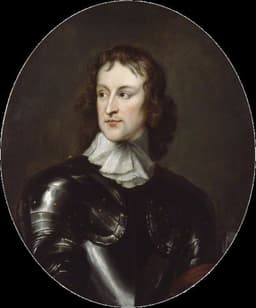
John Lambert
General · Modern
56.7Total
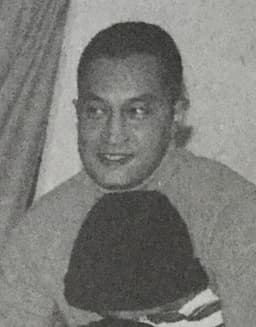
Suchinda Kraprayoon
General · Modern
37.1Total
Basic Information
Born
1619
1933
Died
1684
—
Era
Modern
Modern
Nationality
England
Thailand
Occupation
General
General
Civilization
Western
Eastern
Score Comparison
Military (10%)
70.0
10.2
Political (20%)
45.0
27.9
Influence (20%)
59.0
47.1
Legacy (20%)
50.0
37.5
Leadership (15%)
68.0
45.0
Strategy (15%)
55.0
39.6
TOTAL
56.7
37.1
John Lambert — Complete Timeline
1648 AD
Battle of PrestonWar◆ Major
John Lambert commanded parliamentary forces at the Battle of Preston, defeating a Scottish royalist army. The victory helped secure the parliamentary cause in the Second English Civil War.
BattleEnglish Civil WarParliament
Impact: national
1653 AD
Drafted the Instrument of GovernmentPolitical Action◆ Major
John Lambert was the principal author of the Instrument of Government, the written constitution that established the Protectorate under Oliver Cromwell. The document created a Lord Protector and a Council of State, but was never fully implemented.
ConstitutionProtectorateCromwell
Impact: nationalconstructive
1662 AD
Exiled to GuernseyPolitical Action◆ Major
After the Restoration, John Lambert was tried for treason and exiled to the island of Guernsey. He spent the remainder of his life in captivity, never regaining political influence.
ExileRestorationPunishment
Impact: nationaltragic
Suchinda Kraprayoon — Complete Timeline
1991 AD
Leadership of the 1991 Thai Coup d'ÉtatPolitical Action◆ Major
General Suchinda Kraprayoon led the National Peace Keeping Council in a bloodless coup that overthrew Prime Minister Chatichai Choonhavan. The coup was justified by claims of corruption and political instability, establishing a military junta.
CoupMilitary JuntaPower Seizure
Impact: nationaldestructive
1992 AD
Appointment as Prime MinisterPolitical Action◆ Major
After a general election, Suchinda was appointed Prime Minister despite not being an elected MP. His appointment sparked widespread protests, as it was seen as a continuation of military rule and a violation of democratic principles.
Prime MinisterControversyMilitary Rule
Impact: nationaldestructive
Black May 1992 Uprising and ResignationPolitical Action
Massive pro-democracy protests in Bangkok, led by Chamlong Srimuang, demanded Suchinda's resignation. The military crackdown resulted in dozens of deaths. King Bhumibol intervened, leading to Suchinda's resignation and the restoration of civilian government.
UprisingBlack MayResignation
Impact: nationaltragic
Expert Analysis
John Lambert vs Suchinda Kraprayoon
### The General and the Strongman
History rarely pairs the forgotten architect with the fallen autocrat, yet John Lambert and Suchinda Kraprayoon share a strange kinship. Both were generals who seized the machinery of state, convinced that military order could redeem political chaos. One wrote a constitution that briefly made England a republic; the other crushed a democracy and then fled in disgrace. Lambert died in exile on a windswept island, his grand experiment erased by a restored monarchy. Suchinda survived, but his name became synonymous with betrayal. What drove these two men, born three centuries apart on opposite sides of the world, to such different fates? The answer lies not in their ambitions—which were startlingly similar—but in the soil where those ambitions took root.
### Origins
John Lambert was born in 1619 into the turbulent world of the English gentry. The son of a Yorkshire landowner, he came of age as King Charles I’s tyranny pushed the kingdom toward civil war. Lambert absorbed the Puritan conviction that authority must answer to God and law, not to a monarch’s whim. He was a lawyer’s son turned soldier, a man who believed order could be legislated.
Suchinda Kraprayoon was born in 1933 in Siam, a kingdom that had never been colonized but was forever shadowed by the threat of Western domination. He entered a world where the military was not a rebel force but the guardian of national unity. Thailand’s army had already toppled kings and prime ministers; it was the institution that held the nation together when civilian factions failed. Suchinda grew up believing that the uniform was the only legitimate authority—and that democracy was a foreign luxury.
### Rise to Power
Lambert rose through the crucible of battle. At the Battle of Preston in 1648, he commanded parliamentary forces against a Scottish royalist army. His tactical brilliance—coordinating infantry and cavalry to trap the enemy in a narrow valley—broke the king’s last hope. Lambert was not merely a soldier; he was Oliver Cromwell’s most trusted lieutenant, a man who could think as well as fight. When Cromwell dissolved Parliament in 1653, it was Lambert who drafted the Instrument of Government, the first written constitution in English history. He was creating a republic on paper, a vision of law above men.
Suchinda’s path was more clinical. In 1991, he led the National Peace Keeping Council in a bloodless coup that overthrew Prime Minister Chatichai Choonhavan, whom the military accused of corruption. It was a familiar script: the army stepping in to “cleanse” politics. Suchinda was not a battlefield commander; he was a bureaucrat of power. In 1992, after a rigged general election, he accepted the prime ministership despite not being an elected MP. He believed the people would accept order over democracy.
### Leadership & Governance
Lambert ruled as a parliamentary general, not a king. As a member of Cromwell’s Council of State, he pushed for religious toleration, legal reform, and a government accountable to written law. His Instrument of Government created a Lord Protector, a council, and a Parliament with limited powers—a hybrid that tried to balance military necessity with civilian consent. Lambert was no democrat; he believed the godly should rule. But he also believed in institutions. When Cromwell died, Lambert tried to preserve the Protectorate, but he lacked the charisma to hold it together. His strength was design, not command.
Suchinda governed as a strongman. He appointed military loyalists to cabinet posts, suppressed dissent, and treated the economy as a military operation. His government was efficient but brittle. In May 1992, when pro-democracy protests erupted in Bangkok, Suchinda ordered a crackdown. Soldiers fired into crowds; dozens died. The violence, broadcast globally, turned him into a pariah. He had no constitution to fall back on, no legal framework to justify his rule. His power rested solely on fear—and fear evaporates.
### Triumph & Tragedy
Lambert’s triumph was the Instrument of Government, a document that inspired later constitutional experiments. His tragedy came after the Restoration of Charles II in 1660. Unlike Cromwell, who died in power, Lambert was captured, tried for treason, and exiled to the island of Guernsey in 1662. He spent his final years in a stone fortress, watching the tide erase his legacy. He died in 1684, forgotten by the nation he helped forge.
Suchinda’s triumph was brief: he became prime minister in 1992, the pinnacle of military ambition. His tragedy was Black May—the uprising that forced him to resign after only three months. He fled the country, his career shattered. He returned later to a quiet life, but his name became a curse. In Thailand, he is remembered as the general who shot his own people.
### Character & Destiny
Lambert was a constitutionalist who believed law could tame power. His downfall was not incompetence but timing: he lived in an era when monarchy was the only stable system, and his republic was a fragile experiment. He lacked Cromwell’s ruthlessness and the king’s divine aura. He was a builder in a world that demanded a king.
Suchinda was a pragmatist who believed power was its own justification. He never asked whether the people would accept military rule; he assumed they would obey. His downfall was not external pressure but internal emptiness. He had no ideology, no vision, no legacy. He was a placeholder who mistook his office for authority.
### Legacy
Lambert’s legacy is invisible but enduring. The Instrument of Government influenced later written constitutions, from the United States to modern democracies. He is a footnote in British history, but his ideas survived. He proved that a general could be a statesman—even if the statesman was erased.
Suchinda’s legacy is a warning. Black May 1992 taught Thailand that military rule leads to bloodshed. The protests he crushed eventually forced the army to retreat from politics—temporarily. He is a symbol of what happens when order becomes oppression.
### Conclusion
Stand on the cliffs of Guernsey, where Lambert watched the English Channel, and imagine him dreaming of a republic of laws. Stand in Bangkok’s Democracy Monument, where Suchinda’s soldiers fired into crowds, and imagine him believing that power alone could save a nation. Both were wrong, but in different ways. Lambert failed because his vision was too advanced for his age. Suchinda failed because his vision was too narrow for his. One built a bridge to the future; the other built a wall. History remembers the builder and the wall, but only the bridge survives.
Rankings
🥇
John LambertLeader
Mil: 70.0Pol: 45.0Inf: 59.0
56.7
🥈
Suchinda Kraprayoon
Mil: 10.2Pol: 27.9Inf: 47.1
37.1
+19.6 behind
How This Comparison Works
Algorithm
Each figure is scored on 6 dimensions (0—100 scale) based on structured historical data: Military (10%), Political (20%), Influence (20%), Legacy (20%), Leadership (15%), Strategy (15%). The weighted total produces the final ranking.
Data Sources
Scores are computed from structured sub-indicators in the database. Scale factors adjust for era (Ancient ×0.85, Modern ×1.0) and civilization size (Eastern ×1.05, Other ×0.80) to account for differences in population and military scale.
Maximum 3 Figures
Comparisons are limited to 2—3 figures to ensure readability and statistical meaningfulness.
Error Margins
±5 points per dimension — Sub-scores are derived from historical records with inherent uncertainty. Two figures within 5 points on a dimension should be considered roughly equivalent in that area.
Total Score Accuracy
±3 points overall — The weighted combination of 6 dimensions produces a total score with approximately ±3 points of uncertainty. Differences of less than 3 points are not statistically significant— the figures are effectively tied.
Known Limitations
- Historical records are incomplete and uneven across civilizations
- Figures from oral-tradition societies may be underrepresented
- Occupation labels can misclassify multi-role figures
- Scores measure capability and impact, not moral character
- Quantitative scoring is a comparison tool, not absolute truth
Capability Radar
Military (10%) — Battles & Warfare
Battles
65
5
Win Rate
60
5
Expansion
40
5
Political (20%) — Governance & Reform
Reform
55
5
Diplomacy
50
10
Economy
45
5
Influence (20%) — Cultural & Global Reach
Cultural
35
5
Global
30
5
Legacy (20%) — Historical Impact
Historical
50
10
Longevity
40
5
Leadership (15%) — Power & Stability
Tenure
60
10
Stability
40
5
Strategy (15%) — Tactics & Innovation
Strategy
65
10
Tactics
70
10
Reform
55
5
Similar Comparisons
Comments & Discussion
IRON CROMWELL'S GHOST6/16/2026
Lambert wasn't just some forgotten footnote—he was the real architect of Cromwell's military machine. Without his tactical brilliance at Dunbar and Worcester, the New Model Army would've been a blunt instrument, not a precision weapon. Suchinda, by contrast, relied on tanks and lies. Lambert understood war as a tool to reshape society; Suchinda used it to protect corrupt cronies. The difference is between a strategist and a thug who happened to wear a uniform.
记账员的反击6/16/2026
数据不会骗人。你看着这两个人就觉得他们被历史书害了。Lambert写宪法时英国人口约500万,他搞的那个治理结构三年就崩了。Suchinda政变时泰国人口5500万,他撑了不到一年。从数字看,两个都是失败者,只不过一个死在荒岛上,一个死在富豪别墅里。别把失败包装成悲剧,算算实际任期和人口基数,他们连及格线都没摸到。
CLASSICAL ANVIL6/16/2026
The comparison is intellectually lazy. Suchinda operated in Thailand’s unique military-bureaucratic monarchy, a system with zero constitutional precedent. Lambert drew from the Roman Republic’s fall and Machiavelli. He actually tried to impose order through written law, while Suchinda relied on brute force and royal endorsements. Lambert failed because he overestimated law; Suchinda failed because he underestimated the people. One was a tragic idealist; the other, a predictable tyrant.
荒岛幽灵6/16/2026
你们都在说Lambert是个被抹去的天才,可别忘了:他死在普利茅斯海峡的德雷克岛上,那个地方连鸟都不愿久留。Suchinda至少死在曼谷的豪宅里,身边有子孙和空调。Lambert的共和宪法没撑过复辟,Suchinda的政变却被后来者反复复制。历史对亚洲暴君实在太宽容了—他们还能享受失败后的晚年,西方那张白纸上的理想主义者只能被潮水吞没。
THIRD WORLD BUREAUCRAT6/16/2026
Let's be honest: neither of these men had a coherent plan. Lambert's "Instrument of Government" was a desperate patchwork to keep Cromwell's factions from tearing apart. Suchinda's National Peace Keeping Council was just a military Mafia protecting its rice smuggling and logging concessions. The difference? Lambert tried to build something—albeit poorly. Suchinda only wanted to loot. One was a failed statesman; the other was a successful gangster who got unlucky.