Loading...
John Lambert vs Soe Win
John Lambert leads by 15.0 pts · 2 figures compared
…
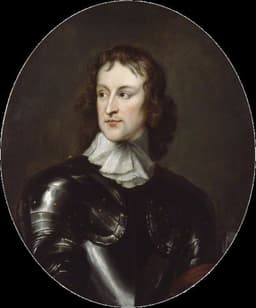
John Lambert
General · Modern
56.7Total
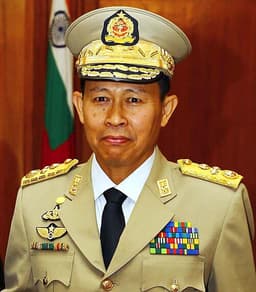
Soe Win
General · Modern
41.7Total
Basic Information
Born
1619
1947
Died
1684
—
Era
Modern
Modern
Nationality
England
Myanmar
Occupation
General
General
Civilization
Western
Eastern
Score Comparison
Military (10%)
70.0
25.9
Political (20%)
45.0
30.8
Influence (20%)
59.0
48.6
Legacy (20%)
50.0
40.0
Leadership (15%)
68.0
57.6
Strategy (15%)
55.0
36.8
TOTAL
56.7
41.7
John Lambert — Complete Timeline
1648 AD
Battle of PrestonWar◆ Major
John Lambert commanded parliamentary forces at the Battle of Preston, defeating a Scottish royalist army. The victory helped secure the parliamentary cause in the Second English Civil War.
BattleEnglish Civil WarParliament
Impact: national
1653 AD
Drafted the Instrument of GovernmentPolitical Action◆ Major
John Lambert was the principal author of the Instrument of Government, the written constitution that established the Protectorate under Oliver Cromwell. The document created a Lord Protector and a Council of State, but was never fully implemented.
ConstitutionProtectorateCromwell
Impact: nationalconstructive
1662 AD
Exiled to GuernseyPolitical Action◆ Major
After the Restoration, John Lambert was tried for treason and exiled to the island of Guernsey. He spent the remainder of his life in captivity, never regaining political influence.
ExileRestorationPunishment
Impact: nationaltragic
Soe Win — Complete Timeline
2004 AD
Appointed Prime Minister of MyanmarPolitical Action◆ Major
Soe Win was appointed Prime Minister of Myanmar by the State Peace and Development Council, succeeding Khin Nyunt. He served as a key figure in the military junta's government.
Military JuntaGovernment Appointment
Impact: national
2007 AD
Saffron Revolution CrackdownPolitical Action
As Prime Minister, Soe Win oversaw the military's violent suppression of the Saffron Revolution, a series of anti-government protests led by Buddhist monks. The crackdown resulted in numerous deaths, arrests, and international condemnation.
Saffron RevolutionHuman RightsRepression
Impact: nationaldestructive
Death in OfficeOther
Soe Win died in office on October 12, 2007, from leukemia. His death occurred shortly after the Saffron Revolution crackdown, and he was succeeded by Thein Sein.
DeathSuccession
Impact: national
Expert Analysis
John Lambert vs Soe Win
# The General and the Constitution: Two Paths to Power in Turbulent Times
On a crisp autumn morning in 1648, John Lambert stood on the rain-soaked field at Preston, watching the remnants of a Scottish royalist army scatter before his parliamentary cavalry. The victory would cement his reputation as a brilliant military commander. Nearly four centuries later and half a world away, in the sweltering heat of a Yangon summer in 2007, General Soe Win sat in his office, ordering soldiers to fire on unarmed Buddhist monks. Two generals, two centuries, two vastly different outcomes—yet both men shared a common thread: they rose to power through the military, only to find that the sword alone could not secure their legacy.
Origins
John Lambert was born in 1619 into a family of Yorkshire gentry, a world of manor houses, local politics, and the simmering tensions between Crown and Parliament that would soon explode into civil war. His education was practical rather than scholarly—law at the Inns of Court, then military service. The English Civil War was not merely a conflict; it was a crucible that forged a generation of men who believed they could reshape the very structure of government. Lambert came of age in an era when ideas about sovereignty, representation, and written constitutions were not abstract philosophy but matters of life and death.
Soe Win, born in 1948 in British Burma, entered a world already fractured by colonialism and war. His family background remains obscure, but his path was clear: the military academy, the steady climb through the ranks of the Tatmadaw, the Burmese army that had seized power in 1962 and never let go. Unlike Lambert, who witnessed the collapse of monarchy and the birth of parliamentary sovereignty, Soe Win lived under a regime where the military was the state, and the state was the military. There was no debate about constitutions or rights—only the grim calculus of survival and control.
Rise to Power
Lambert’s ascent was meteoric but earned. At the Battle of Preston in 1648, he commanded parliamentary forces with tactical brilliance, outmaneuvering the Scottish royalists and securing a decisive victory that effectively ended the Second Civil War. He was not merely a soldier; he was a political animal, moving easily between the battlefield and the committee room. By 1653, he had become the principal architect of the Instrument of Government, the first written constitution in English history. This document established a Protectorate under Oliver Cromwell, with a carefully balanced system of executive and legislative powers. Lambert did not seize power—he created the framework for it.
Soe Win’s rise was quieter, more bureaucratic. He served in various military and intelligence roles, his loyalty unquestioned. In 2004, he was appointed Prime Minister of Myanmar by the State Peace and Development Council, the military junta that had ruled the country for decades. His predecessor, Khin Nyunt, had been purged in a power struggle. Soe Win stepped into the vacuum, not as a visionary or a reformer, but as a reliable enforcer. Where Lambert had helped draft a constitution, Soe Win inherited a system that had none—only the iron will of the generals.
Leadership & Governance
Lambert’s leadership style was collaborative and intellectual. He understood that military victory was meaningless without political stability. As a member of Cromwell’s Council of State, he pushed for religious toleration and legal reform. His Instrument of Government was a bold experiment: it limited the powers of the Protector, established a Parliament, and guaranteed certain rights. Lambert was no democrat—he believed in rule by the godly and the capable—but he believed in rules. Governance, for him, was a matter of structure and law.
Soe Win governed through fear and silence. His tenure was marked by the steady repression of dissent, the imprisonment of political opponents, and the absolute control of the media. The Saffron Revolution of 2007 was his defining moment. Thousands of Buddhist monks took to the streets in peaceful protest against rising fuel prices and decades of military rule. Soe Win’s response was swift and brutal: soldiers fired on the monks, beat protesters, and shut down monasteries. The crackdown was condemned worldwide, but within Myanmar, it achieved its goal—the protests collapsed. Soe Win had no interest in reform; he was a manager of oppression.
Triumph & Tragedy
Lambert’s greatest triumph was the Instrument of Government. It was a moment of genuine constitutional innovation, an attempt to create a stable republic out of the chaos of civil war. But it was also his tragedy. When Cromwell died in 1658, the Protectorate crumbled. Lambert tried to hold the pieces together, but he lacked Cromwell’s authority. The monarchy was restored in 1660, and Lambert was arrested. In 1662, he was tried for treason and exiled to the island of Guernsey, where he spent the rest of his life in obscurity. The man who had written a constitution died forgotten, his papers moldering in a damp island cottage.
Soe Win’s triumph was survival. He held power until his death from leukemia on October 12, 2007, just months after the Saffron Revolution. He never faced trial, never answered for the blood on his hands. But his tragedy was that he left nothing behind—no reforms, no legacy, no vision. His name is remembered only as a footnote in Myanmar’s long history of military rule, a symbol of a system that consumed its own.
Character & Destiny
Lambert was a man of ideas in an age of action. He believed that government could be designed, that constitutions could tame power. His downfall came not from weakness but from overreach—he tried to impose order on a nation exhausted by war and suspicious of all authority. Soe Win was a man of action in an age of ideas. He believed only in force, and he used it without hesitation. His downfall was not personal—he died in bed—but historical: he represented a regime that would eventually crumble under the weight of its own brutality.
Legacy
Lambert’s legacy is paradoxical. The Instrument of Government failed, but it planted seeds. The idea of a written constitution, of limits on executive power, of representative government—these would resurface in England’s Glorious Revolution of 1688 and later in the American Constitution. Lambert is not a household name, but his fingerprints are on the foundations of modern democracy.
Soe Win’s legacy is a warning. The Saffron Revolution was crushed, but the monks’ courage inspired a generation. In 2011, Myanmar began a halting transition toward civilian rule. Soe Win’s name is invoked as a symbol of everything that was wrong with the old regime—the brutality, the corruption, the refusal to change. He is remembered not as a leader but as a cautionary tale.
Conclusion
Two generals, two centuries, two worlds. John Lambert tried to build a republic with a constitution; Soe Win tried to preserve a dictatorship with bullets. Both failed, but their failures teach us something essential about power. Lambert believed that power could be contained by law, and history proved him partly right. Soe Win believed that power was its own law, and history proved him utterly wrong. In the end, the general who wrote a constitution left a legacy of hope; the general who shot monks left only ashes.
Rankings
🥇
John LambertLeader
Mil: 70.0Pol: 45.0Inf: 59.0
56.7
🥈
Soe Win
Mil: 25.9Pol: 30.8Inf: 48.6
41.7
+15.0 behind
How This Comparison Works
Algorithm
Each figure is scored on 6 dimensions (0—100 scale) based on structured historical data: Military (10%), Political (20%), Influence (20%), Legacy (20%), Leadership (15%), Strategy (15%). The weighted total produces the final ranking.
Data Sources
Scores are computed from structured sub-indicators in the database. Scale factors adjust for era (Ancient ×0.85, Modern ×1.0) and civilization size (Eastern ×1.05, Other ×0.80) to account for differences in population and military scale.
Maximum 3 Figures
Comparisons are limited to 2—3 figures to ensure readability and statistical meaningfulness.
Error Margins
±5 points per dimension — Sub-scores are derived from historical records with inherent uncertainty. Two figures within 5 points on a dimension should be considered roughly equivalent in that area.
Total Score Accuracy
±3 points overall — The weighted combination of 6 dimensions produces a total score with approximately ±3 points of uncertainty. Differences of less than 3 points are not statistically significant— the figures are effectively tied.
Known Limitations
- Historical records are incomplete and uneven across civilizations
- Figures from oral-tradition societies may be underrepresented
- Occupation labels can misclassify multi-role figures
- Scores measure capability and impact, not moral character
- Quantitative scoring is a comparison tool, not absolute truth
Capability Radar
Military (10%) — Battles & Warfare
Battles
65
10
Win Rate
60
10
Expansion
40
10
Political (20%) — Governance & Reform
Reform
55
10
Diplomacy
50
10
Economy
45
10
Influence (20%) — Cultural & Global Reach
Cultural
35
10
Global
30
10
Legacy (20%) — Historical Impact
Historical
50
20
Longevity
40
10
Leadership (15%) — Power & Stability
Tenure
60
30
Stability
40
10
Strategy (15%) — Tactics & Innovation
Strategy
65
10
Tactics
70
10
Reform
55
10
Similar Comparisons
Comments & Discussion
Emperor's Shadow6/16/2026
John Lambert was the mastermind behind England's first written constitution, the Instrument of Government. That's a legacy of juridical innovation that Soe Win, whose only constitutional contribution was shredding Myanmar's 1947 charter, couldn't even fathom. Lambert understood that military power alone crumbles without legal scaffolding. Soe Win thought bullets and orders were enough. Results? Lambert's framework shaped modern governance. Soe Win's name is synonymous with crackdowns.
江东铁律6/16/2026
说到底,兰伯特在普雷斯顿平原上能用骑兵撕碎“王军”阵线,但真正让他立足于历史的,是1653年《政府约法》。这份文件规定了权力分立和宗教宽容——四百年后,梭温对着僧侣开火的时候,连个法条都拿不出来。军人统治讲什么?不是枪,是条文啊。没有宪法兜底,刀架在脖子上也坐不稳龙椅。
Faction Wrangler6/16/2026
Let's be honest: Lambert lost his legacy the moment he backed Lambert's Protectorate against the Rump Parliament. He was a brilliant tactician at Preston, but he squandered it in political infighting. Soe Win, on the other hand, held Myanmar's junta together through sheer brutality after Than Shwe's purge. Lambert died in obscurity on Plymouth Hoe. Soe Win died a prime minister, albeit reviled. Pragmatism wins over principle in rough neighborhoods.
墨痕旧吏6/16/2026
梭温属于那种“冷血官僚”的典型——1997年他负责镇压学生运动,手法干净利落,不留证据。兰伯特呢?他的《政府约法》第一条就写着“主权在人民”,但这家伙转头就跑去支持克伦威尔当护国公,把自己的政治原则踩得粉碎。两兵相望,一个是拿了枪却忘了抄法条,另一个是写了法条却转头往裤裆里塞刀——都差一口气。