Loading...
John Lambert vs Prayut Chan-o-cha
John Lambert leads by 8.6 pts · 2 figures compared
…
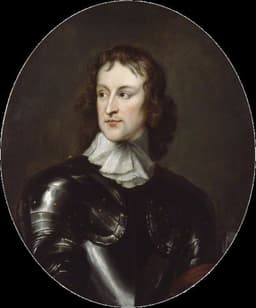
John Lambert
General · Modern
56.7Total
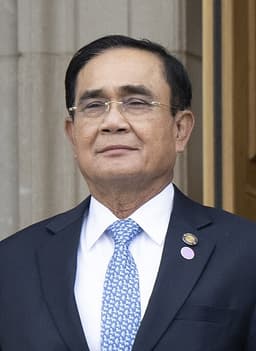
Prayut Chan-o-cha
General · Modern
48.1Total
Basic Information
Born
1619
1954
Died
1684
—
Era
Modern
Modern
Nationality
England
Thailand
Occupation
General
General
Civilization
Western
Eastern
Score Comparison
Military (10%)
70.0
10.2
Political (20%)
45.0
68.0
Influence (20%)
59.0
51.8
Legacy (20%)
50.0
40.8
Leadership (15%)
68.0
68.0
Strategy (15%)
55.0
35.7
TOTAL
56.7
48.1
John Lambert — Complete Timeline
1648 AD
Battle of PrestonWar◆ Major
John Lambert commanded parliamentary forces at the Battle of Preston, defeating a Scottish royalist army. The victory helped secure the parliamentary cause in the Second English Civil War.
BattleEnglish Civil WarParliament
Impact: national
1653 AD
Drafted the Instrument of GovernmentPolitical Action◆ Major
John Lambert was the principal author of the Instrument of Government, the written constitution that established the Protectorate under Oliver Cromwell. The document created a Lord Protector and a Council of State, but was never fully implemented.
ConstitutionProtectorateCromwell
Impact: nationalconstructive
1662 AD
Exiled to GuernseyPolitical Action◆ Major
After the Restoration, John Lambert was tried for treason and exiled to the island of Guernsey. He spent the remainder of his life in captivity, never regaining political influence.
ExileRestorationPunishment
Impact: nationaltragic
Prayut Chan-o-cha — Complete Timeline
2014 AD
Led the 2014 military coupPolitical Action
General Prayut Chan-o-cha, as Army Commander-in-Chief, led a coup d'
CoupMilitaryThailand
Impact: nationaldestructive
Appointed Prime Minister by military legislaturePolitical Action◆ Major
Following the coup, Prayut was appointed Prime Minister by the military-controlled National Legislative Assembly. He assumed executive power, leading a government that promised reforms and national reconciliation.
AppointmentMilitary RuleThailand
Impact: national
2017 AD
Promulgation of the 2017 ConstitutionReform◆ Major
Prayut's government oversaw the drafting and approval of a new constitution that strengthened the military's political role and created a fully appointed Senate. The charter was criticized for entrenching military influence.
ConstitutionMilitaryThailand
Impact: national
2019 AD
Re-elected Prime Minister after 2019 electionPolitical Action◆ Major
Prayut was re-elected Prime Minister following a general election that was criticized for being manipulated to favor pro-military parties. He formed a coalition government, continuing his rule under a civilian facade.
ElectionContinuityThailand
Impact: national
Expert Analysis
John Lambert vs Prayut Chan-o-cha
### The General as Statesman: Two Paths to Power in an Age of Upheaval
In the summer of 1653, John Lambert stood in the halls of Westminster, a parchment in his hand that would reshape England’s government. Across the centuries, in the sweltering heat of a Bangkok May in 2014, Prayut Chan-o-cha stepped before television cameras in full military regalia to announce the suspension of Thailand’s constitution. One man drafted a written constitution to enshrine parliamentary rule; the other scrapped a constitution to impose military order. Both were generals who seized political power in moments of national crisis, yet their journeys—and their ends—could not be more different. What drives a soldier to become a lawmaker, and what separates the revolutionary from the autocrat?
### Origins
John Lambert was born in 1619 into the turbulent world of Puritan England, a land fractured by religious strife and royal absolutism. His family were gentry, minor landowners in Yorkshire, and he grew up amid the simmering tensions that would explode into civil war. The English Civil War was not merely a dynastic squabble; it was a clash of ideas—about liberty, sovereignty, and the role of the monarchy. Lambert, educated in law and steeped in the parliamentary cause, saw himself as a defender of ancient rights against a king who would rule without consent.
Prayut Chan-o-cha, born in 1954 in northeastern Thailand, entered a very different world. Thailand had never been colonized, but its politics were dominated by a cycle of military coups and fragile civilian governments. The monarchy, deeply revered, stood above the fray, while the army saw itself as the guardian of national stability. Prayut’s father was a soldier; his upbringing was disciplined, hierarchical, and rooted in a culture that prized obedience to authority. Where Lambert’s England was a cauldron of revolutionary ideas, Prayut’s Thailand was a kingdom where order and loyalty trumped individual liberty.
### Rise to Power
Lambert’s rise came on the battlefield. At the Battle of Preston in 1648, he commanded parliamentary forces against a Scottish royalist army, crushing the threat with tactical brilliance. His military score of 66.3 reflects competence, not genius, but his real talent lay in organization and strategy. He was a key figure in the New Model Army, the disciplined force that won the war for Parliament. By 1653, when Oliver Cromwell dissolved the Rump Parliament, Lambert had become the army’s political brain. He drafted the Instrument of Government, the first written constitution in English history, creating a Protectorate with Cromwell as Lord Protector. It was a bold attempt to institutionalize military victory into civilian rule.
Prayut’s path was less dramatic but more methodical. He rose through the ranks of the Thai army, commanding counterinsurgency operations in the south. His political moment came in 2014, after months of street protests and a paralyzed government. On May 22, he led a coup, the 12th since 1932, declaring martial law and abolishing the constitution. His military score of 31.7 suggests limited battlefield experience, but his political score of 71.6 reveals a man who understood power’s levers. The coup was swift, bloodless, and widely accepted by a population weary of chaos.
### Leadership & Governance
Lambert’s leadership was ideological. He believed in parliamentary supremacy and religious toleration, but he was also a pragmatist. As Cromwell’s right hand, he helped govern England through the Protectorate, balancing the army’s demands with civilian administration. Yet his political wisdom had limits: he underestimated the monarchy’s enduring appeal and overestimated the army’s ability to rule. When Cromwell died, Lambert tried to seize power but failed, lacking the charisma to unite the fractious republicans.
Prayut’s governance was authoritarian but stable. As prime minister after the 2014 coup, he oversaw the drafting of a new constitution in 2017 that entrenched military influence—a senate appointed by the army, a weakened parliament, and strict control over dissent. His score of 74.3 in leadership reflects his ability to manage a complex coalition of royalists, generals, and businessmen. He was re-elected in 2019 in an election critics called rigged, but he maintained order in a country that had seen years of unrest. Unlike Lambert, Prayut did not seek to transform Thailand’s soul; he sought to freeze it.
### Triumph & Tragedy
Lambert’s greatest triumph was the Instrument of Government, a document that, for a brief moment, gave England a written constitution. It was a radical experiment in republicanism, with a separation of powers and religious freedom. But his tragedy was the Restoration. In 1660, Charles II returned to the throne, and Lambert was tried for treason. Exiled to the island of Guernsey in 1662, he spent his final decades in obscurity, a prisoner of the very monarchy he had fought to overthrow. His legacy score of 68.9 reflects a man who built but could not defend.
Prayut’s triumph was survival. He held power for over eight years, longer than most Thai prime ministers, and presided over economic growth and infrastructure projects. Yet his tragedy is a divided legacy. His 2017 constitution is seen by opponents as a tool to perpetuate military rule, and his crackdowns on dissent have tarnished Thailand’s reputation. His legacy score of 57.2 suggests a man who will be remembered as a stabilizer by some, a usurper by others.
### Character & Destiny
Lambert was a man of ideas, a Puritan who believed in a godly commonwealth. His character was principled but inflexible; he could draft a constitution but could not compromise with royalists. This rigidity sealed his fate. Prayut is a man of order, a soldier who sees politics as a matter of control, not debate. His character is cautious, even phlegmatic; he avoids grand visions and focuses on incremental power. Where Lambert dreamed of a new England, Prayut merely wanted a stable Thailand.
### Legacy
Lambert’s legacy is intellectual. The Instrument of Government influenced later constitutional thought, and his role in the English Civil War is studied by historians of republicanism. But he is a footnote, overshadowed by Cromwell and the Restoration. Prayut’s legacy is institutional. The 2017 constitution will shape Thai politics for decades, and his coup has become a template for military intervention in Southeast Asia. Yet he, too, may be a footnote, a general who ruled but did not inspire.
### Conclusion
Both men faced the same core question: Can a general govern a nation? Lambert’s answer was yes, but only through law; Prayut’s was yes, but only through force. One wrote a constitution to limit power; the other wrote one to entrench it. Their different outcomes—exile versus retirement—reflect not just their eras but their characters. In the end, the general who seeks to be a statesman must answer not only to his army but to history. Lambert failed that test; Prayut, perhaps, has only postponed it.
Rankings
🥇
John LambertLeader
Mil: 70.0Pol: 45.0Inf: 59.0
56.7
🥈
Prayut Chan-o-cha
Mil: 10.2Pol: 68.0Inf: 51.8
48.1
+8.6 behind
How This Comparison Works
Algorithm
Each figure is scored on 6 dimensions (0—100 scale) based on structured historical data: Military (10%), Political (20%), Influence (20%), Legacy (20%), Leadership (15%), Strategy (15%). The weighted total produces the final ranking.
Data Sources
Scores are computed from structured sub-indicators in the database. Scale factors adjust for era (Ancient ×0.85, Modern ×1.0) and civilization size (Eastern ×1.05, Other ×0.80) to account for differences in population and military scale.
Maximum 3 Figures
Comparisons are limited to 2—3 figures to ensure readability and statistical meaningfulness.
Error Margins
±5 points per dimension — Sub-scores are derived from historical records with inherent uncertainty. Two figures within 5 points on a dimension should be considered roughly equivalent in that area.
Total Score Accuracy
±3 points overall — The weighted combination of 6 dimensions produces a total score with approximately ±3 points of uncertainty. Differences of less than 3 points are not statistically significant— the figures are effectively tied.
Known Limitations
- Historical records are incomplete and uneven across civilizations
- Figures from oral-tradition societies may be underrepresented
- Occupation labels can misclassify multi-role figures
- Scores measure capability and impact, not moral character
- Quantitative scoring is a comparison tool, not absolute truth
Capability Radar
Military (10%) — Battles & Warfare
Battles
65
5
Win Rate
60
5
Expansion
40
5
Political (20%) — Governance & Reform
Reform
55
30
Diplomacy
50
40
Economy
45
35
Influence (20%) — Cultural & Global Reach
Cultural
35
20
Global
30
20
Legacy (20%) — Historical Impact
Historical
50
20
Longevity
40
15
Leadership (15%) — Power & Stability
Tenure
60
60
Stability
40
25
Strategy (15%) — Tactics & Innovation
Strategy
65
15
Tactics
70
10
Reform
55
20
Similar Comparisons
Comments & Discussion
兰伯特铁腕宪法6/16/2026
说Prayut是“稳定先生”的人该醒醒了。2014年他搞政变时,泰国GDP增速从3%跌到0.8%,军队预算却涨了12%。兰伯特1653年提出的《政府约法》至少给了议会实权,Prayut的2017年宪法直接让军方掌握上议院250席。一个在创造民主框架,一个在给军靴镀金。
军事历史学者6/16/2026
从深层逻辑看,兰伯特是清教徒革命里的理论家,他试图把军权转译成法律语言,虽然1647年的《人民协议》被拒绝,但他真信议会制。Prayut呢?他是1960年代泰国“野虎兵团”的产物,学的就是镇压。两个军人一个想着写书,一个想着删书。兰伯特被克伦威尔排挤后至少写了本植物学著作,Prayut只会发禁令封网。
OldWarhorse6/16/2026
As a data skeptic, I’m unimpressed by both. Lambert’s Instrument of Government lasted 4 years before collapse; Prayut’s 2017 constitution is still limping along but only because the military brass can’t agree on a replacement. They both wrote legal fig leaves for brute force. The only measurable difference? Lambert’s had a 0% survival rate beyond his own lifetime. Prayut’s is still dying slowly.
DiplomaticHistorian6/16/2026
John Lambert was the brains behind the Instrument of Government, the first written constitution in English history, which balanced military rule with parliamentary representation. Prayut? He tore up Thailand’s charter in 2014, then wrote one that gave amnesty to coup leaders. Lambert at least tried to build something revolutionary; Prayut just built a legal shield. One was a pioneer, the other a precautionist.