Loading...
John Lambert vs Pedro I of Brazil
John Lambert leads by 2.1 pts · 2 figures compared
…
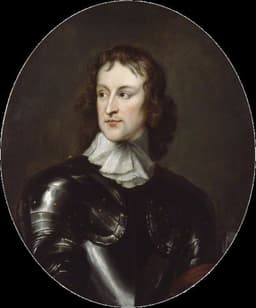
John Lambert
General · Modern
56.7Total
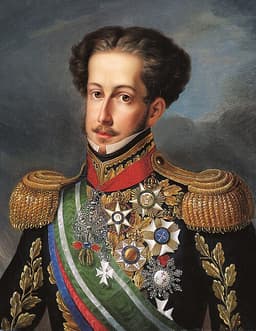
Pedro I of Brazil
Emperor · Modern
54.6Total
Basic Information
Born
1619
1798
Died
1684
1834
Era
Modern
Modern
Nationality
England
Brazil
Occupation
General
Emperor
Civilization
Western
Western
Score Comparison
Military (10%)
70.0
55.0
Political (20%)
45.0
62.7
Influence (20%)
59.0
59.0
Legacy (20%)
50.0
50.0
Leadership (15%)
68.0
53.2
Strategy (15%)
55.0
45.0
TOTAL
56.7
54.6
John Lambert — Complete Timeline
1648 AD
Battle of PrestonWar◆ Major
John Lambert commanded parliamentary forces at the Battle of Preston, defeating a Scottish royalist army. The victory helped secure the parliamentary cause in the Second English Civil War.
BattleEnglish Civil WarParliament
Impact: national
1653 AD
Drafted the Instrument of GovernmentPolitical Action◆ Major
John Lambert was the principal author of the Instrument of Government, the written constitution that established the Protectorate under Oliver Cromwell. The document created a Lord Protector and a Council of State, but was never fully implemented.
ConstitutionProtectorateCromwell
Impact: nationalconstructive
1662 AD
Exiled to GuernseyPolitical Action◆ Major
After the Restoration, John Lambert was tried for treason and exiled to the island of Guernsey. He spent the remainder of his life in captivity, never regaining political influence.
ExileRestorationPunishment
Impact: nationaltragic
Pedro I of Brazil — Complete Timeline
1822 AD
Declaration of Independence of BrazilPolitical Action
Pedro I declared Brazil's independence from Portugal on September 7, 1822, at the Ipiranga River in S
Impact: globalprogressive
Coronation as Emperor of BrazilPolitical Action◆ Major
Pedro I was crowned Emperor of Brazil on December 1, 1822, in Rio de Janeiro. The coronation formalized the new imperial government, with Pedro I as constitutional monarch, though he retained significant executive powers.
Impact: nationalconstructive
1823 AD
War of Independence of BrazilWar◆ Major
Pedro I led Brazilian forces against Portuguese loyalists in the War of Independence. Key battles occurred in Bahia, Maranh
Impact: national
Dissolution of the Constituent AssemblyPolitical Action◆ Major
Pedro I dissolved the Constituent Assembly after conflicts over the constitution's limits on imperial power. He then imposed the 1824 Constitution, which granted the emperor extensive powers, including the Moderating Power, centralizing authority.
Impact: nationaldestructive
1831 AD
Abdication of the Brazilian ThronePolitical Action
Pedro I abdicated the Brazilian throne in favor of his five-year-old son Pedro II on April 7, 1831. He returned to Portugal to claim the Portuguese throne, leaving Brazil under a regency until his son came of age.
Impact: national
Expert Analysis
John Lambert vs Pedro I of Brazil
# The Emperor and the General: Two Paths Through Revolution’s Crucible
On a sweltering September afternoon in 1822, Pedro de Alcântara stood beside the Ipiranga River in São Paulo, tore the Portuguese blue-and-white cockade from his uniform, and shouted “Independence or Death!” It was a scene of pure theater, staged by a prince who understood that legitimacy in the New World required a dramatic break from the Old. Thirty years earlier and three thousand miles away, John Lambert sat in a London committee room, carefully drafting the Instrument of Government—a written constitution that would, for the first time in English history, define the powers of a head of state in cold legal prose. One man shouted; the other wrote. One became an emperor; the other became a prisoner. Their lives, though separated by a century and an ocean, pose a single haunting question: Why do some revolutionaries build thrones while others build cages for themselves?
Origins
Pedro I was born into the House of Braganza, a dynasty that had ruled Portugal since 1640. His father, King John VI, fled Napoleon’s armies in 1807 and established the Portuguese court in Rio de Janeiro—a decision that transformed a colony into the temporary capital of a global empire. Young Pedro grew up in a tropical Versailles, surrounded by courtiers, priests, and the constant tension between European tradition and American reality. He was educated by tutors who taught him Latin, French, and military tactics, but he never learned the patient art of compromise. His world was one of absolute monarchy, where the king’s word was law and the people were subjects, not citizens.
John Lambert came from a different soil. Born in 1619 to a minor gentry family in Yorkshire, he studied law at the Inns of Court in London—a profession that taught him the power of precedent, argument, and written agreements. When civil war erupted in 1642, Lambert chose Parliament over the King, not out of ideological fervor but because he believed in a balanced constitution where no man—not even Charles I—stood above the law. He was a Puritan, but a practical one: he prayed, but he also planned. While Pedro learned to command from horseback, Lambert learned to negotiate from a desk.
Rise to Power
Pedro’s ascent was almost accidental. When his father returned to Portugal in 1821, leaving Pedro as regent in Brazil, the young prince faced a choice: obey the Portuguese Cortes, which sought to reduce Brazil to colonial status, or defy them and risk everything. He chose defiance, and on September 7, 1822, he became the voice of a nation’s longing. The War of Independence that followed—fought primarily in Bahia, Maranhão, and Pará—was not a long struggle; Brazilian forces, led by Pedro and his foreign mercenary commanders, defeated Portuguese loyalists within a year. By December 1822, he was crowned Emperor Pedro I, a monarch by acclamation and by blood.
Lambert’s rise was slower and harder. He distinguished himself at the Battle of Preston in 1648, where his cavalry charges broke the Scottish royalist army and secured England’s northern frontier. But his true genius lay in politics. After Oliver Cromwell dissolved the Rump Parliament in 1653, Lambert drafted the Instrument of Government, a constitution that created a Protectorate with Cromwell as Lord Protector. It was a radical document: it separated executive and legislative powers, guaranteed religious toleration, and limited the Protector’s authority. Lambert believed he had built a framework for lasting stability. Instead, he had built his own prison.
Leadership & Governance
As emperor, Pedro I ruled with a sword in one hand and a whip in the other. He dissolved the Constituent Assembly in 1823 when its members tried to limit his powers, then imposed his own constitution—the 1824 Constitution of Brazil—which preserved imperial veto authority, a state religion, and a powerful Council of State. He was a modernizer in some ways: he supported education, encouraged European immigration, and maintained Brazil’s territorial unity. But he was also an authoritarian who could not tolerate dissent. His military leadership was competent but uninspired; his political wisdom was shallow. He governed not by building consensus but by exhausting his opponents.
John Lambert governed by the pen. As the principal author of the Instrument of Government, he tried to create a republic in all but name—a commonwealth where power was shared between a Protector, a Council, and a Parliament. He was a brilliant administrator and a skilled parliamentary tactician, but he lacked the ruthless instinct for survival. When Cromwell rejected the Instrument’s limits and dissolved Parliament in 1655, Lambert did not resist. He believed in the rule of law, even when the law was broken by the very man he had helped elevate.
Triumph & Tragedy
Pedro’s greatest triumph was the independence of Brazil itself. He created a nation from a colony, and he did it without the bloodbaths that scarred the Spanish American revolutions. His tragedy came later: unable to manage the political factions that demanded constitutional limits, unwilling to compromise, he abdicated the throne on April 7, 1831, leaving his five-year-old son Pedro II to rule. He sailed back to Portugal, where he died three years later, a king without a kingdom.
Lambert’s triumph was the Instrument of Government, a document that planted seeds of constitutionalism that would flower centuries later. His tragedy was the Restoration of 1660, when Charles II returned to the throne and Lambert was tried for treason. He spent the last twenty-two years of his life in exile on the island of Guernsey, watching from a prison window as the world he had fought to create crumbled into dust.
Character & Destiny
Pedro I was impulsive, passionate, and theatrical. He lived by emotion, not calculation. He declared independence on a riverbank because he felt the moment demanded it. He abdicated because he could not bear the tedium of governance. His character was his destiny: a man who could start revolutions but could not finish them.
John Lambert was methodical, principled, and cautious. He believed that good government came from good laws, not from great men. He drafted the Instrument of Government because he thought the written word could tame power. His character was his tragedy: a man who could write constitutions but could not defend them.
Legacy
Today, Pedro I is remembered as the Father of the Nation, his name carved on monuments and his cry of “Independence or Death” taught to every Brazilian schoolchild. His legacy is a unified Brazil, a Portuguese-speaking giant that avoided the fragmentation of its Spanish-speaking neighbors.
John Lambert is remembered, if at all, as a footnote to Cromwell—a clever lawyer who wrote a constitution that failed. But his ideas survived. The Instrument of Government’s separation of powers, its written limits on executive authority, its commitment to religious toleration—these became the bones of modern constitutional government. Lambert lost the battle, but his principles won the war.
Conclusion
Pedro I and John Lambert were both revolutionaries, but they understood revolution differently. Pedro saw it as a transfer of power from one monarch to another; Lambert saw it as a transfer of power from men to laws. One built a throne; the other built a document. One is remembered; the other is forgotten. And yet, in the long arc of history, it is the forgotten man—the lawyer who believed in paper—who may have changed the world more deeply. The emperor’s cry echoed for a moment; the general’s constitution echoes still.
Rankings
🥇
John LambertLeader
Mil: 70.0Pol: 45.0Inf: 59.0
56.7
🥈
Pedro I of Brazil
Mil: 55.0Pol: 62.7Inf: 59.0
54.6
+2.1 behind
How This Comparison Works
Algorithm
Each figure is scored on 6 dimensions (0—100 scale) based on structured historical data: Military (10%), Political (20%), Influence (20%), Legacy (20%), Leadership (15%), Strategy (15%). The weighted total produces the final ranking.
Data Sources
Scores are computed from structured sub-indicators in the database. Scale factors adjust for era (Ancient ×0.85, Modern ×1.0) and civilization size (Eastern ×1.05, Other ×0.80) to account for differences in population and military scale.
Maximum 3 Figures
Comparisons are limited to 2—3 figures to ensure readability and statistical meaningfulness.
Error Margins
±5 points per dimension — Sub-scores are derived from historical records with inherent uncertainty. Two figures within 5 points on a dimension should be considered roughly equivalent in that area.
Total Score Accuracy
±3 points overall — The weighted combination of 6 dimensions produces a total score with approximately ±3 points of uncertainty. Differences of less than 3 points are not statistically significant— the figures are effectively tied.
Known Limitations
- Historical records are incomplete and uneven across civilizations
- Figures from oral-tradition societies may be underrepresented
- Occupation labels can misclassify multi-role figures
- Scores measure capability and impact, not moral character
- Quantitative scoring is a comparison tool, not absolute truth
Capability Radar
Military (10%) — Battles & Warfare
Battles
65
35
Win Rate
60
40
Expansion
40
30
Political (20%) — Governance & Reform
Reform
55
45
Diplomacy
50
50
Economy
45
30
Influence (20%) — Cultural & Global Reach
Cultural
35
40
Global
30
45
Legacy (20%) — Historical Impact
Historical
50
55
Longevity
40
50
Leadership (15%) — Power & Stability
Tenure
60
55
Stability
40
25
Strategy (15%) — Tactics & Innovation
Strategy
65
35
Tactics
70
30
Reform
55
20
Similar Comparisons
Comments & Discussion
TheatreCritic6/16/2026
The Ipiranga shout was brilliant stagecraft for its moment, but let’s not mistake theater for governing. In 1823, Pedro I dissolved the Constituent Assembly by force when they tried to limit his powers—same old absolutist instincts. The “Independence or Death” line made a fine painting, but it covered up a ruthless centralizer who bled Brazil dry in his disastrous Cisplatine War. Lambert never got to shout anything, but he authored a constitution that actually tried to limit executive power. Per
数据怀疑论者6/16/2026
把伊皮兰加河的喊话和《政府约法》放在一起比,完全是风马牛不相及。一个是在河边摆拍,一个是在会议室里写法律条文,根本不在同一个维度。更关键的是:佩德罗一世那场戏发生在电报、报纸和铁路都还没普及的时代,动员效果极其有限;而兰伯特的文字在伦敦的印刷机里流动,靠的是成熟的出版网络和清教徒的政治文化。表面上都在对抗旧体制,但物质基础差了整整一个档次。两位主角没有可比性,它们各自的历史条件才是真正的对手。
ClassicsScholar6/16/2026
What strikes me is the contrast in their legitimation strategies. Pedro I claimed power through dynastic inheritance, staged martial charisma, and religious coronation, all familiar from Roman imperial precedents. Lambert, meanwhile, reached back to the English Commonwealth’s republican tradition, grounding authority in written compact. Pedro sought to embody the nation in his person; Lambert sought to define the state in a document. Both were revolutionaries, but one looked to Caesar, the other
历史常识侠6/16/2026
我对这场比较最大的不满是:它完全忽略了佩德罗一世在1825年强硬推行“辅助金法案”,强迫巴西各省为新建立的帝国军队出钱出力,结果引发了长达四年的普拉蒂尼内战。这场战争导致至少八万巴西人丧生,国库几乎破产。而约翰·兰伯特的《政府约法》虽然最终被克伦威尔亲手撕毁,但至少没有直接导致数万人死亡。说“动荡变革的代表人物”可以,但必须算一算人命的账。一个是贵族闹剧,一个是法律悲剧,根本不是一个重量级。
RevisionistCritic6/16/2026
Look closer at the “throne vs. cage” framing—it’s melodrama dressed as analysis. Pedro I wasn’t just a prince playing emperor; he was an abolitionist who freed his own slaves in 1826 and pushed for ending the slave trade, which cost him support from Brazil’s planter elite. Lambert shaped the Protectorate’s foreign policy but was complicit in the conquest of Ireland,