Loading...
John Lambert vs Louis Botha
Louis Botha leads by 4.4 pts · 2 figures compared
…
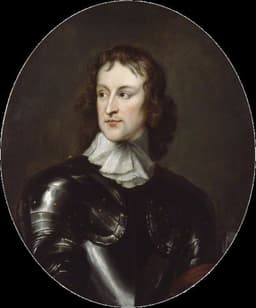
John Lambert
General · Modern
56.7Total
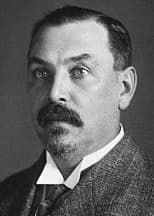
Louis Botha
General · Modern
61.1Total
Basic Information
Born
1619
1862
Died
1684
1919
Era
Modern
Modern
Nationality
England
South Africa
Occupation
General
General
Civilization
Western
Other
Score Comparison
Military (10%)
70.0
61.7
Political (20%)
45.0
70.0
Influence (20%)
59.0
56.7
Legacy (20%)
50.0
50.0
Leadership (15%)
68.0
79.8
Strategy (15%)
55.0
58.0
TOTAL
56.7
61.1
John Lambert — Complete Timeline
1648 AD
Battle of PrestonWar◆ Major
John Lambert commanded parliamentary forces at the Battle of Preston, defeating a Scottish royalist army. The victory helped secure the parliamentary cause in the Second English Civil War.
BattleEnglish Civil WarParliament
Impact: national
1653 AD
Drafted the Instrument of GovernmentPolitical Action◆ Major
John Lambert was the principal author of the Instrument of Government, the written constitution that established the Protectorate under Oliver Cromwell. The document created a Lord Protector and a Council of State, but was never fully implemented.
ConstitutionProtectorateCromwell
Impact: nationalconstructive
1662 AD
Exiled to GuernseyPolitical Action◆ Major
After the Restoration, John Lambert was tried for treason and exiled to the island of Guernsey. He spent the remainder of his life in captivity, never regaining political influence.
ExileRestorationPunishment
Impact: nationaltragic
Louis Botha — Complete Timeline
1899 AD
Battle of ColensoWar◆ Major
Botha commanded Boer forces at the Battle of Colenso during the Second Boer War. His troops repelled a British attack under General Buller, inflicting heavy casualties and boosting Boer morale.
Second Boer WarBattleVictory
Impact: regional
1900 AD
Boer War Guerrilla CommanderWar◆ Major
After the British captured Pretoria, Botha led Boer guerrilla forces in the Transvaal. He conducted hit-and-run attacks against British columns, prolonging the war and becoming a symbol of Afrikaner resistance.
Second Boer WarGuerrillaResistance
Impact: regional
1902 AD
Signed the Treaty of VereenigingPolitical Action
Botha, as a leading Boer general, signed the Treaty of Vereeniging which ended the Second Boer War. The treaty granted the Boer republics self-government under British sovereignty and promised eventual self-rule.
TreatyPeaceSecond Boer War
Impact: regional
1910 AD
First Prime Minister of the Union of South AfricaPolitical Action
Botha became the first Prime Minister of the newly formed Union of South Africa. He led a coalition government that sought to reconcile Afrikaners and English-speaking whites, while implementing segregationist policies.
Prime MinisterUnion of South AfricaFounding
Impact: nationalconstructive
1914 AD
Suppressed the 1914 RebellionWar◆ Major
Botha personally led government forces to suppress the Maritz Rebellion, an Afrikaner uprising against South Africa's entry into World War I. He defeated the rebels, asserting state authority and maintaining support for the British Empire.
RebellionWorld War ISuppression
Impact: national
1915 AD
Conquered German South West AfricaWar◆ Major
Botha commanded South African forces in the invasion and conquest of German South West Africa. The campaign succeeded, and the territory was later administered by South Africa under a League of Nations mandate.
World War IConquestGerman South West Africa
Impact: regional
Expert Analysis
Louis Botha vs John Lambert
# The General Who Wrote a Constitution, and the General Who Built a Nation
On a grey morning in 1662, John Lambert stood before a packed courtroom in London, his military career already a fading echo of civil war cannonades. He had once commanded armies that shattered the King’s cause, and he had once held the future of England in his hands. Now he was a prisoner, about to be exiled to a barren island in the Channel. Across the centuries and across the oceans, another general faced a very different fate. In 1910, Louis Botha stood on the steps of the Union Buildings in Pretoria, the first Prime Minister of a unified South Africa. He had once led guerrilla fighters against the British Empire, and now he was its partner in government. Both men were generals who outlived their wars. But one ended in chains, the other in power. Why?
Origins
John Lambert was born in 1619 into the Yorkshire gentry, a world of manor houses, Puritan piety, and simmering resentment against the Stuart monarchy. His father was a lawyer, his family solidly Protestant. The England of his youth was a nation tearing itself apart over religion, taxation, and the limits of royal authority. Lambert absorbed the legal-mindedness of his class: he believed in order, in contracts, in the rule of law—but also in the right to resist tyranny. He was a product of the English Civil War generation, men who thought they could remake the world with ink and steel.
Louis Botha was born in 1862 on a farm in the Orange Free State, a world of vast skies, Boer independence, and constant friction with British colonialism. His family were Voortrekkers, descendants of Dutch settlers who had fled British rule in the Cape. Botha grew up speaking Afrikaans, riding horses, and fighting—first against African kingdoms, then against the British. He had little formal education, but he had an instinct for leadership and a pragmatism born of the veld. Where Lambert’s world was one of parliaments and pamphlets, Botha’s was one of cattle, commandos, and compromise.
Rise to Power
Lambert rose through the ranks of the New Model Army, Oliver Cromwell’s formidable fighting machine. His first major moment came at the Battle of Preston in 1648, where he commanded parliamentary forces and crushed a Scottish royalist invasion. The victory was decisive: it ended the Second Civil War and paved the way for the King’s execution. Lambert was not just a soldier; he was a political soldier. He sat in Parliament, he debated, he schemed. By 1653, he was the principal author of the Instrument of Government, the first written constitution in English history. It was a stunning achievement: a document that created a Protectorate under Cromwell, balancing executive power with a parliament and a council. Lambert believed he was building a new republic.
Botha’s rise was more brutal and more personal. In 1899, at the Battle of Colenso, he commanded Boer forces that repelled a British attack with devastating rifle fire. The British lost over a thousand men; Botha lost only a handful. That victory made him a national hero. When the British captured Pretoria in 1900, Botha refused to surrender. Instead, he became a guerrilla commander, leading hit-and-run attacks across the Transvaal. He was relentless, elusive, and respected even by his enemies. By 1902, however, the war was unwinnable. Botha made the painful decision to negotiate, and on May 31, 1902, he signed the Treaty of Vereeniging, ending the war and accepting British sovereignty. It was a surrender, but it was also a foundation.
Leadership & Governance
Lambert’s leadership was intellectual and constitutional. He believed that military victory must be followed by legal order. The Instrument of Government was his masterwork: it divided power, protected property, and guaranteed religious toleration (for Protestants). But Lambert was a poor politician. He lacked Cromwell’s charisma and ruthlessness. When Cromwell died in 1658, Lambert tried to seize control, but the army fractured, and the republic collapsed. In 1660, Charles II was restored to the throne. Lambert was arrested, tried for treason, and exiled to Guernsey in 1662. He spent the rest of his life in captivity, writing legal treatises that no one read.
Botha’s leadership was pragmatic and unifying. As Prime Minister from 1910, he faced an impossible task: reconciling Boers and Britons, blacks and whites, in a single nation. He formed a coalition government, sought cooperation with British authorities, and even led South African forces into World War I on the British side. In 1914, when Afrikaner rebels rose up against the war, Botha personally led government troops to suppress them. In 1915, he commanded the conquest of German South West Africa. He was a general who became a statesman, and he understood that power required flexibility, not purity.
Triumph & Tragedy
Lambert’s greatest triumph was the Instrument of Government, a constitution that anticipated modern democratic principles. His greatest tragedy was that it failed. The Protectorate collapsed, the monarchy returned, and Lambert died forgotten on a rocky island in 1684. He had tried to build a republic with a sword, but he had no foundation of popular support.
Botha’s greatest triumph was the Union of South Africa itself, a nation born from the ashes of war. His greatest tragedy was that the union was built on racial exclusion. The 1910 constitution denied voting rights to most black South Africans, a legacy that would haunt the country for a century. Botha was a man of his time, but his time was one of empire and segregation.
Character & Destiny
Lambert was a man of principles: rigid, legalistic, and uncompromising. He believed in the rightness of his cause, and he could not bend. That strength became his weakness. When the political winds shifted, he had no room to maneuver. Botha was a man of instincts: flexible, patient, and realistic. He knew when to fight and when to negotiate. That pragmatism saved him, but it also led him to accept compromises that others would later condemn.
Legacy
Lambert is remembered, if at all, as a footnote: the general who wrote a constitution that never took root. His Instrument of Government was a brilliant document, but it was a document without a people. Botha is remembered as a founder: the first Prime Minister of South Africa, a man who helped shape a nation. But that nation was deeply flawed, and Botha’s legacy is entangled with the apartheid that followed.
Conclusion
Two generals, two paths. Lambert tried to build a republic with a constitution and an army, but he had no gift for politics. Botha built a nation with compromise and force, but he had no gift for justice. One died in exile, the other in office. Yet both faced the same question: how do you turn victory into peace? The answer, it seems, depends not on the battle, but on the man.
Rankings
🥇
Louis BothaLeader
Mil: 61.7Pol: 70.0Inf: 56.7
61.1
🥈
John Lambert
Mil: 70.0Pol: 45.0Inf: 59.0
56.7
+4.4 behind
How This Comparison Works
Algorithm
Each figure is scored on 6 dimensions (0—100 scale) based on structured historical data: Military (10%), Political (20%), Influence (20%), Legacy (20%), Leadership (15%), Strategy (15%). The weighted total produces the final ranking.
Data Sources
Scores are computed from structured sub-indicators in the database. Scale factors adjust for era (Ancient ×0.85, Modern ×1.0) and civilization size (Eastern ×1.05, Other ×0.80) to account for differences in population and military scale.
Maximum 3 Figures
Comparisons are limited to 2—3 figures to ensure readability and statistical meaningfulness.
Error Margins
±5 points per dimension — Sub-scores are derived from historical records with inherent uncertainty. Two figures within 5 points on a dimension should be considered roughly equivalent in that area.
Total Score Accuracy
±3 points overall — The weighted combination of 6 dimensions produces a total score with approximately ±3 points of uncertainty. Differences of less than 3 points are not statistically significant— the figures are effectively tied.
Known Limitations
- Historical records are incomplete and uneven across civilizations
- Figures from oral-tradition societies may be underrepresented
- Occupation labels can misclassify multi-role figures
- Scores measure capability and impact, not moral character
- Quantitative scoring is a comparison tool, not absolute truth
Capability Radar
Military (10%) — Battles & Warfare
Battles
65
65
Win Rate
60
70
Expansion
40
60
Political (20%) — Governance & Reform
Reform
55
65
Diplomacy
50
70
Economy
45
55
Influence (20%) — Cultural & Global Reach
Cultural
35
45
Global
30
50
Legacy (20%) — Historical Impact
Historical
50
55
Longevity
40
40
Leadership (15%) — Power & Stability
Tenure
60
60
Stability
40
50
Strategy (15%) — Tactics & Innovation
Strategy
65
72
Tactics
70
68
Reform
55
55
Similar Comparisons
Comments & Discussion
THE CONSTITUTION-MAKER6/16/2026
Lambert’s real legacy isn’t soldiering—it’s the Instrument of Government, the written constitution that literally invented the idea of a British republic. Botha got a handshake deal with empire. Lambert got paper. Botha’s Union of South Africa was still a colonial creature; Lambert’s Protectorate actually rewrote sovereignty. And he paid for it with exile while Botha died in power. Give me the man who wrote the rules over the one who just followed them.
沉默的指挥官6/16/2026
你以为Botha是胜利者?他被英帝国收编了,成了他们的傀儡总理。Lambert至少敢在1653年拒绝克伦威尔的独裁,坚持议会至上的原则。Botha在1902年签了弗里尼欣和约出卖布尔人,而Lambert宁愿坐牢也不妥协。真正的将军不是靠头衔活着,是靠骨气。