Loading...
John Lambert vs Julius Maada Bio
John Lambert leads by 5.5 pts · 2 figures compared
…
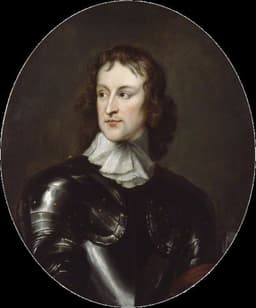
John Lambert
General · Modern
56.7Total
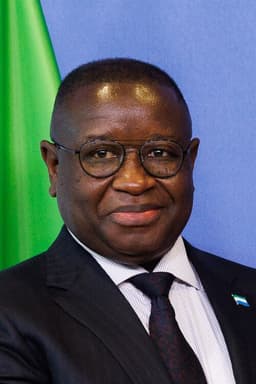
Julius Maada Bio
General · Modern
51.2Total
Basic Information
Born
1619
1964
Died
1684
—
Era
Modern
Modern
Nationality
England
Sierra Leone
Occupation
General
General
Civilization
Western
Other
Score Comparison
Military (10%)
70.0
50.0
Political (20%)
45.0
45.0
Influence (20%)
59.0
53.3
Legacy (20%)
50.0
45.0
Leadership (15%)
68.0
70.0
Strategy (15%)
55.0
43.7
TOTAL
56.7
51.2
John Lambert — Complete Timeline
1648 AD
Battle of PrestonWar◆ Major
John Lambert commanded parliamentary forces at the Battle of Preston, defeating a Scottish royalist army. The victory helped secure the parliamentary cause in the Second English Civil War.
BattleEnglish Civil WarParliament
Impact: national
1653 AD
Drafted the Instrument of GovernmentPolitical Action◆ Major
John Lambert was the principal author of the Instrument of Government, the written constitution that established the Protectorate under Oliver Cromwell. The document created a Lord Protector and a Council of State, but was never fully implemented.
ConstitutionProtectorateCromwell
Impact: nationalconstructive
1662 AD
Exiled to GuernseyPolitical Action◆ Major
After the Restoration, John Lambert was tried for treason and exiled to the island of Guernsey. He spent the remainder of his life in captivity, never regaining political influence.
ExileRestorationPunishment
Impact: nationaltragic
Julius Maada Bio — Complete Timeline
1992 AD
1992 Sierra Leonean coup d'étatPolitical Action◆ Major
Julius Maada Bio was a member of the National Provisional Ruling Council (NPRC) that overthrew President Joseph Momoh in a military coup. Bio served as a key figure in the junta, which promised to end the civil war but faced criticism for human rights abuses.
CoupSierra LeoneCivil War
Impact: nationaldestructive
1996 AD
Brief tenure as head of statePolitical Action◆ Major
Bio led a palace coup within the NPRC in January 1996, becoming head of state. He oversaw the transition to civilian rule, handing over power to Ahmad Tejan Kabbah after elections in March 1996, a move that earned him praise for restoring democracy.
TransitionDemocracyCoup
Impact: nationalconstructive
2018 AD
Election as President of Sierra LeonePolitical Action◆ Major
Bio won the 2018 Sierra Leonean presidential election as the candidate of the Sierra Leone People's Party, defeating Samura Kamara in a runoff. His victory marked a return to power for the SLPP after a decade in opposition.
ElectionSierra LeonePresidency
Impact: nationalconstructive
2023 AD
Re-election amid economic challengesPolitical Action◆ Major
Bio was re-elected in 2023 with 56.6% of the vote, but the election was disputed by the opposition. His second term has been marked by economic difficulties, including high inflation and debt, as well as allegations of authoritarianism.
ElectionSierra LeoneEconomy
Impact: national
Expert Analysis
John Lambert vs Julius Maada Bio
# The General Who Wrote a Constitution and the General Who Learned to Win Elections
On a crisp morning in December 1653, John Lambert sat in London’s Whitehall, quill in hand, drafting the Instrument of Government—the first written constitution in English history. He was a man who had led cavalry charges at Preston, who had helped topple a king, and who now believed he could reshape a nation with words on parchment. Nearly three and a half centuries later, in the humid heat of Freetown, Julius Maada Bio—a young soldier who had seized power in a coup—stood before a crowd and promised not to rule, but to hand over authority to civilians. Two generals, separated by oceans and centuries, both stepping from the battlefield into the treacherous realm of politics. One would see his constitution crushed, his life end in lonely exile. The other would lose power, wait, and return to win the presidency by ballot. What made the difference?
Origins
John Lambert was born in 1619 into the Yorkshire gentry, a class of landed families who prided themselves on independence and godly piety. England was simmering with religious and constitutional conflict when he came of age. The Puritan revolution was not an abstraction—it was the air he breathed. He studied law at the Inns of Court, but the outbreak of civil war in 1642 pulled him into the New Model Army. Lambert was a product of a society that believed in divine providence and parliamentary sovereignty, but also one that had no template for what to do after a king was defeated. His world was hierarchical, insular, and convinced that God had a plan for England.
Julius Maada Bio, born in 1964 in a small village in Sierra Leone, grew up in a very different crucible. His country was emerging from British colonial rule, fragile and fractured by ethnic rivalries. Bio joined the military as a young man, but the army he entered was not a professional force—it was a tool for corrupt presidents and a stage for ambitious officers. Sierra Leone had no tradition of constitutional governance; it had a history of coups, diamonds, and violence. Bio’s formative years were shaped by the brutal civil war of the 1990s, when rebels hacked off limbs and child soldiers carried AK-47s. Where Lambert saw a constitutional crisis, Bio saw a failed state.
Rise to Power
Lambert’s rise came through sheer military competence. At the Battle of Preston in 1648, he commanded parliamentary forces that crushed a Scottish royalist army, a victory that sealed the fate of King Charles I. Lambert was not just a fighter—he was a thinker. He organized the army’s administration, won the loyalty of soldiers, and earned the trust of Oliver Cromwell. His path to power ran through campfires and council chambers, not through palace intrigue. By 1653, when Cromwell dissolved the Rump Parliament, Lambert was the natural choice to design a new government.
Bio’s rise was faster and bloodier. In 1992, as a 28-year-old captain, he joined a group of young officers who overthrew President Joseph Momoh, a man whose regime had collapsed into chaos. The coup was not a revolution of ideas—it was a mutiny of frustration. Bio became a member of the National Provisional Ruling Council, a junta that promised to restore democracy but clung to power. In January 1996, he led a palace coup within the junta, pushing aside his own commander to become head of state. At thirty-two, he was the youngest leader in Africa. But his power rested on bayonets, not ballots.
Leadership & Governance
Lambert’s great achievement was the Instrument of Government of 1653. It created a Lord Protector (Cromwell), a council of state, and a parliament elected on a reformed franchise. It was a genuine attempt to balance executive power with representative government—something no English constitution had ever done. Lambert believed that law, not men, should rule. He was a brilliant administrator and a skilled political operator, but he lacked the common touch. His vision was rational, orderly, and cold. He saw politics as a machine to be designed, not a garden to be tended.
Bio’s governance was the opposite: pragmatic, patient, and deeply personal. In 1996, after only a few months as head of state, he kept his promise and handed power to an elected civilian president—a rare act in African politics. He then left the country, studied at university, and waited. When he returned to run for president in 2012, he lost. He ran again in 2018 and won, narrowly. His leadership has been marked by economic crisis, disputed elections, and accusations of authoritarian drift, but he has never returned to military rule. He learned that in a democracy, you must win votes, not battles.
Triumph & Tragedy
Lambert’s triumph was also his tragedy. The Instrument of Government was never fully implemented; Cromwell grew to distrust parliaments and ruled as a de facto monarch. When Cromwell died in 1658, Lambert tried to hold the fragile republic together, but he had no army of his own and no popular base. In 1660, the monarchy was restored. Charles II returned, and Lambert was tried for treason. He spent his final years in exile on the island of Guernsey, a prisoner on a rock in the sea, watching the world he built crumble. His constitution was forgotten for centuries.
Bio’s triumph came in 2018, when he was elected president of Sierra Leone after a decade of opposition. His tragedy is still unfolding. Re-elected in 2023 with 56.6% of the vote amid opposition protests and economic hardship, he faces the same curse that haunted Lambert: how to govern a divided country without becoming the tyrant you fought against. His military past haunts him; his critics call him a dictator in civilian clothes. But unlike Lambert, he has not been imprisoned or exiled. He is still in power, still trying to prove that a general can become a democrat.
Character & Destiny
Lambert was a man of principle, rigid and unyielding. He believed in constitutional government, but he could not imagine that ordinary people might not want it. His character was his fate: he was too cerebral for the rough world of English politics, too loyal to a vision that had no champions. He died alone, his name erased from the history books of the victors.
Bio is a survivor, flexible and patient. He knows when to fight and when to wait. He has admitted mistakes, changed course, and learned the language of democracy. His character is shaped by the chaos of Sierra Leone—a place where ideology is a luxury and survival is a skill. He has not created a constitution, but he has kept one alive, however imperfectly.
Legacy
John Lambert is remembered, if at all, as a footnote in the story of Oliver Cromwell. His Instrument of Government was a ghost that haunted English politics for generations—a warning that constitutions without popular support are paper walls. Today, historians rank him as a competent general and a visionary politician whose moment came too early.
Julius Maada Bio is a living figure, his legacy unwritten. He is ranked as a moderate leader in a troubled region, a man who traded a uniform for a suit and survived. His scores show a leader of middling military skill but strong political instincts. He may yet fail, or he may prove that soldiers can learn to serve the ballot box.
Conclusion
The difference between Lambert and Bio is not simply one of talent or luck. It is the difference between a world that believed in God’s plan and a world that believed in nothing but power. Lambert tried to impose order from above; Bio learned to build support from below. One wrote a constitution that died with him; the other inherited a damaged democracy and is still fighting to keep it breathing. Both were generals who wanted to be statesmen. Only one understood that in politics, you cannot command—you must persuade. And that lesson, hard-won in the bloody soil of Sierra Leone, is the one Lambert never learned.
Rankings
🥇
John LambertLeader
Mil: 70.0Pol: 45.0Inf: 59.0
56.7
🥈
Julius Maada Bio
Mil: 50.0Pol: 45.0Inf: 53.3
51.2
+5.5 behind
How This Comparison Works
Algorithm
Each figure is scored on 6 dimensions (0—100 scale) based on structured historical data: Military (10%), Political (20%), Influence (20%), Legacy (20%), Leadership (15%), Strategy (15%). The weighted total produces the final ranking.
Data Sources
Scores are computed from structured sub-indicators in the database. Scale factors adjust for era (Ancient ×0.85, Modern ×1.0) and civilization size (Eastern ×1.05, Other ×0.80) to account for differences in population and military scale.
Maximum 3 Figures
Comparisons are limited to 2—3 figures to ensure readability and statistical meaningfulness.
Error Margins
±5 points per dimension — Sub-scores are derived from historical records with inherent uncertainty. Two figures within 5 points on a dimension should be considered roughly equivalent in that area.
Total Score Accuracy
±3 points overall — The weighted combination of 6 dimensions produces a total score with approximately ±3 points of uncertainty. Differences of less than 3 points are not statistically significant— the figures are effectively tied.
Known Limitations
- Historical records are incomplete and uneven across civilizations
- Figures from oral-tradition societies may be underrepresented
- Occupation labels can misclassify multi-role figures
- Scores measure capability and impact, not moral character
- Quantitative scoring is a comparison tool, not absolute truth
Capability Radar
Military (10%) — Battles & Warfare
Battles
65
15
Win Rate
60
20
Expansion
40
5
Political (20%) — Governance & Reform
Reform
55
50
Diplomacy
50
55
Economy
45
45
Influence (20%) — Cultural & Global Reach
Cultural
35
30
Global
30
20
Legacy (20%) — Historical Impact
Historical
50
35
Longevity
40
25
Leadership (15%) — Power & Stability
Tenure
60
55
Stability
40
40
Strategy (15%) — Tactics & Innovation
Strategy
65
20
Tactics
70
25
Reform
55
10
Similar Comparisons
Comments & Discussion
Cromwell’s Shadow6/16/2026
Lambert’s Instrument of Government was revolutionary but doomed by timing. He drafted a constitution without popular legitimacy—no Parliament voted on it, no people ratified it. It was a general’s blueprint for order, not a society’s contract. Bio, by contrast, understood that raw force fades; he bided his time, studied electoral mechanics, and won legitimately. Lambert was a constitutional architect without a foundation. Bio was a political engineer who knew power required patience, not just pa
草根统帅6/16/2026
Maada Bio 的厉害之处在于他学会了“等”。很多非洲政变将军一上台就不想下来,但Bio 1996年主动交权,选择蛰伏十几年,等到2018年才通过选举回来。这种耐心说明他真正理解了权力合法性不是枪杆子,是选票箱。而兰伯特不懂这一点——他起草《政府约法》时,根本没想过要问问老百姓同不同意。两个将军,一个急着写宪法,一个急着学选举,高下立判。
Constitutional Ghost6/16/2026
Lambert’s constitution was a masterpiece of political theory but a failure of political reality. The Instrument of Government created a Lord Protector and a single-chamber Parliament—radical ideas for 1653. Yet Lambert never convinced the army, the gentry, or the people. It had no democratic roots. Meanwhile, Bio didn’t try to write a new social contract overnight. He let the existing one work, adapted, and won. Lambert tried to build a cathedral in a storm. Bio built a house one election at a t
马背上的法学家6/16/2026
兰伯特是英国历史上少有的既能打仗又能写法律条文的人——他在普雷斯顿战役中指挥骑兵冲锋,又在白厅起草宪法。但他犯了一个致命错误:以为一套完美的宪法文本就能解决政治冲突。1653年的英格兰根本没有稳定的政治秩序,他的《政府约法》像在流沙上盖楼。而Maada Bio 深知塞拉利昂的实际,他选择在民主框架内博弈,而不是强行推一套自己的规则。理论家输给了实干家。
Empire Builder vs Surviver6/16/2026
The crucial difference is scale of ambition. Lambert wanted to reshape a global Protestant empire—he even negotiated with Cromwell to become king, then turned against him when denied. His vision exceeded his political base. Bio aimed for something smaller but achievable: lead a fragile West African state through democratic transition. Lambert overreached and died forgotten in Plymouth Castle. Bio underpromised and overdelivered. In politics, survival often beats grandeur.
权力游戏两重天6/16/2026
两个将军最大的区别是:兰伯特在权力顶端时没有学会妥协,而Bio 在权力低潮时学会了等待。1657年兰伯特因为反对克伦威尔称王而被解职,他宁愿站着