Loading...
John Diefenbaker vs Wasfi al-Tal
John Diefenbaker leads by 11.2 pts · 2 figures compared
…
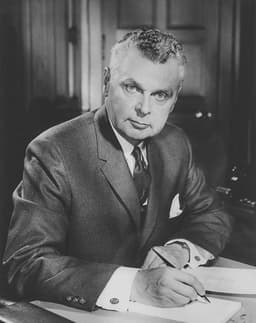
John Diefenbaker
Politician · Modern
53.4Total

Wasfi al-Tal
Politician · Modern
42.2Total
Basic Information
Born
1895
1919
Died
1979
1971
Era
Modern
Modern
Nationality
Canada
Jordan
Occupation
Politician
Politician
Civilization
Western
Middle Eastern
Score Comparison
Military (10%)
50.0
17.2
Political (20%)
68.0
40.8
Influence (20%)
56.4
49.4
Legacy (20%)
47.5
39.2
Leadership (15%)
53.2
51.9
Strategy (15%)
42.5
43.8
TOTAL
53.4
42.2
John Diefenbaker — Complete Timeline
1957 AD
Became Prime Minister of CanadaPolitical Action◆ Major
Diefenbaker became the 13th Prime Minister of Canada, leading the Progressive Conservative Party. His victory ended 22 years of Liberal rule and was built on a populist platform.
Government FormationElectionConservatism
Impact: national
1959 AD
Cancelled the Avro Arrow projectPolitical Action◆ Major
Diefenbaker's government cancelled the Avro CF-105 Arrow, a state-of-the-art supersonic interceptor aircraft. The decision was controversial, leading to the loss of thousands of jobs and the destruction of the prototypes, but was driven by cost concerns.
AviationDefenseEconomic Policy
Impact: nationaldestructive
1960 AD
Passed the Canadian Bill of RightsReform◆ Major
Diefenbaker's government passed the Canadian Bill of Rights, a federal statute that guaranteed fundamental freedoms such as speech, assembly, and religion. Though not constitutional, it was a landmark in human rights protection.
Human RightsLegislationCivil Liberties
Impact: nationalconstructive
Extended the franchise to Indigenous peoplesReform◆ Major
Diefenbaker's government amended the Canada Elections Act to give First Nations people the right to vote in federal elections without losing their status. This was a significant step toward Indigenous rights.
Indigenous RightsVoting RightsEquality
Impact: nationalconstructive
Wasfi al-Tal — Complete Timeline
1962 AD
Appointment as Prime Minister of JordanPolitical Action◆ Major
Wasfi al-Tal was appointed Prime Minister of Jordan in January 1962 by King Hussein. He served multiple terms, known for his strong anti-communist stance and efforts to modernize Jordan's economy and military.
Prime MinisterGovernmentModernization
Impact: nationalconstructive
1965 AD
Economic and Administrative ReformsReform
During his tenure, Talal implemented economic reforms including the establishment of the Jordanian Central Bank and the development of the Aqaba port. He also pushed for administrative modernization, reducing corruption and improving government efficiency.
Economic ReformCentral BankModernization
Impact: nationalconstructive
1970 AD
Suppression of the Black September UprisingWar◆ Major
As Prime Minister, Talal played a key role in the Jordanian military's suppression of the Black September uprising in September 1970, when Palestinian factions challenged the monarchy. The conflict resulted in thousands of casualties and the expulsion of the PLO from Jordan.
Black SeptemberCivil ConflictPLO
Impact: regionaldestructive
1971 AD
Assassination by Black SeptemberPolitical Action◆ Major
Wasfi al-Tal was assassinated on November 28, 1971, in Cairo, Egypt, by members of the Black September Organization. The assassination was in retaliation for his role in the 1970 crackdown. His death marked a major escalation in Palestinian-Jordanian tensions.
AssassinationBlack SeptemberRetaliation
Impact: regionaltragic
Expert Analysis
Origins
John Diefenbaker was born on September 18, 1895, in Neustadt, Ontario, to a German-Canadian family. His father was a teacher and farmer. He studied at the University of Saskatchewan, earning a law degree in 1919. Diefenbaker's early legal career involved defending marginalized individuals, shaping his commitment to civil rights.
Wasfi al-Tal was born in 1920 in Irbid, Jordan, to a prominent Jordanian family. His father was a politician. He studied at the American University of Beirut, earning a degree in political science. Tal's early career included journalism and government service, shaping his nationalist and anti-communist views.
Rise to Power
Diefenbaker entered politics in 1940, winning a seat in the House of Commons as a Progressive Conservative. He became party leader in 1956 and led the party to a landslide victory in 1958, ending 22 years of Liberal rule. His rise was fueled by his oratory and populist appeal, particularly in rural Canada.
Wasfi al-Tal served in various government posts before being appointed Prime Minister of Jordan in January 1962 by King Hussein. He became known for his strong anti-communist stance and economic reforms. His rise was tied to royal favor and his ability to manage internal security.
Leadership & Governance
Diefenbaker's leadership focused on human rights and national identity. He passed the Canadian Bill of Rights in 1960, a federal statute guaranteeing fundamental freedoms. He also extended voting rights to Indigenous peoples in 1960. However, his economic policies were criticized for indecision, and his cancellation of the Avro Arrow in 1959 damaged Canada's aerospace industry. His political score of 68.0 reflects his legislative achievements but also his governance struggles.
Tal's leadership emphasized stability and economic development. He established the Jordanian Central Bank in 1964 and developed the Aqaba port, boosting trade. His suppression of the Black September uprising in 1970 was decisive, but criticized for harshness. His strategy score of 43.8 reflects his heavy reliance on military force. Political score 40.8.
Triumph & Tragedy
Diefenbaker's greatest triumph was the Canadian Bill of Rights, a foundational document for human rights in Canada. He also extended the franchise to Indigenous peoples, a landmark for democracy. His greatest failure was the cancellation of the Avro Arrow, which cost jobs and technological leadership. He also mishandled the Cuban Missile Crisis, initially hesitating to arm nuclear weapons, straining US relations.
Tal's triumph was the suppression of Black September, preserving Jordan's monarchy. His economic reforms modernized Jordan's infrastructure. His tragedy was his assassination in 1971 by Black September operatives in Cairo, a direct result of his actions against Palestinian groups. Legacy score 39.2.
Character & Destiny
Diefenbaker was a passionate orator with a strong sense of justice, but his indecisiveness and distrust of experts hindered his governance. His character led to a dramatic fall from power, losing the 1963 election. Leadership score 53.2.
Tal was determined and pragmatic, willing to use force to maintain order. His anti-communist and nationalist views made him a target. His assassination sealed his fate as a martyr for Jordanian stability. Leadership score 51.9.
Legacy
Diefenbaker's legacy is the Bill of Rights, which influenced the later Charter of Rights and Freedoms. He is remembered as a champion of civil liberties. His total score of 53.4 reflects moderate impact.
Tal's legacy is mixed: he is remembered for stabilizing Jordan but also for the bloody repression of Palestinians. His influence on Jordanian institutions endures. Total score 42.2.
Conclusion
Diefenbaker had a greater impact due to his legislative achievements that shaped Canadian identity and rights. While Tal's actions preserved Jordan's monarchy, his methods were divisive and his legacy narrower. Diefenbaker's score of 53.4 vs Tal's 42.2 reflects this, with Diefenbaker's political and influence scores significantly higher. Diefenbaker's reforms had lasting constitutional influence, while Tal's legacy is more contingent on regional politics.
Rankings
🥇
John DiefenbakerLeader
Mil: 50.0Pol: 68.0Inf: 56.4
53.4
🥈
Wasfi al-Tal
Mil: 17.2Pol: 40.8Inf: 49.4
42.2
+11.2 behind
How This Comparison Works
Algorithm
Each figure is scored on 6 dimensions (0—100 scale) based on structured historical data: Military (10%), Political (20%), Influence (20%), Legacy (20%), Leadership (15%), Strategy (15%). The weighted total produces the final ranking.
Data Sources
Scores are computed from structured sub-indicators in the database. Scale factors adjust for era (Ancient ×0.85, Modern ×1.0) and civilization size (Eastern ×1.05, Other ×0.80) to account for differences in population and military scale.
Maximum 3 Figures
Comparisons are limited to 2—3 figures to ensure readability and statistical meaningfulness.
Error Margins
±5 points per dimension — Sub-scores are derived from historical records with inherent uncertainty. Two figures within 5 points on a dimension should be considered roughly equivalent in that area.
Total Score Accuracy
±3 points overall — The weighted combination of 6 dimensions produces a total score with approximately ±3 points of uncertainty. Differences of less than 3 points are not statistically significant— the figures are effectively tied.
Known Limitations
- Historical records are incomplete and uneven across civilizations
- Figures from oral-tradition societies may be underrepresented
- Occupation labels can misclassify multi-role figures
- Scores measure capability and impact, not moral character
- Quantitative scoring is a comparison tool, not absolute truth
Capability Radar
Military (10%) — Battles & Warfare
Battles
29
21
Win Rate
31
22
Expansion
32
25
Political (20%) — Governance & Reform
Reform
60
25
Diplomacy
50
35
Economy
40
20
Influence (20%) — Cultural & Global Reach
Cultural
40
10
Global
30
15
Legacy (20%) — Historical Impact
Historical
50
20
Longevity
35
15
Leadership (15%) — Power & Stability
Tenure
55
30
Stability
45
15
Strategy (15%) — Tactics & Innovation
Strategy
36
30
Tactics
40
33
Reform
47
37
Similar Comparisons
Comments & Discussion
No comments yet. Be the first to share your thoughts!