Loading...
Fernando de la Rua vs John Diefenbaker
John Diefenbaker leads by 6.7 pts · 2 figures compared
…

Fernando de la Rua
Politician · Modern
46.7Total
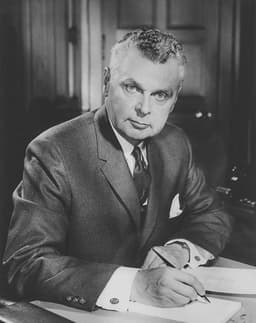
John Diefenbaker
Politician · Modern
53.4Total
Basic Information
Born
1937
1895
Died
—
1979
Era
Modern
Modern
Nationality
Argentina
Canada
Occupation
Politician
Politician
Civilization
Western
Western
Score Comparison
Military (10%)
47.9
50.0
Political (20%)
40.8
68.0
Influence (20%)
48.6
56.4
Legacy (20%)
38.3
47.5
Leadership (15%)
65.7
53.2
Strategy (15%)
41.6
42.5
TOTAL
46.7
53.4
Fernando de la Rua — Complete Timeline
1999 AD
Elected President of ArgentinaPolitical Action◆ Major
On October 24, 1999, Fernando de la R
ElectionAllianceEnd of Menemism
Impact: national
2000 AD
Faced deepening economic recessionPolitical Action◆ Major
De la Rúa inherited an economy in recession with high unemployment and a fixed exchange rate. His government struggled to implement reforms, and the recession worsened, leading to rising poverty and social unrest.
Economic CrisisRecessionUnemployment
Impact: nationaltragic
2001 AD
Resigned during the December 2001 crisisPolitical Action
On December 20, 2001, Fernando de la R
Resignation2001 CrisisProtests
Impact: nationaltragic
Implemented the 'corralito' bank freezePolitical Action◆ Major
On December 1, 2001, de la R
Bank FreezeEconomic PolicyCorralito
Impact: nationaldestructive
John Diefenbaker — Complete Timeline
1957 AD
Became Prime Minister of CanadaPolitical Action◆ Major
Diefenbaker became the 13th Prime Minister of Canada, leading the Progressive Conservative Party. His victory ended 22 years of Liberal rule and was built on a populist platform.
Government FormationElectionConservatism
Impact: national
1959 AD
Cancelled the Avro Arrow projectPolitical Action◆ Major
Diefenbaker's government cancelled the Avro CF-105 Arrow, a state-of-the-art supersonic interceptor aircraft. The decision was controversial, leading to the loss of thousands of jobs and the destruction of the prototypes, but was driven by cost concerns.
AviationDefenseEconomic Policy
Impact: nationaldestructive
1960 AD
Passed the Canadian Bill of RightsReform◆ Major
Diefenbaker's government passed the Canadian Bill of Rights, a federal statute that guaranteed fundamental freedoms such as speech, assembly, and religion. Though not constitutional, it was a landmark in human rights protection.
Human RightsLegislationCivil Liberties
Impact: nationalconstructive
Extended the franchise to Indigenous peoplesReform◆ Major
Diefenbaker's government amended the Canada Elections Act to give First Nations people the right to vote in federal elections without losing their status. This was a significant step toward Indigenous rights.
Indigenous RightsVoting RightsEquality
Impact: nationalconstructive
Expert Analysis
Origins
Fernando de la Rua was born on September 15, 1937, in Córdoba, Argentina, into a middle-class family. He studied law at the National University of Córdoba and later entered politics through the Radical Civic Union (UCR). His early career included serving as a senator and mayor of Buenos Aires, where he gained a reputation as a moderate reformer.
John Diefenbaker was born on September 18, 1895, in Neustadt, Ontario, Canada, to a family of German descent. He studied law at the University of Saskatchewan and established a legal practice. Diefenbaker entered federal politics in 1940 as a Progressive Conservative MP, known for his populist oratory and advocacy for civil rights.
Rise to Power
De la Rua rose to prominence as the mayor of Buenos Aires from 1996 to 1999, where he earned a reputation for efficiency and honesty. In 1999, he was elected President of Argentina with 48% of the vote, leading the Alliance for Work, Justice and Education. His victory ended the Peronist rule of Carlos Menem, but he inherited a severe economic recession.
Diefenbaker's rise was slower. He ran for the Conservative leadership multiple times before winning in 1956. In the 1957 federal election, he led the Progressive Conservatives to a minority government, ending 22 years of Liberal rule. A year later, he won the largest majority in Canadian history up to that point, with 208 seats out of 265.
Leadership & Governance
De la Rua's governance was marked by austerity and adherence to the fixed exchange rate (convertibility plan). He struggled to manage the recession, with unemployment rising above 20%. His government passed the 'corralito' bank freeze in December 2001, limiting cash withdrawals to 250 pesos per week, which sparked massive protests. His leadership score of 65.7 reflects his inability to navigate the crisis, while his strategy score of 41.6 indicates poor crisis management.
Diefenbaker's leadership was characterized by his commitment to individual rights. He passed the Canadian Bill of Rights in 1960, a federal statute guaranteeing fundamental freedoms. He also extended the vote to Indigenous peoples in 1960. However, his indecisiveness on defense issues, such as the cancellation of the Avro Arrow in 1959 and his reluctance to accept nuclear warheads for Bomarc missiles, damaged his political standing. His political score of 68.0 reflects his electoral success, but his strategy score of 42.5 shows poor long-term planning.
Triumph & Tragedy
De la Rua's greatest triumph was winning the presidency and briefly stabilizing the economy in 1999-2000. However, his tragedy was the overwhelming crisis of 2001: the bank freeze, looting, and his resignation on December 20, 2001, after only two years in office. The crisis led to the largest sovereign default in history and a collapse of confidence in Argentina's political system. His influence score of 48.6 and legacy score of 38.3 reflect his negative impact.
Diefenbaker's triumph was the Canadian Bill of Rights, a landmark in human rights legislation. He also expanded social programs and increased old-age pensions. His tragedy was the cancellation of the Avro Arrow, a decision that cost thousands of jobs and set back Canadian aerospace. His indecision on nuclear weapons led to a split in his cabinet and his party's defeat in the 1963 election. His military score of 50.0 and legacy score of 47.5 reflect mixed achievements.
Character & Destiny
De la Rua was seen as honest but indecisive. He lacked the political skills to build consensus, and his technocratic approach alienated voters. His character, marked by caution and adherence to orthodox economics, led to his downfall. Historians view him as a well-intentioned leader overwhelmed by events.
Diefenbaker was a populist with a strong sense of justice. His oratory appealed to ordinary Canadians, but his stubbornness and suspicion of elites alienated allies. His character led to both his historic rights legislation and his political isolation. Historians note his role in shaping Canadian identity but criticize his economic and defense policies.
Legacy
De la Rua's legacy is largely negative: he is remembered as the president who presided over Argentina's worst economic collapse. The crisis he left forced a rethinking of economic policy and led to the rise of leftist governments. His legacy score of 38.3 reflects this.
Diefenbaker's legacy is more positive. The Canadian Bill of Rights influenced later constitutional reforms, including the Charter of Rights and Freedoms. His extension of voting rights to Indigenous peoples helped advance equality. However, his cancellation of the Avro Arrow is seen as a strategic mistake. His legacy score of 47.5 shows a mixed but enduring impact.
Conclusion
John Diefenbaker had a greater impact than Fernando de la Rua. Diefenbaker's total score of 53.4 surpasses de la Rua's 46.7 by 6.7 points. While de la Rua failed in a crisis that devastated Argentina, Diefenbaker advanced civil rights and left a lasting legal legacy. Despite his strategic errors, Diefenbaker's political achievements and influence on Canadian identity outweigh de la Rua's brief and disastrous presidency.
Rankings
🥇
John DiefenbakerLeader
Mil: 50.0Pol: 68.0Inf: 56.4
53.4
🥈
Fernando de la Rua
Mil: 47.9Pol: 40.8Inf: 48.6
46.7
+6.7 behind
How This Comparison Works
Algorithm
Each figure is scored on 6 dimensions (0—100 scale) based on structured historical data: Military (10%), Political (20%), Influence (20%), Legacy (20%), Leadership (15%), Strategy (15%). The weighted total produces the final ranking.
Data Sources
Scores are computed from structured sub-indicators in the database. Scale factors adjust for era (Ancient ×0.85, Modern ×1.0) and civilization size (Eastern ×1.05, Other ×0.80) to account for differences in population and military scale.
Maximum 3 Figures
Comparisons are limited to 2—3 figures to ensure readability and statistical meaningfulness.
Error Margins
±5 points per dimension — Sub-scores are derived from historical records with inherent uncertainty. Two figures within 5 points on a dimension should be considered roughly equivalent in that area.
Total Score Accuracy
±3 points overall — The weighted combination of 6 dimensions produces a total score with approximately ±3 points of uncertainty. Differences of less than 3 points are not statistically significant— the figures are effectively tied.
Known Limitations
- Historical records are incomplete and uneven across civilizations
- Figures from oral-tradition societies may be underrepresented
- Occupation labels can misclassify multi-role figures
- Scores measure capability and impact, not moral character
- Quantitative scoring is a comparison tool, not absolute truth
Capability Radar
Military (10%) — Battles & Warfare
Battles
29
29
Win Rate
33
31
Expansion
37
32
Political (20%) — Governance & Reform
Reform
30
60
Diplomacy
40
50
Economy
25
40
Influence (20%) — Cultural & Global Reach
Cultural
15
40
Global
15
30
Legacy (20%) — Historical Impact
Historical
20
50
Longevity
10
35
Leadership (15%) — Power & Stability
Tenure
55
55
Stability
10
45
Strategy (15%) — Tactics & Innovation
Strategy
35
36
Tactics
40
40
Reform
44
47
Similar Comparisons
Comments & Discussion
No comments yet. Be the first to share your thoughts!