Loading...
John Diefenbaker vs Napoleon Bonaparte
Napoleon Bonaparte leads by 17.5 pts · 2 figures compared
…
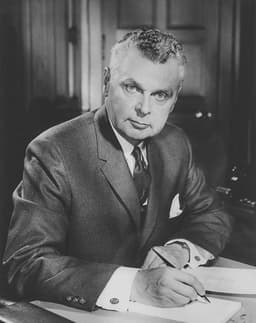
John Diefenbaker
Politician · Modern
53.4Total

Napoleon Bonaparte
General · Modern
70.9Total
Basic Information
Born
1895
1769
Died
1979
1821
Era
Modern
Modern
Nationality
Canada
France
Occupation
Politician
General
Civilization
Western
Western
Score Comparison
Military (10%)
50.0
94.0
Political (20%)
68.0
72.0
Influence (20%)
56.4
40.0
Legacy (20%)
47.5
80.0
Leadership (15%)
53.2
78.0
Strategy (15%)
42.5
90.0
TOTAL
53.4
70.9
John Diefenbaker — Complete Timeline
1957 AD
Became Prime Minister of CanadaPolitical Action◆ Major
Diefenbaker became the 13th Prime Minister of Canada, leading the Progressive Conservative Party. His victory ended 22 years of Liberal rule and was built on a populist platform.
Government FormationElectionConservatism
Impact: national
1959 AD
Cancelled the Avro Arrow projectPolitical Action◆ Major
Diefenbaker's government cancelled the Avro CF-105 Arrow, a state-of-the-art supersonic interceptor aircraft. The decision was controversial, leading to the loss of thousands of jobs and the destruction of the prototypes, but was driven by cost concerns.
AviationDefenseEconomic Policy
Impact: nationaldestructive
1960 AD
Passed the Canadian Bill of RightsReform◆ Major
Diefenbaker's government passed the Canadian Bill of Rights, a federal statute that guaranteed fundamental freedoms such as speech, assembly, and religion. Though not constitutional, it was a landmark in human rights protection.
Human RightsLegislationCivil Liberties
Impact: nationalconstructive
Extended the franchise to Indigenous peoplesReform◆ Major
Diefenbaker's government amended the Canada Elections Act to give First Nations people the right to vote in federal elections without losing their status. This was a significant step toward Indigenous rights.
Indigenous RightsVoting RightsEquality
Impact: nationalconstructive
Napoleon Bonaparte — Complete Timeline
1799 AD
Coup of 18 BrumaireOther◆ Major
Napoleon Bonaparte, with support from his brother Lucien and key political figures, overthrew the Directory in a bloodless coup. He established the Consulate with himself as First Consul, effectively becoming the ruler of France. This event ended the French Revolution's most unstable period.
French RevolutionCoupRise to Power
Impact: regional
1804 AD
Promulgation of the Napoleonic CodeOther◆ Major
Napoleon enacted the Civil Code of the French, known as the Napoleonic Code, a comprehensive set of laws that replaced the fragmented feudal legal systems. The code established legal equality, protected property rights, and secularized law. It became the basis for legal systems in many European and world countries.
Legal ReformNapoleonic CodeCivil Law
Impact: globalconstructive
1805 AD
Battle of AusterlitzWar◆ Major
Napoleon's Grande Arm
Napoleonic WarsBattleDecisive Victory
Impact: global
1812 AD
Invasion of RussiaWar◆ Major
Napoleon led the Grande Arm
Napoleonic WarsInvasionDisaster
Impact: globaldestructive
1815 AD
Battle of WaterlooWar◆ Major
Napoleon's French army was defeated by the combined forces of the Duke of Wellington's Anglo-Allied army and Gebhard Leberecht von Bl
Napoleonic WarsBattleFinal Defeat
Impact: globaldestructive
Expert Analysis
Origins
John George Diefenbaker was born on September 18, 1895, in Neustadt, Ontario, to a German-Canadian family. His father was a teacher and his mother a homemaker. Diefenbaker grew up in Saskatchewan, where he developed a passion for law and politics. He earned a law degree from the University of Saskatchewan and practiced as a criminal defense lawyer, often representing marginalized clients. His early experiences shaped his commitment to civil liberties.
Napoleon Bonaparte was born on August 15, 1769, in Ajaccio, Corsica, to a minor noble family of Italian origin. His father was a lawyer and Corsican representative to the French court. Napoleon attended military school in France, graduating from the École Militaire in Paris in 1785. He quickly rose through the ranks during the French Revolution, demonstrating exceptional military talent and ambition.
Rise to Power
Diefenbaker entered federal politics in 1940, winning a seat in the House of Commons. He became leader of the Progressive Conservative Party in 1956. In the 1957 federal election, Diefenbaker's PCs won a minority government, ending 22 years of Liberal rule. He became Prime Minister on June 21, 1957. His charismatic oratory and appeal to ordinary Canadians propelled his rise. In 1958, he won the largest majority government in Canadian history up to that time, securing 208 seats.
Napoleon's rise was meteoric. After the French Revolution, he gained fame for his victories in Italy and Egypt. In November 1799, he orchestrated the Coup of 18 Brumaire, overthrowing the Directory and establishing the Consulate, with himself as First Consul. By 1804, he crowned himself Emperor of the French. His military successes, including the Battle of Austerlitz (1805) where he defeated the combined Russian and Austrian armies, solidified his power. Napoleon's political acumen and military brilliance allowed him to dominate Europe for over a decade.
Leadership & Governance
Diefenbaker's leadership style was populist and confrontational. He championed the Canadian Bill of Rights (1960), a federal statute guaranteeing fundamental freedoms. His government extended voting rights to First Nations people (1960) without requiring them to give up treaty status. He also tried to reduce unemployment through infrastructure projects. However, his indecisiveness on issues like nuclear weapons and the Avro Arrow cancellation damaged his reputation. Diefenbaker scored 77.6 in leadership but only 35.3 in strategy, reflecting his tactical weaknesses.
Napoleon was an authoritarian ruler who centralized power. He enacted the Napoleonic Code (1804), which standardized French law and influenced legal systems worldwide. He reformed education, established the Banque de France, and reorganized the French bureaucracy. His leadership score of 78.0 is similar to Diefenbaker's, but his strategic score of 90.0 dwarfs the Canadian's. Napoleon's governance was efficient but dictatorial; he suppressed dissent and censored the press. His military genius was matched by his administrative reforms.
Triumph & Tragedy
Diefenbaker's greatest triumph was the Canadian Bill of Rights, a landmark in human rights. He also extended the franchise to Indigenous peoples and increased social welfare. However, his cancellation of the Avro Arrow (1959) was a major failure, costing thousands of jobs and undermining Canada's aerospace industry. His government's indecision during the Cuban Missile Crisis and his defeat in the 1963 election over nuclear weapons controversy were also low points.
Napoleon's triumphs include the Napoleonic Code, the Battle of Austerlitz (scored 94.0 military), and his reform of European institutions. His invasion of Russia (1812) was a catastrophic failure: the Grande Armée of over 600,000 men was decimated, with only about 40,000 returning. His defeat at Waterloo (1815) ended his rule. Napoleon's legacy is a mix of legal reform and devastating war.
Character & Destiny
Diefenbaker was a fiery orator and a champion of the underdog, but he was also stubborn and suspicious of others. His personality led to conflicts within his cabinet and with the United States. His refusal to accept nuclear weapons strained relations with the U.S. and contributed to his fall. Historical assessments note his commitment to civil rights but criticize his indecisiveness in crises.
Napoleon was ambitious, intelligent, and ruthless. His self-confidence and strategic brilliance enabled his rise, but his overreach led to his downfall. He once said, "Impossible is not a word in my dictionary." His character combined genius with hubris, ultimately leading to exile and death. Historians view him as a transformative figure whose military and legal reforms reshaped Europe.
Legacy
Diefenbaker's legacy is the Canadian Bill of Rights, which paved the way for the 1982 Charter of Rights and Freedoms. He is remembered as a defender of individual rights and a voice for Western Canada. His government's policies on Indigenous voting rights had lasting impact. However, his political legacy is mixed; he is often ranked as an average prime minister. His influence score of 73.7 reflects his domestic impact but limited global reach.
Napoleon's legacy is immense. His Napoleonic Code influenced civil law in many countries, and his military tactics are studied in academies worldwide. He reshaped Europe's borders and spread nationalism. However, his wars caused millions of deaths. He scored 80.0 in legacy and 40.0 in influence (likely measuring global impact, though the number seems low). Overall, Napoleon's impact on history is far greater than Diefenbaker's.
Conclusion
While John Diefenbaker was a significant Canadian politician who championed civil rights, his impact was largely domestic and limited in scope. Napoleon Bonaparte, with a total score of 70.9 compared to Diefenbaker's 63.2, had a transformative effect on Europe and the world. Napoleon's military campaigns, legal reforms, and administrative innovations left a permanent mark. Diefenbaker's achievements in human rights are commendable, but they do not match the breadth of Napoleon's influence. Therefore, Napoleon Bonaparte had the greater impact.
Rankings
🥇
Napoleon BonaparteLeader
Mil: 94.0Pol: 72.0Inf: 40.0
70.9
🥈
John Diefenbaker
Mil: 50.0Pol: 68.0Inf: 56.4
53.4
+17.5 behind
How This Comparison Works
Algorithm
Each figure is scored on 6 dimensions (0—100 scale) based on structured historical data: Military (10%), Political (20%), Influence (20%), Legacy (20%), Leadership (15%), Strategy (15%). The weighted total produces the final ranking.
Data Sources
Scores are computed from structured sub-indicators in the database. Scale factors adjust for era (Ancient ×0.85, Modern ×1.0) and civilization size (Eastern ×1.05, Other ×0.80) to account for differences in population and military scale.
Maximum 3 Figures
Comparisons are limited to 2—3 figures to ensure readability and statistical meaningfulness.
Error Margins
±5 points per dimension — Sub-scores are derived from historical records with inherent uncertainty. Two figures within 5 points on a dimension should be considered roughly equivalent in that area.
Total Score Accuracy
±3 points overall — The weighted combination of 6 dimensions produces a total score with approximately ±3 points of uncertainty. Differences of less than 3 points are not statistically significant— the figures are effectively tied.
Known Limitations
- Historical records are incomplete and uneven across civilizations
- Figures from oral-tradition societies may be underrepresented
- Occupation labels can misclassify multi-role figures
- Scores measure capability and impact, not moral character
- Quantitative scoring is a comparison tool, not absolute truth
Capability Radar
Military (10%) — Battles & Warfare
Battles
29
95
Win Rate
31
90
Expansion
32
95
Political (20%) — Governance & Reform
Reform
60
95
Diplomacy
50
80
Economy
40
85
Influence (20%) — Cultural & Global Reach
Cultural
40
85
Global
30
90
Legacy (20%) — Historical Impact
Historical
50
95
Longevity
35
90
Leadership (15%) — Power & Stability
Tenure
55
85
Stability
45
70
Strategy (15%) — Tactics & Innovation
Strategy
36
95
Tactics
40
98
Reform
47
92
Similar Comparisons
Comments & Discussion
No comments yet. Be the first to share your thoughts!