Loading...
John Diefenbaker vs Julius Caesar
Julius Caesar leads by 29.4 pts · 2 figures compared
…
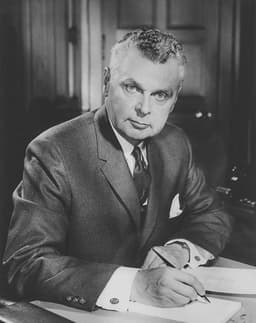
John Diefenbaker
Politician · Modern
53.4Total

Julius Caesar
General · Ancient
82.8Total
Basic Information
Born
1895
-100
Died
1979
-44
Era
Modern
Ancient
Nationality
Canada
Roman Republic
Occupation
Politician
General
Civilization
Western
Western
Score Comparison
Military (10%)
50.0
88.0
Political (20%)
68.0
78.0
Influence (20%)
56.4
85.0
Legacy (20%)
47.5
82.0
Leadership (15%)
53.2
80.0
Strategy (15%)
42.5
85.0
TOTAL
53.4
82.8
John Diefenbaker — Complete Timeline
1957 AD
Became Prime Minister of CanadaPolitical Action◆ Major
Diefenbaker became the 13th Prime Minister of Canada, leading the Progressive Conservative Party. His victory ended 22 years of Liberal rule and was built on a populist platform.
Government FormationElectionConservatism
Impact: national
1959 AD
Cancelled the Avro Arrow projectPolitical Action◆ Major
Diefenbaker's government cancelled the Avro CF-105 Arrow, a state-of-the-art supersonic interceptor aircraft. The decision was controversial, leading to the loss of thousands of jobs and the destruction of the prototypes, but was driven by cost concerns.
AviationDefenseEconomic Policy
Impact: nationaldestructive
1960 AD
Passed the Canadian Bill of RightsReform◆ Major
Diefenbaker's government passed the Canadian Bill of Rights, a federal statute that guaranteed fundamental freedoms such as speech, assembly, and religion. Though not constitutional, it was a landmark in human rights protection.
Human RightsLegislationCivil Liberties
Impact: nationalconstructive
Extended the franchise to Indigenous peoplesReform◆ Major
Diefenbaker's government amended the Canada Elections Act to give First Nations people the right to vote in federal elections without losing their status. This was a significant step toward Indigenous rights.
Indigenous RightsVoting RightsEquality
Impact: nationalconstructive
Julius Caesar — Complete Timeline
58 BC
Gallic WarsWar◆ Major
Caesar, as proconsul of Gaul, launched a series of campaigns that conquered all of Gaul (modern France, Belgium, and parts of Switzerland). He fought numerous battles, including against the Helvetii, the Belgae, and the Gallic chieftain Vercingetorix. The wars brought immense wealth and a loyal army to Caesar.
Gallic WarsConquestRoman Expansion
Impact: regional
49 BC
Crossing the RubiconPolitical Action◆ Major
Caesar led Legio XIII across the Rubicon River into Italy, defying the Roman Senate's order to disband his army. This act triggered a civil war against Pompey and the Optimates, ultimately leading to Caesar's dictatorship and the end of the Roman Republic.
Roman Civil WarEnd of RepublicPower Struggle
Impact: global
48 BC
Battle of PharsalusWar◆ Major
Caesar's outnumbered army defeated the larger forces of Pompey the Great at Pharsalus in Greece. Caesar's tactical use of a reserve line to counter Pompey's cavalry charge proved decisive. Pompey fled to Egypt, where he was assassinated, leaving Caesar as the undisputed master of the Roman world.
Roman Civil WarBattleDecisive Victory
Impact: regional
44 BC
Appointment as Dictator for LifePolitical Action◆ Major
The Roman Senate appointed Caesar dictator perpetuo (dictator for life), granting him unprecedented personal power. This move concentrated military, legislative, and judicial authority in one person, effectively ending the Roman Republic's traditional system of checks and balances and alarming many senators.
DictatorshipEnd of RepublicPower Consolidation
Impact: regionaldestructive
Assassination on the Ides of MarchPolitical Action◆ Major
A group of Roman senators, led by Marcus Junius Brutus and Gaius Cassius Longinus, stabbed Caesar to death at a meeting of the Senate in the Theatre of Pompey. The assassination was intended to restore the Republic, but instead triggered another civil war that led to the rise of the Roman Empire.
AssassinationRoman PoliticsEnd of Republic
Impact: globaldestructive
Expert Analysis
john-diefenbaker-vs-julius-caesar
The Crossing and the Compromise
On a winter day in January 49 BCE, Julius Caesar stood at the banks of the Rubicon, a small river that marked the boundary of his legal command. To cross was treason; to retreat was political death. He crossed, and the Roman Republic bled into empire. Nineteen centuries later, in the spring of 1957, John Diefenbaker stood before a crowd in Ottawa, having just ended twenty-two years of Liberal rule in Canada. His victory was not a crossing of swords but a triumph of speeches. These two men—one a general who redrew the map of the ancient world, the other a prairie lawyer who gave Canada its Bill of Rights—seem to belong to different species of history. Yet both faced the same fundamental question: how does a leader reshape a nation when the old order resists change? Their answers reveal not only the gulf between eras but the profound difference between wielding power through force and through persuasion.
Origins
Caesar was born into the twilight of the Roman Republic, a world of senatorial intrigue, civil wars, and the crumbling of aristocratic consensus. His family, the Julii, claimed descent from the goddess Venus, but they were not among the ruling elite. Young Caesar learned early that in Rome, reputation was currency and audacity was interest. He was captured by pirates as a young man, laughed at their ransom demand, and later crucified them—a story that captures his blend of charm and ruthlessness. His world demanded conquest: the Republic rewarded generals who brought back gold, slaves, and glory.
John Diefenbaker grew up in a very different kind of frontier. Born in 1895 in rural Ontario, he later moved to Saskatchewan, a province then barely a decade old. His father was a teacher of modest means, and young John learned the sting of poverty and the power of oratory in small-town debates. Canada in the early twentieth century was a dominion still finding its voice, caught between British tradition and American influence. For Diefenbaker, the enemy was not a foreign army but the indifference of established power—the railways, the banks, the Liberal machine that had governed so long it seemed eternal. His weapon was not the sword but the speech, and his battlefield was the House of Commons.
Rise to Power
Caesar’s path was a masterclass in political engineering. He formed the First Triumvirate with Pompey and Crassus, married his daughter to Pompey, and secured command of Gaul. Between 58 and 50 BCE, he conquered what is now France and Belgium, fighting over a million men and capturing eight hundred cities. His *Commentaries on the Gallic War* were not just military reports but propaganda, designed to make his name synonymous with Roman glory. When the Senate ordered him to disband his army, he knew the choice was stark: become a private citizen vulnerable to prosecution, or become a tyrant. He chose the latter.
Diefenbaker’s rise was slower, more dogged. He ran for office seven times before winning a seat in 1940. He was a man of the margins, championing the rights of Ukrainian Canadians, Indigenous peoples, and the poor—groups the Liberal establishment ignored. In 1956, he gave a legendary speech against the Liberal government’s pipeline deal, a filibuster that galvanized the opposition. The next year, he became Prime Minister. His victory was not a conquest but a coalition of the disaffected.
Leadership & Governance
Caesar’s rule was a revolution wrapped in a dictatorship. As dictator for life, he reformed the calendar (giving us the Julian calendar), extended citizenship to Gauls and Spaniards, and launched public works projects that employed the poor. He centralized power, reduced the Senate to a rubber stamp, and packed it with his supporters. His military genius was unquestionable—at Alesia in 52 BCE, he besieged a Gallic army while simultaneously repelling a relief force, a feat of logistics and nerve. But his governance was fragile: he pardoned his enemies, but they did not forgive him.
Diefenbaker governed by conviction, not conquest. His greatest achievement, the Canadian Bill of Rights of 1960, was a federal statute guaranteeing freedom of speech, assembly, and religion—but it applied only to federal laws, and courts could not strike down provincial violations. It was a half-step, a compromise. He also gave Indigenous peoples the right to vote in 1960, a moral milestone that took decades to fulfill. Yet his government was plagued by indecision. The cancellation of the Avro Arrow in 1959—a cutting-edge supersonic jet—was a disaster: it killed a homegrown aerospace industry and left Canada dependent on American planes. Diefenbaker saw it as fiscal prudence; historians see it as a failure of vision.
Triumph & Tragedy
Caesar’s greatest triumph was his own ambition realized: he was master of the Roman world. His tragedy came on the Ides of March, 44 BCE, when sixty senators stabbed him to death in the Theatre of Pompey. He fell at the feet of a statue of his old rival, bleeding out his reforms with his life. His murder did not restore the Republic; it unleashed a civil war that ended with his adopted heir, Octavian, becoming the first emperor.
Diefenbaker’s triumph was the Bill of Rights, a document that later inspired the Charter of Rights and Freedoms in 1982. His tragedy was his fall from power. By 1963, his government was paralyzed by indecision over nuclear weapons—he dithered on accepting American warheads for Canadian missiles, alienating both his allies and his cabinet. He lost the election that year, and the Progressive Conservative Party never fully recovered. He remained in Parliament until his death in 1979, a ghost of what might have been.
Character & Destiny
Caesar was a man of supreme confidence, even arrogance. He believed he was destined to rule, and he acted accordingly. His clemency was a calculated tool, not a virtue. He forgave enemies to win their loyalty, but he never trusted them—and they never trusted him. His character shaped his destiny: he could not imagine defeat, so he never prepared for betrayal.
Diefenbaker was a man of deep principle but also deep insecurity. He saw conspiracies everywhere, distrusted the civil service, and often isolated himself. His oratory could move crowds, but his stubbornness could paralyze his cabinet. He was a reformer who lacked the ruthlessness to enforce his vision. His character made him a hero to the marginalized but a puzzle to the powerful.
Legacy
Caesar’s legacy is the Roman Empire itself. His name became a title—Kaiser, Tsar—and his reforms laid the groundwork for two millennia of Western governance. But he also destroyed the Republic, and his assassination proved that even genius cannot outrun its own contradictions.
Diefenbaker’s legacy is quieter but enduring. The Bill of Rights was a seed that grew into the Charter of Rights and Freedoms, which now defines Canadian identity. His advocacy for Indigenous voting rights, though incomplete, set a moral standard. Yet he is remembered as a tragic figure: a man who saw the future but could not build the bridge to reach it.
Conclusion
Caesar crossed the Rubicon and changed the world. Diefenbaker crossed the floor of the House of Commons and changed a nation. One used legions, the other used laws. One died by the sword, the other by the ballot. Their stories remind us that leadership is not a single quality but a constellation of choices—and that the same ambition that builds empires can also destroy them. In the end, both men asked the same question: what does it mean to rule? Caesar answered with conquest; Diefenbaker with a piece of paper. History, in its strange way, has honored both.
Rankings
🥇
Julius CaesarLeader
Mil: 88.0Pol: 78.0Inf: 85.0
82.8
🥈
John Diefenbaker
Mil: 50.0Pol: 68.0Inf: 56.4
53.4
+29.4 behind
How This Comparison Works
Algorithm
Each figure is scored on 6 dimensions (0—100 scale) based on structured historical data: Military (10%), Political (20%), Influence (20%), Legacy (20%), Leadership (15%), Strategy (15%). The weighted total produces the final ranking.
Data Sources
Scores are computed from structured sub-indicators in the database. Scale factors adjust for era (Ancient ×0.85, Modern ×1.0) and civilization size (Eastern ×1.05, Other ×0.80) to account for differences in population and military scale.
Maximum 3 Figures
Comparisons are limited to 2—3 figures to ensure readability and statistical meaningfulness.
Error Margins
±5 points per dimension — Sub-scores are derived from historical records with inherent uncertainty. Two figures within 5 points on a dimension should be considered roughly equivalent in that area.
Total Score Accuracy
±3 points overall — The weighted combination of 6 dimensions produces a total score with approximately ±3 points of uncertainty. Differences of less than 3 points are not statistically significant— the figures are effectively tied.
Known Limitations
- Historical records are incomplete and uneven across civilizations
- Figures from oral-tradition societies may be underrepresented
- Occupation labels can misclassify multi-role figures
- Scores measure capability and impact, not moral character
- Quantitative scoring is a comparison tool, not absolute truth
Capability Radar
Military (10%) — Battles & Warfare
Battles
29
95
Win Rate
31
92
Expansion
32
97
Political (20%) — Governance & Reform
Reform
60
90
Diplomacy
50
85
Economy
40
82
Influence (20%) — Cultural & Global Reach
Cultural
40
88
Global
30
94
Legacy (20%) — Historical Impact
Historical
50
95
Longevity
35
96
Leadership (15%) — Power & Stability
Tenure
55
75
Stability
45
60
Strategy (15%) — Tactics & Innovation
Strategy
36
94
Tactics
40
96
Reform
47
88
Similar Comparisons
Comments & Discussion
No comments yet. Be the first to share your thoughts!