Loading...
John Diefenbaker vs Sooronbay Jeenbekov
John Diefenbaker leads by 17.2 pts · 2 figures compared
…
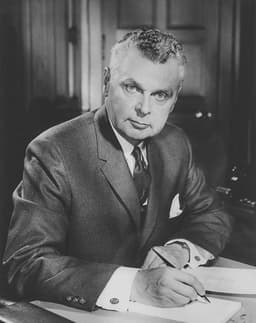
John Diefenbaker
Politician · Modern
53.4Total

Sooronbay Jeenbekov
Politician · Modern
36.2Total
Basic Information
Born
1895
1958
Died
1979
—
Era
Modern
Modern
Nationality
Canada
Kyrgyzstan
Occupation
Politician
Politician
Civilization
Western
Eastern
Score Comparison
Military (10%)
50.0
11.1
Political (20%)
68.0
27.9
Influence (20%)
56.4
47.1
Legacy (20%)
47.5
37.5
Leadership (15%)
53.2
41.5
Strategy (15%)
42.5
35.8
TOTAL
53.4
36.2
John Diefenbaker — Complete Timeline
1957 AD
Became Prime Minister of CanadaPolitical Action◆ Major
Diefenbaker became the 13th Prime Minister of Canada, leading the Progressive Conservative Party. His victory ended 22 years of Liberal rule and was built on a populist platform.
Government FormationElectionConservatism
Impact: national
1959 AD
Cancelled the Avro Arrow projectPolitical Action◆ Major
Diefenbaker's government cancelled the Avro CF-105 Arrow, a state-of-the-art supersonic interceptor aircraft. The decision was controversial, leading to the loss of thousands of jobs and the destruction of the prototypes, but was driven by cost concerns.
AviationDefenseEconomic Policy
Impact: nationaldestructive
1960 AD
Passed the Canadian Bill of RightsReform◆ Major
Diefenbaker's government passed the Canadian Bill of Rights, a federal statute that guaranteed fundamental freedoms such as speech, assembly, and religion. Though not constitutional, it was a landmark in human rights protection.
Human RightsLegislationCivil Liberties
Impact: nationalconstructive
Extended the franchise to Indigenous peoplesReform◆ Major
Diefenbaker's government amended the Canada Elections Act to give First Nations people the right to vote in federal elections without losing their status. This was a significant step toward Indigenous rights.
Indigenous RightsVoting RightsEquality
Impact: nationalconstructive
Sooronbay Jeenbekov — Complete Timeline
2016 AD
Appointment as Prime MinisterPolitical Action
Jeenbekov was appointed Prime Minister of Kyrgyzstan by President Almazbek Atambayev. He focused on infrastructure development and anti-corruption measures, though his tenure was marked by tensions with the opposition and limited progress on reforms.
Prime MinisterInfrastructureKyrgyzstan
Impact: national
2017 AD
Election as President of KyrgyzstanPolitical Action◆ Major
Sooronbay Jeenbekov was elected President of Kyrgyzstan in a peaceful transfer of power, winning 54.7% of the vote. He succeeded Almazbek Atambayev, marking the first time in Kyrgyz history that one elected president handed power to another.
ElectionPeaceful TransitionKyrgyzstan
Impact: nationalconstructive
2020 AD
Resignation after October 2020 ProtestsPolitical Action◆ Major
Jeenbekov resigned as president following widespread protests triggered by disputed parliamentary elections. The protests turned violent, and Jeenbekov stepped down to avoid further bloodshed, handing power to an interim government led by Sadyr Japarov.
ResignationProtestsPolitical Crisis
Impact: nationaltragic
Disputed Parliamentary ElectionsPolitical Action◆ Major
Jeenbekov oversaw parliamentary elections that were widely criticized as fraudulent, with allegations of vote-buying and manipulation. The results triggered mass protests that ultimately led to his resignation, highlighting deep political instability in Kyrgyzstan.
ElectionFraudProtests
Impact: nationaldestructive
Expert Analysis
Origins
**John Diefenbaker** was born on September 18, 1895, in Neustadt, Ontario, to a German-Canadian family. His father was a teacher and his mother a homemaker. Diefenbaker studied law at the University of Saskatchewan and established a legal practice. His early experiences with discrimination against German Canadians during World War I shaped his commitment to civil rights.
**Sooronbay Jeenbekov** was born on November 16, 1958, in Kara-Kulja, Kyrgyzstan, then part of the Soviet Union. He came from a rural farming family. Jeenbekov graduated from the Kyrgyz Agricultural Institute and worked as a teacher and later in agricultural management. His rise was rooted in the Soviet system, where he joined the Communist Party and held various administrative posts.
Rise to Power
Diefenbaker entered federal politics in 1940 as a Conservative MP. He became leader of the Progressive Conservative Party in 1956 and led the party to a minority government in 1957, ending 22 years of Liberal rule. His charismatic speaking style and populist appeal, especially in the Prairies, propelled him. In 1958, he won the largest majority in Canadian history up to that point.
Jeenbekov rose through Kyrgyzstan's post-Soviet political system. He served as governor of Osh Region from 2010 to 2015, then as Prime Minister from 2016 to 2017 under President Almazbek Atambayev. In 2017, he was elected President with 54.7% of the vote, marking the first peaceful transfer of power in Kyrgyzstan's history. His election was seen as a step toward stability.
Leadership & Governance
Diefenbaker's leadership style was confrontational and populist. He championed individual rights, passing the Canadian Bill of Rights in 1960, a federal statute guaranteeing fundamental freedoms. He also extended voting rights to Indigenous peoples in 1960. However, his indecisiveness on economic issues and defense (notably the cancellation of the Avro Arrow in 1959) hurt his government. His political score of 68.0 reflects his parliamentary success but also his inability to manage internal party divisions.
Jeenbekov governed as a cautious reformer, focusing on infrastructure and anti-corruption measures. However, his administration was marred by political infighting and authoritarian tendencies. The 2020 parliamentary elections, widely seen as fraudulent, triggered massive protests. Jeenbekov's leadership score of 41.5 indicates his failure to maintain democratic credibility. Unlike Diefenbaker, who expanded rights, Jeenbekov's tenure saw democratic backsliding.
Triumph & Tragedy
Diefenbaker's greatest triumph was the Canadian Bill of Rights, which, though limited in scope, laid the groundwork for the 1982 Charter of Rights and Freedoms. His extension of the vote to Indigenous peoples was also historic. His greatest tragedy was the cancellation of the Avro Arrow, a cutting-edge supersonic jet. The decision saved money but devastated Canada's aerospace industry and led to a brain drain. His legacy score of 47.5 reflects these mixed outcomes.
Jeenbekov's triumph was overseeing a peaceful transfer of power in 2017, a rare event in Central Asia. His tragedy was the 2020 protests that forced his resignation. The disputed elections and violent crackdown tarnished his presidency. His military score of 11.1 is low, reflecting his limited involvement in security matters, but his political score of 27.9 indicates poor governance.
Character & Destiny
Diefenbaker was a fiery orator and a champion of the underdog, but he was also stubborn and suspicious of advisors. His personality led to conflicts within his party, contributing to his government's downfall in 1963. His character shaped his fate: his commitment to rights was genuine, but his indecision on key issues undermined his leadership.
Jeenbekov was seen as a technocrat, but his reluctance to crack down on corruption and his tolerance of electoral fraud revealed a weak leadership. His destiny was sealed when he failed to address public grievances. Unlike Diefenbaker, who left office with a clear legacy, Jeenbekov's resignation marked a retreat.
Legacy
Diefenbaker's legacy is the Canadian Bill of Rights and his role in advancing civil liberties. His influence on Canadian law and politics endures, with a score of 56.4. He is remembered as a populist who stood up for individual rights.
Jeenbekov's legacy is more negative. He is associated with political instability and democratic erosion in Kyrgyzstan. His influence score of 47.1 is modest, as his impact was largely domestic and short-lived. The protests that ousted him highlighted the fragility of Kyrgyz democracy.
Conclusion
John Diefenbaker had a greater impact than Sooronbay Jeenbekov. Diefenbaker's political score of 68.0 and legacy score of 47.5, while not stellar, exceed Jeenbekov's 27.9 and 37.5 respectively. Diefenbaker's reforms had lasting effects on Canadian rights and identity, whereas Jeenbekov's tenure contributed to political instability. Diefenbaker's total score of 53.4 versus Jeenbekov's 36.2 reflects this gap. While neither was a transformative leader on a global scale, Diefenbaker's contributions to civil rights in Canada are more enduring than Jeenbekov's troubled presidency.
Rankings
🥇
John DiefenbakerLeader
Mil: 50.0Pol: 68.0Inf: 56.4
53.4
🥈
Sooronbay Jeenbekov
Mil: 11.1Pol: 27.9Inf: 47.1
36.2
+17.2 behind
How This Comparison Works
Algorithm
Each figure is scored on 6 dimensions (0—100 scale) based on structured historical data: Military (10%), Political (20%), Influence (20%), Legacy (20%), Leadership (15%), Strategy (15%). The weighted total produces the final ranking.
Data Sources
Scores are computed from structured sub-indicators in the database. Scale factors adjust for era (Ancient ×0.85, Modern ×1.0) and civilization size (Eastern ×1.05, Other ×0.80) to account for differences in population and military scale.
Maximum 3 Figures
Comparisons are limited to 2—3 figures to ensure readability and statistical meaningfulness.
Error Margins
±5 points per dimension — Sub-scores are derived from historical records with inherent uncertainty. Two figures within 5 points on a dimension should be considered roughly equivalent in that area.
Total Score Accuracy
±3 points overall — The weighted combination of 6 dimensions produces a total score with approximately ±3 points of uncertainty. Differences of less than 3 points are not statistically significant— the figures are effectively tied.
Known Limitations
- Historical records are incomplete and uneven across civilizations
- Figures from oral-tradition societies may be underrepresented
- Occupation labels can misclassify multi-role figures
- Scores measure capability and impact, not moral character
- Quantitative scoring is a comparison tool, not absolute truth
Capability Radar
Military (10%) — Battles & Warfare
Battles
29
16
Win Rate
31
18
Expansion
32
21
Political (20%) — Governance & Reform
Reform
60
15
Diplomacy
50
20
Economy
40
15
Influence (20%) — Cultural & Global Reach
Cultural
40
10
Global
30
10
Legacy (20%) — Historical Impact
Historical
50
15
Longevity
35
10
Leadership (15%) — Power & Stability
Tenure
55
20
Stability
45
10
Strategy (15%) — Tactics & Innovation
Strategy
36
23
Tactics
40
23
Reform
47
31
Similar Comparisons
Comments & Discussion
No comments yet. Be the first to share your thoughts!