Loading...
Jean Bart vs Sun Li-jen
Sun Li-jen leads by 6.9 pts · 2 figures compared
…
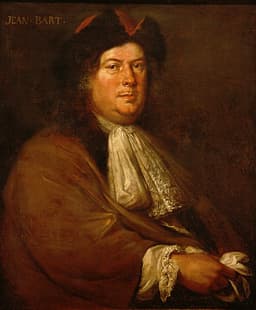
Jean Bart
General · Modern
49.9Total
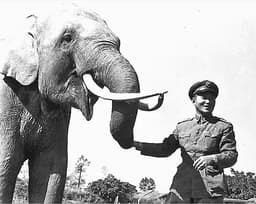
Sun Li-jen
General · Modern
56.8Total
Basic Information
Born
1650
1900
Died
1702
1990
Era
Modern
Modern
Nationality
France
China
Occupation
General
General
Civilization
Western
Eastern
Score Comparison
Military (10%)
52.5
70.0
Political (20%)
36.5
40.8
Influence (20%)
61.0
61.0
Legacy (20%)
47.5
50.0
Leadership (15%)
40.4
61.1
Strategy (15%)
60.0
67.2
TOTAL
49.9
56.8
Jean Bart — Complete Timeline
1690 AD
Battle of Beachy HeadWar
Jean Bart served as a privateer captain under the French admiral Tourville at the Battle of Beachy Head. The French fleet defeated the Anglo-Dutch fleet, gaining temporary control of the English Channel.
Nine Years' WarNaval BattleFrench Victory
Impact: regional
1694 AD
Battle of the TexelWar◆ Major
Jean Bart commanded a French squadron that broke through a Dutch blockade at the Battle of the Texel. He captured a large Dutch grain convoy, relieving a famine in France and demonstrating his skill as a naval commander.
Nine Years' WarNaval BattleFrench Victory
Impact: national
1695 AD
Raid on the Scottish CoastWar
Jean Bart led a raid on the Scottish coast, burning several villages and capturing ships. This raid was part of French efforts to support the Jacobite cause and disrupt English trade in the North Sea.
Nine Years' WarRaidJacobite Support
destructive
1696 AD
Capture of the English Convoy at Dogger BankWar
Jean Bart captured an English convoy off Dogger Bank, taking 25 merchant ships and their escort. This action disrupted English trade and demonstrated the effectiveness of French privateering during the Nine Years' War.
Nine Years' WarPrivateeringEnglish Loss
Impact: regional
1697 AD
Promoted to Chef d'EscadrePolitical Action◆ Major
Jean Bart was promoted to Chef d'Escadre (squadron commander) in the French navy, a high rank for a former privateer. This promotion recognized his successful service and made him a nobleman.
French NavyPromotionNobility
Impact: nationalconstructive
Sun Li-jen — Complete Timeline
1927 AD
Graduated from Virginia Military InstituteCultural
Sun Li-jen graduated from the Virginia Military Institute (VMI) in the United States. His American military education influenced his tactical approach and distinguished him among Chinese commanders.
EducationMilitary Training
Impact: national
1942 AD
Commanded the Chinese Expeditionary Force in BurmaWar◆ Major
Sun Li-jen commanded the 38th Division of the Chinese Expeditionary Force in Burma. He led his troops to victory at the Battle of Yenangyaung, rescuing trapped British forces and earning the nickname 'Rommel of the East.'
World War IIBurma CampaignAllied Cooperation
Impact: regionalconstructive
1944 AD
Commander of the New First ArmyPolitical Action◆ Major
Sun Li-jen was appointed commander of the New First Army, one of the best-equipped Nationalist units. He led the army in the Burma Campaign and later in the Chinese Civil War.
Military CommandWorld War II
Impact: regional
1955 AD
Arrested and Imprisoned by Chiang Kai-shekPolitical Action◆ Major
Sun Li-jen was arrested by Chiang Kai-shek on charges of conspiracy with the United States to stage a coup. He was placed under house arrest for 33 years, ending his military career and becoming a symbol of Nationalist repression.
Political RepressionTaiwanHouse Arrest
Impact: nationaltragic
Expert Analysis
Origins
Jean Bart was born on October 21, 1650, in Dunkirk, France, into a family of fishermen and privateers. His father, Cornil Bart, was a captain, and young Jean learned the sea from a young age. At 12, he served on a Dutch merchant ship, gaining experience. By 1666, he joined the French navy but soon turned to privateering after the navy's decline. His background made him a natural corsair.
Sun Li-jen was born on December 8, 1900, in Lujiang, Anhui, China, into a scholarly family. His father was a Qing official. Sun studied at Tsinghua University before attending the Virginia Military Institute (VMI), graduating in 1927. His American education shaped his modern approach to warfare.
Rise to Power
Jean Bart's rise began during the Franco-Dutch War (1672-1678). In 1674, he commanded a small frigate and captured several Dutch prizes. His major breakthrough came in 1683 when he broke the Dutch blockade of the Spanish Netherlands, capturing a grain convoy. This earned him a captaincy. In 1689, he was promoted to Chef d'Escadre after the Battle of Beachy Head (1690), where he served under Admiral Tourville. His success continued in the Nine Years' War (1688-1697).
Sun Li-jen rose in the National Revolutionary Army. After VMI, he joined the KMT and served in the Northern Expedition (1926-1928). His first major command was during the Second Sino-Japanese War (1937-1945). In 1942, he led the 38th Division to Burma, where he rescued British troops at Yenangyaung. This victory made him a hero. He later commanded the New First Army, one of the best-equipped KMT units.
Leadership & Governance
Jean Bart led by example, known for personal bravery. He often boarded enemy ships with his crew. His governance was minimal; he focused on raiding and disrupting enemy commerce. He operated with a privateer's mentality: profit-driven but effective. He scored 40.4 in leadership and 60.0 in strategy.
Sun Li-jen was a disciplined, modern commander. He trained his troops rigorously, emphasizing marksmanship and tactics. He was popular with soldiers but clashed with Chiang Kai-shek over strategy. His leadership score of 61.1 reflects his effectiveness. He advocated for professionalization, unlike the KMT's political loyalties.
Triumph & Tragedy
Jean Bart's greatest triumph was the Battle of the Texel (1694), where he broke a Dutch blockade and captured 150 merchant ships, relieving a famine in France. His tragedy was limited by his station; he never held high naval command due to his privateer background. He died of illness in 1702 at age 51.
Sun Li-jen's triumph was the Burma Campaign, where his 38th Division fought the Japanese to a standstill. He rescued 7,000 British troops at Yenangyaung. His tragedy was his arrest in 1955 by Chiang Kai-shek on false coup charges. He spent 33 years under house arrest, dying in 1990. His political score of 40.8 reflects this downfall.
Character & Destiny
Jean Bart was bold, independent, and loyal to France. His privateer spirit made him a national hero but limited his career. He was known for his temper and directness. His destiny was tied to the French monarchy's need for naval disruption.
Sun Li-jen was principled, stubborn, and American-influenced. He believed in professional military over political armies. This clashed with Chiang's system, leading to his downfall. His character sealed his fate: he refused to compromise.
Legacy
Jean Bart is remembered as a folk hero in Dunkirk, with statues and ships named after him. His tactics influenced privateering but had limited long-term impact. His legacy score is 47.5.
Sun Li-jen is honored in Taiwan and China as a military hero. His New First Army's training methods influenced later ROC forces. His legacy score is 50.0. He is often called the "Rommel of the East."
Conclusion
Sun Li-jen had greater impact. His military score of 70.0 versus Bart's 52.5, and leadership of 61.1 versus 40.4, show superior effectiveness. Sun's campaigns directly influenced World War II in Asia, while Bart's actions were local. Sun's tragedy also highlights the political struggles of modern China. Jean Bart was a skilled privateer, but Sun Li-jen was a transformative military leader.
Rankings
🥇
Sun Li-jenLeader
Mil: 70.0Pol: 40.8Inf: 61.0
56.8
🥈
Jean Bart
Mil: 52.5Pol: 36.5Inf: 61.0
49.9
+6.9 behind
How This Comparison Works
Algorithm
Each figure is scored on 6 dimensions (0—100 scale) based on structured historical data: Military (10%), Political (20%), Influence (20%), Legacy (20%), Leadership (15%), Strategy (15%). The weighted total produces the final ranking.
Data Sources
Scores are computed from structured sub-indicators in the database. Scale factors adjust for era (Ancient ×0.85, Modern ×1.0) and civilization size (Eastern ×1.05, Other ×0.80) to account for differences in population and military scale.
Maximum 3 Figures
Comparisons are limited to 2—3 figures to ensure readability and statistical meaningfulness.
Error Margins
±5 points per dimension — Sub-scores are derived from historical records with inherent uncertainty. Two figures within 5 points on a dimension should be considered roughly equivalent in that area.
Total Score Accuracy
±3 points overall — The weighted combination of 6 dimensions produces a total score with approximately ±3 points of uncertainty. Differences of less than 3 points are not statistically significant— the figures are effectively tied.
Known Limitations
- Historical records are incomplete and uneven across civilizations
- Figures from oral-tradition societies may be underrepresented
- Occupation labels can misclassify multi-role figures
- Scores measure capability and impact, not moral character
- Quantitative scoring is a comparison tool, not absolute truth
Capability Radar
Military (10%) — Battles & Warfare
Battles
55
75
Win Rate
70
70
Expansion
30
30
Political (20%) — Governance & Reform
Reform
10
25
Diplomacy
25
35
Economy
30
20
Influence (20%) — Cultural & Global Reach
Cultural
45
45
Global
30
50
Legacy (20%) — Historical Impact
Historical
40
55
Longevity
35
40
Leadership (15%) — Power & Stability
Tenure
20
40
Stability
15
25
Strategy (15%) — Tactics & Innovation
Strategy
50
75
Tactics
65
85
Reform
20
60
Similar Comparisons
Comments & Discussion
No comments yet. Be the first to share your thoughts!