Loading...
Giovanni Messe vs Jean Bart
Giovanni Messe leads by 4.8 pts · 2 figures compared
…
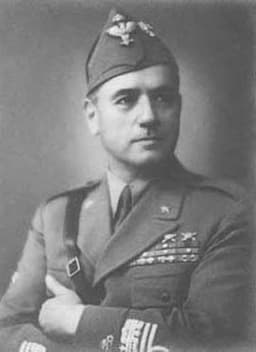
Giovanni Messe
General · Modern
54.7Total
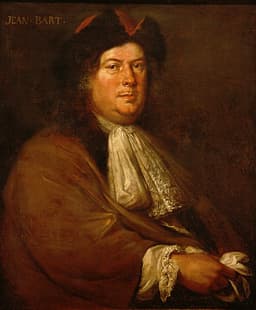
Jean Bart
General · Modern
49.9Total
Basic Information
Born
1883
1650
Died
1968
1702
Era
Modern
Modern
Nationality
Italy
France
Occupation
General
General
Civilization
Western
Western
Score Comparison
Military (10%)
45.0
52.5
Political (20%)
61.3
36.5
Influence (20%)
59.0
61.0
Legacy (20%)
46.7
47.5
Leadership (15%)
62.0
40.4
Strategy (15%)
52.5
60.0
TOTAL
54.7
49.9
Giovanni Messe — Complete Timeline
1942 AD
Commanded Italian Eighth Army in RussiaWar◆ Major
Messe commanded the Italian Eighth Army on the Eastern Front during Operation Barbarossa. His forces were deployed along the Don River and suffered heavy casualties during the Soviet counteroffensive at Stalingrad.
World War IIEastern FrontItalian Army
Impact: regionaltragic
1943 AD
Commanded Axis Forces in TunisiaWar◆ Major
Messe commanded the 1st Italian Army in Tunisia, later taking command of all Axis forces after Rommel's departure. He conducted a fighting retreat but was ultimately forced to surrender to the Allies in May 1943.
World War IINorth AfricaTunisia
Impact: regionaltragic
Surrendered Axis Forces in North AfricaWar◆ Major
Messe surrendered the remaining Axis forces in North Africa to the Allies on May 13, 1943, ending the North African campaign. Over 250,000 Axis soldiers were taken prisoner.
World War IINorth AfricaSurrender
Impact: regionaltragic
Appointed Chief of Staff of the Italian ArmyPolitical Action◆ Major
After the Italian armistice, Messe was appointed Chief of Staff of the Italian Army under the Badoglio government. He worked to reorganize Italian forces and coordinate with the Allies against German forces in Italy.
World War IIItalian ArmyPost-Armistice
Impact: nationalconstructive
Jean Bart — Complete Timeline
1690 AD
Battle of Beachy HeadWar
Jean Bart served as a privateer captain under the French admiral Tourville at the Battle of Beachy Head. The French fleet defeated the Anglo-Dutch fleet, gaining temporary control of the English Channel.
Nine Years' WarNaval BattleFrench Victory
Impact: regional
1694 AD
Battle of the TexelWar◆ Major
Jean Bart commanded a French squadron that broke through a Dutch blockade at the Battle of the Texel. He captured a large Dutch grain convoy, relieving a famine in France and demonstrating his skill as a naval commander.
Nine Years' WarNaval BattleFrench Victory
Impact: national
1695 AD
Raid on the Scottish CoastWar
Jean Bart led a raid on the Scottish coast, burning several villages and capturing ships. This raid was part of French efforts to support the Jacobite cause and disrupt English trade in the North Sea.
Nine Years' WarRaidJacobite Support
destructive
1696 AD
Capture of the English Convoy at Dogger BankWar
Jean Bart captured an English convoy off Dogger Bank, taking 25 merchant ships and their escort. This action disrupted English trade and demonstrated the effectiveness of French privateering during the Nine Years' War.
Nine Years' WarPrivateeringEnglish Loss
Impact: regional
1697 AD
Promoted to Chef d'EscadrePolitical Action◆ Major
Jean Bart was promoted to Chef d'Escadre (squadron commander) in the French navy, a high rank for a former privateer. This promotion recognized his successful service and made him a nobleman.
French NavyPromotionNobility
Impact: nationalconstructive
Expert Analysis
Origins
Giovanni Messe was born in 1883 in Mesagne, Italy, into a modest family. He entered the Italian military academy and served in colonial campaigns in Libya and Ethiopia. His early career was marked by steady advancement through the ranks, with no aristocratic connections. Jean Bart was born in 1650 in Dunkirk, France, into a family of fishermen and privateers. He began his maritime career as a cabin boy and later commanded privateer vessels. His humble origins contrasted with Messe's formal military education, but both rose through merit.
Rise to Power
Messe's rise came during World War I, where he served with distinction, earning promotions. He commanded the Italian Eighth Army on the Eastern Front in 1941-1942, but his forces were destroyed at the Battle of Stalingrad. He was then sent to Tunisia in 1943, where he commanded the 1st Italian Army and later all Axis forces after Rommel's departure. Jean Bart's rise began during the Franco-Dutch War, where he captured numerous merchant ships. His major breakthrough was at the Battle of the Texel in 1694, where he broke a Dutch blockade and captured a grain convoy, relieving famine in France. This led to his promotion to Chef d'Escadre, a high rank for a former privateer.
Leadership & Governance
Messe's leadership was characterized by tactical competence but strategic limitations. In Tunisia, he conducted a fighting retreat against overwhelming Allied forces, but his supply lines were stretched. He scored 62.0 in leadership and 52.5 in strategy. Jean Bart's leadership style was aggressive and independent, typical of privateers. He scored 40.4 in leadership, reflecting his difficulty in formal command structures, but 60.0 in strategy for his effective raiding tactics. Messe focused on land warfare, while Bart excelled at naval commerce raiding.
Triumph & Tragedy
Messe's greatest success was his command in Tunisia, where he delayed the Allied advance and surrendered with honor. However, his greatest failure was the destruction of the Italian Eighth Army in Russia, where he lost over 100,000 men. Jean Bart's triumphs include the Battle of the Texel and the capture of the English convoy at Dogger Bank in 1695, taking 25 ships. His tragedies include the Raid on the Scottish coast in 1695, which had limited strategic impact and provoked English retaliation. Both men achieved tactical victories but ultimately failed to change the war's outcome.
Character & Destiny
Messe was a professional soldier, disciplined and cautious. His character led him to follow orders even when they were flawed, as in Russia. After the war, he became Chief of Staff of the Italian Army, showing political adaptability (political score 61.3). Jean Bart was daring and opportunistic, often taking risks that paid off. His personality was shaped by his privateer background, which made him less suited for formal naval command. His destiny was to be a national hero in France, but his influence was limited to maritime warfare.
Legacy
Messe is remembered as one of Italy's more competent generals, but his legacy is overshadowed by the Axis defeat. He scored 46.7 in legacy. Jean Bart's legacy is more enduring in French naval history; he is celebrated as a symbol of Dunkirk's maritime heritage. He scored 47.5 in legacy. Both have streets and ships named after them, but Jean Bart's name is more widely recognized in popular culture, including a French battleship. Messe's legacy is primarily among military historians.
Conclusion
Giovanni Messe scored 54.7 total, while Jean Bart scored 49.9. Though the gap is only 4.8 points, Messe's broader leadership roles in two major theaters and his post-war political influence give him a slight edge. However, Jean Bart's impact as a privateer was more decisive in the short term, disrupting English trade. Given the scope of command and historical significance, Messe had greater overall impact. His military and political scores (45.0 and 61.3) show a more balanced career, while Bart's influence (61.0) was high but narrow. Therefore, Messe is the more significant figure.
Rankings
🥇
Giovanni MesseLeader
Mil: 45.0Pol: 61.3Inf: 59.0
54.7
🥈
Jean Bart
Mil: 52.5Pol: 36.5Inf: 61.0
49.9
+4.8 behind
How This Comparison Works
Algorithm
Each figure is scored on 6 dimensions (0—100 scale) based on structured historical data: Military (10%), Political (20%), Influence (20%), Legacy (20%), Leadership (15%), Strategy (15%). The weighted total produces the final ranking.
Data Sources
Scores are computed from structured sub-indicators in the database. Scale factors adjust for era (Ancient ×0.85, Modern ×1.0) and civilization size (Eastern ×1.05, Other ×0.80) to account for differences in population and military scale.
Maximum 3 Figures
Comparisons are limited to 2—3 figures to ensure readability and statistical meaningfulness.
Error Margins
±5 points per dimension — Sub-scores are derived from historical records with inherent uncertainty. Two figures within 5 points on a dimension should be considered roughly equivalent in that area.
Total Score Accuracy
±3 points overall — The weighted combination of 6 dimensions produces a total score with approximately ±3 points of uncertainty. Differences of less than 3 points are not statistically significant— the figures are effectively tied.
Known Limitations
- Historical records are incomplete and uneven across civilizations
- Figures from oral-tradition societies may be underrepresented
- Occupation labels can misclassify multi-role figures
- Scores measure capability and impact, not moral character
- Quantitative scoring is a comparison tool, not absolute truth
Capability Radar
Military (10%) — Battles & Warfare
Battles
65
55
Win Rate
45
70
Expansion
30
30
Political (20%) — Governance & Reform
Reform
35
10
Diplomacy
50
25
Economy
30
30
Influence (20%) — Cultural & Global Reach
Cultural
30
45
Global
35
30
Legacy (20%) — Historical Impact
Historical
40
40
Longevity
30
35
Leadership (15%) — Power & Stability
Tenure
40
20
Stability
45
15
Strategy (15%) — Tactics & Innovation
Strategy
55
50
Tactics
60
65
Reform
40
20
Similar Comparisons
Comments & Discussion
No comments yet. Be the first to share your thoughts!