Loading...
Henry I Duke of Guise vs Jean Bart
Henry I Duke of Guise leads by 18.9 pts · 2 figures compared
…
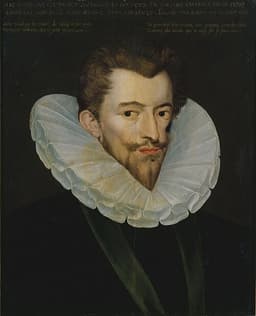
Henry I Duke of Guise
General · Modern
68.8Total
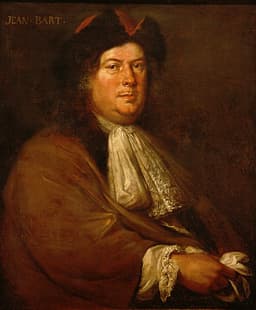
Jean Bart
General · Modern
49.9Total
Basic Information
Born
1550
1650
Died
1588
1702
Era
Modern
Modern
Nationality
France
France
Occupation
General
General
Civilization
Western
Western
Score Comparison
Military (10%)
70.0
52.5
Political (20%)
72.0
36.5
Influence (20%)
82.0
61.0
Legacy (20%)
52.0
47.5
Leadership (15%)
80.0
40.4
Strategy (15%)
55.0
60.0
TOTAL
68.8
49.9
Henry I Duke of Guise — Complete Timeline
1576 AD
Formation of the Catholic LeaguePolitical Action◆ Major
Henry I, Duke of Guise, helped found the Catholic League, a militant Catholic faction opposed to Huguenot concessions. The League aimed to protect Catholicism in France and became a powerful political and military force during the Wars of Religion.
Catholic LeagueReligious ConflictPolitical Faction
Impact: national
1588 AD
Day of the BarricadesPolitical Action
Henry I, Duke of Guise, led a popular uprising in Paris against King Henry III. The city's Catholic population erected barricades, forcing the king to flee. This event demonstrated the League's power and led to the king's submission to the League's demands.
UprisingCatholic LeaguePower Struggle
Impact: nationaldestructive
Assassination at BloisOther◆ Major
Henry I, Duke of Guise, was assassinated on the orders of King Henry III at the Ch
AssassinationCatholic LeagueWars of Religion
Impact: nationaltragic
Jean Bart — Complete Timeline
1690 AD
Battle of Beachy HeadWar
Jean Bart served as a privateer captain under the French admiral Tourville at the Battle of Beachy Head. The French fleet defeated the Anglo-Dutch fleet, gaining temporary control of the English Channel.
Nine Years' WarNaval BattleFrench Victory
Impact: regional
1694 AD
Battle of the TexelWar◆ Major
Jean Bart commanded a French squadron that broke through a Dutch blockade at the Battle of the Texel. He captured a large Dutch grain convoy, relieving a famine in France and demonstrating his skill as a naval commander.
Nine Years' WarNaval BattleFrench Victory
Impact: national
1695 AD
Raid on the Scottish CoastWar
Jean Bart led a raid on the Scottish coast, burning several villages and capturing ships. This raid was part of French efforts to support the Jacobite cause and disrupt English trade in the North Sea.
Nine Years' WarRaidJacobite Support
destructive
1696 AD
Capture of the English Convoy at Dogger BankWar
Jean Bart captured an English convoy off Dogger Bank, taking 25 merchant ships and their escort. This action disrupted English trade and demonstrated the effectiveness of French privateering during the Nine Years' War.
Nine Years' WarPrivateeringEnglish Loss
Impact: regional
1697 AD
Promoted to Chef d'EscadrePolitical Action◆ Major
Jean Bart was promoted to Chef d'Escadre (squadron commander) in the French navy, a high rank for a former privateer. This promotion recognized his successful service and made him a nobleman.
French NavyPromotionNobility
Impact: nationalconstructive
Expert Analysis
Origins
Henry I, Duke of Guise (born 1550), was the son of Francis, Duke of Guise, a prominent military commander. The Guise family was a powerful Catholic noble house in France, deeply involved in the French Wars of Religion. Henry was raised in an atmosphere of militant Catholicism and political ambition. He inherited his father's military prowess and his family's leadership of the ultra-Catholic faction.
Jean Bart (born 1650) was the son of a fisherman in Dunkirk. He began his career as a cabin boy on a merchant ship, later joining the Dutch navy, then the French navy. His background was humble, and he rose through merit and daring as a privateer, not through noble birth.
Rise to Power
Henry I rose to prominence during the French Wars of Religion. In 1576, he helped found the Catholic League, a militant Catholic alliance aimed at suppressing Huguenots and opposing any concessions. His popularity in Paris grew, culminating in the Day of the Barricades (1588), when he led a popular uprising that forced King Henry III to flee the capital. This event made him the de facto ruler of Paris and a direct challenger to the crown.
Jean Bart's rise was gradual. He served as a privateer during the Franco-Dutch War. His breakthrough came in 1694 at the Battle of the Texel, where he broke a Dutch blockade and captured a large grain convoy, relieving a famine in France. This victory earned him promotion to Chef d'Escadre (squadron commander) in 1697, a rare honor for a commoner. His raids on English and Dutch shipping made him a national hero.
Leadership & Governance
Henry I was a charismatic leader who mobilized the Catholic masses. He governed Paris through the Catholic League's council, using popular support to challenge royal authority. His leadership was aggressive and confrontational, often prioritizing religious orthodoxy over stability. He opposed King Henry III's attempts at compromise, leading to a direct confrontation.
Jean Bart led by example, known for his personal courage and tactical skill. He commanded small squadrons of privateers, emphasizing speed and surprise. His governance was limited to naval operations; he was not a political figure. His leadership style was pragmatic, focusing on disrupting enemy trade and capturing prizes.
Triumph & Tragedy
Henry I's greatest triumph was the Day of the Barricades, which demonstrated his ability to mobilize Paris against the king. His greatest failure was his assassination at Blois in 1588, orchestrated by King Henry III, which removed the League's leader but intensified the civil war. His political score of 72.0 reflects his influence, but his strategy score of 55.0 indicates poor long-term planning.
Jean Bart's triumph was the Battle of the Texel (1694), where he captured 150 Dutch ships. His failure was the raid on the Scottish coast (1702), which burned villages but had limited strategic impact. His military score of 52.5 and strategy of 60.0 reflect his effectiveness as a raider but not a fleet commander.
Character & Destiny
Henry I was bold and ambitious, driven by family honor and religious zeal. His assassination was a direct result of his overreach; he underestimated the king's desperation. Historians note his charisma but also his inflexibility.
Jean Bart was audacious and resilient, rising from poverty to nobility. His death in 1702 was natural, and his legacy as a privateer hero endured. His character suited his role as a commerce raider, not a political leader.
Legacy
Henry I's legacy is mixed: the Catholic League continued after his death but eventually collapsed. His actions deepened the religious divide and contributed to the instability that led to Henry IV's conversion. He is remembered as a symbol of Catholic militancy. His legacy score of 52.0 reflects limited long-term impact.
Jean Bart's legacy is more positive: he became a folk hero in Dunkirk, symbolizing French naval resilience. His tactics influenced privateering, but he did not change naval warfare. His legacy score of 47.5 is lower, as his achievements were tactical, not strategic.
Conclusion
Henry I, Duke of Guise, with a total score of 68.8, had a greater impact on French history than Jean Bart's 49.9. Henry's political and leadership scores (72.0 and 80.0) reflect his role in shaping the French Wars of Religion, a pivotal period. Jean Bart's military and strategic scores (52.5 and 60.0) are lower, and his influence was limited to naval raids. While both were skilled, Henry's actions had national consequences, whereas Bart's were tactical. Thus, Henry I of Guise is the more significant historical figure.
Rankings
🥇
Henry I Duke of GuiseLeader
Mil: 70.0Pol: 72.0Inf: 82.0
68.8
🥈
Jean Bart
Mil: 52.5Pol: 36.5Inf: 61.0
49.9
+18.9 behind
How This Comparison Works
Algorithm
Each figure is scored on 6 dimensions (0—100 scale) based on structured historical data: Military (10%), Political (20%), Influence (20%), Legacy (20%), Leadership (15%), Strategy (15%). The weighted total produces the final ranking.
Data Sources
Scores are computed from structured sub-indicators in the database. Scale factors adjust for era (Ancient ×0.85, Modern ×1.0) and civilization size (Eastern ×1.05, Other ×0.80) to account for differences in population and military scale.
Maximum 3 Figures
Comparisons are limited to 2—3 figures to ensure readability and statistical meaningfulness.
Error Margins
±5 points per dimension — Sub-scores are derived from historical records with inherent uncertainty. Two figures within 5 points on a dimension should be considered roughly equivalent in that area.
Total Score Accuracy
±3 points overall — The weighted combination of 6 dimensions produces a total score with approximately ±3 points of uncertainty. Differences of less than 3 points are not statistically significant— the figures are effectively tied.
Known Limitations
- Historical records are incomplete and uneven across civilizations
- Figures from oral-tradition societies may be underrepresented
- Occupation labels can misclassify multi-role figures
- Scores measure capability and impact, not moral character
- Quantitative scoring is a comparison tool, not absolute truth
Capability Radar
Military (10%) — Battles & Warfare
Battles
65
55
Win Rate
60
70
Expansion
50
30
Political (20%) — Governance & Reform
Reform
60
10
Diplomacy
70
25
Economy
45
30
Influence (20%) — Cultural & Global Reach
Cultural
55
45
Global
45
30
Legacy (20%) — Historical Impact
Historical
60
40
Longevity
50
35
Leadership (15%) — Power & Stability
Tenure
65
20
Stability
30
15
Strategy (15%) — Tactics & Innovation
Strategy
75
50
Tactics
70
65
Reform
55
20
Similar Comparisons
Comments & Discussion
No comments yet. Be the first to share your thoughts!