Loading...
James I of Aragon vs Ramiro II of Leon
James I of Aragon leads by 7.6 pts · 2 figures compared
…
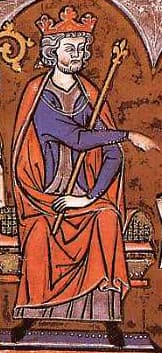
James I of Aragon
Emperor · Medieval
58.7Total
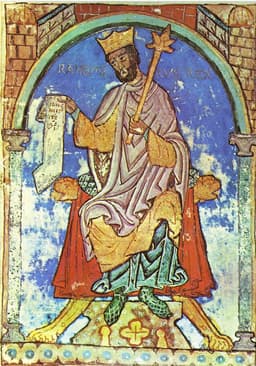
Ramiro II of Leon
Emperor · Medieval
51.1Total
Basic Information
Born
1208
900
Died
1276
951
Era
Medieval
Medieval
Nationality
Aragon
Leon
Occupation
Emperor
Emperor
Civilization
Western
Western
Score Comparison
Military (10%)
74.7
47.5
Political (20%)
45.0
40.8
Influence (20%)
61.0
52.5
Legacy (20%)
54.0
45.0
Leadership (15%)
66.0
65.7
Strategy (15%)
58.0
60.0
TOTAL
58.7
51.1
James I of Aragon — Complete Timeline
1229 AD
Conquest of MallorcaWar◆ Major
James I led a fleet from Salou to invade the island of Mallorca, defeating the Almohad governor. The conquest added the Balearic Islands to the Crown of Aragon and established a base for Mediterranean trade.
ReconquistaConquestMallorca
Impact: regionalconstructive
1238 AD
Conquest of ValenciaWar◆ Major
James I captured the city of Valencia after a long siege, incorporating the Kingdom of Valencia into the Crown of Aragon. The conquest added a wealthy and populous territory to Aragon and extended Christian control down the Mediterranean coast.
ReconquistaConquestValencia
Impact: regionalconstructive
1258 AD
Treaty of CorbeilPolitical Action◆ Major
James I signed the Treaty of Corbeil with Louis IX of France, renouncing Aragonese claims to territories in southern France in exchange for French recognition of Aragonese rule over Roussillon and Montpellier. This treaty defined the border between France and Aragon.
TreatyBorderFranceAragon
Impact: regionalconstructive
1261 AD
Promulgation of the Furs of ValenciaReform◆ Major
James I granted the Kingdom of Valencia its own legal code, the Furs, which established a separate legal and administrative system for the new kingdom. This code balanced royal authority with local privileges and became a model for later Aragonese governance.
LawLegal CodeValencia
Impact: regionalconstructive
Ramiro II of Leon — Complete Timeline
933 AD
Suppression of the Rebellion of the Banu QasiWar◆ Major
Ramiro II crushed a rebellion by the Banu Qasi family, a powerful Muslim dynasty in the Ebro Valley, who had allied with the Caliphate of Cordoba. He captured their strongholds and executed their leader, Muhammad ibn Hashim, eliminating a major threat to Leonese security.
RebellionBanu QasiEbro Valley
Impact: regionalconstructive
939 AD
Battle of SimancasWar
Ramiro II led a coalition of Christian forces to a decisive victory over the Caliphate of Cordoba under Abd al-Rahman III at Simancas. The battle was the first major defeat of the caliphate and halted Muslim expansion into the Duero Valley. Ramiro's victory secured Leonese independence and prestige.
BattleReconquistaCordoba
Impact: regionalconstructive
940 AD
Repopulation of SalamancaReform◆ Major
Following the victory at Simancas, Ramiro II ordered the repopulation of the abandoned city of Salamanca. He granted land and privileges to settlers from the north, establishing a fortified Christian presence on the southern bank of the Duero. This repopulation strengthened Leonese control over the region.
RepopulationSalamancaSettlement
Impact: regionalconstructive
Expert Analysis
Origins
James I of Aragon (1208–1276) was born in Montpellier to King Peter II of Aragon and Maria of Montpellier. His childhood was marked by instability: his father died at the Battle of Muret in 1213, leaving James as a captive in the hands of Simon de Montfort. He was ransomed at age 7 and spent his youth under the regency of the Templars, who educated him in knightly arts and governance. This early exposure to conflict and diplomacy shaped his later expansionist policies.
Ramiro II of Leon (c. 898–951) was the son of King Ordoño II of Leon and Elvira Menéndez. He ascended to the throne of Leon in 931 after a period of civil war, having previously governed the region of Galicia. His upbringing in the turbulent Christian kingdoms of northern Iberia, constantly threatened by the Caliphate of Cordoba, ingrained in him a defensive and consolidating approach to kingship.
Rise to Power
James I's rise began after he assumed personal rule in 1227 at age 19. He immediately faced a rebellion from Aragonese nobles, which he suppressed, then turned to external expansion. In 1229, he launched the conquest of Mallorca, leading a fleet of 155 ships from Salou. The campaign succeeded by 1232, adding the Balearic Islands to the Crown of Aragon. This victory established his reputation as a military leader and provided resources for further campaigns.
Ramiro II's path to power was through inheritance and conflict. He became king of Leon in 931 after the death of his brother Alfonso IV, but had to fight his cousin Alfonso Fróilaz for control. He secured his throne by 932 and then focused on defending his realm from the Caliphate. His defining moment came in 939 at the Battle of Simancas, where he led a coalition of Christian forces (including Navarre and Castile) to a decisive victory over Abd al-Rahman III. This battle halted Cordoban expansion into the Duero valley.
Leadership & Governance
James I was a proactive conqueror and legislator. He personally led military campaigns and oversaw the administration of new territories. Notably, he granted the Kingdom of Valencia its own legal code, the Furs (Furs de València), in 1238, which established a separate legal and administrative system. This allowed Valencia to retain its own customs while integrating into the Crown. Similarly, he promoted repopulation and granted charters to settlers. His governance style was decentralized, favoring local autonomy under royal authority.
Ramiro II focused on consolidation and defense. After the victory at Simancas, he ordered the repopulation of Salamanca in 939, granting lands and privileges to attract settlers from the north. He also crushed the rebellion of the Banu Qasi in the Ebro Valley, eliminating a threat to his eastern borders. His leadership was more reactive than James's, centered on securing existing territories rather than expanding. He maintained alliances with other Christian kings but did not pursue large-scale conquests.
Triumph & Tragedy
James I's greatest triumph was the conquest of Valencia (1238), a wealthy and strategic city that became a core part of the Crown of Aragon. He also successfully conquered Mallorca and signed the Treaty of Corbeil (1258) with Louis IX of France, renouncing Aragonese claims in southern France in exchange for French recognition of his conquests. However, his later years were marred by a failed crusade to the Holy Land (1269) that achieved nothing, and internal strife with his nobles, particularly over succession issues. He died in 1276, having expanded his realm significantly but leaving a complex inheritance.
Ramiro II's greatest success was the Battle of Simancas, which checked Cordoban power and secured Christian control over the Duero frontier. The repopulation of Salamanca also strengthened his kingdom. However, his reign saw limited territorial expansion; he did not capture major Muslim cities. His later years were peaceful, but his legacy is overshadowed by the more aggressive campaigns of his son Ordoño III and the eventual collapse of the Caliphate later in the century.
Character & Destiny
James I was ambitious, energetic, and pragmatic. He was a skilled diplomat and military commander, able to mobilize resources for large-scale campaigns. His decision to grant the Furs to Valencia shows a strategic understanding of governance. However, he could be reckless, as shown by the failed crusade. His character drove him to expand Aragonese influence across the Mediterranean.
Ramiro II was cautious and defensive. He prioritized the security of his kingdom over expansion. His victory at Simancas was a coalition effort, demonstrating his ability to unite Christian factions, but he lacked James's drive for conquest. His destiny was to be a consolidator, not a conqueror, and his legacy reflects that.
Legacy
James I's legacy is enduring. He created the Crown of Aragon as a major Mediterranean power, with possessions in Iberia and the islands. The Furs of Valencia influenced later legal codes. His conquests laid the foundation for Aragonese expansion into Italy and Greece. He is remembered as "the Conqueror" and is a national hero in Catalonia, Valencia, and the Balearic Islands.
Ramiro II's legacy is more limited. The Battle of Simancas is a key event in the Reconquista, but his reign did not lead to major territorial gains. The repopulation of Salamanca was important for the region's development, but his impact was regional rather than enduring across centuries. He is often overshadowed by later Leonese kings.
Conclusion
James I of Aragon had a greater impact than Ramiro II of Leon. His military score of 74.7 reflects his successful conquests, while Ramiro's 47.5 shows a defensive focus. James's political score of 45.0 is slightly higher than Ramiro's 40.8, but his influence (61.0 vs 52.5) and legacy (54.0 vs 45.0) are clearly superior. James's conquests reshaped the political map of the western Mediterranean, while Ramiro's victory at Simancas, though important, did not lead to lasting expansion. James's total score of 58.7 outpaces Ramiro's 51.1 by 7.6 points. Therefore, James I of Aragon stands as the more significant figure in medieval Iberian history.
Rankings
🥇
James I of AragonLeader
Mil: 74.7Pol: 45.0Inf: 61.0
58.7
🥈
Ramiro II of Leon
Mil: 47.5Pol: 40.8Inf: 52.5
51.1
+7.6 behind
How This Comparison Works
Algorithm
Each figure is scored on 6 dimensions (0—100 scale) based on structured historical data: Military (10%), Political (20%), Influence (20%), Legacy (20%), Leadership (15%), Strategy (15%). The weighted total produces the final ranking.
Data Sources
Scores are computed from structured sub-indicators in the database. Scale factors adjust for era (Ancient ×0.85, Modern ×1.0) and civilization size (Eastern ×1.05, Other ×0.80) to account for differences in population and military scale.
Maximum 3 Figures
Comparisons are limited to 2—3 figures to ensure readability and statistical meaningfulness.
Error Margins
±5 points per dimension — Sub-scores are derived from historical records with inherent uncertainty. Two figures within 5 points on a dimension should be considered roughly equivalent in that area.
Total Score Accuracy
±3 points overall — The weighted combination of 6 dimensions produces a total score with approximately ±3 points of uncertainty. Differences of less than 3 points are not statistically significant— the figures are effectively tied.
Known Limitations
- Historical records are incomplete and uneven across civilizations
- Figures from oral-tradition societies may be underrepresented
- Occupation labels can misclassify multi-role figures
- Scores measure capability and impact, not moral character
- Quantitative scoring is a comparison tool, not absolute truth
Capability Radar
Military (10%) — Battles & Warfare
Battles
70
55
Win Rate
75
60
Expansion
75
40
Political (20%) — Governance & Reform
Reform
70
35
Diplomacy
65
40
Economy
60
35
Influence (20%) — Cultural & Global Reach
Cultural
55
30
Global
50
25
Legacy (20%) — Historical Impact
Historical
60
40
Longevity
55
30
Leadership (15%) — Power & Stability
Tenure
75
45
Stability
60
40
Strategy (15%) — Tactics & Innovation
Strategy
70
55
Tactics
65
50
Reform
60
30
Similar Comparisons
Comments & Discussion
No comments yet. Be the first to share your thoughts!