Loading...
Ramiro II of Leon vs Zhu Youjian
Ramiro II of Leon leads by 13.2 pts · 2 figures compared
…
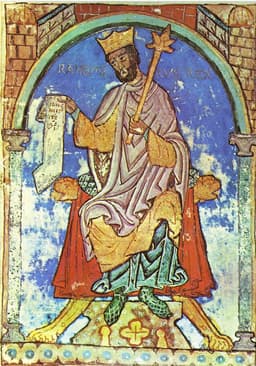
Ramiro II of Leon
Emperor · Medieval
51.1Total

Zhu Youjian
Emperor · Medieval
37.9Total
Basic Information
Born
900
1611
Died
951
1644
Era
Medieval
Medieval
Nationality
Leon
China
Occupation
Emperor
Emperor
Civilization
Western
Eastern
Score Comparison
Military (10%)
47.5
21.2
Political (20%)
40.8
27.9
Influence (20%)
52.5
48.6
Legacy (20%)
45.0
40.8
Leadership (15%)
65.7
38.1
Strategy (15%)
60.0
35.7
TOTAL
51.1
37.9
Ramiro II of Leon — Complete Timeline
933 AD
Suppression of the Rebellion of the Banu QasiWar◆ Major
Ramiro II crushed a rebellion by the Banu Qasi family, a powerful Muslim dynasty in the Ebro Valley, who had allied with the Caliphate of Cordoba. He captured their strongholds and executed their leader, Muhammad ibn Hashim, eliminating a major threat to Leonese security.
RebellionBanu QasiEbro Valley
Impact: regionalconstructive
939 AD
Battle of SimancasWar
Ramiro II led a coalition of Christian forces to a decisive victory over the Caliphate of Cordoba under Abd al-Rahman III at Simancas. The battle was the first major defeat of the caliphate and halted Muslim expansion into the Duero Valley. Ramiro's victory secured Leonese independence and prestige.
BattleReconquistaCordoba
Impact: regionalconstructive
940 AD
Repopulation of SalamancaReform◆ Major
Following the victory at Simancas, Ramiro II ordered the repopulation of the abandoned city of Salamanca. He granted land and privileges to settlers from the north, establishing a fortified Christian presence on the southern bank of the Duero. This repopulation strengthened Leonese control over the region.
RepopulationSalamancaSettlement
Impact: regionalconstructive
Zhu Youjian — Complete Timeline
1627 AD
Ascension as Chongzhen EmperorPolitical Action
Zhu Youjian became the Chongzhen Emperor at age 16 after the death of his brother. He inherited a dynasty plagued by fiscal crisis, peasant rebellions, and Manchu threats, and he attempted to reform the government but faced insurmountable challenges.
Ming DynastyImperial SuccessionCrisis
Impact: national
Execution of Wei ZhongxianPolitical Action◆ Major
Chongzhen ordered the execution of the powerful eunuch Wei Zhongxian, who had dominated the previous reign. This purge aimed to restore imperial authority but alienated the eunuch faction and destabilized the court.
Eunuch PowerCourt PoliticsMing Dynasty
Impact: nationalconstructive
1644 AD
Fall of Beijing and suicidePolitical Action
As Li Zicheng's rebel army approached Beijing, Chongzhen refused to flee. He hanged himself on Jingshan Hill, ending the Ming dynasty. His death marked the dynasty's collapse and the beginning of the Qing conquest of China.
Ming-Qing TransitionImperial SuicideDynastic Fall
Impact: globaltragic
Refusal to negotiate with Li ZichengPolitical Action◆ Major
Chongzhen rejected Li Zicheng's offers of a negotiated settlement, insisting on unconditional surrender. This decision eliminated the possibility of a peaceful transition and led to the violent sack of Beijing.
Ming-Qing TransitionDiplomacyPeasant Rebellion
Impact: nationaldestructive
Expert Analysis
Origins
Ramiro II of Leon was born around 900 AD, the son of King Ordoño II of Leon. He grew up in a fragmented Christian kingdom constantly threatened by the powerful Caliphate of Cordoba. Ramiro's early life was shaped by military training and the politics of the Leonese court, where he learned to navigate alliances with neighboring Christian states and Muslim frontier lords.
Zhu Youjian, born in 1611, was the fifth son of the Ming Emperor Taichang. His early life was marked by the political intrigues of the Ming court, dominated by eunuchs and factional struggles. He ascended the throne unexpectedly at age 16 after his brother's death, receiving little preparation for rule.
Rise to Power
Ramiro II became king of Leon in 931 after the death of his brother Alfonso IV. He quickly consolidated power by suppressing internal dissent and asserting control over the Galician nobility. His key turning point came at the Battle of Simancas in 939, where he led a coalition of Christian forces to a decisive victory over the Caliphate of Cordoba under Abd al-Rahman III. This victory cemented his reputation and expanded Leonese influence.
Zhu Youjian became the Chongzhen Emperor in 1627 after his brother's sudden death. He immediately moved against the powerful eunuch Wei Zhongxian, executing him and purging his faction. This action initially strengthened his authority but alienated key court officials. His reign was plagued by the worsening Ming fiscal crisis, peasant rebellions, and Manchu invasions.
Leadership & Governance
Ramiro II governed with a focus on military expansion and consolidation. He repopulated frontier cities like Salamanca, granting land and privileges to attract settlers. His governance was pragmatic, forging alliances with local Muslim rulers when expedient. He suppressed the rebellion of the Banu Qasi, a powerful Muslim dynasty, demonstrating his ability to project power.
Zhu Youjian attempted to restore imperial authority by centralizing control and eliminating eunuch influence. However, he was indecisive and suspicious, frequently executing or dismissing capable generals. His refusal to negotiate with rebel leader Li Zicheng, demanding unconditional surrender, eliminated any chance of a negotiated settlement. His leadership scores 38.1, reflecting his inability to adapt to crisis.
Triumph & Tragedy
Ramiro II's greatest triumph was the Battle of Simancas, where he defeated Abd al-Rahman III, stopping Cordoban expansion for decades. His repopulation of Salamanca revitalized a key frontier region. However, his later years saw internal strife with his son Sancho, who rebelled against him, leading to a divided kingdom.
Zhu Youjian's triumph was his initial purge of eunuch power, a popular move. However, his reign ended in tragedy: as Li Zicheng's army approached Beijing in 1644, he hanged himself on Jingshan Hill, ending the Ming dynasty. His military score of 21.2 reflects his inability to defend the capital.
Character & Destiny
Ramiro II was a decisive and pragmatic ruler, willing to cooperate with Muslim allies when needed. His military strategy scored 60.0, showing competence in battlefield command. His character led to a stable reign, though his later years were marred by familial conflict.
Zhu Youjian was stubborn and micromanaging, distrustful of his officials. His refusal to negotiate or retreat doomed the Ming. Historians note his integrity but condemn his inflexibility. His leadership score of 38.1 reflects a ruler who could not adapt to crisis.
Legacy
Ramiro II's legacy is tied to the Christian Reconquista: his victory at Simancas is remembered as a turning point. He strengthened Leon as a regional power and his repopulation efforts laid foundations for future growth. He scored 45.0 in legacy.
Zhu Youjian is remembered as the tragic last Ming emperor. His death symbolized the dynasty's fall, but his legacy is mixed. Some credit his attempts to reform, but most blame his rigidity for the collapse. His legacy score is 40.8.
Conclusion
Ramiro II had greater impact with a total score of 51.1 compared to Zhu Youjian's 37.9. Ramiro's military and political actions advanced the Christian cause in Iberia, while Zhu Youjian's failures led to the fall of a dynasty. Though both faced immense challenges, Ramiro's adaptability and success on the battlefield give him the edge.
Rankings
🥇
Ramiro II of LeonLeader
Mil: 47.5Pol: 40.8Inf: 52.5
51.1
🥈
Zhu Youjian
Mil: 21.2Pol: 27.9Inf: 48.6
37.9
+13.2 behind
How This Comparison Works
Algorithm
Each figure is scored on 6 dimensions (0—100 scale) based on structured historical data: Military (10%), Political (20%), Influence (20%), Legacy (20%), Leadership (15%), Strategy (15%). The weighted total produces the final ranking.
Data Sources
Scores are computed from structured sub-indicators in the database. Scale factors adjust for era (Ancient ×0.85, Modern ×1.0) and civilization size (Eastern ×1.05, Other ×0.80) to account for differences in population and military scale.
Maximum 3 Figures
Comparisons are limited to 2—3 figures to ensure readability and statistical meaningfulness.
Error Margins
±5 points per dimension — Sub-scores are derived from historical records with inherent uncertainty. Two figures within 5 points on a dimension should be considered roughly equivalent in that area.
Total Score Accuracy
±3 points overall — The weighted combination of 6 dimensions produces a total score with approximately ±3 points of uncertainty. Differences of less than 3 points are not statistically significant— the figures are effectively tied.
Known Limitations
- Historical records are incomplete and uneven across civilizations
- Figures from oral-tradition societies may be underrepresented
- Occupation labels can misclassify multi-role figures
- Scores measure capability and impact, not moral character
- Quantitative scoring is a comparison tool, not absolute truth
Capability Radar
Military (10%) — Battles & Warfare
Battles
55
15
Win Rate
60
10
Expansion
40
5
Political (20%) — Governance & Reform
Reform
35
20
Diplomacy
40
15
Economy
35
10
Influence (20%) — Cultural & Global Reach
Cultural
30
20
Global
25
10
Legacy (20%) — Historical Impact
Historical
40
30
Longevity
30
15
Leadership (15%) — Power & Stability
Tenure
45
40
Stability
40
5
Strategy (15%) — Tactics & Innovation
Strategy
55
15
Tactics
50
20
Reform
30
10
Similar Comparisons
Comments & Discussion
No comments yet. Be the first to share your thoughts!